Wednesday, July 06, 2022

Coronavirus: 5 things you should have in your lunch box for strong immunity against COVID and other infections

What we eat defines our immunity and resistance against pathogens

Living with millions of viruses, few of which even led to global pandemic, we have now understood that these microscopic neighbours are not going anywhere and we have to learn to live with them. For that, we need a strong immune power.

It goes without saying that what we eat defines our immunity and resistance against microscopic invaders. The last two years of the pandemic has taught us that the key to a long life lies in healthy lifestyle practices which includes cleanliness, eating a balanced and nutritious diet and following hygiene practices.

With offices reopening and work from home coming to an end, the dietary habit of people has started going back to pre-COVID times where skipping a meal or eating something or the other for lunch was common.

In view of COVID and other infections here are few such lunchbox related tips which can help you get a proper meal and can subsequently improve your immunity:

Not just a lunch box, prepare a lunch bag

No more small lunch boxes! Get a medium sized bag and fill your lunch with it. A big bag will have ample space for several things like meals, snacks, water, and other fluids to keep you full.

Let's prepare your lunch box

Do not worry about putting on weight. Pack a decent meal for yourself: it can start with rice or roti or both, a dal, a curry of a seasonal vegetable and salad. Now, this is the simple lunch, you can keep adding items to this as per your appetite. The more, the better!

Don't forget snacks

The vendor on the street right next to your office might seem an easier option than carrying snacks from home, but this snack will provide you with nutrients that a street side food can not. Another plus point is when you carry snacks from home, you have several options to pick from and you munch one as much as you can.

​Water is a must

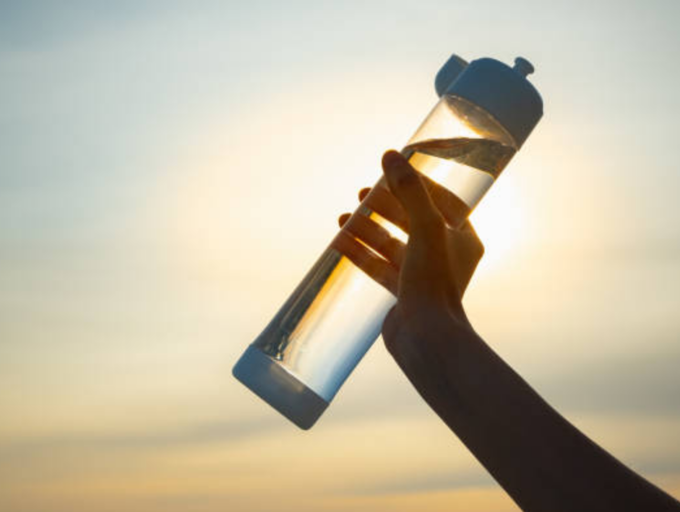
You can definitely get water in the office. But in offices small sized disposable cups are used, which might affect the amount of water you require in a day. It is wise to carry your own water bottle, which of course you can refill in the office as many times as required.

​Other source of hydration

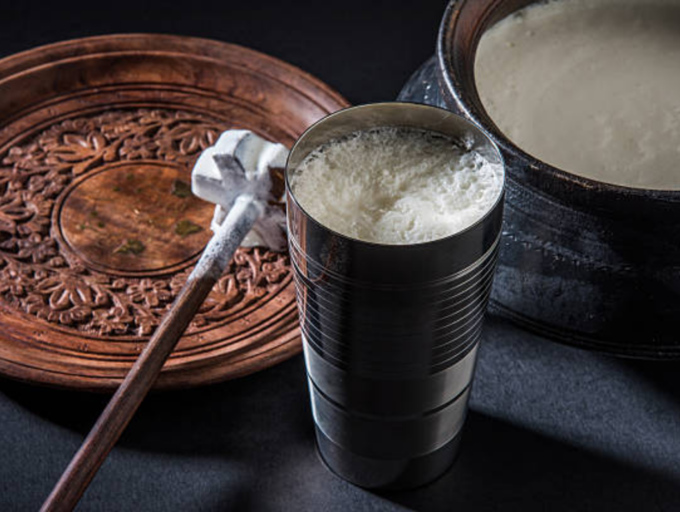
Plain water gets boring sometimes. If possible carry a bottle of lassi or salted butter milk with you in your lunch bag. You can also carry detox water with you and have small sips of it throughout the day.

​Other important points to note

Make sure your lunch covers all the seasonal vegetables available during that time of the year.

If time does not permit, make something that is easy to prepare. For example, instead of dal, chawal and sabji, you can prepare a khichdi and add a dollop of ghee to it.

Do not overload your lunch bag

Pack only that much that you consume in a day. Try not to bring leftovers home.

This is only for your information, kindly take the advice of your doctor for medicines, exercises and so on.   

https://gscrochetdesigns.blogspot.com. one can see my crochet creations  
https://gseasyrecipes.blogspot.com. feel free to view for easy, simple and healthy recipes    
https://kneereplacement-stickclub.blogspot.com. for info on knee replacement


readmore

Labels: , , , , , , , , , ,

Friday, February 14, 2020

These Are The Early Symptoms of The New Coronavirus, According to The Latest Research

The most common symptom is fever, according to the researchers at Zhongnan Hospital of Wuhan University. They observed fevers in 99 percent of the patients in their study.

Other common symptoms include fatigue and a dry cough, which appeared in more than half of the patients studied. About a third also experienced muscle pain and difficulty breathing, though it took about five days (on average) for a patient to have difficulty breathing after first showing symptoms.
Other symptoms associated with common colds – such as a headache or sore throat – were seen in only a small number of cases.
COVID-19 symptoms
The coronavirus outbreak likely originated at a seafood market in Wuhan in December. It has since spread to 25 countries outside China, though most of the cases remain concentrated on the Chinese mainland.

So far, more than 1,100 people have died and more than 45,000 have been infected by the virus.

Learning more about the virus' symptoms could help physicians identify severe cases before a person becomes critically ill. It could also help scientists better understand how the virus spreads.

"We don't know yet the arc of how infectious someone is over the course of their infection," Lauren Meyers, an epidemiologist at the University of Texas at Austin, told Business Insider.

"We don't know if people are infectious before they have symptoms, and we are not sure how infectious they are even while they have symptoms."

Patients could spread the virus before they're hospitalised

The new study found that the virus is most likely to affect older men with preexisting health problems. More than 54 percent of the patients in the study were men, and the median age of patients was 56.

On average, it took about 10 days for patients with severe cases to be admitted to the ICU from the time their symptoms began, the researchers found. But it's possible that these patients contracted the virus long before they developed a fever.

Meyers guessed that a typical infected person is probably contagious without showing symptoms for five or more days. In total, health experts have estimated a person with COVID-19 can be contagious for between one and 14 days; one group of Chinese scientists recently suggested that people could be contagious for  up to 24 days.

But according to the new study, it is taking about seven days for patients who are already showing symptoms in Wuhan to be admitted to a hospital there.

The authors didn't say why that's the case, but Reuters reported last week that hospitals in Wuhan have turned away some patients with milder symptoms.

Other infected people may choose not to admit themselves right away, since there's no cure for the virus – doctors just provide supportive care such as fluids or steroids.

Whatever the reason, that delay could help the virus spread.

"Assuming that people are not hospitalised, not isolated for the first week of their symptomatic period, then that certainly is a key opportunity for onward transmission," Meyers said.

But she added: "It's not clear necessarily how mobile those people would have even been in that week. If they're really feeling lousy and they have a fever and they're already having issues with breathing, they may not be moving around."

Early symptoms could also include diarrhoea

The new study also found that patients who ended up in the ICU had more abdominal pain and appetite loss than patients with milder coronavirus cases.

The researchers noted some early, "atypical" symptoms as well: They found that 14 patients developed diarrhoea and nausea one to two days before their fever or difficulty breathing set in.

This might suggest another way the virus is spreading. According to the study, one patient with abdominal symptoms was sent to the surgical department, since the symptoms didn't align with typical coronavirus cases.

That person went on to infect at least four other hospitalised patients – all of whom showed "atypical abdominal symptoms" as well – and at least 10 healthcare workers.

"If true, then this confirms that some patients are likely to be far more infectious than others, and this poses further difficulties in managing their cases," Michael Head, a senior global health research fellow at the University of Southampton, said in a statement.

Of the nearly 140 patients in the Zhongnan Hospital study, nearly 30 percent were healthcare workers.

Scientists still think the coronavirus is mostly transmitted through respiratory droplets such as saliva and mucus when a person coughs or sneezes.

But Meyers said diarrhoea could be a possible route of transmission, too.

A January study from researchers in Beijing and Shanghai  identified the coronavirus in stool samples from patients with diarrhoea and nausea.

Meyers pointed to one "gruesome anecdote" from the SARS outbreak in 2003, when a patient with severe diarrhoea infected hundreds of residents in his apartment complex in Hong Kong. The virus is believed to have spread through pipes, entering people's bathrooms via floor drains.

"It's too early to say how significant of a contribution diarrhoea would be to future transmission of this novel coronavirus," Meyers said.

"With SARS, diarrhoea was not a super common symptom, but it certainly occurred in a fraction of SARS patients."

Health authorities recently evacuated more than 100 people from a building in Hong Kong  after two residents 10 floors apart tested positive for COVID-19. They're now investigating whether the virus can spread through sewage systems.

This is only for your information, kindly take the advice of your doctor for medicines, exercises and so on.     
https://gscrochetdesigns.blogspot.com. one can see my crochet creations  
https://gseasyrecipes.blogspot.com. feel free to view for easy, simple and healthy recipes    
https://kneereplacement-stickclub.blogspot.com. for info on knee replacement
 

Labels: , , , , , , , , , , ,

Saturday, April 28, 2018

Why Do We Get Angry More In Hot Weather?

We all get hot and irritable during summers and now we have a theory that explains why it happens. A team in Poland conducted a study to find the link between rising temperature and stress levels. This has been something that has puzzled experts for many years. 

The research has revealed that cortisol, which is the stress hormone is lower in winter, and the heat does make it rise. This could affect public health because cortisol is important to regulate salt, sugar as well as fluids across the body.

Pathophysiologist was surprised to see more cortisol circulating in the body during warm weather. She shared, "These non-intuitive findings contradict traditional concepts of the taxing physical toll of winter and the relaxed ease of summer."

The first sample of data was actually derived from crime statistics and how it was associated with the weather. The report showed criminals engaging in increased violence when it was warmer.

Many theories connect warm temperatures with spike in heart rate, testosterone along with metabolic reactions, triggering the sympathetic nervous system. 

THIS IS ONLY FOR INFORMATION, ALWAYS CONSULT YOU PHYSICIAN BEFORE HAVING ANY PARTICULAR FOOD/ MEDICATION/EXERCISE/OTHER REMEDIES.                                                                                                                                                                                                        PS- THOSE INTERESTED IN RECIPES ARE FREE TO  VIEW MY BLOG-                                                                                           https://gseasyrecipes.blogspot.com/  

FOR INFO ABOUT KNEE REPLACEMENT, YOU CAN VIEW MY BLOG-                                                                                                                              https:// kneereplacement-stickclub.blogspot.com/                              
FOR CROCHET DESIGNS                                                                                                                                                                                                                                 https://my crochet creations.blogspot.com
  

Labels: , , , , , , , ,