Friday, November 28, 2025

A Guide to Laparoscopy Surgery

Laparoscopy, derived from the Greek words "lapara" (flank or abdomen) and "skopein" (to examine), is a minimally invasive surgical technique that allows physicians to inspect and operate on abdominal and pelvic organs without the need for large incisions. This approach offers patients reduced recovery times, less postoperative pain, and minimal scarring compared to traditional open surgeries.
Historical Background  
The evolution of laparoscopy dates back to 1806 when Philip Bozzini developed a device using a simple tube and candlelight to view the interior of the urethra. In 1869, gynecologist Pantaleoni utilized an endoscope to examine the uterine cavity, marking the early use of endoscopy in gynecology. By 1901, George Kelling employed a cystoscope to explore the abdominal cavity in dogs, introducing the concept of insuffiating the abdomen with filtered air to control internal bleeding. The term "laparoscopy" was coined in 1911 by Swedish internist Hans Christian Jacobaeus, who used a cystoscope to examine the abdominal and thoracic cavities. Significant advancements continued, notably by Raoul Palmer in 1944, who performed gynecological laparoscopies with patients in a head-down position and used gas insufflation to enhance visibility. The development of cold light sources in 1952 further enhanced the safety and efficacy of laparoscopic procedures.
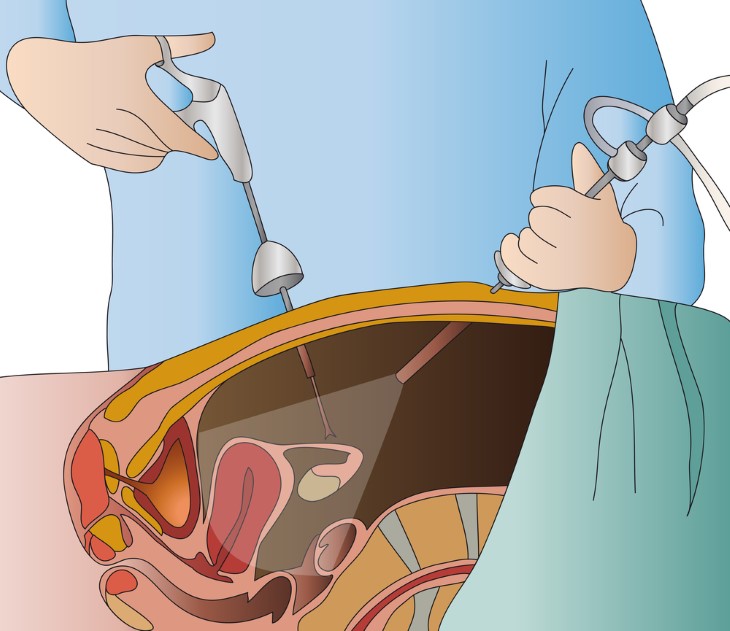
 laparoscopy surgery illustration

Applications of Laparoscopy 
 
Today, laparoscopy is integral to various surgical specialties, including general surgery, gynecology, and urology. In gynecology, it addresses conditions such as ovarian cysts, ectopic pregnancies, endometriosis, and fibroids. General surgeons utilize laparoscopy for procedures like cholecystectomy (gallbladder removal), appendectomy, hernia repairs, and colorectal surgeries. The technique's minimally invasive nature results in shorter hospital stays, quicker recoveries, and fewer complications. 
 
A few stories that highlight what this surgery is for: 
 
At 86, John had always been active, enjoying daily walks and time with his grandchildren. When sudden abdominal pain led to a diagnosis of acute cholecystitis, he feared a prolonged recovery. Fortunately, doctors recommended a laparoscopic cholecystectomy. Through small incisions, the surgeons removed his inflamed gallbladder. Everything went without a hitch, and John was home just days later. He was soon back to his routines, grateful for the swift intervention and shocked at how fast his recovery was for a man of his age.
 
 
Take Emily, a much younger, 37-year-old teacher, who was in the middle of her school year when she experienced sharp abdominal pain. Diagnosed with acute appendicitis, she worried about missing work and her students. Her medical team suggested a laparoscopic appendectomy. The minimally invasive procedure meant Emily was back on her feet within a week. This kind of surgery used to take weeks and months of hard-earned recovery and pain. 
 
We'll finish with the case of Michael, a 17-year-old athlete, faced a life-threatening situation after a chest injury during a game. Doctors used diagnostic laparoscopy to assess internal damage. The clear visualization allowed them to address his injuries promptly. Thanks to this approach, Michael's recovery was swift and complete enough to put him back on the field. 
 
Preparation and Procedure 
 
Preparation for laparoscopy involves a comprehensive medical evaluation, including a review of medical history, physical examination, and necessary laboratory tests. Patients are advised to fast for approximately eight hours before the procedure and may need to discontinue certain medications, especially blood thinners. The surgical process includes general anesthesia, followed by small abdominal incisions through which a laparoscope and specialized instruments are inserted. Carbon dioxide gas is introduced to inflate the abdominal cavity, providing better visualization of internal organs. The procedure's duration varies based on its complexity, and patients typically experience shorter recovery periods compared to open surgeries.

Risks and Considerations 
 
While laparoscopy offers numerous benefits, it is not without risks. Potential complications include bleeding, infection, and injury to internal organs. Certain conditions, such as advanced abdominal cancers, chronic tuberculosis, bleeding disorders, or extensive abdominal adhesions, may contraindicate the use of laparoscopy. It is crucial for you to discuss their medical history and any concerns with their healthcare provider to determine the appropriateness of this surgical approach. 
 
Postoperative Care and Recovery 
 
After laparoscopy, you may experience mild abdominal discomfort, bloating, or referred shoulder pain due to residual carbon dioxide gas. These symptoms typically resolve within a few days. Adhering to postoperative care instructions, such as wound care, activity restrictions, and follow-up appointments, is essential for optimal recovery. Most individuals can resume normal activities within a week, although this may vary depending on the specific procedure performed. 
 
In summary, laparoscopy represents a significant advancement in surgical practice, offering a less invasive option for diagnosing and treating various abdominal and pelvic conditions. 


This is only for your information, kindly take the advice of your doctor for medicines, exercises and so on.   


Labels: , , , , , , ,

Monday, July 21, 2025

36 Interesting Facts About Walking

What are the benefits of speed walking, how long would it take to walk around the planet, how many steps do children in the UK take, and how many steps a day does one need to take to lose weight? 
 
Here are 36 interesting facts about the steps we take every day: auto skip 
 
1. Speed walking helps reduce body fat, lower blood pressure and increase the density of lipoprotein, which improves good cholesterol. 
 
2. The longest hiking trip in the world was carried out by a native of Quebec, Canada, Jean Beliveau. On his 45th birthday, he crossed the Jacques Cartier Bridge in Montreal and walked about 75,554 kilometers through 64 countries. Over 11 years he changed 54 pairs of shoes but somehow managed to maintain a good relationship with his wife who was waiting for him at home. 
 
3. Walking on hot stones or coals with bare feet is a religious ritual practiced in several places around the world, including the Indian subcontinent, China, the Fiji Islands, and New Zealand. In the past, it was introduced in ancient Greece. Walking on coals is supposed to ensure a good harvest, or to purify the person walking from their sins. 
 
4. Competitive Walking - Racewalking - is an Olympic sport that has existed for over 90 years. The distances range from 20 km to 50 km. The sport was developed in Britain during the 19th century, and the first time it was represented in an Olympic competition was in 1908. This is not one of the most popular branches of the Olympics, and in fact, Bob Costas, a senior broadcaster at NBC, once compared a competitive walk to the "strongest whispering" competition. 
 
5. Modern literary scholars find a great similarity between walking and writing. As Michel de Certeau put it in the past: "Writing is one way to make the world ours, walking is the other" 
 
6. The average Australian takes 9,695 steps per day (slightly less than the ideal of 10,000) The average Japanese person takes 7,168 steps a day, the average Swiss takes 9,650 steps a day, while the average American takes only 5,117 steps a day.
7. In Britain, children average 12-16,000 steps a day. In the United States, children take an average of 11-13,000 steps a day.
8. Given that the world is over 40 thousand kilometers in circumference and that the average walking rate is about 5 km per hour, a person walking continuously for 347 days could encompass the world. 
 
 9. It would take 225 million years to walk the distance of a light year at a rate of 20 minutes per kilometer and a half. 
 
10. One light year equals 9.4 trillion km.  
 
11. To burn off a 540 calorie Big Mac you’d need to walk for an hour and 43 minutes.  
 
12. It would take an average person 7 hours to burn off a large Big Mac meal + a large coke + large fries.
13. People began walking on two limbs three to six million years ago. Scientists believe that evolution evolved this way because humans wanted to carry goods and use energy more efficiently. 
 
14. Researchers note that the human spine was not designed to work in a vertical position of walking on two legs, which is why many people suffer from back pain, disc herniation, and arthritis
 
15. Experts recommend walking up to 6000 steps a day to improve health and 10,000 steps a day to lose weight
 
16. Studies indicate that the way a person walks can indicate his or her sexual orientation
 
17. A woman who weighs 68 kg needs to walk 6.4 km/h in 48 minutes to burn a donut containing 240 calories. This is about 4.8 km. 
 
18. So far, the oldest human traces found date back 3.75 million years. It is believed that these traces are of a person called Australopithecus. 
 
19. Research from 2000 reports that walking regularly (minimum 3 times a week, for half an hour or more) saves $330 in health expenses
 
20. 20 minutes of walking or 2000 steps are equivalent to one and a half kilometers
 
21. The best way to lose weight is by walking at a moderate pace for at least 40 minutes. On the other hand, a quick brisk walk of 20-25 minutes is better for strengthening cardio-pulmonary endurance.  
 
22. A man weighing 60 kg burns 100 calories per kilometer and a half of walking. A man who weighs 90 kg burns 133 calories per kilometer and a half of walking and a man weighing 113 kg burns 166 calories per kilometer and a half of walking. 
 
 23. The significant difference between walking and running is the amount of time the foot is placed on the floor. While walking, at least one foot is in contact with the ground at any given moment, and the time it's on the floor is longer. On the other hand. While running, foot contact on the ground is shorter and there are moments when both feet are in the air. 
 
24. Chickens, pigeons, cranes, and quails are known as part of the family of birds who shake their heads while walking. Researchers say they do so because shaking the head helps to find balance, provides depth perception and sharpens vision.

25. About 18% of the world suffers from sleepwalking (walking or performing various activities during sleep).  
 
26. The first person to walk on the moon was Neil Armstrong in 1969. 
 
27. Most babies start walking around the age of 13 months. However, some may begin earlier, at the age of 9 or 10 months, or later, at the age of 15 or 16 months. 
 
28. A person's chances of being killed while walking are 36 times greater than their chances of dying while driving a car. 
 
29. A person is 300 times more likely to be killed while walking than when flying an airplane. 
 
30. Walking can reduce the risk of heart attack, type 2 diabetes, and bone fractures. In addition, speed walking can reduce stress and depression and improve chances of recovery from cancer.

31. Walking briskly for a mile and a half in 15 minutes burns the same number of calories as jogging for the same distance in 8.5 minutes. 
 
32. Researchers found that women who walked at least an hour and a half a week had significantly better cognitive function than women who walked only 40 minutes a week. 
 
33. Walking helps prevent osteoporosis. Studies show that postmenopausal women who walk 1.5 km a day have higher bone density than women who walk less. 
 
34. Walking reduces the risk of breast cancer and colon cancer
 
35. The average human walking speed is about 5 km per hour. 
 
36. When the body goes faster than the speed of 5 mph, naturally, the length of a person's step increases, resulting in increased calorie burning.


This is only for your information, kindly take the advice of your doctor for medicines, exercises and so on.   


Labels: , , , , , ,

Friday, October 11, 2024

Protein vs creatine: Which supplement is better for muscle gain?

Creatine and protein are two supplements that many fitness enthusiasts swear by. They are great for building muscles, enhancing performance, and supporting overall health. Protein powder can enhance the body’s ability to repair and build muscle tissue after strenuous workouts, leading to increased muscle mass over time. Creatine, on the other hand, draws water into muscle cells, and in turn, increases cell volume. It basically promotes an environment perfect for muscle growth and so, may contribute to muscle hypertrophy. Does that mean creatine is better than protein for muscle gain? Let’s find out who the winner is in this protein vs creatine debate.

What is protein powder?

“Protein powder is a concentrated dietary supplement designed to provide a high amount of protein in a convenient and easily consumable form,” says a nutritionist. Such powders are derived from various sources. The most common sources include:

  • Whey protein derived from milk during the cheese-making process.
  • Casein protein derived from milk.
  • Soy protein extracted from soybeans.
  • Pea protein made from yellow split peas.
  • Rice protein derived from brown rice.
  • Hemp protein extracted from hemp seeds.
  • Egg protein made from egg whites.

What are the health benefits of protein powder?

Protein powder is a versatile and convenient supplement that offers many health benefits:

1. Muscle growth and repair

Protein supplementation may lead to enhanced muscle function in young adults, as per 2019 research published in the journal Nutrients. “Protein is essential for muscle protein synthesis, the process by which the body repairs and builds muscle fibers after exercise. Consuming protein powder, especially post-workout, provides the necessary amino acids to facilitate this process, leading to muscle hypertrophy (growth),” says the expert. After intense physical activity, muscles undergo stress and minor tears. Protein powder helps accelerate the repair process, reducing recovery time and minimising muscle soreness.

2. Weight loss

During a 2019 study published in the Nutrients journal, women who had an extra 40 grams of whey protein in a day showed a reduction in abdominal fat compared with the other participants who consumed a other type of protein supplement. Incorporating protein powder into meals or snacks can increase feelings of fullness, reducing overall calorie intake and aiding in weight loss efforts.

3. Enhanced immune function

Consumption of whey protein consumption may improve the immune system and decrease the incidence of disease, as per research published in the Foods journal in 2021. Proteins play a crucial role in the immune system by aiding in the production of antibodies, which help defend the body against pathogens.

4. Support for healthy ageing

Protein supplement can improve muscle mass and reduce the risk of sarcopenia in older adults, as per research published in the Canadian Geriatrics Journal in 2022. “Sarcopenia is the age-related loss of muscle mass as well as strength, but can be mitigated with the help of protein. This can help older adults maintain mobility and independence,” says the expert.

5. Cognitive benefits

“Amino acids from protein are precursors for neurotransmitters, which are essential for brain function, mood regulation, and cognitive performance,” says Susmita. Consuming protein, particularly in the morning or before mentally demanding tasks, can improve concentration and cognitive function by providing sustained energy.

What is creatine?

Creatine is another widely used dietary supplement in the fitness world. “It is a naturally occurring compound, which plays a crucial role in energy production, especially while engaging in activities such as weightlifting, and sprinting,” says the expert. Some of the natural sources of creatine include:

 Beef and pork

Salmon, tuna, and herring

Chicken

Milk and cheese

What are the benefits of creatine?

Creatine offers several benefits for your health, which include:

1. Enhanced muscle strength

Creatine phosphate stored in muscles donates a phosphate group to ADP or adenosine diphosphate) to regenerate adenosine triphosphate or ATP, the primary energy currency of cells. “Elevated ATP levels help muscles to perform at higher intensities for longer durations. This results in better strength and power output during activities like weightlifting, and high-intensity interval training,” says the expert.

2. Increased muscle mass

Creatine supplement is an efficient way to grow muscle in healthy young adults, as per research published in the Nutrients journal in 2022. Creatine causes muscles to retain water, increasing muscle volume and creating a more conducive environment for muscle growth.

3. Improved exercise performance

With enhanced energy availability, people can sustain higher training volumes, contributing to greater overall training stimulus and subsequent performance improvements. Creatine supplementation is particularly beneficial for sports and activities that require short bursts of high-intensity effort, such as sprinting, jumping, and explosive lifts.

4. Accelerated recovery

Lower levels of inflammation post-exercise can lead to faster recovery times. “This can enable individuals to train more consistently without prolonged downtime,” says the expert.

5. Cognitive benefits

Consumption of creatine supplement may improve short-term memory and intelligence or reasoning of healthy people, as per research published in Experimental Gerontology in 2018. “Creatine may also offer protective benefits against neurodegenerative diseases by supporting cellular energy metabolism in the brain, potentially slowing the progression of conditions like Parkinson’s disease,” says the expert.

6. Support for bone health

During a 2021 study published in the Medicine and Science in Sports and Exercise journal, one year of creatine supplementation and resistance training had favourable effects on muscle density in older adults. “By promoting muscle strength and mass, creatine indirectly supports bone strength through the mechanical loading effect of stronger muscles on bone tissue,” says Susmita.

Should you take protein or creatine supplement for muscle gain?

Both protein and creatine can support muscle gain, but they work in different ways:

  • Protein: If your goal is muscle repair, recovery, and growth, protein is essential because it provides the amino acids needed to build muscle tissue. Without adequate protein, muscle gains will be limited, regardless of exercise intensity.
  • Creatine: If your focus is on increasing strength, power, and workout performance, creatine will help you push through more intense workouts, leading to faster gains in muscle mass.

As for protein vs creatine, you can determine which one is better by going through the following points –

1. Primary purpose

Protein powder is meant for muscle repair and growth, and meeting daily protein needs. Creatine is more for enhancing production of energy for high-intensity workouts.

2. Mechanism of action

Protein powder supplies amino acids for muscle protein synthesis. Creatine increases phosphocreatine stores to regenerate ATP.

3. Best for

Protein is for people seeking muscle growth, recovery, or increased protein intake. Creatine is for people aiming to improve strength, power, and high-intensity performance, especially in sports.

4. Typical dosage

People can take 20 to 30 grams of protein powder per serving, one to two times daily. Three to five grams of creatine can be consumed daily after an optional loading phase.

5. Time of consumption

Protein powder can be consumed post-workout, between meals, or as a meal supplement. Creatine can be consumed pre- or post-workout, or at any consistent time daily.

“You can take both creatine and protein together, as they work synergistically without interfering with each other,” says the expert.

What are the side effects of protein and creatine supplements?

Here are some of the side effects of protein powder –

  • Some people, particularly those who are lactose intolerant (for whey protein), may experience bloating, gas, or upset stomach.
  • Excessive protein intake over long periods can stress the kidneys, especially in individuals with pre-existing kidney conditions.
  • High protein consumption requires adequate hydration to process, so insufficient water intake may cause dehydration.

Here are the side effects of creatine –

  • Creatine causes muscles to retain water, which may result in bloating or temporary weight gain.
  • Some individuals may experience stomach discomfort or diarrhea.
  • Excessive creatine use can put strain on the kidneys, though this risk is minimal in healthy individuals.


This is only for your information, kindly take the advice of your doctor for medicines, exercises and so on.   

https://gscrochetdesigns.blogspot.com. one can see my crochet creations  
https://gseasyrecipes.blogspot.com. feel free to view for easy, simple and healthy recipes    
https://kneereplacement-stickclub.blogspot.com. for info on knee replacement
https://cancersupportindia.blogspot.com  for infor on cancer and health related topics
https://GSiyers home remedies.blogspot.com   is the latest addition to my blogs. I'm going to add posts there, do give me your valuable feed back on my blogs. Thanks a lot, take care, be healthy and be happy.


Labels: , , , , , , , , ,

Wednesday, April 07, 2021

This is why you should drink lemon water every day

Drinking lemon water brings many health benefits

Water with lemon: we mainly add a slice of lemon to liven up a simple glass of water. But did you know that drinking water with lemon every day has many health benefits? So many that you will probably feel inclined to spontaneously run to the market to stock up on that yellow fruit. Curious about the benefits? We list them for you.

1. Anti-aging

We all age, but this does not mean that we have to settle for sagging skin. Thanks to its large dose of vitamin C, water with lemon helps repair damaged skin cells and reduces blemishes, deep grooves, wrinkles and fine lines.

2. Helps prevent acne

The good quantities of water with lemon can help heal your skin from the inside. This does not mean that acne, blackheads and other skin blemishes will completely disappear, but it’s worth trying, isn’t it?

3. Stronger, healthier hair

Lemon water helps to maintain the health of your hair. The good properties in lemon also strengthen the hair roots, promoting new hair growth. And also, lemon water has an astringent property that can help reduce oiliness of the hair. Very useful!

4. Faster recovery from illness

Do you have bleeding gums? Fill a glass with lukewarm water and add the juice of a lemon. You will notice that after a minute of gargling, the bleeding decreases. This cleansing effect of lemon water also aids the recovery from the disease. Do you have a high fever or a soar throat? Lemon water helps kill the bacteria.

5. Promotes digestion

Bloating, abdominal pain or cramps: it happens to all of us at times. Take a glass of lukewarm water with the juice of a whole lemon. This can help promote digestion, which will quickly make cramps or pain disappear.

6. Healthier kidneys

We all know that drinking enough water is good for our kidneys. But did you know that drinking lemon water makes our kidneys even happier? Lemon helps to get toxins and waste out of our body even faster.

7. Boost your immune system

Lemon is packed with vitamin C and therefore can provide a huge boost for your immune system. It helps strengthen your immune system, helping you to prevent or fight diseases.

8. Lung improvement

If you regularly suffer from respiratory problems such as asthma or bronchitis, lemon water can help. Obviously, the problem may not disappear by just drinking a glass of lemon water, but a glass a day can help improve the respiratory system. And admit it, it’s worth trying, right?

Are you going to drink lemon water regularly? If so, drink it with a straw from your glass to protect the enamel on your teeth.

This is only for your information, kindly take the advice of your doctor for medicines, exercises and so on.     

https://gscrochetdesigns.blogspot.com. one can see my crochet creations  
https://gseasyrecipes.blogspot.com. feel free to view for easy, simple and healthy recipes    
https://kneereplacement-stickclub.blogspot.com. for info on knee replacement


Labels: , , , , , , , , ,