Wednesday, February 23, 2022

This is What Really Causes an Enlarged Heart!

The heart is a tight, pear-shaped muscle that pumps oxygen-rich blood throughout the body. However, when it gets sick, it becomes enlarged, and has to work a lot harder to carry out its job.
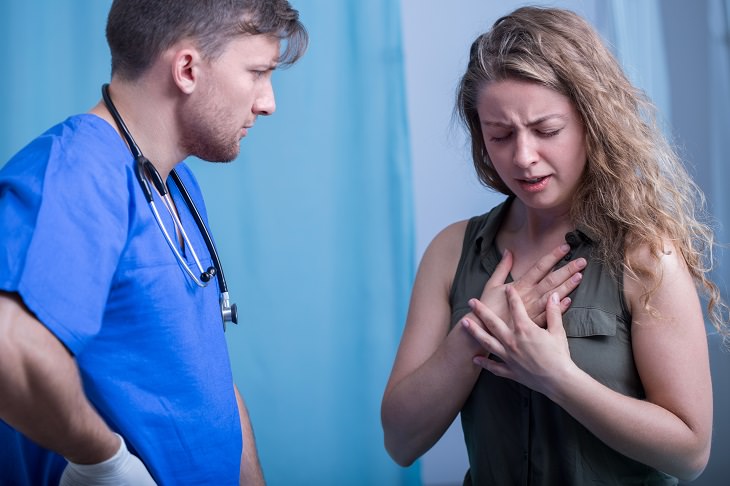
Sandhya Balaram, MD, associate professor or cardiovascular surgery at Icahn School of Medicine at Mount Sinai in New York City, says that “the heart changes shape to become more round and spherical and bigger than its normal size. If the heart muscle is failing and not working well, it’s the result of other problems in the heart causing it to become weak.”
 
While some people are born with genetic diseases that trigger this condition, it’s rare, says Dr. Balaram. Heart disease is the much more common reason for it – this could be due to blocked heart arteries, high blood pressure that has been left untreated, or long-term alcohol abuse. 
 
Since an enlarged heart is a serious issue, patients will have symptoms well in advance. The most common signs are fatigue, shortness of breath, and swelling of the abdomen or legs due to fluid retention. 

Breathing issues might be particularly noticeable at night when you’re laying down. This is because the heart is struggling to pump well so fluid starts to back up into the lungs, making it harder to breathe. “The heart and lungs are closely related, they’re married, so when the heart has trouble then the lungs have trouble too,” Dr. Balaram says. 
 
Other signs that indicate that something isn’t right include, weight gain without a change in diet or exercise, coughing, chest pain, fainting, or dizziness. 
 
There are different degrees of symptoms, depending on the person, but shortness of breath and fluid retention are the most common. These typically come out of nowhere and persist. 
 
Once an enlarged heart is detected, there’s treatment to relieve the symptoms and help the heart pump better, but there’s no fix. “Medical treatment doesn’t make the heart stronger, it just helps the heart work a little better,” says Dr. Balaram. 
 
Some doctors might recommend surgery to treat the underlying cause of the enlarged heart – such as clogged arteries or a valve problem – and the last resort is a heart transplant. “Usually, it’s just controlling the symptoms and seeing how the muscle does over a period of time,” says Dr. Balaram. “We keep up with the patient in terms of how it looks, and then plan further treatment from there."


This is only for your information, kindly take the advice of your doctor for medicines, exercises and so on.   

https://gscrochetdesigns.blogspot.com. one can see my crochet creations  
https://gseasyrecipes.blogspot.com. feel free to view for easy, simple and healthy recipes    
https://kneereplacement-stickclub.blogspot.com. for info on knee replacement


Labels: , , , , , ,

Tuesday, September 30, 2014

Olive oil may revive a failing heart


A potent ingredient in olive oil may hold the key to beating heart failure, a new research suggests.
Oleate, a common dietary fat found in olive oil, restored proper metabolism of fuel in heart cells in an animal model of heart failure, researchers have found.

Heart failure is not the same as having a heart attack — it is a chronic disease state where the heart becomes enlarged, or hypertrophic, in response to chronic high blood pressure which requires it to work harder to pump blood.

As the heart walls grow thick, the volume of blood pumped out diminishes and can no longer supply the body with enough nutrients.

Failing hearts are also unable to properly process or store the fats they use for fuel, which are contained within tiny droplets called lipid bodies in heart muscle cells.

The inability to use fats, the heart's primary fuel source, causes the muscle to become starved for energy.

Fats failing hearts manage to break down into toxic intermediary by-products that further contribute to heart disease, researchers said.

The researchers at University of Illinois at Chicago College of Medicine looked at how healthy and failing hearts beating in rats reacted to being supplied with either oleate or palmitate, a fat associated with the Western diet and found in dairy products, animal fats and palm oil.

When the researchers perfused failing rat hearts with oleate, "we saw an immediate improvement in how the hearts contracted and pumped blood," said E Douglas Lewandowski, director of the UIC Center for Cardiovascular Research and senior and corresponding author on the study.

Lewandowski and colleagues tracked the location of fat molecules in the cells of the diseased hearts by tagging them with a nonradioactive heavy isotope of carbon, which is detected using magnetic resonance spectroscopy.

This technology allows researchers to watch biochemical reactions, like metabolism, as they occur in real-time in functioning organs.

Using this technique, Lewandowski noticed that the metabolism of fats within the cardiac cells of these hearts became normalised.

In contrast, when the researchers perfused the diseased hearts with palmitate, fat metabolism was imbalanced, and cells struggled to access fuel.

There was also a rise in toxic fatty byproducts — another consequence of dysregulated or impaired fat metabolism.

In addition to balancing fat metabolism and reducing toxic fat metabolites in hypertrophic hearts, Lewandowski said, oleate also increased the activation of several genes for enzymes that
metabolise fat.

"This gives more proof to the idea that consuming healthy fats like oleate can have a significantly positive effect on cardiac health," Lewandowski said.

The findings were published in the journal Circulation.


Labels: , , , , , , ,

Monday, March 26, 2012

Sudden death


Sudden death

This phenomenon of a healthy heart ceasing to beat, often at a time when it is stretched to its limits, is hardly an affliction limited to sports, though it does tend to affect fit people more often than those who are unfit, possible because fitter people are more likely to push their heart to the limit. This may cause an existing heart condition to suddenly turn fatal.

There are certain warning signs which if taken seriously can prevent a heart condition from becoming fatal. Any sudden fainting episode should be taken seriously. If such an episode happens while exercising, it is even more significant. If the heart seems to skip a beat once in a while, that is a warning, as is a family history of any person below 30 years dying in similar circumstances. Deafness is associated with the same gene as sudden death, so that is another red flag.

Common causes of SCD(sudden cardiac death) include malfunctioning of the heart’s electrical circuit ( which provides it the stimulus to keep beating, or if the heart muscle which may, due to some inherent deficiencies- some of them congenital- not be able to translate that impulse into action. In simpler words, it is a condition triggered by a disruption in normal beating of the heart called arrhythmia. This condition is believed to claim some 4,000 younger lives around the world every year.

The lack of awareness also means that a potential patient is rarely ever picked up until t is too late.
Medical discourse on heart is disproportionately loaded in favor of coronary artery disease ( CAD), SCD &  its causes like long/short QT syndrome. Though not very rare, problems kike Brugada syndrome, dilated cardiomyopathy & Wolff Parkinson White Syndrome, are hardly ever talked about.

Dilated cardiomyopathy is a condition in which the heart becomes weak & enlarged & hence cannot pump blood properly. This is often caused by common a viral infection which means that working out while suffering from fly can result in far greater complications than resting for a few more days.

Another condition usually associated with athletes, called athletic heart syndrome, can predispose a person to sudden cardiac arrest. It can occur in any individual doing more than 5 hours of aerobic exercise per week or can even occur in people who do extensive weight training. The heart is enlarged & resting pulse rate is lower. In extreme cases, the amount of enlargement can actually reduce the heart’s pumping capacity. Even in moderate cases, the condition may bias the outcome of an ECG & thus prevent an existing heart condition from being picked up.

Screening with an ECG & an echo cardiography most often remains the only way of identifying patients. Anybody with a family history should undergo screening. Defibrillators should be made available in prominent public places & people should be trained in resuscitation.


Labels: , , , , , , ,