Thursday, January 28, 2021

What’s the Meaning of Net Carbs and How to Count Them

You may have heard the term ‘net carbs’, or noticed it on food labels. If you’re not sure what they are and how net carbs differ from other types of carbs, we are here to clear it up for you. Firstly, it is important to note that the term ‘net carbs’ isn't officially recognized or agreed upon by nutrition experts. Moreover, calculating how many net carbs your body absorbs can be a confusing task.

However, knowing the science behind net carbs and being aware of how your body processes different kinds of carbs can help you keep your blood sugar in check, promotes weight loss, and makes achieving other health goals much easier. This article will explain what net carbs are and how they influence your health. We also discuss the pros and cons of counting net carbs. 
 
The role of carbohydrates 
To understand net carbs, it’s important to know the basic functions of carbohydrates first. They are the body’s main source of energy. "Carbohydrates are macronutrients, meaning they are one of the three main ways the body obtains energy or calories," explains Paige Smathers, a registered dietitian. 
 
There are three macronutrients: carbohydrates, proteins, and fats. Macronutrients are essential for the body, and we require large amounts of them. All macronutrients must be obtained through food, as the body cannot produce them on its own.
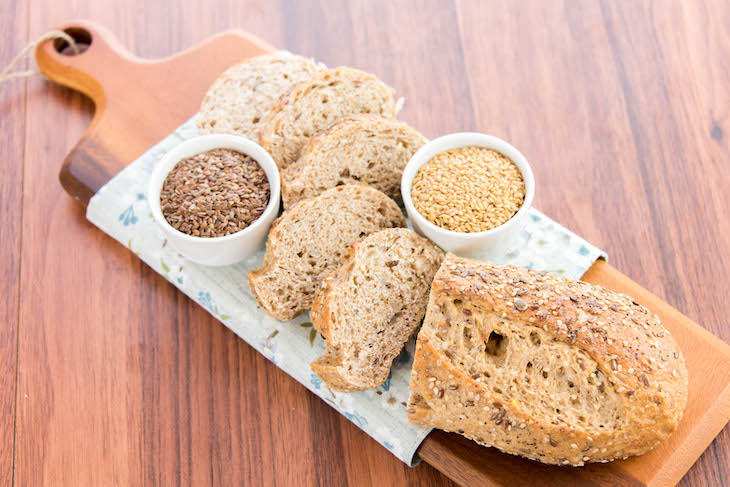
The Benefit of Counting Net Carbs & How To Do It, whole grain bread
As we mentioned, carbohydrates are the body’s preferred source of energy. Protein is used to build muscle tissue, and makeup enzymes while fat is utilized for cell growth and energy storage. By eating carbohydrates, we save other macronutrients, and this way proteins and fats can be used for their primary purpose. 
 
Not all carbohydrates are equal 
 
Carbohydrates fall into three categories: starches, sugar, and fiber. Dietary fiber comes from fruits, vegetables, and grains. Fiber is known for its many health benefits, but it cannot be fully digested by the human body. As for sugar, there are naturally-occurring sugars in fruit and milk, as well as added sugar found in processed foods. 
 
Carbohydrates can also be divided into simple and complex. Simple carbohydrates are easily absorbed by the body, and they tend to taste sweeter than their complex counterparts. Fruits, for example, contain a lot of simple carbohydrates, hence their sweet taste. The same is true for honey. 
 
Foods that contain complex carbohydrates, on the other hand, tend to have more fiber. Examples of such foods are potatoes, rice, wheat, squash, and beans.

What are net carbs? 
Now that you have a general idea of the role of carbohydrates and their different types, net carbs are easier to define. Net carbs are the actual amount of carbohydrates that your body digests and absorbs from food. They are also sometimes referred to as digestible- or impact carbs. 
 
When you eat carb-rich food, most of the carbs are broken down into individual sugar units with the help of the enzymes produced in your small intestine. Some carbs, however, cannot be broken down into individual sugars, and others can be broken down or absorbed only partially, like fiber and sugar alcohol. 
 
Therefore, to calculate the net carbs you consumed, you can subtract the fiber and sugar alcohol from the total carbohydrates listed on a food label. In whole foods, you would calculate the net carbs by subtracting the fiber from the total amount of carbohydrates.​

The pros and cons of counting net carbs 
The main advantage of the practice of counting net carbs is that it can promote a higher fiber intake and helps pinpoint a food’s true impact on your blood sugar. Unlike other types of carbs, fiber doesn’t raise your blood sugar much at all. In fact, it slows down the rate of glucose entering the bloodstream. If we eat food that contains a low amount of fiber, that food will be broken down and absorbed more quickly than a high-fiber food, leading to a spike in blood glucose. Following your net-carb intake leads to an awareness of how much fiber you consume, and thus, it decreases one's blood sugar.

The reason why some nutritionists are against the practice of counting net-carbs is that it's just impossible to get it 100% right. Net carbs are not listed on the Nutrition Facts label, which is regulated by the Food and Drug Administration and found on most foods and beverages. Because they are not standardized, there are simply too many variables that can skew the numbers. 
 
The bottom line is that counting net-carbs can prove beneficial for some, and inconvenient for others. If this practice helps you eat a more fiber-rich diet and manage your blood sugar, that is great. At the end of the day, your health is the top priority.

This is only for your information, kindly take the advice of your doctor for medicines, exercises and so on.     

https://gscrochetdesigns.blogspot.com. one can see my crochet creations  
https://gseasyrecipes.blogspot.com. feel free to view for easy, simple and healthy recipes    
https://kneereplacement-stickclub.blogspot.com. for info on knee replacement

Labels: , , , , , ,

Sunday, December 02, 2018

49 Phrases to Calm an Anxious Child

Children get anxiety for small things, like meeting strangers, going to a new place, going to school in the beginning and so on. As parents, we would like to shield our children from life’s anxious moments, but navigating anxiety is an essential life skill that will serve them in the years to come. In the heat of the moment, try these simple phrases to help your children identify, accept, and work through their anxious moments.
1. “Can you draw it?”
Drawing, painting or doodling about an anxiety provides kids with an outlet for their feelings when they can’t use their words.
2.  “I love you. You are safe.”
Being told that you will be kept safe by the person you love the most is a powerful affirmation. Remember, anxiety makes your children feel as if their minds and bodies are in danger. Repeating they are safe can soothe the nervous system.
3. “Let’s pretend we’re blowing up a giant balloon. We’ll take a deep breath and blow it up to the count of 5.”
If you tell a child to take a deep breath in the middle of a panic attack, chances are you’ll hear, “I CAN’T!” Instead, make it a game. Pretend to blow up a balloon, making funny noises in the process. Taking three deep breaths and blowing them out will actually reverse the stress response in the body and may even get you a few giggles in the process.
4. “I will say something and I want you to say it exactly as I do: ‘I can do this.’” Do this 10 times at variable volume.
Marathon runners use this trick all of the time to get past “the wall.”
5. “Why do you think that is?”
This is especially helpful for older kids who can better articulate the “Why” in what they are feeling.
6. “What will happen next?”
If your children are anxious about an event, help them think through the event and identify what will come after it. Anxiety causes myopic vision, which makes life after the event seem to disappear.
7. “We are an unstoppable team.”
Separation is a powerful anxiety trigger for young children. Reassure them that you will work together, even if they can’t see you.
8. Have a battle cry: “I am a warrior!”; “I am unstoppable!”; or “Look out World, here I come!”
There is a reason why movies show people yelling before they go into battle. The physical act of yelling replaces fear with endorphins. It can also be fun.
9. “If how you feel was a monster, what would it look like?”
Giving anxiety a characterization means you take a confusing feeling and make it concrete and palpable. Once kids have a worry character, they can talk to their worry.
10. “I can’t wait until _____.”
Excitement about a future moment is contagious.
11.  “Let’s put your worry on the shelf while we _____ (listen to your favorite song, run around the block, read this story). Then we’ll pick it back up again.”
Those who are anxiety-prone often feel as though they have to carry their anxiety until whatever they are anxious about is over. This is especially difficult when your children are anxious about something they cannot change in the future. Setting it aside to do something fun can help put their worries into perspective.
12.  “This feeling will go away. Let’s get comfortable until it does.”
The act of getting comfortable calms the mind as well as the body. Weightier blankets have even been shown to reduce anxiety by increasing mild physical stimuli.
13. “Let’s learn more about it.”
Let your children explore their fears by asking as many questions as they need. After all, knowledge is power.
14. “Let’s count _____.”
This distraction technique requires no advance preparation. Counting the number of people wearing boots, the number of watches, the number of kids, or the number of hats in the room requires observation and thought, both of which detract from the anxiety your child is feeling.
15. “I need you to tell me when 2 minutes have gone by.”
Time is a powerful tool when children are anxious. By watching a clock or a watch for movement, a child has a focus point other than what is happening.
16. “Close your eyes. Picture this…”
Visualization is a powerful technique used to ease pain and anxiety. Guide your child through imagining a safe, warm, happy place where they feel comfortable. If they are listening intently, the physical symptoms of anxiety will dissipate.
17. “I get scared/nervous/anxious sometimes too. It’s no fun.”
Empathy wins in many, many situations. It may even strike up a conversation with your older child about how you overcame anxiety.
18. “Let’s pull out our calm-down checklist.”
Anxiety can hijack the logical brain; carry a checklist with coping skills your child has practiced. When the need presents itself, operate off of this checklist.
19. “You are not alone in how you feel.”
Pointing out all of the people who may share their fears and anxieties helps your child understand that overcoming anxiety is universal.
20. “Tell me the worst thing that could possibly happen.”
Once you’ve imagined the worst possible outcome of the worry, talk about the likelihood of that worst possible situation happening. Next, ask your child about the best possible outcome. Finally, ask them about the most likely outcome. The goal of this exercise is to help a child think more accurately during their anxious experience.
21. “Worrying is helpful, sometimes.”
This seems completely counter-intuitive to tell a child that is already anxious, but pointing out why anxiety is helpful reassures your children that there isn’t something wrong with them.
22. “What does your thought bubble say?”
If your children read comics, they are familiar with thought bubbles and how they move the story along. By talking about their thoughts as third-party observers, they can gain perspective on them.
23. “Let’s find some evidence.”
Collecting evidence to support or refute your child’s reasons for anxiety helps your children see if their worries are based on fact.
24. “Let’s have a debate.”
Older children especially love this exercise because they have permission to debate their parent. Have a point, counter-point style debate about the reasons for their anxiety. You may learn a lot about their reasoning in the process.
25. “What is the first piece we need to worry about?”
Anxiety often makes mountains out of molehills. One of the most important strategies for overcoming anxiety is to break the mountain back down into manageable chunks. In doing this, we realize the entire experience isn’t causing anxiety, just one or two parts.
26. “Let’s list all of the people you love.”
Anais Nin is credited with the quote, “Anxiety is love’s greatest killer.” If that statement is true, then love is anxiety’s greatest killer as well. By recalling all of the people that your child loves and why, love will replace anxiety.
27. “Remember when…”
Competence breeds confidence. Confidence quells anxiety. Helping your children recall a time when they overcame anxiety gives them feelings of competence and thereby confidence in their abilities.
28. “I am proud of you already.”
Knowing you are pleased with their efforts, regardless of the outcome, alleviates the need to do something perfectly – a source of stress for a lot of kids.
29. “We’re going for a walk.”
Exercise relieves anxiety for up to several hours as it burns excess energy, loosens tense muscles and boosts mood. If your children can’t take a walk right now, have them run in place, bounce on a yoga ball, jump rope or stretch.
30. “Let’s watch your thought pass by.”
Ask your children to pretend the anxious thought is a train that has stopped at the station above their head. In a few minutes, like all trains, the thought will move on to its next destination.
31. “I’m taking a deep breath.”
Model a calming strategy and encourage your child to mirror you. If your children allow you, hold them to your chest so they can feel your rhythmic breathing and regulate theirs.
32. “How can I help?”
Let your children guide the situation and tell you what calming strategy or tool they prefer in this situation.
33. “This feeling will pass.”
Often, children will feel like their anxiety is never-ending. Instead of shutting down, avoiding, or squashing the worry, remind them that relief is on the way.
34. “Let’s squeeze this stress ball together.”
When your children direct their anxiety to a stress ball, they feel emotional relief. Buy a ball, keep a handful of play dough nearby or make your own homemade stress ball by filling a balloon with flour or rice.
35. “I see Widdle is worried again. Let’s teach Widdle not to worry.”
Create a character to represent the worry, such as Widdle the Worrier. Tell your child that Widdle is worried and you need to teach him some coping skills.
36. “I know this is hard.”
Acknowledge that the situation is difficult. Your validation shows your children that you respect them.
37. “I have your smell buddy right here.”
A smell buddy, fragrance necklace or diffuser can calm anxiety, especially when you fill it with lavender, sage, chamomile, sandalwood or jasmine.
38. “Tell me about it.”
Without interrupting, listen to your children talk about what’s bothering them. Talking it out can give your children time to process their thoughts and come up with a solution that works for them.
39. “You are so brave!”
Affirm your children’s ability to handle the situation, and you empower them to succeed this time.
40. “Which calming strategy do you want to use right now?”
Because each anxious situation is different, give your children the opportunity to choose the calming strategy they want to use.
41. “We’ll get through this together.”
Supporting your children with your presence and commitment can empower them to persevere until the scary situation is over.
42. “What else do you know about (scary thing)?”
When your children face a consistent anxiety, research it when they are calm. Read books about the scary thing and learn as much as possible about it. When the anxiety surfaces again, ask your children to recall what they’ve learned. This step removes power from the scary thing and empowers your child.
43. “Let’s go to your happy place.”
Visualization is an effective tool against anxiety. When your children are calm, practice this calming strategy until they are able to use it successfully during anxious moments.
44. “What do you need from me?”
Ask your children to tell you what they need. It could be a hug, space or a solution.
45. “If you gave your­­ feeling a color, what would it be?”
Asking another person to identify what they’re feeling in the midst of anxiety is nearly impossible. But asking your children to give how they feel with a color, gives them a chance to think about how they feel relative to something simple. Follow up by asking why their feeling is that color.
46. “Let me hold you.”
Give your children a front hug, a hug from behind, or let them sit on your lap. The physical contact provides a chance for your child to relax and feel safe.
47. “Remember when you made it through XYZ?”
Reminding your child of a past success will encourage them to persevere in this situation.
48. “Help me move this wall.”
Hard work, like pushing on a wall, relieves tension and emotions. Resistance bands also work.
49. “Let’s write a new story.”
Your children have written a story in their mind about how the future is going to turn out. This future makes them feel anxious. Accept their story and then ask them to come up with a few more plot lines where the story’s ending is different.

THIS IS ONLY FOR INFORMATION, ALWAYS CONSULT YOU PHYSICIAN BEFORE HAVING ANY PARTICULAR FOOD/ MEDICATION/EXERCISE/OTHER REMEDIES.                                                                                                                                                                                                                                                                                        PS- THOSE INTERESTED IN RECIPES ARE FREE TO  VIEW MY BLOG-                                                                                           https://gseasyrecipes.blogspot.com/                                                                                                                                                                             FOR INFO ABOUT KNEE REPLACEMENT, YOU CAN VIEW MY BLOG-                                                                                                                             https:// kneereplacement-stickclub.blogspot.com/                                                                                       FOR CROCHET DESIGNS                                                                                                                                                                                                                                 https://gscrochetdesigns.blogspot.com

Labels: , , , , , , , , , , ,