Saturday, January 01, 2022

The Path to Waking Up Feeling Great

Our mornings often set the tone for the day - Especially the way we start them. Sometimes we're sleepy, other times cranky. Sometimes we wonder if we have the energy to get through the day, or have so much it is impossible to sleep well. So let me give you 14 tips that may change your day for the better, starting from the time you wake up.

1. Don't sleep in.  
Choosing and maintaining a wake-up time is one of the best things you can do for your sleep cycle. Having a fixed wake-up time will set your circadian rhythm (your body's sleep/wake schedule) and bring about a good feeling when waking up. If you sleep past that point, you'll feel a bit 'jet-lagged' - sleepy even though you slept more than before. 
 
2. Consistency, Consistency and... Consistency.  
No less important than when you wake up is when you go to sleep. If you go to sleep at more or less the same time every day, say 11pm, and then suddenly you go to sleep at 2am, you won't sleep well and you will feel a lot more tired. The body craves habit and routine.
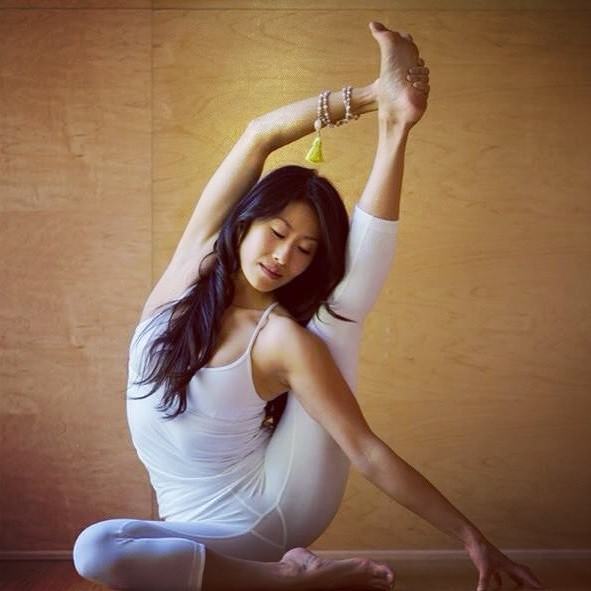
3. Meditate a bit before bed  
Just 20-30 minutes of meditation can wash away all the stress of a long, hard day. Forgetting your trouble and focusing on your well-being will rejuvenate your sleep and will help prevent bad dreams and stressful sleeping. 
 
4. Make preparations to sleep.  
This may sound weird but one reason we stay up at night is that the switch was too sudden from being fully awake to trying and fall asleep. If you want to fall asleep easily, spend the hour before bed getting slowly ready. Turn your phone off, brush your teeth, read a chapter from a book, and in the name of all that is holy - turn off the tv! 
 
5. Cut out all background noise 
According to the New Scientist Magazine, background noise such as from the television and outside is taking years off our lives. Take control of the noise level in your home. Turn off the television and any other sound-making device. 
 
6. Find the right room temperature for you  
Being too hot causes night sweats, bad dreams and restless sleeping, if you manage to fall asleep at all. Being too cold causes many awakenings during the night, even if you don't remember them. Find the right temperature for you that feels good when you are trying to fall asleep.

7. Don't eat right before bed  
Your body needs time to digest the food you just ate. So eating right before bed can cause stomach issues and a pressure on your bowels that may keep you from sliding into deep sleep, where you recharge your batteries. 
 
8. Give Yoga 5 minutes of your time in the morning 
 yoga
Yoga can do wonders. It is known to reduce blood pressure, decrease inflammation and release tensed up muscles and joints. What a better way to start your day!

9. Invest in the right pillow 
Few investments are as worth it as investing in the right pillow. You can follow the rest of the 13 points and still not get enough sleep because your pillow doesn't support your spine, moves it out of line and causes neck and cervical pain. 
 
10. Mellow out your alarm clock 
Besides having a loud, annoying alarm wake you up in the morning, studies performed by the University of Pennsylvania, show that sleep inertia feels much worse when we are woken up abruptly. Pick a softer alarm clock or one that starts with a weak alarm and then goes louder and louder, allowing you to turn it off before it gets to the really annoying volumes. 
 
11. Drink a whole glass of water before eating breakfast 
It's only a glass of water, but it kick jumps your metabolism for the day, while refreshing you and waking you up. 
 
12. Leave the blinds/window open 
Our body is configured to perk up with the sun. Even when your eyes are still closed, the light coming into the room will signal your body that it is time to wake up and do things.

13. Cut down on coffee consumption  
Many of us drink coffee every morning. However, drinking every morning will get your body hooked on the caffeine, requiring more and more to get the same effect and making you feel miserable when you wake up. In addition, the sudden boost the coffee gives will run out around mid-day, leaving you sleepy and annoyed. 
 
14. A stretch and a jog  
So yoga is great, but you may not be into that. That's ok, but at least do a little warm up for your body, get out the kinks and loosen up muscles. You'll feel a lot more comfortable during the day.

This is only for your information, kindly take the advice of your doctor for medicines, exercises and so on.   

https://gscrochetdesigns.blogspot.com. one can see my crochet creations  
https://gseasyrecipes.blogspot.com. feel free to view for easy, simple and healthy recipes    
https://kneereplacement-stickclub.blogspot.com. for info on knee replacement


Labels: , , , , , , , , , , ,

Friday, September 06, 2019

Study Finds There’s No Age Limit to Start Strength Building Exercises

There’s a persistent misconception that muscle and strength building is dangerous or simply ineffective for older adults. Busting this myth is a new study, which found that the ability to build muscle isn't lowered due to lack of experience, so even if you start exercising in your 60’s or 70’s, you can build up muscle mass as effectively as an experienced athlete. Here is what the study found and how to start your exercise regimen in your golden years.

Muscle Building Exercise is Equally Effective for Senior Beginners and Master Athletes

Building muscle strength is a tedious task at any age, but the benefits by far outweigh the costs, like frailty, muscle weakness and an unsupported skeletal system can all be dealt with just through a few hours of regular weekly training. Though young individuals are at an advantage compared to older adults when it comes to exercise intensity and muscle building, another factor, experience, doesn’t seem to make you get stronger faster, the new study shows.
The research team compared athletes with 20+ years of experience in sports to a group of beginners of a similar age and found that both groups have built muscles identically well. The average age of the experienced athletes was 68 years, whereas the beginners averaged at 73 years.
Of course, the researchers exposed both groups to an identical diet and exercise routine to avoid possible confounds and measured each participant’s muscle-building progress by conducting regular biopsies every 48 hours that showed how much protein buildup was created in the muscle tissue. The researchers found no difference in protein synthesis between the two groups, concluding that novice athletes built muscle strength equally as well as the pros.
Needless to say, regular exercising starting from a younger age provides additional health benefits and is a preventative method for many health conditions, but in general, the study proves that ‘better late than never’ is the motto to follow when it comes to exercise.

Should Seniors Approach Exercise Differently to Youngsters?

Starting an exercise routine for the first time is a difficult endeavor no matter your age, but the possibility of pre-existing conditions, more common among seniors than young adults, further complicates this task. On average, the starting point for older individuals is a lower intensity exercise, and some pre-existing conditions may require further accommodations to your training regimen, so it’s best to start under the supervision of a trainer, doctor, or both.
The complexity of the workout is also an important factor, and it’s best to start slow and simple so as not to overwhelm your body and mind, and stay motivated and inspired before each workout.
The third and last, but still very important factor to consider is consistency. Training consistently is more important than going to the gym for an hour or more, and so shorter, but more regular training sessions will benefit seniors more than demanding long training routines.
this is only for your information, kindly take the advice of your doctor for medicines, exercises and so on.   
https://gscrochetdesigns.blogspot.com. one can see my crochet creations 
https://gseasyrecipes.blogspot.com. feel free to view for easy, simple and healthy recipes    
https://kneereplacement-stickclub.blogspot.com. for info on knee replacement


Labels: , , , , , , ,

Wednesday, April 10, 2019

Music therapy can ease anxiety disorders, and speeds up recovery too

A nine-year old, who had never spoken a word all his life, spoke for the first time during a music session. His first word was ' open'. Diagnosed with autism, the boy had been non-verbal until then. The development came as a pleasant surprise to India's only CBMT- Certification Board for Music Therapists, and neurologic music therapist, when she was an intern at that time.

With that boy, my supervisor and I had developed a song where he would knock on the drum when we prompted him to. I was leading the session and began the song. When I got to the part about knocking, the song went, ' Who's that knocking on the door?' and instead of just knocking on the drum, he looked straight at me and said the word ' open'. That was the first time he had ever said a word and it was a huge moment for me, my supervisor, his teacher as well as his family. And this word came after months of music therapy the therapist said.


With music therapy, consistency, patience and practice are key according to her.


A clinical psychologist said music is an expressive therapeutic tool that helps people improve their physical and mental health- it relaxes the mind and has a functional effect on the brain.


The therapeutic role of music has been recognised since ancient times, through texts such as Raga Chikitsa, and has the support of current research as well, which talks about the psychological benefits of music for relaxation and stress management, the application of music to improve memory and attention, as well as music-induced long-term changes in the behaviour of depressed elderly people, she said.


Music therapy , as a model, was initially designed for psychiatric patients to help them channel their pent-up and conflicting emotions. But with some modifications, it is now also used to address anxiety, sleep disturbance, and improve one's ability to identify and communicate needs, thoughts and feelings in a productive manner, she said.


A neurology consultant said there's evidence that music has a calming influence on the body and mind, as it produces endorphins- natural painkillers usually produced during a happy state of mind- thus lowering stress and anxiety, and promoting relaxation by reducing muscle tension. Young people with anxiety issues can focus better, avoid distraction and negative thoughts and increase productivity, the Dr. said.


Music therapy is an intersection between psychology, neuroscience and music to observe how music affects the brain and how various tools in music, such as rhythm, pitch, melody and timbre can be used to address clients' challenges, the Dr. said.


Music is known to speed up recovery too. Music therapy promotes consciousness among patients in a coma, especially after a head injury or during metabolic coma. Listening to their favourite music helps in recovering from memory lapses faster and more effectively, even among patients with early memory loss, he said.


Education vs Therapy
The end goal of music therapy is nonmusical one, whereas in music education, the end goal is amusical one, he said. For examole, if I'm working on playing the piano with a client who has come to me for music therapy with the challenge of fine motor skills, then my end goal for using the piano in the session is for the client to work on their fine motor skills of using their finger. However, if I were teaching someone how to play the piano, the end goal would be for them to learn and reproduce whatever we did on the piano, so the end goal here is a music skill, the Dr. said.


Who is it for?
The Dr. has suggested music therapy to many of her clients, especially people with anxiety disorders. Many of them have said that it hs helped them calm down. I often use music while doing relaxation training or visual imagery for anxiety, stress and anger issues, she said.


There is no age limit in terms of the benefit that one can ger. The youngest client that she has worked with was 2 and the oldest 97 !. She has worked with children and adults on the autism spectrum, traumatic brain injuries, stroke, cerebral palsy, learning difficulties, intellectual and cognitive challenges. Down syndrome, Alzheimer's, dementia, Parkinson's and an entire range of mental health disorders, including schizophernia, depression, personality disorders and anxiety disorders, she said.


What's special about it
Music is one of the few activities that engage both the right and the left hemispheres of the brain. So, when you actively participate in music by singing or playing an instrument, multiple areas of your brain are working. Our brains have the ability to create new neural pathways to relearn skills like speech, cognitive abilities and physical abilities. So, music is an integral part of getting the brain to create these connections and strengthen them, she said. While music therapy has a lot of benefits, it must be stressed that it is most effective when used along with psychotherapy and or medical treatment, the Dr. added.


Neuro atypical children don't talk to you or play with you in a typical way- they've their own ways of connecting, which we struggle to understand. And that's where music therapy helps- it becomes, a language through which 2 people can connect. For example, for any 2 people to have a conversation, they should both understand the  same language- here, that language is music. A soulful conversation makes us feel good- music therapy does that for my daughter,  a lady said.


Once the therapist has figured out what works for the girl on that particular day, depending on variables like mood, the therapist introduces emotion verbs or explains simple process like how to have a bath through a song, which the girl tends to remember better than regular instructions, because by nature, she has a good ear for music and has learnt to play musical instruments like the keyboard herself with no formal teaching. Among children with special needs, especially autism, there is concern about joint attention, turn-taking, maintaining eye contact- when the therapist and my daughter play a piece together for 5 minutes, joint attention is addressed, when the therapist plays a part of the tune and the child plays the rest, before asking the therapist to continue, the issue of turn-taking is subtly addressed. Once the child achieves these in a space where she feels safe, we can slowly start  exploring then in other areas, such as in a classroom. Just knowing that your child is capable of doing any of these things is huge in itself.


THIS IS ONLY FOR INFORMATION, ALWAYS CONSULT YOU PHYSICIAN BEFORE HAVING ANY PARTICULAR FOOD/ MEDICATION/EXERCISE/OTHER REMEDIES.                                    PS- THOSE INTERESTED IN RECIPES ARE FREE TO  VIEW MY BLOG-                                                                                           https://gseasyrecipes.blogspot.com/     
                                                                                                                                                    FOR INFO ABOUT KNEE REPLACEMENT, YOU CAN VIEW MY BLOG-                                                  https:// kneereplacement-stickclub.blogspot.com/  
         
                   FOR CROCHET DESIGNS                                                                                                                                                                                                  https://gscrochetdesigns.blogspot.com
A nine-year-old, who’d never uttered a word all his life, spoke for the first time during a music session. His first word was “open”. Diagnosed with autism, the boy had been non-verbal until then. The development came as a pleasant surprise to Purvaa Sampath—currently India’s only CBMT (Certification Board for Music Therapists)-certified music therapist and neurologic music therapistwho was an intern at the time.

A nine-year-old, who’d never uttered a word all his life, spoke for the first time during a music session. His first word was “open”. Diagnosed with autism, the boy had been non-verbal until then. The development came as a pleasant surprise to Purvaa Sampath—currently India’s only CBMT (Certification Board for Music Therapists)-certified music therapist and neurologic music therapistwho was an intern at the time.

A nine-year-old, who’d never uttered a word all his life, spoke for the first time during a music session. His first word was “open”. Diagnosed with autism, the boy had been non-verbal until then. The development came as a pleasant surprise to Purvaa Sampath—currently India’s only CBMT (Certification Board for Music Therapists)-certified music therapist and neurologic music therapistwho was an intern at the time.

“With that boy, my supervisor and I had developed a song where he would kn ..

Labels: , , , , , , , , , ,