Friday, September 06, 2024

Mindful activities that transforms your wellness and helps you live longer

One of the secrets of a long life that many centenarians have shared is leading a stress-free, happy and purposeful life. Instead of sleepwalking through your life, being mindful of life’s pursuits, and allocating some time for personal well-being can go a long way in boosting longevity. Even a few minutes of mindfulness can be beneficial for cognitive health and bring about positive psychological changes.

While stress has become a part and parcel of life, managing it could be easier when you are more mindful. In a study, psychology researchers found that people who received MBCT ( Mindfulness0based Cognitive therapy) were less likely to react with negative thoughts or unhelpful emotional reactions in times of stress.

 Here are mindful habits that can transform your wellness and help you live longer-

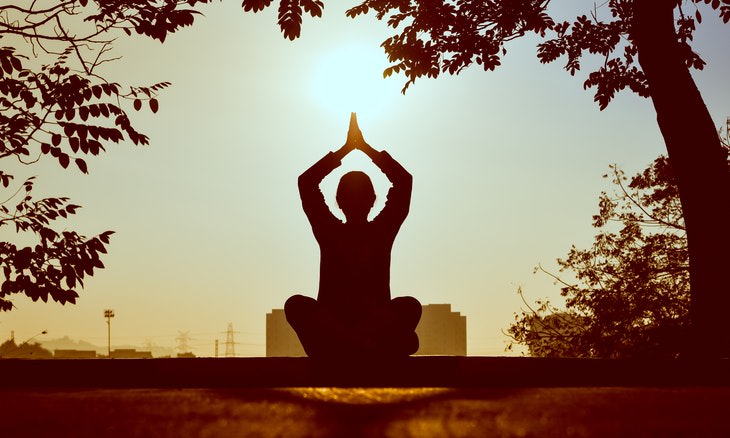
Meditation

One of the oldest mindfulness practices  followed by saints and sages of India is meditation. By focusing attention on your inner world, and disconnecting from the external world for a while, a sense of calm and peace is achieved. In this state fighting anxiety and stress becomes easier, which has a positive effect even on your physical health. People who meditate regularly live a longer life. According to a study, meditation has potentially beneficial effects on the plasma telomerase level which is linked to longevity and delaying cellular ageing.


Mindful eating

A toxic relationship with food can be detrimental to your health as it can lead to emotional eating, eating to satisfy your taste buds or mindless eating. Building a positive relationship with food means observing whether or not you are hungry, and enjoying every morsel of your food. Mindful eating is all about paying complete attention to your meal and savouring it with every bite. Enjoying the aroma of a freshly prepared meal and relishing it, while understanding body cues on when to stop, is something mindful eaters do. Such kind of eating is associated with good digestion, satiety, weight loss and relaxation.


Flow

Being in a flow can be immensely rewarding and enhance your well-being. Flow happens when you are completely focused on a task or a chore, lose the sense of self and time, and find activities intrinsically rewarding. In his book Flow, psychologist Mihaly Csikszentmihalyi describes “ flow as the state in which people are so involved in an activity that nothing else seems to matter; the experience itself is so enjoyable that people will do it even at great cost, for the sheer sake of doing it”. Being in ‘Flow’ can be extremely rewarding and make you happier and more satisfied person. It can reduce stress, help in emotional regulation and keep you self-motivated.


Slow walking

Slow walking is what it sounds like. Walking at a sluggish pace with complete focus in your every step is slow walking. This mindfulness way of walking is becoming popular as it is not only good for your joints, but also helps you connect with your inner world by promoting calmness and connection. While walking, pay attention to how your leg lifts and touches the ground and how your arms move. The practice is said to reduce anxiety and depression, and helps you connect with the present moment.


Body scan

Sleeping mindfully is as important as living mindfully, as drifting off to sleep with a tired body but a restless mind can will carry forward your daily stress to your sleep too, which means the deep sleep that’s considered restorative may evade you. In body scan meditation, you focus attention on every part of your body, which helps release the hidden stress and allows you to slip into a deeper and more restful sleep. Sleeping well is associated with increased longevity as it can help chronic diseases at bay and boost your overall well-being.

If there is any antidote to stress, it’s mindfulness, as it connects us to the internal as well as external world, and soothes the mind. Stress is one of the major risk factors of most of the chronic diseases today, including heart disease, hypertension and stroke. Embracing mindfulness can help a person lead a healthier and happier lie.


This is only for your information, kindly take the advice of your doctor for medicines, exercises and so on.   

https://gscrochetdesigns.blogspot.com. one can see my crochet creations  
https://gseasyrecipes.blogspot.com. feel free to view for easy, simple and healthy recipes    
https://kneereplacement-stickclub.blogspot.com. for info on knee replacement
https://cancersupportindia.blogspot.com  for infor on cancer and health related topics
https://GSiyers home remedies.blogspot.com   is the latest addition to my blogs. I'm going to add posts there, do give me your valuable feed back on my blogs. Thanks a lot, take care, be healthy and be happy.


Labels: , , , , , , , , , ,

Monday, February 19, 2024

This Simple 3-Step Method Can Help You Avoid Burnout for Good

 Burnout is on the rise. Defined as “chronic workplace stress that has not been successfully managed,” it was recognised by the World Health Organisation (WHO) as a phenomenon in 2019. During the pandemic, the blurring of work/life boundaries has made burnout even more ubiquitous: a survey from Mental Health UK found 46% of UK workers feel “more prone to extreme levels of stress” compared to the year before.

It can be hard to anticipate when  burnout will strike. People may feel varying levels of stress and tiredness, but when this heightens significantly, we often don’t notice until it’s too late. A long, gradual phenomenon, there are plenty of things you can do to prevent burnout from reaching its most intense point.

One technique recommended by psychologists to manage and prevent burnout is the ‘Three R’ approach. “Burnout happens when our stress response continues for a long period of time, which leads to exhaustion,” explains Dr Audrey Tang, a psychologist, mental health and wellness expert and author of books on mindfulness and resilience. “The three R technique helps you deal with stress responses as they arrive.”

The three Rs used in the method to prevent and deal with burnout are: recognise, reverse and resilience. Each of these three steps can help people deal with different stages of  stress. “Think of your stress response like an elastic band being stretched  – burnout is the band snapping,” Dr Tang says.

“Prevention is really important because we need to build up our emotional strength just as we build up our physical strength,” she continues. “Dealing with emotional issues at the point of crisis is not very effective.”

The three R method can help you deal with each stage of stress, so you can build up a toolkit to deal with burnout long term. Here, Dr Tang breaks down the method simply to help you learn how to use it.

Recognise 

The first step of the three R method is learning to recognise when your body is stressed. “It’s OK to feel a stress response as long as you recognise it,” Dr Tang says. By recognising your stress, you can figure out what’s triggering it and try to deal with that trigger head on.

To help you learn to recognise when you’re stressed, Dr Tang recommends doing regular body scans, either at the beginning or at the end of the day. “

She also suggests doing regular breathing practices to keep track of how you’re feeling and to understand how your breathing is affected when you are stressed. 

Reverse

If you haven’t been able to recognise your stress and deal with it before it becomes an issue, the next step is to try and remove that stress from your life while it’s happening. “Most of us overthink while we’re stressed so trying to stop ourselves from getting carried away with our thoughts is a good way to deal with stress,” Dr Tang says.

“Ask yourself what you can do to stop yourself feeling stressed because taking action will stop your thoughts from spiraling,” she says. “Our brains and our bodies are really adaptive so unless we push them too far, you can always reverse your neuropathways.”

The action you take might be sending an email to the person who is causing you stress or putting a plan in place so you know the thing that is stressing you out won’t be a long-term issue. Figure out what it is that will allow you to calm down and find ways to try and do that, to avoid a prolonged stress response leading to burnout.

“You can’t feel stressed while you feel grateful”

Resilience

According to Dr Tang, resilience to stress is something you should try and build up all the time to prevent burnout. This is particularly important after you’ve dealt with a stressful situation. “Building resilience isn’t about how quickly or easily your stress response is triggered – it’s about how long it takes you to calm down from it,” Dr Tang says.

To help you improve the ways you deal with stress and stop you from reaching the point of burnout, Dr Tang recommends practicing mindfulness techniques, as well as meditation, affirmations and breathing techniques, so you have tools available for the next time you feel stressed.

“It’s also important to stop taking on other people’s stress and try to surround yourself with positive people who make you feel good,” Dr Tang continues. “Try to change your approach to life to one of gratitude and try some gratitude practices. You can’t feel stressed while you feel grateful.”


Labels: , , , , , , , , , ,

Monday, March 22, 2021

Meditation For Beginners: How to Do Body Scan Meditation

The benefits of meditation are widely known by now - better sleep, stress relief, reduced pain, and better overall mental well-being are just a few impressive mentions. As most people know, meditation aims to increase your self-awareness, both physical and mental, to help release any potential tension in the body and mind.

One of the easiest ways to achieve that goal is through a body scan, a meditative technique that teaches you to examine the different sensations you might be experiencing in your body and to mentally let go of those sensations, thereby relieving yourself of the mental burden they impart and alter your perception of pain and tension to provide relief. All this may sound quite complicated, but in reality, the technique itself requires no prior preparation and equipment, and it only takes a few minutes every day. Learn how to do a body scan in this short but information-packed article.
 
Beginner’s Tips  How to Do Body Scan Meditation person in a meditating pose
Before we teach you how to complete a body scan step by step, we wanted to give you several tips that will help you get the most out of a body scan. First of all, the setting - we recommend starting in a quiet and calm place that will be conducive to introspection, but with time, you’ll be able to meditate anywhere, be it your home, nature, workplace, or your daily public transportation commute. 
 
We’d encourage you to meditate every day, as this way, you’ll learn how it works faster, and so, you’ll see the effects sooner. Don’t be discouraged if the first few times you don’t see an immediate effect of the meditation. Like any skill, it takes time to cultivate. Think of meditation as an exercise for your mental self. Just like any exercise, it requires repetition and practice for you to notice any beneficial changes.  
 
Luckily, unlike exercise, people typically start observing the effects of meditation much sooner - in just a few weeks of daily practice, you’ll start experiencing better focus, feeling less stressed, and having a more positive outlook on the events going on in your life.
 
How to Practice Body Scan Meditation  
This meditation practice takes anywhere from 5-15 minutes to a full hour, but the basic steps are the same. Here they are: 
 
1. Get in a comfortable position: e.g. lie down or sit in a stable position, be it on the floor, in a chair, or with your back against the wall. 
 
2. Slowly close your eyes and bring your attention to your breath. Observe how it feels when you breathe in and out, how your chest expands when you fill your lungs with air, and how it tightens when you push the air out of the lungs. 
 
3. Choose a point in your body where you’d like to start. Traditionally, you want to start on the top of the head and move down your whole body, but you can also start from any other body part. Continue to breathe deeply and bring your attention to that spot.
 
4. Check if you feel any tension or pain in the body part you chose. For example, if you choose your head, do you feel that it’s heavy? Does breathing in make you a bit dizzy? Are your facial muscles tense or relaxed? Are you frowning or smiling? Open your mind to any sensations that may come, be they pleasant, painful, or irritating. 
 
5. Gradually shift your attention down, as if you’re meticulously scanning each body part inch by inch. Spend time (20sec - 1minute, on average) to experience the sensations in each body part - e.g. from your head down to your neck, shoulders, etc. 
 
6. If you find a feeling of pain or discomfort at any point of the body scan, notice it, and accept any feelings it may cause without any judgment, frustration, or anger. Allow these feelings to go away on their own, the same way they appeared on their own. Observe how, with each breath, the anger, pain, and tension slowly melt away.

7. Move down to the next area and visualize in your mind’s eye how your focus shifts from one point to another, continuing the scan until you’ve given every body part, every cell in your body a moment of your attention.
 
8. If your mind drifts away at any point in the scan, don’t worry and don’t feel bad, it is bound to happen because your unconscious self is trying to avoid facing the unpleasant emotions and sensations. Simply return where you left off and continue. 
 
9. Once you’re done, visualize your entire body, see how it feels to breathe now compared to when you started. Breathe deeply a few more times, and then slowly open your eyes and find yourself in your environment, refreshed and awake.

This is only for your information, kindly take the advice of your doctor for medicines, exercises and so on.     

https://gscrochetdesigns.blogspot.com. one can see my crochet creations  
https://gseasyrecipes.blogspot.com. feel free to view for easy, simple and healthy recipes    
https://kneereplacement-stickclub.blogspot.com. for info on knee replacement

Labels: , , , , , , , , ,

Sunday, April 22, 2018

Meditation may lower anxiety, boost heart health

I just saw a video, in which the Dr. said in as early as 1979, in a study in a hospital in Europe, it was found that patients having different diseases, felt very calm and improved their health after meditating on the sound " OM", which is said to be one of the most powerful mantra which easily anyone can say.

Just a single session of meditation can alleviate anxiety and boost heart health, a study has found.
Researchers found that that 60 minutes after meditating the 14 study participants showed lower resting heart rates and reduction in aortic pulsatile load – the amount of change in blood pressure between diastole and systole of each heartbeat multiplied by heart rate.

Additionally, shortly after meditating, and even one week later, the group reported anxiety levels were lower than pre-meditation levels.

It sounds like a late-night commercial: In just one hour you can reduce your anxiety levels and some heart health risk factors. But a recent study with 14 participants shows preliminary data that even a single session of meditation can have cardiovascular and psychological benefits for adults with mild to moderate anxiety.

“Even a single hour of meditation appears to reduce anxiety and some of the markers for cardiovascular risk,” said an assistant professor.

While its well-documented that meditation over the course of several weeks reduces anxiety, there have been few comprehensive research studies on the benefits of a single meditation session.

Researchers wanted to understand the effect of acute mindfulness on cognition and the cardiovascular system to improve how anti-anxiety therapies and interventions are designed.

They designed the mindfulness study to include three sessions. First, in an orientation session researchers measured anxiety and conducted cardiovascular testing by measuring heart rate variability, resting blood pressure and pulse wave analysis. Then there was meditation session that included repetition of the cardiovascular testing plus the mindfulness meditation – 20 minutes introductory meditation, 30 minutes body scan and 10 minutes self-guided meditation – as well as repeating cardiovascular measurements immediately following meditation and 60 minutes after.

This was followed by a post-meditation anxiety test a week later.

During a body scan, the participant is asked to focus intensely on one part of the body at a time, beginning with the toes. By focusing on individual parts of the body, a person can train his or her mind to pivot from detailed attention to a wider awareness from one moment to the next.

“The point of a body scan is that if you can focus on one single part of your body, just your big toe, it can make it much easier for you to deal with something stressful in your life. You can learn to focus on one part of it rather than stressing about everything else in your life,” said a researcher.

THIS IS ONLY FOR INFORMATION, ALWAYS CONSULT YOU PHYSICIAN BEFORE HAVING ANY PARTICULAR FOOD/ MEDICATION/EXERCISE/OTHER REMEDIES.                                                                                                                                                                                                        PS- THOSE INTERESTED IN RECIPES ARE FREE TO  VIEW MY BLOG-                                                                                           https://gseasyrecipes.blogspot.com/  

FOR INFO ABOUT KNEE REPLACEMENT, YOU CAN VIEW MY BLOG-                                                                                                                              https:// kneereplacement-stickclub.blogspot.com/                              
FOR CROCHET DESIGNS                                                                                                                                                                                                                                 https://my crochet creations.blogspot.com
  

Labels: , , , , , ,