Tuesday, June 03, 2025

Difficulty Sleeping? This Banana Tea Recipe Works Wonders

There are nights when I cannot get myself to sleep. Try as I might, at 2 or 3 am I find myself wide awake, tossing and turning, unable to get any shuteye. While everyone experiences occasional restless nights, if you regularly find it hard to get back to sleep within 15 to 20 minutes, or if you wake up more than two to three times per night, your lack of sleep can disrupt your daily life, so it is worth addressing. While there are a number of natural remedies and herbs to help put you to sleep, here's another remedy you can try - in fact, I highly recommend it: 
 
Banana Tea for Deep Sleep 
This organic, banana-infused sleep remedy works wonders and it tastes great too. But, how does it work? Bananas, the peels, in particular, are loaded with potassium and magnesium - two vital nutrients that will help you sleep better. While magnesium will help prevent sleep disturbances, both nutrients work together to help relax the muscles. 
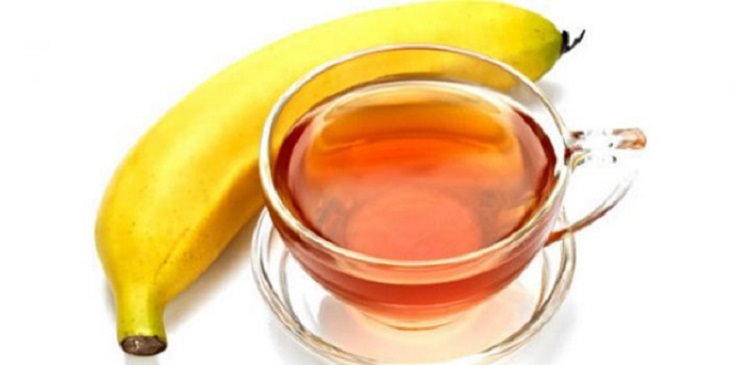
 
Difficulty Sleeping? This Banana Tea Recipe Works Wonders

Note: It is also important to use organic bananas because they are free of harmful pesticides. As this recipe requires you to heat the boiled peel, non-organic bananas should be avoided.

Here's how: 
 
Prepare in under 10 minutes and enjoy every night before bed: 
 
Ingredients 
• 1 organic banana 
• 1 small pot of water 
• Dash of cinnamon (optional) 
 
Directions  
1. Cut both ends off the banana, then place it, peel and all, into boiling water. Let the banana cook for around 10 minutes. 
 
2. Use a colander to pour the banana water into a mug. If you like, you may sprinkle some cinnamon at this point. Drink the tea one hour before bedtime. 
 
3. The leftover banana is pretty tasty too. Serve it on a plate and dig in - skin included. The texture is soft, gooey and very enjoyable. 
 
How Sleep Deprivation Affects  
Your Body When your body doesn't get enough sleep it suffers. A lack of sleep affects your mood and your short term memory. Processing simple things can become challenging and it also affects your emotional response. A lack of sleep has also been linked to serious health conditions. 

Why Sleeping Pills Are Not a Safe 
Alternative Almost half of Americans suffer from insomnia or inadequate sleep. Yet, while it may be tempting to resort to sleeping pills, they cannot address the root of the problem. Rather, sleeping pills provide a short term fix. Furthermore, those frequently prescribed Benzodiazepines, like Xanax and Valium, which are used to treat anxiety disorders by increasing drowsiness can, unfortunately, be worryingly addictive too. In addition, Barbiturates suppress the central nervous system and act very much like anesthetics and sedatives. 
 
 As with all drugs, there's a list of side effects that accompany sleeping pills. Besides being addictive, they can cause constipation, dizziness, a tendency to lose focus and memory, stomach pain, weakness, uncontrollable shaking and parasomnias (doing things without realizing). 


This is only for your information, kindly take the advice of your doctor for medicines, exercises and so on.   


Labels: , , , , , , , , , , , ,

Monday, January 20, 2025

What is the cancer-linked red dye found in candy, drinks banned by US FDA?

The United States Food and Drug Administration (FDA) has banned a bright red dye, used in candy, drinks and snacks, that has been linked to cancer in animals. American health officials have barred the use of artificial food colouring Red No 3, decades after the dye was removed from cosmetics.

The FDA’s decision comes two years after consumer and patient advocacy groups pressed the regulatory agency to disallow the dye.

Let’s take a closer look.

What has FDA said?

Red dye No 3 will no longer be used in food or ingested drugs in the US. The ban came into effect on Wednesday (January 15), the agency announced.

The FDA has directed drug-makers who use the colouring to reformulate their products by January 18, 2028.

The US agency said its decision was based on the federal law called the Delaney Clause, which prohibits the use of any additive that causes cancer in humans or animals in food.

“The Delaney Clause is clear; the FDA cannot authorise a food additive or colour additive if it has been found to cause cancer in humans or animals,” Jim Jones, the FDA’s deputy commissioner for human foods, said in a statement, as per The Washington Post.

“Importantly, the way that … Red No 3 causes cancer in male rats does not occur in humans,” the statement added.

The FDA’s move comes amid criticism by Robert F Kennedy Jr, US President-elect Donald Trump’s pick for health secretary, of some food dyes. He has vowed a crackdown on some chemicals and ingredients found in food and drinks if he is confirmed claiming the dyes cause cancer and ADHD in children, as per reports.


Red dye No 3 linked to cancer

Studies have shown that high doses of red dye No 3, also known as erythrosine, could cause cancer in lab rats, specifically thyroid cancer.

However, the FDA has pointed out that those studies “have limited relevance to humans” because cancer is not caused in the same way in both species.

“The petitioners provided data demonstrating that this additive induces cancer in male rats,” the FDA wrote in its notice Wednesday.

In 1990, the US agency banned the cherry-red additive in cosmetics after studies linked it to cancer in rats.

Reactions to the ban

Proponents of the ban have welcomed the FDA’s move.

“Red Dye 3 poses an unacceptable risk to our health, especially when safer alternatives are readily available,” Brian Ronholm, director of food policy at Consumer Reports, told Bloomberg. “By banning Red Dye 3, the FDA will protect the public by encouraging manufacturers to switch to safer ingredients already used in products sold in Europe and numerous other countries.”

Linda Birnbaum, former director of the National Institute of Environmental Health Sciences, reportedly said last month, “If you can’t put it on your skin why would you eat it? Bright red dye is completely unessential. We don’t need bright red candies.”

As per Bloomberg, Birnbaum along with 20 advocacy groups including Consumer Reports, Public Citizen and the Environmental Working Group signed a petition in 2022 to ban Red No 3 in the US.

California banned this dye in foods in 2023.

The Consumer Brands Association, a food industry group, and the National Confectioners Association, a candy-focused trade organisation, have said both companies will comply with the ban.

 Our consumers and everyone in the food industry want and expect a strong FDA, and a consistent, science-based national regulatory framework. FDA is the rightful national regulatory decision maker and leader in food safety,” the candy group said in a statement.

What is Red Dye No 3?

Red No 3 is a colour additive found in hundreds of processed foods, as per the Environmental Working Group.

 us red dye ban

The now-banned artificial food colouring is used in candy, fruit juice, cakes and frozen desserts.

An analysis of October data performed by healthy food app GoCoCo found 26 per cent of baking decorations and dessert toppings have Red No 3. It is also present in 16 per cent of chewing gum and mints, 13 per cent of candy, and 11 per cent of cookies and biscuits, reported Bloomberg.

As per the Environmental Working Group and the Center for Science in the Public Interest, some types of Fruit by the Foot, Dubble Bubble chewing gum, Entenmann’s Little Bites, Hostess’ Ding Dongs, Nestle strawberry milk, Jordan Almonds, Pez hard candies, Brach’s candy corn and some flavours of Ringpop have listed red 3 as an ingredient.

Betty Crocker’s loaded mashed potatoes, Vigo saffron yellow rice, Don Pancho green and blue tortilla chips also use the colouring in their products, as per a Forbes report.

Medicines like Tylenol PM, gabapentin and doxycycline also contain Red No 3. The dye is also an inactive ingredient in the capsule shell of the popular ADHD drug Vyvanse.

How harmful are food dyes?

Artificial food dyes have long been controversial due to their safety. However, the US FDA and the European Food Safety Authority (EFSA) have concluded that the additives do not pose significant health risks, as per Healthline.

That being said, consuming high levels of food dye that has contaminants could adversely impact health.

So far, studies have not found that Red No 3 causes thyroid cancer in humans. Research has, however, linked the dye to behavioural health issues, like attention deficit hyperactivity disorder, in children.

Over the years, clinical trials have shown that children who drank juices containing food dyes saw a small but significant increase in hyperactivity.

“There’s a reasonable suspicion that food dyes may be harmful, at least for some kids,” Joel Nigg, a professor of psychiatry at Oregon Health and Science University, told The New York Times. “So why expose them to it?”


This is only for your information, kindly take the advice of your doctor for medicines, exercises and so on.   

https://gscrochetdesigns.blogspot.com. one can see my crochet creations  
https://gseasyrecipes.blogspot.com. feel free to view for easy, simple and healthy recipes    
https://kneereplacement-stickclub.blogspot.com. for info on knee replacement
https://GSiyers home remedies.blogspot.com   is the latest addition to my blogs. I'm going to add posts there, do give me your valuable feed back on my blogs. Thanks a lot, take care, be healthy and be happy.


Labels: , , , , , , , ,

Tuesday, April 26, 2022

The Incredible Harm White Bread Does to Your Body

There are quite a few hyped-up fad diets around that promote no- or low-carb intake, such as Atkins, Paleolithic and ketogenic diets that claim carbohydrates are the devil and you should primarily eat fatty food if you want to lose weight. While we aren’t quite sold, they are absolutely correct about one thing: refined grain products, and white bread, in particular, do a lot more harm to your body than they do any good. Here’s why:

1. Refined grains have nearly zero nutritional value
Why White Bread Is Bad: white flour
Refining grains typically means removing their bran (tough, fiber-rich outer layer) and their germ (the seed’s embryo and source for many nutrients), leaving only the endosperm, a starchy middle-layer. This is done for several reasons: the most practical reason is that the oils in the germ make the grain go bad quicker. Other reasons boil down to taste; whole grains are tougher, tend to be rather dry (because the germ and bran absorb a lot of water) and have a rather distinct taste that can range from bitter to nutty. 
 
2. White bread causes sugar crashes 
The high carbohydrate content of white bread causes a rise in blood-sugar levels. If the energy stored in the sugar isn’t exerted in exercise, the body will produce insulin to process the sugars and store them away, leading to a quick drop in the blood-sugar levels. The effect is a sudden loss of energy characterized by headaches, confusion, tiredness, dizziness, and possibly even depression. 
 
3. It can induce type 2 diabetes
As mentioned before, the body produces insulin to reduce blood-sugar levels. Insulin achieves this by absorbing the sugar into cells in the body for later use. Regular high sugar intake can cause cells to develop immunity to insulin, hampering the body's ability to regulate blood sugar levels, causing what is known as diabetes type 2. There is no cure for diabetes, and the complications that can result from it are numerous, including heart disease. 
 
4. It is a major contributor to weight gain
When you eat food that is rich in carbohydrates, like bread, the body breaks it down to readily usable energy for the body's many functions. Excess energy that isn’t used (through strenuous physical activity) is converted and stored in the body as fatty tissue. Energy is rather easy to burn, but fat is substantially harder to lose.

5. Carbohydrates and water weight
Why White Bread Is Bad: water weight
This is not the only reason for weight gain associated with high carbohydrate intake. Before the energy is converted to fat, the excess energy is stored for later use as glycogen molecules. Each of those comes with a substantial amount of water attached (around 3-4 grams of water for every gram of glycogen). 
 
6. It is quite literally addictive
When blood-sugar levels drop, one of the most common reactions by the body is to seek immediate relief by… consuming more sugar. Sugar cravings are a vicious self-perpetuating cycle that are very hard to escape, as quitting sugar predictably results in moodiness and the body struggling to accommodate the dietary change. 
 
7. It increases the risk of heart complications
Research published in 2010 in JAMA Internal Medicine Journal demonstrated that women whose diet consists of a lot of high carbohydrate food like white bread are twice as likely to develop heart disease as those who don’t eat such food as often. 
 
8. It has no fiber
Fiber is what makes up a lot of the brain, skin or shell of the plant and is removed during the refining process white flour undergoes. Like starch and glycogen, fiber is a complex sugar-molecule. Such molecules require special enzymes to break down, but whereas our bodies secrete the enzymes needed to break down starch and glycogen, only a select few animals (such as insects and true herbivores) can process fiber, meaning that our body doesn’t digest it. This may sound like a bad thing, but it is actually very beneficial to our digestive system. The fiber waste that our bodies does not digest moves through our digestive tract without undergoing any changes, which in turn helps expedite bowl movement, while also giving bulk to the stool and taking up water, preventing diarrhea. 
 
9. Bread is a lazy man’s food
In all honesty, one of the biggest selling points of bread is just how gosh-darn convenient it is. You want a quick meal? Just take a slice of bread, slap some cheese or jelly on it and voilà! You’ve got dinner. A sedentary lifestyle begins in the smallest routines in our lives and trying to find shortcuts to prepare ourselves a proper meal is definitely a part of that. 
 
10. You should still eat some whole-grain
After all of this tirade, it should be said that carbohydrates are the best source of energy for our body, and going cold turkey off of them can have several adverse effects on your health. You can and should eat bread- preferably whole-wheat bread- occasionally and in moderation, just don’t make it your bread and butter (pun very much intended). When buying whole-wheat bread, make sure it actually is whole-wheat. The easiest way to tell is by looking at the ingredients, where the first one should always be whole grain wheat flour.


This is only for your information, kindly take the advice of your doctor for medicines, exercises and so on.   

https://gscrochetdesigns.blogspot.com. one can see my crochet creations  
https://gseasyrecipes.blogspot.com. feel free to view for easy, simple and healthy recipes    
https://kneereplacement-stickclub.blogspot.com. for info on knee replacement

Labels: , , , , , , , , , ,