Wednesday, May 26, 2021

7 Household Foods That Contain the Vital Vitamin K2

We all know the importance of Vitamin A and Vitamin C, found in numerous foods and even in sunlight, in the case of the latter. However, one of the more underappreciated vitamins that our bodies need to be healthy and fully functional is Vitamin K2. It works alongside calcium to provide protection against tooth decay and strengthen our bones. It can also help us fight cancer and heart disease. Are you wondering "Where can I get Vitamin K2?" Well, the answer is pretty positive as you can find it present in numerous common dairy and meat products like these listed below.

1. Egg Yolk
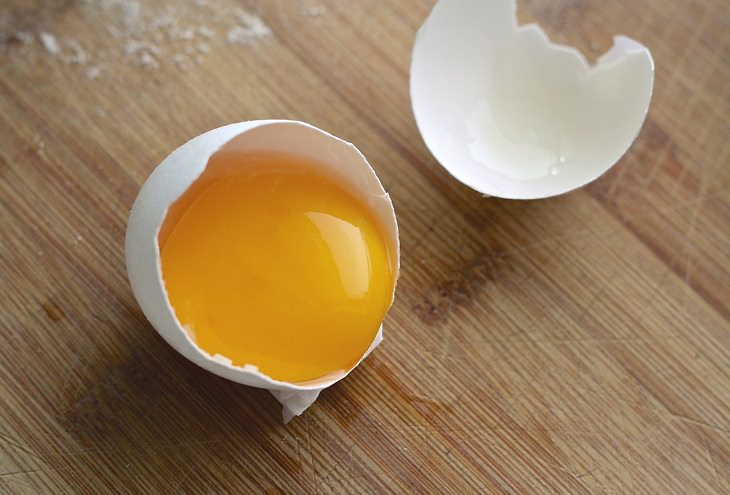
Best food sources for Vitamin K2, Raw egg yolk scooped into half an egg shell
The current practice for anyone looking to fix their cholesterol levels or lose some weight is to toss aside the yolk and eat only egg whites. Unfortunately, each time you throw away an egg yolk, you're throwing away anywhere between 70 to 190 micrograms of Vitamin K2. The exact content of this vitamin in each yolk differs based on what the hens each, some of whom are fed vitamin k supplemented bird feed. Hens fed soy or corn usually lay vitamin K deficient eggs.

2. Butter
It is a known fact that everything is better with butter, and that includes Vitamin K2 content. Of course, butter must be had in small quantities in order to stay healthy and avoid gaining weight. The good news is all you need is just 1 tablespoon of butter to take in 2.1 micrograms. So you can up your intake of Vitamin K2 every morning with a quick breakfast of buttered toast. 3. Sausages

3. Sausages
There are a wide variety of meats in the form of sausages that will give you a good dose of Vitamin K2, so you can feel somewhat healthy even when enjoying a barbecue or a hot dog. There are 20 micrograms of Vitamin K2 in every 100 grams of Kielbasa, 22 micrograms in pork sausage, 28 micrograms in salami, and 41 micrograms in pepperoni. These sausages are a combination of meats, and fatty cuts of meat tend to be the most nutritious. 
 
4. Sauerkraut
Anyone who enjoys classic New York style hot dogs with all the fixings will be familiar with this pickled additive. It is simply a sour fermented cabbage that adds a distinct and delicious taste to any dish. The process of fermentation itself offers numerous immunity-boosting benefits. In addition to that, each half-cup of sauerkraut contains 2.75 micrograms of Vitamin K2, which means you can take in a little bit of this vital vitamin with every hot dog.

5. Cream
Fermented dairy products, in general, come with numerous health benefits, partly because of the fermentation process like sauerkraut, but also because they are excellent sources of Vitamin K2. 100 grams of sour cream which is not only delicious but also smooth and refreshing, contains 6 micrograms of K2. Cream cheese contains 8.7 micrograms for every 100 grams and heavy cream contains 8 grams. So be a little generous with the cream cheese on your next bagel.

6. Chicken with the skin
Poultry is a great source of protein and nutrients, and it comes in many different cuts that let you enjoy the parts you like. Each cut of chicken has its own Vitamin K2 content. If you're a fan of chicken wings (with the skin), then every 100 grams will give you 25 micrograms of K2. Enjoying some baked chicken thighs for dinner? Then you'll get a whopping 24 micrograms with every 100 grams. The same amount of chicken drumstick contains 35 micrograms.

7. Cheese
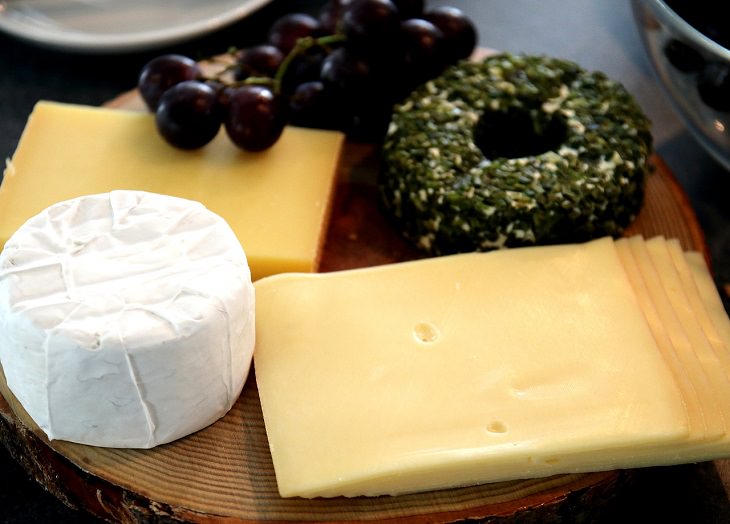
Best food sources for Vitamin K2, Different types of cheeses on a platter
Excessive amounts of cheese can be detrimental to weight loss attempts and overall health. But small amounts enjoyed in measured doses, sprinkled over your pasta or put in a sandwich can give you a good dose of protein, vitamin A, calcium, and of course, vitamin K2. 
 
The exact content will vary depending on the type of cheese you prefer. 100 grams of cheddar cheese contains 24 micrograms of K2. The same amount of Gouda, Edam, and Camembert cheese holds about 65-70 micrograms of K2. The highest content of approximately 100 micrograms belongs to Munster cheese.

This is only for your information, kindly take the advice of your doctor for medicines, exercises and so on.   

https://gscrochetdesigns.blogspot.com. one can see my crochet creations  
https://gseasyrecipes.blogspot.com. feel free to view for easy, simple and healthy recipes    
https://kneereplacement-stickclub.blogspot.com. for info on knee replacement

Labels: , , , , , , , , , , ,

Saturday, April 11, 2020

Milk and Osteoporosis — Is Dairy Really Good for Your Bones?

Dairy products are the best sources of calcium, and calcium is the main mineral in bones.

For this reason, health authorities recommend consuming dairy products every day.

But many people wonder whether they really need dairy in their diet.

This evidence-based review looks into the science.
Consuming Dairy Doesn't Make Sense From an Evolutionary Perspective

The idea that adult humans "need" dairy in their diet doesn’t seem to make much sense.

Human beings are the only animal that consumes dairy after weaning and consumes the milk of another species.

Before animals were domesticated, milk was likely a rare delicacy only reserved for infants. Yet, it’s unclear to what extent hunter-gatherers sought out the milk of wild animals.

Given that milk intake was probably rare among adults during most of human evolution, it’s safe to assume that humans were getting all the calcium they needed from other dietary sources.


However, even though dairy isn't necessary in the human diet, that doesn’t mean it can't be beneficial. This especially applies to people who do not get much calcium from other dietary sources.

    Summary
    Humans have been consuming dairy for a relatively short time on an evolutionary scale. They are also the only species that consumes milk after weaning or from another species.

A Quick Primer on Osteoporosis

Osteoporosis is a progressive disease in which bones deteriorate, losing mass and minerals over time.

The name is very descriptive of the nature of the disease: osteoporosis = porous bones.

It has many different causes and factors that are completely unrelated to nutrition, such as exercise and hormones.

Osteoporosis is much more common in women than in men, especially after menopause. It significantly increases the risk of bone fractures, which can have a very negative effect on quality of life.


Why Calcium Is Important

Your bones serve a structural role, but they are also your body’s main reservoirs of calcium, which has multiple essential functions in the body.

Your body maintains blood levels of calcium within a narrow range. If you're not getting calcium from the diet, your body pulls it from your bones to sustain other functions that are more important for immediate survival.

Some amount of calcium is continually excreted in the urine. If your dietary intake doesn't compensate for what is lost, your bones will lose calcium over time, making them less dense and more likely to break.

    Summary
    Osteoporosis is a common disease in Western countries, especially in postmenopausal women. It’s a leading cause of fractures in the elderly.

The Myth That Protein Reduces Bone Health
Despite all the calcium that dairy contains, some believe that its high protein content can cause osteoporosis.

The reason is that when protein is digested, it increases the acidity of the blood. The body then pulls calcium from the blood to neutralize the acid.

This is the theoretical basis for the acid-alkaline diet, which is based on choosing foods that have a net alkaline effect and avoiding foods that are "acid forming."

However, there really isn't much scientific support for this theory.

If anything, the high protein content of dairy is a good thing. Studies consistently show that eating more protein leads to improved bone health.


Not only is dairy rich in protein and calcium, it’s also loaded with phosphorus. Full-fat dairy from grass-fed cows also contains some vitamin K2.

Protein, phosphorus and vitamin K2 are all very important for bone health.


    Summary
    Not only is dairy rich in calcium, it also contains large amounts of protein and phosphorus, all of which are important for optimal bone health.

Studies Show Mixed Results

A few observational studies show that increased dairy intake has no effects on bone health or may even be harmful .

However, the majority of studies show a clear association between high dairy intake and a reduced risk of osteoporosis.

The truth is that observational studies often provide a mixed bag of results. They are designed to detect associations, but can't prove cause and effect.

Luckily, randomized controlled trials (real scientific experiments) can give us a clearer answer, as explained in the next chapter.

    Summary
    Some observational studies show that dairy intake is linked to a detrimental effect on bone health. However, even more observational studies show beneficial effects.

High-Quality Studies Show That Dairy Is Effective

The only way to determine cause and effect in nutrition is to conduct a randomized controlled trial.

This type of study is the "gold standard" of science.

It involves separating people into different groups. One group receives an intervention (in this case, eats more dairy), while the other group does nothing and continues to eat normally.

Many such studies have examined the effects of dairy and calcium on bone health. Most of them lead to the same conclusion — dairy or calcium supplements are effective.

    Childhood: Dairy and calcium lead to increased bone growth.


     Adulthood: Dairy decreases the rate of bone loss and leads to improved bone density.
 
   Elderly: Calcium supplements improve bone density and lowers the risk of fractures.

Dairy has consistently led to improved bone health in randomized controlled trials in every age group. That's what counts.

Milk that is fortified with vitamin D seems to be even more effective at strengthening bones.

However, be careful with calcium supplements. Some studies have associated them with an increased risk of heart attacks .

It’s best to get your calcium from dairy or other foods that contain calcium, such as leafy greens and fish.

    Summary
    Multiple randomized controlled trials show that dairy products lead to improved bone health in all age groups.

The Bottom Line
Bone health is complex, and there are many lifestyle-related factors at play.

Dietary calcium is one of the most important. To improve or maintain your bone health, you need to get adequate amounts of calcium from your diet.

In the modern diet, dairy provides a large percentage of people’s calcium requirements.

While there are many other calcium-rich foods to choose from, dairy is one of the best sources you can find.


This is only for your information, kindly take the advice of your doctor for medicines, exercises and so on.     

https://gscrochetdesigns.blogspot.com. one can see my crochet creations  
https://gseasyrecipes.blogspot.com. feel free to view for easy, simple and healthy recipes    
https://kneereplacement-stickclub.blogspot.com. for info on knee replacement

Labels: , , , , ,