6 early warning signs of thyroid that women often miss
Common warning signs of a thyroid disorder to never ignore

Experiencing extreme fatigue, hair loss, menstrual irregularities of late? Or have you been feeling shaky, anxious, sweaty and hungrier?
While these are some common symptoms which could be experienced by people across ages, chances are that the symptoms become a lot more evident if your thyroid gland is acting up. The thyroid gland is an important hormone regulator, but it can be incredibly possible for it to flare-up, especially in women. For a condition that's as common as 1 in 8 women worldwide, it's also reported that as many as 60% of women who do have thyroid problems are blatantly unaware about the symptoms.
What role does the thyroid play?

Just
like other organs of the body, controlling and regulating proper
thyroid function is quite crucial. The thyroid organ, a butterfly-shaped
organ which rests in front of our neck is an organ responsible for
production of important hormones, from triiodothyronine (T3) and
thyroxine (T4), which regulate vital functions such as weight loss,
metabolism, energy to maintaining your skin, hair health as well or even
affect your body temperature. The thyroid stimulating hormone (TSH) is
yet another important hormone which further instructs the thyroid to
produce more of T3 and T4 levels. Thus, any flare-up or concerning
elevation or lowering down of these important hormones can lead to an
overactive or underactive function, and lead to a thyroid disorder.
When the hormonal levels fluctuate abruptly, a range of symptoms could appear, which can be very profound in women and affect other vital functions as well. What should also be remembered is that thyroid is such an impactful organ, which can impact every other organ in the body, and it can be increasingly difficult to tell symptoms apart, especially when you are unaware. Thus, women should be diligently looking for warning signs and symptoms, and take the right care. Some of the symptoms may also require further testing for TSH, T3 and T4 levels and know if what you may be suffering from is hyperthyroidism (overactive thyroid) or hypothyroidism (underactive thyroid). Having said that, we list some common symptoms to be particularly careful of:
Unexplained weight loss or gain

Thyroid levels have a huge impact on your overall metabolism and keep your weight in check as well. While there are a lot of reasons for weight loss or gain, if you have been recording abrupt or unexplained changes in your weight, chances are that you may first need to get your thyroid checked. While low levels of thyroid hormones could lead to weight gain, an overactive thyroid could land in an overdrive and make you lose weight unexpectedly. Weight loss related to hypothyroidism is one of the most common changes observed in women.
Darkening of skin folds around the neck
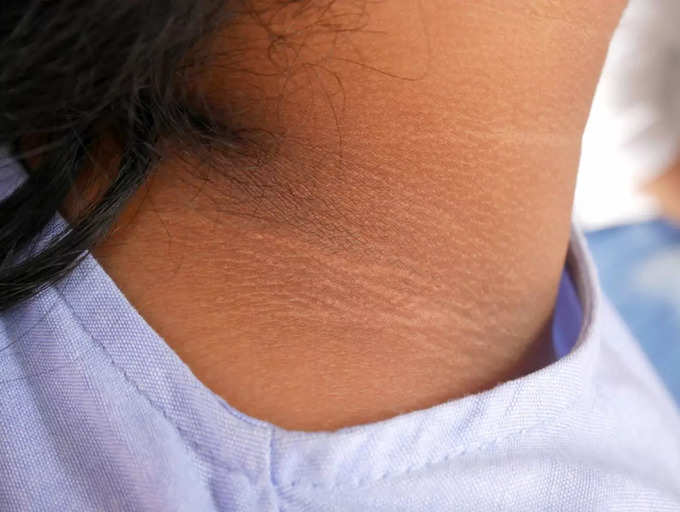
A common early symptom of a thyroid disorder which could be seemingly missed out is darkening of the skin around your neck. Particularly, research has found that the darkening of skin folds around the neck is usually because of hormonal flare-ups, and more common when the thyroid is acting up. This is one sign which women and men are often asked to be on the lookout for, and get tested if needed.
Apart from that, the thyroid organ is responsible for maintaining good skin and hair health. A disruption of T3 and T4 levels could also pose issues such as dry skin, itchy scalp, oily skin, or cause brittleness in the nails.
Fatigue and weakness
Losing out on energy, or feeling tired are often taken to be signs of ageing and everyday stress. While it may happen so, irregular and chronic fatigue and feelings of exhaustion could be resultant of an underlying thyroid issue. Since our thyroid gland significantly impacts metabolic function, an underactive thyroid could lead to a metabolic slow down, and further make you tired and lethargic on the regular. Similarly, for those who have an overactive gland, the metabolic function could potentially flare-up and cause energy loss. Fatigue and weakness associated with thyroid could also cause heart palpitations, muscle weakness and tremors.
Difficulty sleeping well

Here's another sign to suspect an underlying thyroid issue- sleeping difficulties. A thyroid dysfunction could terribly impact your sleep and make you toss and turn in the bed. What it could also possibly lead to is daytime sleepiness as well. While an overactive, high-functional thyroid could impact your mood, nervous system, tiredness and muscle weakness, the constant feelings could make it difficult for a person to get a good night's sleep. Other associated symptoms could be night sweats and frequent urination, which could disrupt sleep.
Underactive thyroid has also been associated with poor quality sleep, delayed or prolonged sleep onset and an overall shorter sleep duration.
Anxiety, nervousness and brain fog

Any symptoms of weakening or worsening mental health should never be taken lightly. While a lot of health conditions are relatively linked to mood fluctuations and stress, women suffering from thyroid are said to be at a higher risk of experiencing anxiety issues, nervousness, tremors, irritability, intense mood swings as well as brain fog, a symptom which has drawn more attention since COVID-19. Further symptoms of hypothyroidism could include memory loss, decreased concentration levels and render energy loss in performing day-to-day activities and routines. What can also happen if thyroid diagnosis or treatment is delayed is more anxiety issues.
Menstrual irregularities and changes

In women, any sort of menstrual changes or irregularities are primarily taken to be the warning sign of PCOS or infertility issues. However, that cannot be the case all the time. A disruption of the thyroid levels, too, can cause a lot of periodic changes and impact regular menstrual flow, since the thyroid directly controls your reproductive system. While too low or high levels of thyroid hormones can make periods light, heavy or scanty, in older women (over the age of 35), it could also make periods cease for a long time, or bring menopause early. Hence, any changes should be attended to at the earliest.