Tuesday, July 08, 2025

World Vitiligo Day: Yet another gut health win – Scientists find potential vitiligo treatment?
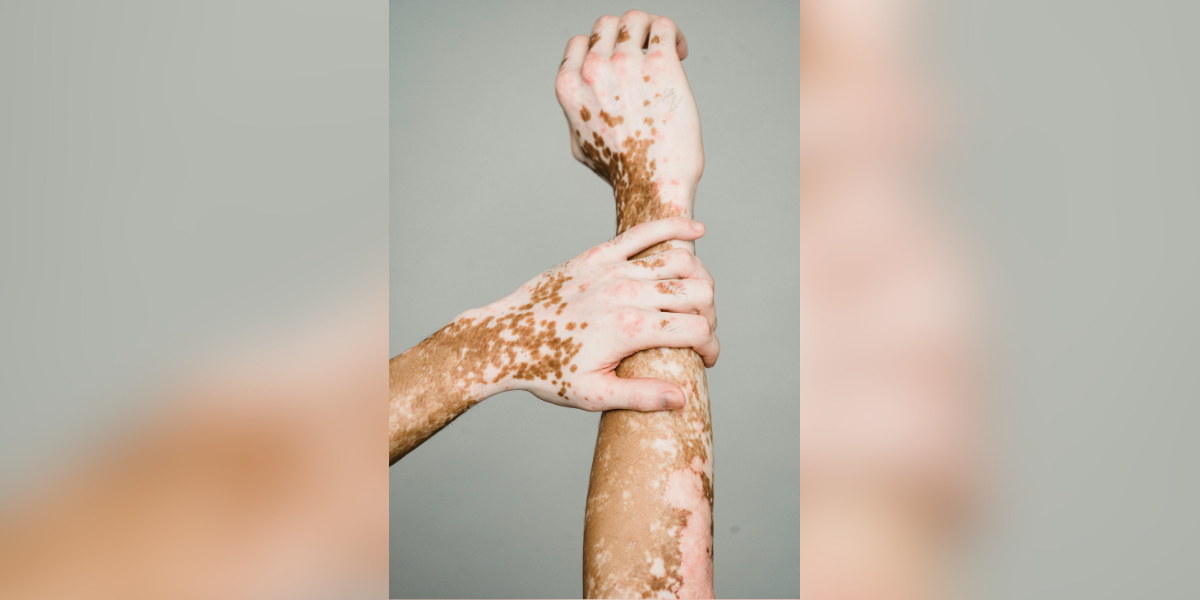
 World Vitiligo Day: Yet another gut health win (Pexels- Armin Rimoldi) 


Scientists may have found a surprising new way to tackle vitiligo — using a compound from good gut bacteria. Vitiligo is a skin condition that causes white patches and deep emotional scars, especially in darker-skinned individuals.

A new pre-clinical study from Northwestern University, published in the Journal of Investigative Dermatology, has found that injecting this microbial compound into mice prone to vitiligo slowed the disease dramatically — and even helped reverse it.

“This was beyond anything we expected,” said Dr. I. Caroline Le Poole, a senior researcher on the study, professor of Dermatology and of Microbiology-Immunology.. “The white patches stopped spreading — and colour started coming back.”

The gut-skin connection scientists are buzzing about

Vitiligo, a condition marked by the loss of skin pigmentation, affects between 0.5 percent and 2 percent of the global population and is often accompanied by other health complications such as cardiovascular disease, endocrine disorders, and psychological distress.

The patches of discoloration typically show up on visible areas like the face, scalp, hands, and around body openings such as the mouth and genitals. In many cases, those diagnosed with vitiligo also live with at least one other autoimmune disorder.

Dr. I. Caroline Le Poole, who has spent over three decades researching vitiligo, noted that the disease tends to be more severe in individuals with darker skin tones — not because the disease is biologically worse, but because the contrast in pigmentation makes it more visible.

This often intensifies the social stigma and emotional toll. “Patients often feel powerless as they watch their disease progress, unsure how they will look next month,” Le Poole said. “For many, stabilising the disease would be life-changing.”

Although vitiligo can significantly impact self-esteem, especially in adolescents dealing with peer pressure, not everyone seeks treatment. “We’ve seen beautiful models with vitiligo challenging societal norms, and that’s wonderful,” Le Poole added. “But for those who want treatment, it’s important to provide real options that can halt disease progression,”

In this study, scientists explored whether a natural compound made by friendly gut bacteria (called Bacillus subtilis) could help slow or stop vitiligo. For 18 weeks, the researchers gave weekly doses of the microbial compound to mice genetically inclined to develop vitiligo. By the end of the experiment, pigment loss had reduced by a stunning 74 percent.

How? The compound acted like a peacekeeper — reducing the aggressive T-cells that attack pigment cells in the skin, while increasing protective immune cells that are usually missing in people with vitiligo. “This could be a standalone treatment, or it might supercharge existing therapies,” said Dr. Le Poole in the study

Why this matters — especially in India

In India, where skin tone often unfairly defines beauty, vitiligo carries not just medical implications, but also social stigma. Visible white patches on the face, hands, or body can lead to shame, isolation, and in some cases, difficulty with marriage proposals or job opportunities.

The study author noted that vitiligo “has been found to be more severe in people with darker skin tones. The visibility of the discoloration … amplifies stigma and emotional distress.”

For those affected — especially adolescents — the unpredictability of the condition can be heartbreaking. “Patients often say they feel powerless, not knowing what they’ll look like next month,” said Dr Girish MS, dermatologist from Bengaluru.

A long-awaited alternative to creams that barely work

In 2022, the US FDA approved the first re-pigmentation cream for vitiligo but it is said to have helped only about 30 percent of patients regain noticeable colour, mostly on the face. This new gut-derived compound, however, offers a promising shift in how vitiligo could be managed — from treating symptoms to possibly stopping the disease in its tracks.

For now, the compound is being injected into mice — but researchers are already looking at more practical human options.
“Weekly injections are possible, but imagine if we could deliver this through a food additive or a skin ointment,” said Dr. Le Poole in the study. “That would change everything,”

The team is now collaborating with scientists across institutions to refine the treatment and test it for use in humans. They’re also curious whether the same compound could help in other autoimmune conditions involving skin.

Le Poole added that the same microbial compound she and her colleagues injected in mice could potentially treat other autoimmune conditions, particularly those involving killer T-cells in the skin. “Our next step is collaborating with scientists from several institutions to refine the compound, understand its mechanisms and determine whether it works alongside existing treatments for auto-immune disease.”


This is only for your information, kindly take the advice of your doctor for medicines, exercises and so on.   


Labels: , ,

Friday, March 06, 2020

New method to deliver an immune system 'uncloaking' device directly to cancer cells

Scientists at Johns Hopkins report they have designed and successfully tested an experimental, super small package able to deliver molecular signals that tag implanted human cancer cells in mice and make them visible for destruction by the animals' immune systems. The new method was developed, say the researchers, to deliver an immune system "uncloaking" device directly to cancer cells.

Conventional immune therapies generally focus on manipulating patients' immune system cells to boost their cancer-killing properties or injecting drugs that do the same but often have toxic side effects.

Results of the proof-of-concept experiments were published online Feb. 7 in the Proceedings of the National Academy of Sciences.

A hallmark of cancer biology is a tumor cell's ability to essentially hide from the immune system cells whose job is to identify and destroy cancer cells. Current cellular immunotherapies, notably CAR-T, require scientists to chemically alter and enhance a patient's own harvested immune system T-cells -- an expensive and time-consuming process, say the researchers. Other weapons in the arsenal of immunotherapies are drugs, including so-called checkpoint inhibitors, which have broad effects and often lead to unwanted immune-system-associated side effects, including damage to normal tissue.

By contrast, the Johns Hopkins team sought an immune system therapy that can work like a drug but that also individually engineers a tumor and its surrounding environment to draw the immune system cells to it, says Jordan Green, Ph.D.

Green is the director of the biomaterials and drug delivery laboratory and a professor of biomedical engineering at the Johns Hopkins University School of Medicine. "And our process happens entirely within the body," Green says, "requiring no external manipulation of a patient's cells."

To develop the new system, Green and his team, including Stephany Tzeng, Ph.D., a research associate in the Department of Biomedical Engineering at Johns Hopkins, took advantage of a cancer cell's tendency to internalize molecules from its surroundings.


Cancer cells may be easier to directly genetically manipulate because their DNA has gone haywire, they divide rapidly, and they don't have the typical checks and balances of normal cells." Jordan Green, Ph.D., professor of biomedical engineering, Johns Hopkins University School of Medicine

The team created a polymer-based nanoparticle -- a tiny case that slips inside cells. They guided the nanoparticles to cancer cells by injecting them directly into the animals' tumors.

"The nanoparticle method we developed is widely applicable to many solid tumors despite their variability on an individual and tumor type level," says Green, also a member of the Johns Hopkins Kimmel Cancer Center.

Once inside the cell, the water-soluble nanoparticle slowly degrades over a day. It contains a ring of DNA, called a plasmid, that does not integrate into the genome and is eventually degraded as the cancer cell divides, but it stays active long enough to alter protein production in the cell.


The additional genomic material from the plasmid makes the tumor cells produce surface proteins called 4-1BBL, which work like red flags to say, "I'm a cancer cell, activate defenses." The plasmid also forces the cancer cells to secrete chemicals called interleukins into the space around the cells. The 4-1BBL tags and interleukins are like magnets to immune system cells, and they seek to kill the foreign-looking cancer cells.

"Essentially, we're forcing the tumor to open itself up and instruct immune cells to kill it," says Tzeng.

In their animal experiments, Tzeng and the Johns Hopkins team injected the loaded nanoparticles into tumors created by implanting mice with either human melanoma or colon cancer cells.

A control group of mice implanted with melanoma cells received systemically an immunotherapy drug known as anti-PD-1 antibody. All of those mice died quickly, within 2.5 to three weeks, due to tumor growth.

Then, the research team injected other groups of mice, which were also injected with the cancer cells, with nanoparticles containing only one or both of the "uncloaking" signals -- the genetically encoded 4-1BBL tags and interleukins. In mice with implanted melanomas, the nanoparticles that combined the two signals had a stronger effect than either signal alone. The median, or midpoint, survival of the mice with the combo signal package was 40 days, and about 20% of them lived through the end of the 60-day study period.

The researchers also saw that some of the mice in the treated melanoma group developed vitiligo, a condition in which skin cells lose their pigment. It occurs in humans too, including in people undergoing immunotherapy for melanoma. "It's generally thought that vitiligo in melanoma patients is a sign that the immunotherapy treatment is working, and the immunotherapy is spreading to other parts of the body where other melanocytes reside," says Tzeng.

The tumor shrank away in all of the mice with implanted colon tumors that received the nanoparticles with both signals, and they survived through the entire 60-day study period. When the researchers reinjected human colon cancer cells into the sides of mice opposite the original tumors, unlike with age-matched controls, the newly implanted cancer cells failed to form a tumor, suggesting a lasting effect of the boosted immune system.

"The hope is that, eventually, we could develop nanoparticles that hold instructions for a variety of immune-related signals," says Green, who cautioned that use of the nanoparticle system will remain experimental for years to come. "We are developing this system as an 'off-the-shelf' therapy that can induce a personalized systemic anti-tumor response without needing to know the specific genetic makeup of the tumor beforehand."


This is only for your information, kindly take the advice of your doctor for medicines, exercises and so on.     

https://gscrochetdesigns.blogspot.com. one can see my crochet creations  
https://gseasyrecipes.blogspot.com. feel free to view for easy, simple and healthy recipes    
https://kneereplacement-stickclub.blogspot.com. for info on knee replacement
 

Labels: , , , , , , , ,

Monday, May 27, 2019

Vitiligo

Vitiligo is a rather mysterious condition that may affect people of all ethnicities, but is far more noticeable in people with darker skin, as the white blotches contrast more heavily with their natural pigmentation.
The causes behind vitiligo are unknown, but studies seem to link the onset of vitiligo with changes to the immune system, and many people who have vitiligo also have some form of autoimmune disease such as celiac or lupus. Some have even commented that flare-ups in their disease seemed to aggravate their vitiligo. Mental stress seems to speed up the loss of pigments.
Vitiligo often first appears on parts of the body that come into a lot of contact with the sun, particularly the hands and eyelids.
In and of itself, the only harm that is associated with vitiligo is that it removes the body’s natural protection from UV radiation from the sun. However, for many people, vitiligo is the cause of tremendous mental distress, as they see their own image change uncontrollably.
Though there is no known cure for vitiligo, there are some treatments that inhibit its progression. Immune-suppressing medications are considered effective in slowing vitiligo down, as is phototherapy, a treatment where the skin is exposed to UV light in a contained environment.
That being said, some people opt to give in to the radical change and either let the vitiligo run its course or choose to de-pigment their skin voluntarily.
THIS IS ONLY FOR INFORMATION, ALWAYS CONSULT YOU PHYSICIAN BEFORE HAVING ANY PARTICULAR FOOD/ MEDICATION/EXERCISE/OTHER REMEDIES.                                    PS- THOSE INTERESTED IN RECIPES ARE FREE TO  VIEW MY BLOG-                                                                                           https://gseasyrecipes.blogspot.com/    
                                                                                                                                                     FOR INFO ABOUT KNEE REPLACEMENT, YOU CAN VIEW MY BLOG-                                                  https:// kneereplacement-stickclub.blogspot.com/  

                            FOR CROCHET DESIGNS                                                                                                                                                                                                  https://gscrochetdesigns.blogspot.com
 

Labels: , , , , , ,