Friday, July 12, 2024

7 Signs of Diabetes That Appear in the Mouth and How to Detect the Disease

 Discover how the initial symptoms of diabetes manifest and learn how proper control of this disease aids in oral health.

Diabetes is a condition caused by insufficient production or poor absorption of insulin, a hormone that regulates blood glucose and ensures energy for the body.

According to data from the American Diabetes Association, 11.6% of the population had diabetes in 2021.

Therefore, it is of utmost importance to be aware of the risk factors and symptoms of the disease. Interestingly, the first signs can appear in the mouth.

What are the signs of diabetes that appear in the mouth?

Diabetes affects blood sugar control in the body, which reflects on blood circulation and reduces salivary flow. This results in a drier mouth and changes in the pH of saliva, thus losing its protective effect.

Consequently, the oral cavity becomes more prone to infections such as periodontitis, in addition to a higher susceptibility to the action of herpes virus and candida.

Experts say that diabetes may not show obvious symptoms at the beginning. However, some signs manifest in the mouth and deserve your attention:

1) Dry Mouth Dryness of the mouth, also known as xerostomia, is a consequence of reduced saliva production in response to increased blood sugar levels.

2) Red and Sensitive Gums The increased blood sugar level facilitates the proliferation of bacteria in the mouth, which can result in red, sensitive, and painful gums, and may even bleed during brushing.

3) Tooth Loss Teeth may be lost more easily when diabetes is uncontrolled. This is due to a higher propensity for periodontal diseases, cavities, and other oral infections.

4) Increased Sugar in Saliva The elevation of glucose levels in saliva creates a favorable environment for the development of bacteria, increasing the likelihood of cavities and oral infections.

5) Bad Breath Ketone breath, a smell of rotting fruit, is common when the disease is uncontrolled, and blood sugar levels are very high or very low. It is a vital indicator for the diagnosis of diabetes, especially when associated with other symptoms, such as increased thirst, frequent urination, and fatigue.

6) Delayed Healing Diabetes can compromise the body's ability to recover from injuries, which can result in complications after dental procedures.

7) Mouth Ulcers The presence of ulcers and sores in the mouth is more common among diabetic patients, especially when the disease is poorly managed.

Given these symptoms, patients with diabetes should make regular visits to the dentist, in addition to maintaining proper oral hygiene.

Early identification and correct treatment of the disease are essential for maintaining the oral and overall health of the patient.


This is only for your information, kindly take the advice of your doctor for medicines, exercises and so on.   

https://gscrochetdesigns.blogspot.com. one can see my crochet creations  
https://gseasyrecipes.blogspot.com. feel free to view for easy, simple and healthy recipes    
https://kneereplacement-stickclub.blogspot.com. for info on knee replacement
https://cancersupportindia.blogspot.com  for infor on cancer and health related topics
https://GSiyers home remedies.blogspot.com   is the latest addition to my blogs. I'm going to add posts there, do give me your valuable feed back on my blogs. Thanks a lot, take care, be healthy and be happy.


Labels: , , , , , ,

Tuesday, February 16, 2021

10 Malicious Aging Myths That Only Complicate Seniors’ Lives

Being a senior comes with a number of limitations that make day-to-day life more complicated and less enjoyable. But what if we told you that some of those limitations are just not necessary? It’s true, there is a great number of medical myths about seniors’ physical and mental health that many of us take at face value, but we shouldn’t.

For example, did you know that seniors don’t have to sleep more or less than younger adults? Or that cognitive decline and vision loss isn’t a given? Below we discuss these and other common medical myths about aging you should be aware of because aging shouldn't be synonymous with limitations, health decline, and being dependent on others. 
 
Not getting enough sleep is detrimental to our energy levels, overall well-being, and even long-term health, but many older adults aren't sure just how much shut-eye they need every night. There is a great deal of confusion surrounding this issue, as there are many stereotypes involved. On one hand, some people say that seniors need more sleep because they tend to take a midday nap, but on the other hand, others believe that seniors need less sleep because they tend to wake up so early in the morning. 
 
Both of these statements are stereotypes, and the reasons why both of these tendencies are observed in older adults vary. Poor pain management, underlying health issues, and even medications can all affect your sleep. For example, suffering from arthritis can
 cause pain at night, and sleep apnea can make you wake up in the middle of the night due to shortness of breath. 
 
Also, the circadian rhythms which predict our sleep-wake cycles may become disrupted with age, which can influence how long and how well you sleep. Therefore, by definition, not all seniors need to nap during the day or sleep more or less every night, but if your sleep is disrupted by your health issues or any other factor in your life, you'll need to catch up during the day. Here are more specifics: according to The Centers for Disease Control and Prevention, people in the age range of 61–64 need 7–9 hours of sleep every night, whereas people older than 65 need 7–8 hours. For comparison, younger adults also require 7 or more hours of sleep every night, so there's no major difference. 
 
2. Dementia and cognitive decline are inevitable   Aging Myths head puzzle solving
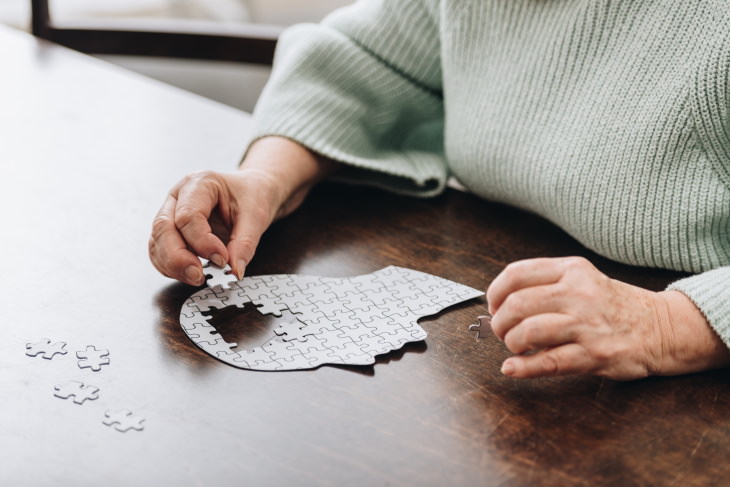
A gradual decline in cognition and other mental faculties are often associated with senior age, but this, too, is but a common misconception. In truth, data by the World Health Organization (WHO) suggests that worldwide, only 5–8% of senior citizens past the age of 60 experience cognitive decline. So, the vast majority of seniors on the planet retain their cognitive abilities. 
 
A similar story is observed in dementia, with US statistics pointing out that 13.9% of Americans past the age of 71 suffer from dementia. Therefore, dementia is by no means a healthy part of aging, and many people in their 90s and beyond live without exhibiting symptoms of this condition.

That said, if you experience lapses in memory and feel like your thinking is slowing down, it's worth getting checked by a doctor. Health professionals point out that maintaining a healthy diet, an active lifestyle, and treating medical issues helps most people preserve their cognitive health and protects them from dementia. 
 
3. The way you age mainly depends on your genes  
Should you "thank" your mom and dad for aging more rapidly than your peers? Medical professionals say "not necessarily", as we tend to give too much credit to the ability of our genes to affect our wellbeing, health, and even our lifespan. So, even if you think that you have poor genetics, don't treat it as a sentence, especially since scientists now know that our habits and lifestyle have the ability to turn certain genes on and off. 
 
The WHO stated, for example, that our lifestyle choices predict over 60% of our health, quality of life, and longevity. Therefore, eating and sleeping well, getting plenty of exercise, not smoking, and limiting alcohol all play a much bigger role in your well-being and longevity than your genes. 
 
4. Seniors should avoid exercise to avoid getting injured  
There’s a persistent misconception that muscle and strength building is dangerous or simply ineffective for older adults. Fear of injuries, the need for individual exercise adjustments, and pain often accompanied by chronic conditions all make many seniors believe that exercise will cause them more harm than good, but most doctors and researchers completely disagree with that statement. 
 
Even if going to the gym, doing yoga, or running isn't for you for whatever reason, they claim that you can participate and benefit from some type of physical activity. As the National Institute of Health pointed out in an article, "Exercise and physical activity are not only great for your mental and physical health but can help keep you independent as you age". We even wrote about a recent study, which found that the ability to build muscle isn't lowered due to lack of experience, so even if you start exercising in your 60’s or 70’s, you can build up muscle mass as effectively as an experienced athlete. 
 
5. It’s too late to stop smoking if you’re older
Quitting smoking is difficult at any age, but even more so when you've been stuck with the habit for years. But don't let your brain come up with the excuse that the damage is already done and it's too late for you to quit. “No matter how long you have smoked for and no matter how many cigarettes you smoke a day, your health will start to improve as soon as you quit. Some health benefits are immediate, some are longer-term, but what matters is that it’s never too late,” states the National Health Services website. 
 
Among the immediate benefits of quitting smoking are the improved sense of smell and taste, a decreased likelihood of getting respiratory infections, deeper breathing, and improved blood circulation. After just 1 year of quitting the harmful habit, your risk of a heart attack will be cut by half, no matter your age. 

6. Vision and tooth loss is a given
Is your vision going to decline with age? Most people would say "yes", but the truth is that it doesn't have to. You see, the reason why many adults feel like their vision is declining is due to an underlying health condition. As Dr. Alicia Arbaje, a geriatric doctor pointed out in an interview with the Business Insider, common causes of vision loss include "Poor circulation, or diabetes, or high blood pressure or strokes". Interestingly, she further added, "Now, what we do know is that the acuity of your vision can change over time. So the sharpness of your vision, but that is not the same as losing your eyesight." 
 
Therefore, vision loss is hardly a given "symptom" of old age, and neither is the loss of teeth. If you keep up your dental health and hygiene and undergo regular checkups and dental cleaning, there is no reason for you to lose any teeth, really. It's just that many people tend to neglect oral health, especially in their younger years, and that's what's causing long-term dental problems and tooth loss in older age. 
 
7. Forget about learning new things if you're older

Aging Myths grandma and granddaughter taking a selfie
Many people mistakably believe that learning and brain development is just for kids and students, neglecting their brain once they reach their late 40's and beyond. While it may be true that learning new information may not be as easy when we're not kids anymore, there's definitely a silver lining. The thing is that older adults learn things once and for all, whereas kids may forget new information much sooner than adults, according to neurological research. 
 
Therefore, learning new skills and information about the world and challenging your brain is always good, no matter your age. In fact, engaging in learning activities and teaching yourself to do new skills may even improve your overall cognitive abilities in the long term.
 
8. Being lonely and depressed is a natural part of aging
Acknowledging emotional and mental problems is very difficult, no matter your age since there's still a great deal of stigma surrounding issues like depression and anxiety. In addition, you may feel like you don't want to burden family members with your emotional issues and seek often expensive psychological aid, especially if you have an underlying physical condition that's causing the depression to begin with. 
 
Still, it's important not to let your hands down and just submit to feelings of depression and loneliness because they are not a normal part of life at any age. Although maintaining family bonds, keeping in touch with friends, and engaging in social activities can help many people feel better, it's equally as important to recognize when these things are not enough and seek professional help.

9. Weight gain is unavoidable because your metabolism slows down
This misconception stems from a common confusion of two terms - digestion and metabolism. While the speed with which you digest foods can become somewhat slower with time, metabolism (a series of complex chemical reactions that happen on a molecular level to help supply the body with energy and produce different essential compounds to the body) usually stays consistent throughout one's life. 
 
Your metabolism has very little to do with weight gain in most cases, and the real culprit behind those extra pounds is a less active lifestyle according to doctors. The solution is pretty apparent - simply move around more whenever possible and don't neglect exercise. 
 
10. Only women suffer from osteoporosis

Osteoporosis is a condition when the bone tissue gradually changes in structure, becoming more porous, and loses its strength as a result. Although this condition is, indeed, more common among elderly women, it can and does affect a lot of older men, too, which is a problem, because this condition is often believed to only affect women. 
 
The International Osteoporosis Foundation states that about 1 in 3 women past the age of 50 suffer from osteoporosis, but so do around 1 in 5 men in the same age range. Of course, the condition is clearly more widespread among the ladies, but as much as 25% of men will develop it as well. Lastly, if you're a woman in your 50s or older, don't think that you will automatically develop osteoporosis, as 67% of women don't suffer from the disease. To prevent osteoporosis, eat plenty of calcium and vitamin D rich foods, and don't forget to exercise on a regular basis.

This is only for your information, kindly take the advice of your doctor for medicines, exercises and so on.     

https://gscrochetdesigns.blogspot.com. one can see my crochet creations  
https://gseasyrecipes.blogspot.com. feel free to view for easy, simple and healthy recipes    
https://kneereplacement-stickclub.blogspot.com. for info on knee replacement


Labels: , , , , , , , , , , , ,

Thursday, October 03, 2019

Tooth loss might be linked to heart disease

Researchers have found that adults who have lost teeth due to non-traumatic reasons might have a higher risk of developing cardiovascular disease (CVD).

“If a person’s teeth fall out, there may be other underlying health concerns. Clinicians should be recommending that people in this age group receive adequate oral health care to prevent the diseases that lead to tooth loss in the first place and as potentially another way of reducing risk of future cardiovascular disease,” said study lead author.

The causal association between oral disease and cardiovascular disease is not well known, so researchers in this study conducted a secondary analysis of the 2014 Behaviour Risk Factor Surveillance System that looked at tooth loss not caused by trauma, as well as cardiovascular disease, including heart attack, angina and stroke.

The study included 316,588 participants from the US and territories between the ages of 40-79.
Overall eight per cent were edentulous (had no teeth) and 13 per cent had cardiovascular disease.
The percentage of people who had cardiovascular disease and were edentulous was 28 per cent, compared to only seven per cent who had cardiovascular disease but did not have missing teeth.

In addition to edentulous participants, those who reported having one to five missing teeth or six or more, but not all, missing teeth were also more likely to develop cardiovascular disease, even after adjusting for other factors such as body mass index, age, race, alcohol consumption, smoking, diabetes and dental visits.

The study was scheduled to be presented at the ACC Middle East Conference 2019 together with the 10th Emirates Cardiac Society Congress on October 3-5 in Dubai.

 this is only for your information, kindly take the advice of your doctor for medicines, exercises and so on.   
https://gscrochetdesigns.blogspot.com. one can see my crochet creations  

https://gseasyrecipes.blogspot.com. feel free to view for easy, simple and healthy recipes    
https://kneereplacement-stickclub.blogspot.com. for info on knee replacement


Labels: , , , , , , , , , , , ,

Tuesday, December 04, 2018

Tooth loss linked to high Blood Pressure in older women

A recent study was conducted to find if there is any relationship between periodontal disease and tooth loss with hypertension. The findings, suggest that older women who suffer tooth loss are more likely to develop high blood pressure (BP). 

The study observed a positive association between tooth loss and hypertension risk among postmenopausal women. Specifically, these women had approximately 20 per cent higher risk of developing hypertension during follow-up compared to other women. The association was stronger among younger women and those with lower BMI.

There are several possible reasons for the observed association. One possible explanation is that as people lose teeth, they may change their diets to softer and more processed foods. These changes in dietary patterns could be associated with higher risk of hypertension. There was no association found between periodontal disease and hypertension.

The study suggests that older postmenopausal women who are losing their teeth may represent a group with a higher risk of developing hypertension. As such, the researchers involved in the study believe that improved dental hygiene among those at risk for tooth loss as well as preventive measures such as closer blood pressure monitoring, dietary modification, physical activity, and weight loss may reduce the risk of hypertension. The findings also suggest that tooth loss may serve as a clinical warning sign for increased hypertension risk.

"These findings suggest tooth loss may be an important factor in the development of hypertension," said the paper's senior author. "Further research may help us to determine the underlying mechanisms by which these two common diseases are associated." 

THIS IS ONLY FOR INFORMATION, ALWAYS CONSULT YOU PHYSICIAN BEFORE HAVING ANY PARTICULAR FOOD/ MEDICATION/EXERCISE/OTHER REMEDIES.                                                                                                                                                                                                                                                                                        PS- THOSE INTERESTED IN RECIPES ARE FREE TO  VIEW MY BLOG-                                                                                           https://gseasyrecipes.blogspot.com/                                                                                                                                                                             FOR INFO ABOUT KNEE REPLACEMENT, YOU CAN VIEW MY BLOG-                                                                                                                             https:// kneereplacement-stickclub.blogspot.com/                                                                                       FOR CROCHET DESIGNS                                                                                                                                                                                                                                 https://gscrochetdesigns.blogspot.com


Labels: , , , , , , , ,

Thursday, January 04, 2018

Poor Oral Health May Increase The Risk Of Weakness In Older Men

Oral health is known to affect overall health and wellness; turns out it may be linked with frailty in older men. According to a study published, tooth loss, gum disease, tooth decay and dry mouth may be linked with increased risks of frailty in older adults, especially men. As per the researchers, men with dental issues were more likely to frail than men without such issues. The findings of the study indicated that the participants were considered frail if they had at least three of these problems- exhaustion, weak grip strength, slow walking speed, weight loss or low levels of physical activity.

Frailty is basically a medical term for becoming weak and more vulnerable to declining health or the inability to perform daily activities. Someone who is frail can be weak and unable to function well and has less endurance; in fact it may increase the risk of falls, disability and even death. For the study, the team examined the relationship between poor oral health and risks of becoming frail in 7, 735 men. Initially they were first examined in 1978 to 1980 when they were 40-59 years old. Later, in the year 2010 to 2012, the team examined 1,722 surviving participants aged 71 to 92. They measured their height, weight, walking tests and grip strength. The exam also included a dental check-up.

The results indicated that 20 percent of participants had no teeth, 64 percent had fewer than 21 teeth, a 54 percent of participants had gum disease, 29 percent of participants had at least two symptoms of dry mouth and 34 percent had rated their oral health as fair to poor.

It is imperative to keep your oral health on point; in order to ensure that, you must include the following foods in your diet.
1. Apple
Apples make a great source of water and fiber that act as cleansing agents. It contains malic acid that boosts saliva production, hence removing bacteria from the mouth. The fibrous texture of apples also helps improving the health of your gums.
2. Cheese
Cheese is an excellent source of calcium, phosphorus and protein that can make your teeth stronger and whiter and also protect them from decaying.
3. Spinach
Green leafy vegetables are super-efficient when it comes to maintaining pearly whites. Spinach has abundant magnesium that helps in building the enamel and keeps it healthy.
4. Basil
Basil is believed to be a natural antibiotic and has anti-bacterial properties that prevent bacterial growth in your mouth. You can easily include basil in your salads, soups or even curries.
5. Nuts and seeds
Nuts and seeds are abrasive in texture; therefore they help in removing plaque and stains in your teeth. The omeg-3 fatty acids present in nuts help in lowering the risk of gum disease that can damage your teeth.

THIS IS ONLY FOR INFORMATION, ALWAYS CONSULT YOU PHYSICIAN BEFORE HAVING ANY PARTICULAR FOOD/ MEDICATION/EXERCISE/OTHER REMEDIES.    
 
PS- THOSE INTERESTED IN RECIPES ARE FREE TO VIEW MY BLOG-                      

HTTP:GSEASYRECIPES.BLOGSPOT.COM/
FOR INFO ABOUT KNEE REPLACEMENT, YOU CAN VIEW MY BLOG-                                                                      
HTTP://KNEE REPLACEMENT-STICK CLUB.BLOGSPOT.COM/
FOR CROCHET DESIGNS

HTTP://MY CROCHET CREATIONS.BLOGSPOT.COM

Labels: , , , , , , , , , , , , , , , , , ,