Tuesday, June 28, 2022

Don't Let These Blood Donation Myths Deter You From Giving

Donating blood saves lives – we’ve all heard this before. But let’s check some facts that back this claim. According to the American Red Cross, one blood donation can save as many as three lives, and someone in the U.S. requires a blood transfusion every two seconds. Every year, millions of lives are saved because of blood donations and blood products. Donating blood can help people injured in accidents, as well as those undergoing cancer treatment and battling blood diseases. 
 
The World Health Organization (WHO) further explains: 
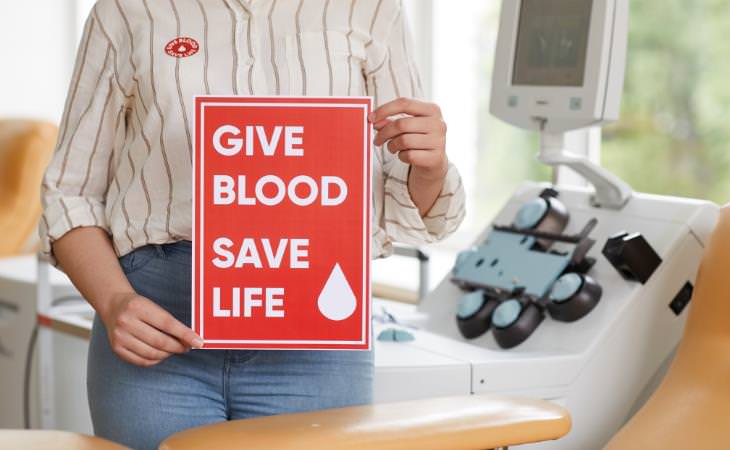
done blood
“A decision to donate your blood can save a life, or even several if your blood is separated into its components — red cells, platelets, and plasma — which can be used individually for patients with specific conditions.” 
 
Unfortunately, while donating blood provides a lifesaving gift, it can be an intimidating task for some people. Misunderstandings or misconceptions about the process make people more reluctant. So, today, we will bust some common myths about blood donation to ease people’s minds about donating.
 
Myth 1: If I donate blood, I won’t have enough left in my own body
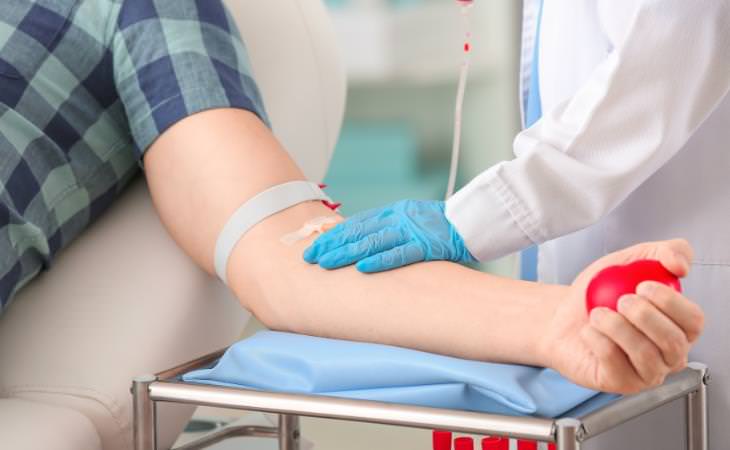
Blood Donation
Blood donation is safe, and any healthy individual who donates will remain healthy afterward. Doctors do recommend that people rest for a day and drink fluids after donating. After about 48 hours, your body will replace the lost blood volume. In about four to eight weeks, your body will completely replace the red blood cells you donated. 
 
Some people might experience adverse effects such as weakness, dizziness, or lightheadedness after donating. But doctors say these symptoms go away on their own. Just make sure to drink some fluids and have a light snack afterward. 
 
Myth 2: Seniors can’t donate blood
This isn’t true. The American Red Cross says that people who are older than 16 years and weigh more than 110 pounds (50 kilograms) are eligible to give blood. They also state that there’s no upper age limit for blood donation as long as someone is healthy and has no restrictions or limitations to their activities. These rules do differ in some countries. In the United Kingdom, for instance, donors must be aged 17–66 years. 
 
According to WHO, some countries allow regular donors over the age of 65 to give blood at the discretion of a responsible physician. 
 
Myth 3: I take medication, so I can’t donate blood 
In almost all cases, medications won’t disqualify you from donating blood. According to the American Red Cross, a donor’s eligibility will be based on the reason that the medication has been prescribed. If you are healthy and your condition is under control, then blood donation is likely to be permitted. 
 
Herbal remedies, nutritional supplements, and over-the-counter oral homeopathic medicines are permitted too. Read the complete breakdown of medications that affect donation eligibility on the American Red Cross website. 
 
Myth 4: I might contract dangerous infections if I give blood
Doctors say that there is no risk of catching an infection when donating blood. A new sterile needle is used with each new blood donation and immediately discarded. Therefore, there’s almost no chance of catching a bloodborne infection from donating blood if the hospital you are donating blood at follows all the rules.  
 
Myth 5: You can’t donate if you’ve had COVID-19
Just because you’ve had COVID-19 in the past doesn’t mean that you won’t be able to donate blood in the future. Health experts say that donors have to be free of any symptoms for at least two weeks. If you're currently recovering from COVID-19 or are displaying COVID-like symptoms, don’t attempt to donate blood. You should be resting and isolating. 
 
Myth 6: You can only give blood once each year  
donThis is false. As we mentioned earlier, blood cells take up to eight weeks to be replenished. After that, it’s safe to donate blood again. The American Red Cross says that you can donate whole blood every 56 days up to 6 times a year.  
 
Myth 7: Blood donation is time-consuming
According to the American Red Cross, the donation of a pint of whole blood takes from 8 to 10 minutes. Registration and processing times vary, but they typically take somewhere between 30 and 60 minutes. After registration, you’re usually required to answer some questions about your health and travel history. This is followed by a brief physical examination to determine if you’re eligible to donate blood. That’s it. 
 
So if you’re planning to donate blood, don’t be hesitant thinking it will take a long time. It won’t.  
 
Myth 8: You cannot donate if you have high blood pressure or high cholesterol
Having high blood cholesterol levels won’t disqualify you from donating blood as long as you're otherwise healthy. 
 
Also, you can donate blood if your blood pressure is below 180 systolic (first number) and below 100 diastolic (second number), says the American Red Cross. Even medications for high blood pressure won’t disqualify you from donating. The Red Cross provides a detailed list of the eligibility criteria for donating blood. 
 
Myth 9: Enough people donate blood. There’s no need for me to do so
Sadly, this isn’t true. Blood has a limited shelf life and can’t be manufactured outside of the human body. Donated red blood cells have a shelf life of up to 42 days, while donated platelets must be used within 5 days. Therefore, the supply must constantly be replenished, and there is always a need for more blood donors. 
 
Statistics show that only about 37 percent of the U.S. population is eligible to donate blood - less than 10 percent of these potential donors give blood regularly. Blood banks can, at times, have a critical shortage of some blood types. Earlier this year, the United States had a national blood shortage during the COVID-19 pandemic. So if you’re eligible, it’s always a good idea to roll up your sleeves and spare an hour to give blood.


This is only for your information, kindly take the advice of your doctor for medicines, exercises and so on.   

https://gscrochetdesigns.blogspot.com. one can see my crochet creations  
https://gseasyrecipes.blogspot.com. feel free to view for easy, simple and healthy recipes    
https://kneereplacement-stickclub.blogspot.com. for info on knee replacement


Labels: , , , , , , , ,

Tuesday, March 01, 2022

Research finds ultrasound scans can diagnose prostate cancer

The one things that rings bell in everyone’s minds and makes them scared is when they’re asked to take an MRI, the procedure that is used to detect cancer. But, new research has found that the good old ultrasound scan can also be used to detect cancer. The research found that ultrasound tests can be used to detect cases of prostate cancer.

Researchers have found a new type of ultrasound scan can diagnose most prostate cancer cases with good accuracy in a clinical trial involving 370 men.

The ultrasound scans missed only 4.3% more clinically important prostate cancer cases—cancer that should be treated rather than monitored- compared to magnetic resonance imaging (MRI) scans currently used to detect prostate cancer.

MRI scans are expensive and time-consuming. The team believed that an ultrasound scan should be used as a first test in a community healthcare setting and in low and middle-income countries which do not have easy access to high-quality MRI scans.

They said, it could be used in combination with current MRI scans to maximize cancer detection. The lead author of the study said, “ prostate cancer is the most commonly diagnosed cancer in the UK. One in 6 men will be diagnosed with the disease in their lifetimes and that figure is expected to rise.”

MRI scans are one of the tests we use to diagnose prostate cancer. Although effective these scans are expensive, take up to 40 minutes to perform and are not easily available to all. Also, there are some patients who are unable to have MRI scans such as those with hip replacements or claustrophobia fears. As cancer waiting lists build as a result of the COVID-19 pandemic, there is a real need to find more efficient and cheaper tests to diagnose prostate cancer, he added.

Out study is the 1st to show that a special type of ultrasound scan can be used as a potential test to detect clinically significant cases of prostate cancer. They can detect most cases of prostate cancer with good accuracy, although MRI scans are slightly better, he said.

We believe that this test can be used in low and middle-income settings where access to expensive MRI equipment is difficult and cases of prostate cancer are growing, he said.

Prostate cancer is the most common cancer in men in the UK with around 52,300 new cases diagnosed each year. It develops when cells in the prostate grows in an uncontrolled way. Prostate cancer develops slowly and symptoms such as the blood in the urine do not appear until the disease has developed. It usually affects men over 50 and often men with a family history of the disease. Black men are disproportionately impacted by the disease and deaths from prostate cancer have now overtaken those from breast cancer.

One of the main methods to diagnose prostate cancer is a special type of magnetic resonance imaging (MRI) scan called a multi-parametric MRI (mpMRI) scan, which helps doctors see if there is  any cancer inside the prostate and how quickly the cancer is likely to grow. However, the scan takes 40 minutes and costs 350-450 pounds.

The new study looked at the use of a different kind of imaging called multi-parametric ultrasound (mpUSS), which uses sound waves to look at the prostate. The test involved the use of a probe called a transducer to make the images of the prostate. It is placed into the rectum and it sends out sound waves that bounce off organs and other structures. These are then made into pictures of the organs.

The doctor doing the test also used extra special types of ultrasound imaging that look at how stiff the tissue is and how much blood supply tissue has. These are called elastography, Doppler and contrast-enhancement with micro-bubbles. As cancers are denser and have a greater blood supply, they show up more clearly.

Although mpUSS is more widely available than mpMRI there has been no large-scale studies to validate its effectiveness as a test to detect prostate cancer cases.

In the new trial, called cancer diagnosis my multi-parametric ultrasound of the prostate (CADMUS), the team recruited 370 men at risk of prostate cancer. They were identified following initial tests such as a prostate-specific antigen (PSA) test- a blood test to help detect prostate cancer- and / or an abnormal digital rectal examination- a test that examines a person’s lower rectum, pelvis and lower belly.

The study took place at 7 hospitals in the UK including lead site Charing Cross Hospital, part of Imperial College Healthcare NHS Trust, between March 2016= November 2019t.

The men were given both mpUSS and mpMRI scans at separate visits. This was then followed by biopsies- which involves using then needles to take small samples of tissue from the prostate to analyse under a microscope to check cancer- for 257 patients who had a positive mpUSS or mpMRI test result. The team then compared the results from the tests.

Cancer was detected in 133 men, with 83 men diagnosed with clinically significant cancer.

Individually, mpUSS detected 66 cases if clinically significant cancer compared to mpMRI which detected 77 cases.

Although mpUSS detected 4.3 % fewer clinically-important prostate cancers compared to mpMRI the researcher said his method would lead to 11.1 % more patients being biopsied. This was because the mpUSS sometimes showed up in abnormal areas even though there was no cancer.

The researchers believe that the test can be used as an alternative to mpMRI as a 1st test for patients at risk of prostate cancer, particularly where mpMRI cannot be carried out. Both imaging tests missed clinically-important cancers detected by the other, so using both would increase the detection of clinically important prostate cancers compared to using each test alone.

The 1st author said, our results provide an accurate test for prostate cancer in patients who were previously without one using a scan that’s cheap and easy to conduct.


This is only for your information, kindly take the advice of your doctor for medicines, exercises and so on.   

https://gscrochetdesigns.blogspot.com. one can see my crochet creations  
https://gseasyrecipes.blogspot.com. feel free to view for easy, simple and healthy recipes    
https://kneereplacement-stickclub.blogspot.com. for info on knee replacement


Labels: , , , , ,