Tuesday, March 18, 2025

Four Home Tests for Hair Health - Tips and treatments

Similar to wrinkles that form over time but we only notice their appearance suddenly when they become very noticeable, our hair is also affected by aging processes and various other harmful factors. To avoid an unpleasant surprise about the poor health of your hair, it is recommended to perform the following 4 tests that anyone can do at home in just a few minutes. If after these tests you discover that your hair is in urgent need of repair, at the end of the article we will also provide you with a selection of tips, treatments, and recommended foods that can help you do so.

1. The Follicle Test 
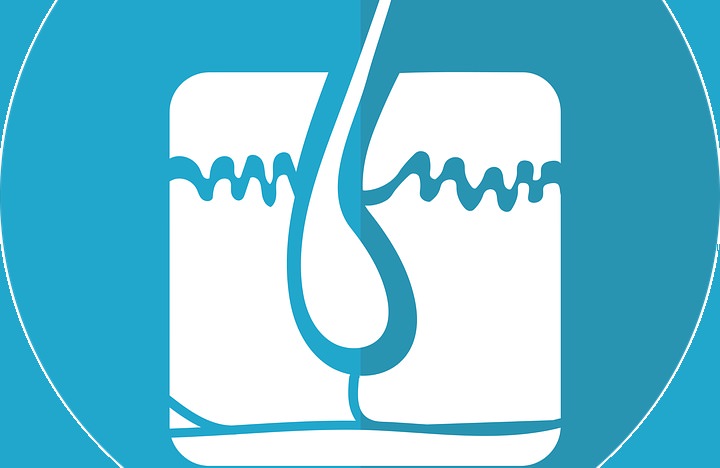
Hair health tests: illustration of a hair follicle
Like many other problems, hair damage often starts at the root, and this is exactly what you will check now. Carefully pluck a hair from your head, trying to grab it as close to the base as possible to pull it out completely. Examine the root of the hair at the base of the follicle to see its shape—rounded root in the form of a bulb indicates healthy hair, whereas a thin or uneven root suggests that your hair is weak and needs treatment.

2. The Glass of Water Test
 Hair health tests: glass of water
This test helps check the condition of your hair using a simple float test—healthy hair is relatively uniform and unaffected by water absorption, whereas damaged hair often absorbs liquids. So, to check this for yourself, pluck a small number of hairs from different areas of your scalp, such as near the forehead, above the ears on both sides, and from the top part, and place them in a glass of regular water. Healthy hair will float, while damaged or neglected hair will slowly begin to sink.


3. The Pull Test 
Don’t worry, you’re not going to pull all your hair out… To perform this test, you need to pluck a single hair from your head, hold it by both ends, and pull. Do this a few times with gradually increasing pulling force, from weak to strong. If each time you release the tension, the hair "snaps" back into shape and withstands strong pulling forces, its condition is good. On the other hand, if the hair doesn’t show elasticity after pulling or breaks easily even with weak pulling force, it's likely in trouble.


4. The Roughness Test 
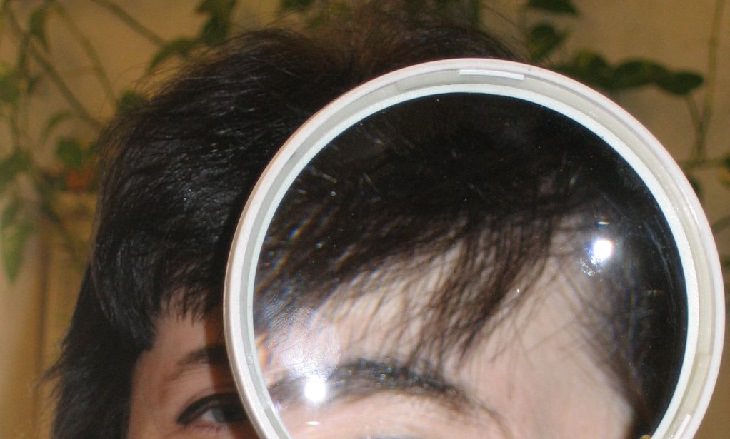
Hair health tests: hair under magnifying glass 
Healthy hair is smooth, and to check your own hair in this regard, you can use two very accessible tools: your fingers and a magnifying glass or a smartphone. First, lift one hand to your head, and isolate a small group of hairs from the rest of the head using your fingers. Now, raise your other hand and run the group of hairs between your thumb and index finger—try doing this from the ends of the hair to the roots on the scalp. If you feel that your hair is rough, you may need to check it more closely, and for that purpose, you can use a magnifying glass or smartphone magnification apps. If a close-up reveals “broken,” uneven, or not smooth hair, it’s a sign that it is not healthy...

What to do if you find that your hair is unhealthy?  
 
Use Peppermint Oil to boost your hair's health. 
 
Try Rosemary to help your hair overcome problems 
 
Adopt the principles of the Mediterranean diet, which has proven scientific effectiveness in reducing the risk of male hair loss. 
 
Learn how to wash your hair properly and healthily. 
 
 Prepare natural hair masks to strengthen and maintain its health. 
 
Eat foods that may heal your hair.

For all the above tips kindly see my following posts as each one will deal with solution.


This is only for your information, kindly take the advice of your doctor for medicines, exercises and so on.   


Labels: , , , , , , , ,

Thursday, December 08, 2011

Actinic keratosis


Actinic keratosis

Solar keratosis; Sun-induced skin changes - keratosis; Keratosis - actinic (solar)
Last reviewed: October 8, 2010.
Actinic keratosis is a small, rough, raised area found on skin that has been exposed to the sun over a long period of time.
Over many years, some actinic keratoses may develop into a type of skin cancer.

Causes, incidence, and risk factors

Actinic keratosis is caused by sun exposure, but it takes many years or decades to develop.
Risk factors for actinic keratosis include:
  • Having fair skin, blue or green eyes, or blond or red hair
  • History of kidney or other solid organ transplant (people who take medicines that suppress the immune system)
  • Long-term, daily sun exposure (for example, if you work outdoors)
  • Multiple, severe sunburns early in life
  • Older age
    Actinic keratosis on the armOn the arm, this is how it looks like

    Symptoms

    Actinic keratosis is usually found on the face, scalp, back of the hands, chest, or other sun-exposed areas.
    They may be gray, pink, red, or the same color as the skin. Often, they have a white or yellow scale on top.
    • They begin as flat and scaly areas
    • Later they develop a hard and wart-like or gritty, rough, and "sandpapery" surface -- may develop a horn-like texture
    The skin lesion may be easier to feel than to see.

    Signs and tests

    The health care provider makes the diagnosis based on the appearance of the skin growth. A skin biopsy may be done for larger and thicker actinic keratoses to make sure no cancer is present.

    Treatment

    Because about 5% of actinic keratoses go on to develop into squamous cell skin cancer, have them examined promptly. Follow your health care provider's advice for treatment.
    Growths may be removed by:
    • Burning (electrical cautery)
    • Scraping away the lesion and using electricity to kill any remaining cells (caled curettage and electrodesiccation)
    • Cutting the tumor out and using stitches to place the skin back together (called excision)
    • Freezing (cryotherapy, which freezes and kills the cells)
    When many actinic keratoses are found, treatments that cause irritation and redness over a larger area are used:
    • A laser treatment called photodynamic therapy
      • Chemical peels
      • Creams such as 5-fluorouracil (5-FU) and imiquimod

      Expectations (prognosis)

      Actinic keratosis itself is harmless ( benign), but about 5% develop into skin cancer.
      Removal of the growth is usually effective.

      Complications

      • Irritation and discomfort of the skin growth
      • Scarring from the treatment
      • Squamous cell carcinoma

      Calling your health care provider

      Call for an appointment with your health care provider if areas of persistent roughness or scaliness develop in sun-exposed skin.

      Prevention

      Reduce sun exposure and protect your skin from the sun:
      • Wear protective clothing such as hats, long-sleeved shirts, long skirts, or pants.
      • Try to avoid sun exposure during midday, when ultraviolet light is most intense.
      • Use high-quality sunscreens, preferably with a sun protection factor (SPF) rating of at least 15. Pick a sunscreen that blocks both UVA and UVB light.
      • Apply sunscreen before going out into the sun, and reapply often.
      • Use sunscreen year-round, including in the winter.
        • Avoid sun lamps, tanning beds, and tanning salons.
        Other important sun safety facts to keep in mind:
        • Sun exposure is stronger in or near surfaces that reflect light, such as water, sand, concrete, and areas painted white.
        • Sun exposure is more intense at the beginning of the summer.
        • Skin burns faster at higher altitudes.
          Some of the symptoms in different parts of the body
          • Actinic keratosis on the arm.
            Actinic keratosis - close-up.
            Actinic keratosis on the forearms.
            Actinic keratosis on the scalp.
            Actinic keratosis - ear.

Labels: , , , , , , , , ,