Wednesday, July 13, 2022

Study finds adding extra salt to food can take away years from your life, cause premature death

How adding salt to your foods at the table can affect your life?

Salt plays an essential role in elevating the taste of the food. No matter how well you spice up your cuisine, without salt, it is likely to taste bland and boring. Having said that, there is no wrong in seasoning your food while it's cooking on the stove. However, if you're someone who adds extra salt to their food at the table, you may be at a higher risk of premature death, claims a study involving over 500,000 middle-aged Britons.

About the study

The research published on July 11 in the European Heart Journal looked at data from 501,379 participants in the UK Biobank project, who had joined the study between 2006 and 2010 and were followed for about nine years.

The study participants were asked via a touch-screen questionnaire whether they added salt to their foods and if they did, how often they do so. The options included: i) I never/rarely, ii) occasionally, iii) generally, iv) always, or v) prefer not to answer.

The study did not include people who responded 'prefer not to answer.'

Compared to people who never or rarely added salt, those who frequently added salt were at a 28% increased risk of dying prematurely.

Study leader Professor Lu Qi, of Tulane University School of Public Health and Tropical Medicine, New Orleans, USA, said: “To my knowledge, our study is the first to assess the relation between adding salt to foods and premature death."

“It provides novel evidence to support recommendations to modify eating behaviours for improving health. Even a modest reduction in sodium intake, by adding less or no salt to food at the table, is likely to result in substantial health benefits, especially when it is achieved in the general population," he adds.

Furthermore, the study author also explains how adding salt to foods at the table is a common eating behaviour that indicates an individual's long-term preference for salty-tasting foods.

How adding salt to meals can affect life expectancy in men vs women

While on an average, those who added extra salt to their meals had a 28% increased risk of premature death, for men aged 50, who added salt to the foods, about 2.28 years were slashed off of their life. For women, it was 1.5 years.

Other risk factors included age, sex, ethnicity, deprivation, body mass index, smoking, alcohol intake, physical activity, diet and medical conditions such as diabetes, cancer and heart disease.

The study recommends eating fruits and vegetables
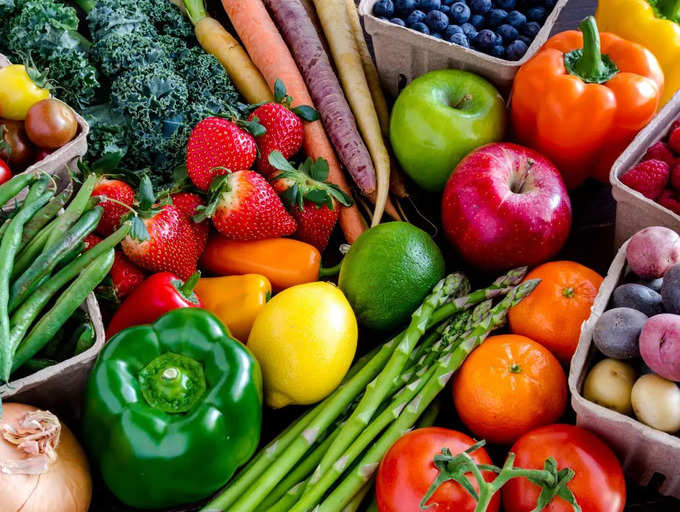
The study findings come as a shock for many who love seasoning their foods with some extra salt.

Almost 18,500 premature deaths i.e. death before age 75, were recorded after the data was collected between 2006 and 2010.

But apart from that, study researchers also found that the risks were slightly reduced in people who ate more fruits and vegetables, even though these results were not statistically significant.

“We were not surprised by this finding as fruits and vegetables are major sources of potassium, which has protective effects and is associated with a lower risk of premature death,” said Prof. Qi.

The dangers of eating too much salt

According to the World Health Organization (WHO), high sodium consumption (>2 grams/day, equivalent to 5 g salt/day) and insufficient potassium intake (less than 3.5 grams/day) contribute to high blood pressure and increase the risk of heart disease and stroke.

That said, salt intake of less than 5 grams per day for adults helps to reduce blood pressure and risk of cardiovascular disease, stroke and coronary heart attack, suggests the global health agency.

How does salt increase blood pressure

Eating too much salt can cause your body to hold extra water to wash the salt from your body. In some people, this may lead to high blood pressure. In the long run, this can stiffen and narrow down the blood vessels, limiting the blood and oxygen flow to key organs. This furthermore strains the heart, giving rise to many cardiovascular diseases, including heart attack.

Signs you're eating too much salt

There are many ways you can tell if you're consuming too much salt. Some of the signs include:

- Bloating

- Swelling

- Raised blood pressure

- Frequent thirst and urination

- Disturbed sleep

- Weakness

- Gastrointestinal issues

Ways to cut down your salt-intake

The UK National Health Services (NHS) recommends shopping for foods with lower salt content.

"Compare nutrition labels on food packaging when buying everyday items. You can really cut your salt intake by checking the label and choosing the pizza, ketchup or breakfast cereal that's lower in salt. Try choosing 1 food a week to check and swap when you're food shopping," the health body advises.

Furthermore, they recommend eating healthier snacks, choosing fruit or vegetables such as carrot or celery sticks.

"If you are going to have crisps or crackers, check the label and choose the ones lower in salt. Don't forget to check the fat and sugar content, too," they add.

Most importantly, cooking with less salt is crucial.

One can also use alternatives such as black pepper, herbs and spices to season the foods.


This is only for your information, kindly take the advice of your doctor for medicines, exercises and so on.   

https://gscrochetdesigns.blogspot.com. one can see my crochet creations  
https://gseasyrecipes.blogspot.com. feel free to view for easy, simple and healthy recipes    
https://kneereplacement-stickclub.blogspot.com. for info on knee replacement


Labels: , , , , , , , , ,

Friday, June 18, 2021

Full-Fat Yogurt Versus Low-Fat Yogurt: Which Is Healthier?

For decades, we have been told that full-fat dairy increases our risk of cardiovascular disease. So we chose the low-fat variety that’s lower in calories and fats, hoping that sacrificing the rich taste of whole-milk dairy would pay off in the long run. The taste difference is especially noticeable in foods we eat alone, particularly yogurt, which is why consumers and researchers alike started doubting the recommendation to ditch full-fat yogurt. As a result, a whole discussion appeared online, and whole milk yogurt was vindicated. Read on to learn more on the topic.

Is whole-fat yogurt really less healthy?
Full-Fat Yogurt Versus Low-Fat Yogurt ?
In order to understand the difference between low-fat and full-fat yogurt, we must be mindful of the difference between saturated fat and other fat varieties. According to Harvard Health, “unlike the so-called healthy monounsaturated and polyunsaturated fats found in olive oil, oily fish, and nuts — dairy products primarily contain saturated fat, which can contribute to heart disease risk.” 
 
It is for these concerns that experts recommend eating no more than 20 grams of saturated fat for the standard 2,000-calorie diet. 
 
To give you some perspective, a 7-oz container of full-fat Greek yogurt contains only about 6.5 g of saturated fat. As you can see, it’s possible to eat full-fat yogurt and be within the healthy range of saturated fat consumption throughout the day. And saturated fat is really the only difference between nonfat, low-fat, and full-fat yogurt. So as long as you’re not eating too much dairy and meat every day, enjoying full-fat yogurt is fine.
 
Of course, all yogurt varieties also contain many nutrients, such as calcium, protein, vitamin K, and magnesium, and probiotics - all of which make this food extremely beneficial for the body overall.

How eating full-fat yogurt may be MORE beneficial  Full-Fat Yogurt Versus Low-Fat Yogurt with fruit
Where did the myth that full-fat yogurt and dairy can kill you come from? Blame the 1980s, when fat in general was seen as the cause of all ailments and weight gain. But modern research shows that having around 3 servings of dairy a day is actually beneficial for you. In 2018, a major study came out in the Lancet medical journal. This large study showed that people who eat dairy on a regular basis have a lower incidence of cardiovascular disease and stroke compared to those who eat low-fat dairy. Moreover, those who eat full-fat dairy have a lower risk of premature death and are less likely to gain weight according to the study. 
 
In addition to the health benefits, it’s also helpful to know that full-fat yogurt is more filling, and it usually contains less sugar than lower fat yogurts. Manufacturers add sugar to low-fat products to compensate for their poorer texture and taste. If you don’t believe us, check the amount of sugar in the full-fat and low-fat yogurt of the same brand the next time you’re at the grocery store. More often than not, lower-fat varieties have double or triple the amount of sugar. 
 
Finally, if you decided to have a flavored yogurt, it’s better to pick full-fat because the extra fats slow down digestion and reduce blood sugar spikes. Of course, the best choice is to eat plain white yogurt or Greek yogurt and add your own flavorings, such as fresh fruit or granola. The reason why is simple: flavored yogurts usually contain between 10-13 g of sugar per 100 grams of yogurt, which means that an average serving of flavored yogurt contains more than half of the allowed daily 9 teaspoons (36 g) of added sugar. 
 
So, the next time you’re buying yogurt, feel free to go for the classic, full-fat variety. After all, it tastes better, and that matters too!


This is only for your information, kindly take the advice of your doctor for medicines, exercises and so on.   

https://gscrochetdesigns.blogspot.com. one can see my crochet creations  
https://gseasyrecipes.blogspot.com. feel free to view for easy, simple and healthy recipes    
https://kneereplacement-stickclub.blogspot.com. for info on knee replacement


Labels: , , , ,