Thursday, November 10, 2022

A Visual Guide to Osteoporosis

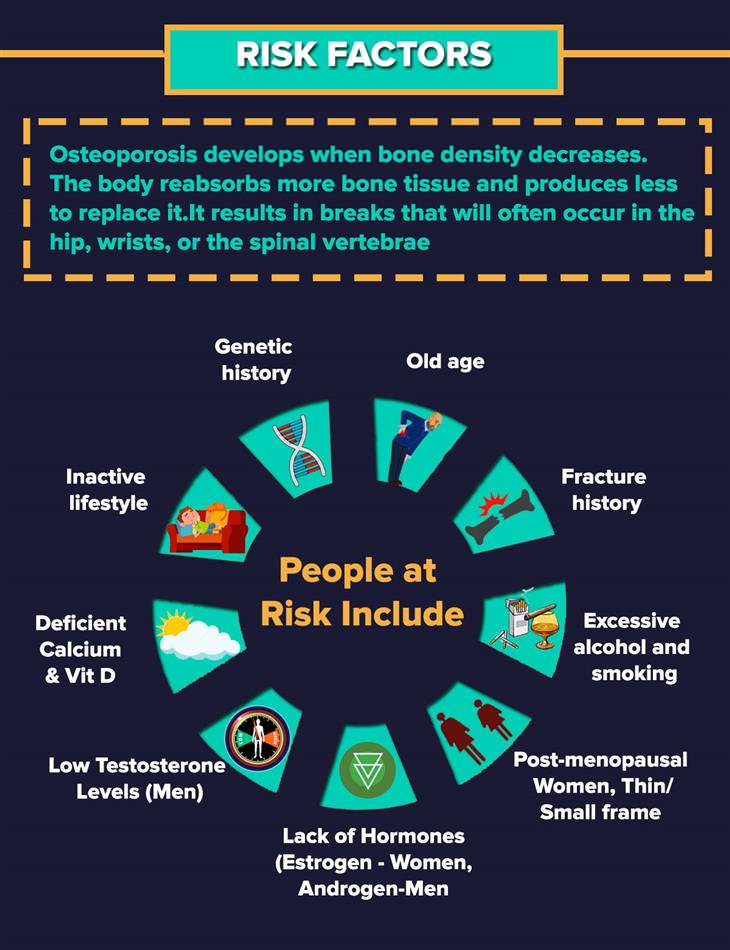
During our lifetime, the bones are continuously being rebuilt, but after age 30, the generation of new bone tissue slowly starts to decrease. Ultimately, our bones become brittle and porous, and a condition called osteoporosis is developed. The disease leads to a significant decrease in bone density, and this causes the bone to weaken and increases the risk of fractures, with even such seemingly harmless activities as a sudden sneeze being capable of causing bone damage. 
 
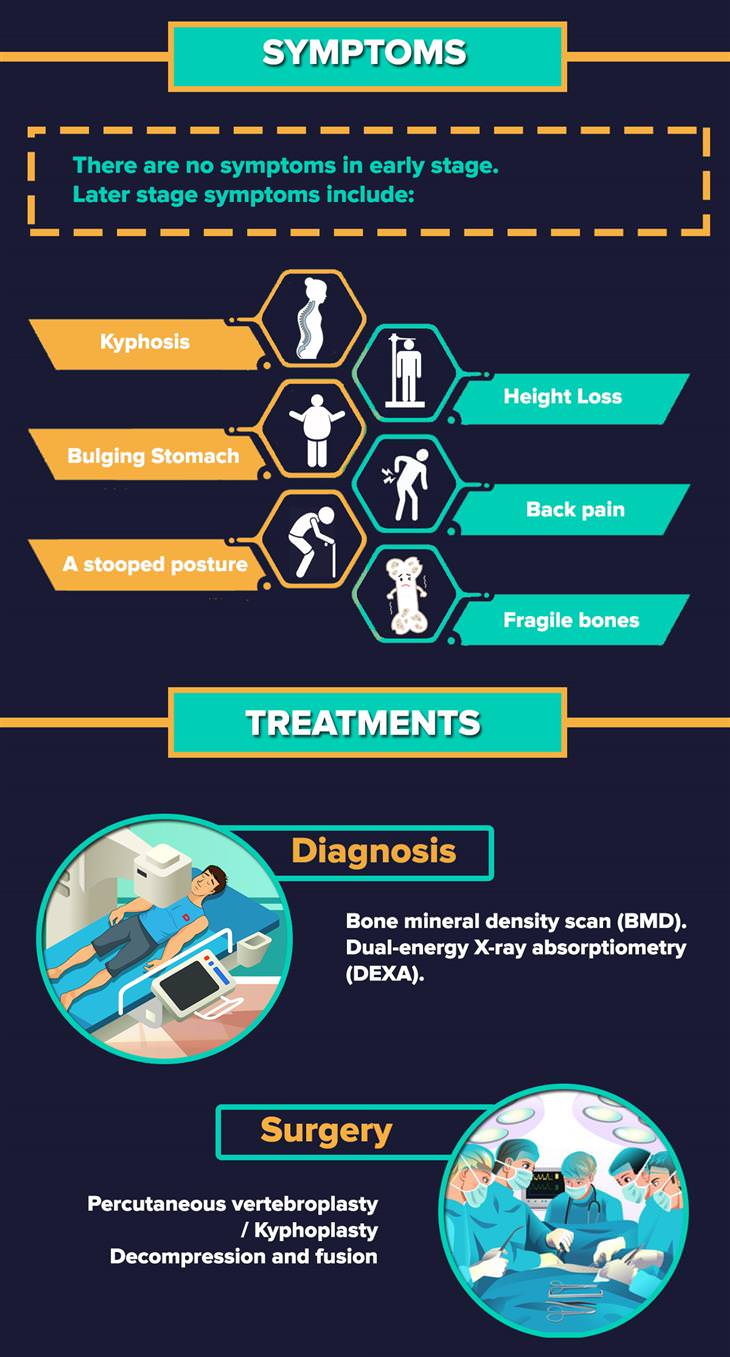
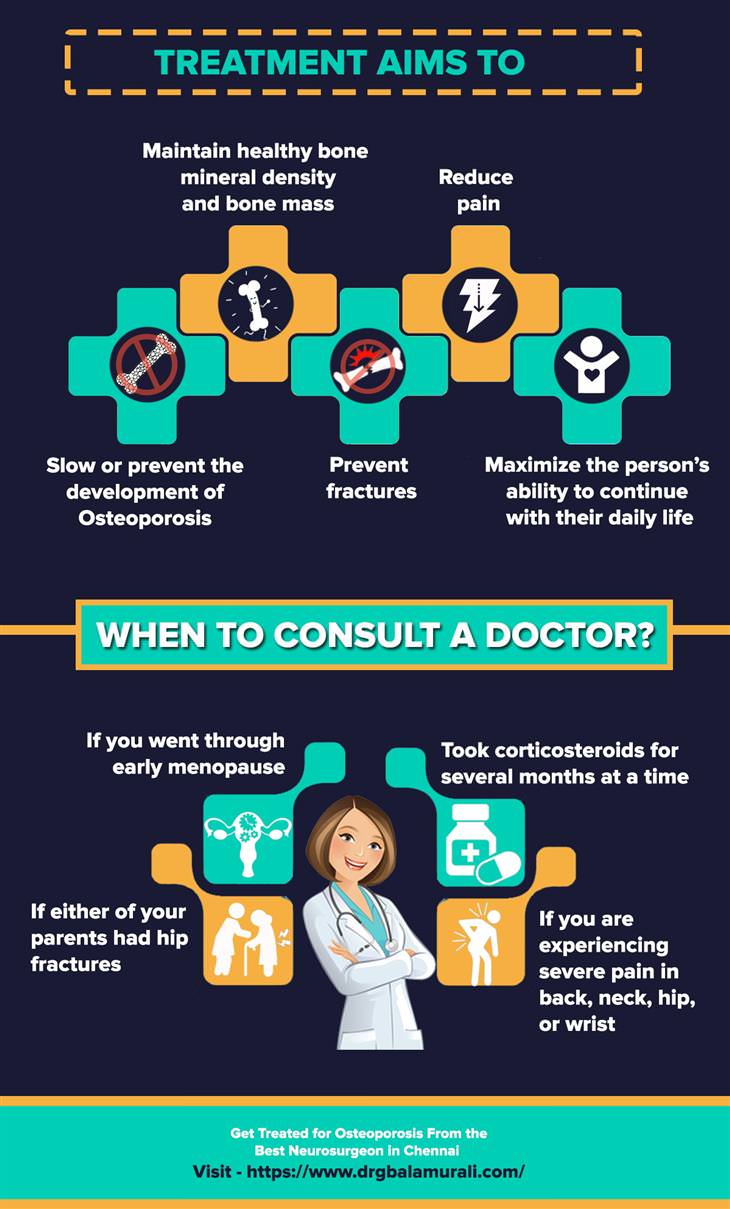
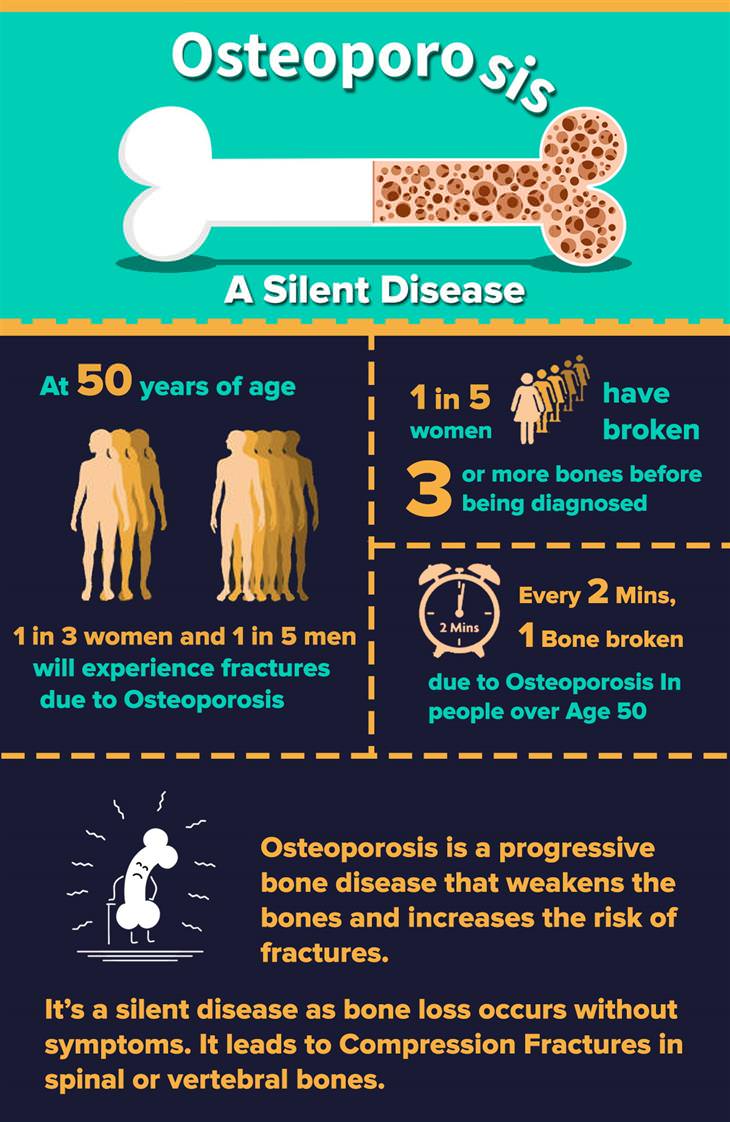
The risk of developing osteoporosis increases dramatically with age, and statistical information suggests that about 50% of women and 25% of men in the US will experience an osteoporosis-related fracture in their lifetime. Worst of all, many people have no idea they have the condition. Find more valuable information on this dangerous and underdiagnosed disease in the visually-pleasing infographic below.
Osteoporosis Infographic 1

Osteoporosis Infographic 2

Osteoporosis Infographic 3

Osteoporosis Infographic 4


This is only for your information, kindly take the advice of your doctor for medicines, exercises and so on.   

https://gscrochetdesigns.blogspot.com. one can see my crochet creations  
https://gseasyrecipes.blogspot.com. feel free to view for easy, simple and healthy recipes    
https://kneereplacement-stickclub.blogspot.com. for info on knee replacement

https://GSiyers home remedies.blogspot.com     is my latest addition to my blogs. I'm going to add posts there, do give me your valuable feed back on my blogs. Thanks a lot, take care, be healthy and be happy.


Labels: , , , , , , , , , , , ,

Thursday, January 16, 2020

Study explains “Swiss-cheese” bones suspected to cause lower back pain

Researchers at the John Hopkins University School of Medicine say they have added to the evidence that age-related changes to spinal cartilage tissue could invite painful nerve overgrowth that causes lower back pain.

Osteoclast
The team is hopeful that their findings from experiments with genetically engineered mice, may one day help researchers develop treatments that target abnormal nerve growth in the spine, preventing lower back pain.


Lower back pain a common problem
Lower back pain is an almost universal problem, affecting an estimated 80% of people worldwide at some point in their lives. In some cases, the pain is the result of strain or injury, but for the vast majority of people, and particularly older people, there is no apparent explanation for the pain.

The researchers say that “in total, 90% of lower back pain is nonspecific and has no apparent pathoanatomical cause.”


Age-related changes in cartilage could be the source of pain

Now, Xu Cao from the John Hopkins Department of Orthopaedic Surgery and colleagues suggest an explanation. Their study findings suggest that as the cartilaginous spinal tissue hardens with age, it develops swiss cheese-like, porous structures that allow pain-sensing nerves to grow into the tissue, triggering lower back pain.
 

Cartilage does not typically have nerve and blood vessels. However, when cartilage becomes a porous bony structure with the growth of nerve fibers, it could be the source of back pain,”  Xu Cao.

The spinal column can be described as a series of joints, each made up of bony vertebrae, a spinal disc and soft-tissue layers called cartilage endplates that protect the vertebrae from the weight-bearing work of the spine.

"The cartilage endplate is the cushion on a seat that makes it more comfortable. But, like similar tissue in the knee and hip joints, it succumbs to wear and tear over time," explains Cao.

The team’s experiments were designed to test whether sensory nerves growing into the cartilaginous endplates of the spine could cause the lower back pain that commonly gets reported in the absence of any injury or strain. Cao says researchers have long theorized that age-related changes and deterioration of the tissue in the spinal column provide “fertile ground” for overgrowth of these sensory nerves, which might explain why regular load-bearing actions of the spine become more painful as people age.


What did the study involve?
As reported in the journal Nature Communications, the researchers examined the cartilage endplates of vertebrae in mice older than 20 months – the equivalent of about 70 to 80 years in humans.

The team found that the endplates had hardened, becoming filled with holes, resembling diffuse bone with a Swiss cheese-like structure.

Previous studies by the team had reported that an aging spine can cause cartilage endplates to turn into porous bony structures that would provide holes for nerves to enter. Specialized cells called osteoclasts, which dissolve and absorb bone, create these holes in areas where the cartilage should be. Since osteoclasts are known to secrete the signaling molecule Netrin-1 during this cartilage-changing process, Cao thought that perhaps this molecule actively invites abnormal nerve growth and, in turn, leads to back pain.

To test this hypothesis, the researchers microscopically examined spine tissue samples taken from old mice and labeled all visible osteoclasts and nerve fibers with fluorescent tags.

They found that osteoclasts and nerve fibers co-existed in the same parts of the vertebrae, suggesting that the osteoclasts could somehow be inducing the nerve growth, possibly via netrin-1.

Next, the team genetically engineered knock-out mice lacking the gene that codes for osteoclasts, to test what would happen without their hole-forming and netrin1-secreting abilities.

After surgically destabilizing the joints between the mice’s vertebrae to mimic the instability seen in human lower back pain, the team found that mice without osteoclasts had significantly fewer pain-sensing nerves in their endplates, compared with mice that did have osteoclasts.


An important lead for potential therapeutic targets

Cao says the findings show that the porous structure of cartilaginous endplates is an important lead in understanding how unexplained lower back pain develops and a major step towards developing new treatments.

“These findings suggest that osteoclast-initiated porosity of endplates and sensory innervation are potential therapeutic targets for spinal pain,” concludes the team.

Next, the researchers plan to use compounds known to slow the development of abnormal bone structures to test whether they relieve lower back pain.


This is only for your information, kindly take the advice of your doctor for medicines, exercises and so on.     
https://gscrochetdesigns.blogspot.com. one can see my crochet creations  
https://gseasyrecipes.blogspot.com. feel free to view for easy, simple and healthy recipes    
https://kneereplacement-stickclub.blogspot.com. for info on knee replacement
 

Labels: , , , , , , ,

Friday, February 02, 2018

Simple test may predict preterm births

Researchers have found that a simple test of cervical mucus may reveal pregnant women’s risk of going into labour too early. Up to 18 per cent of babies born worldwide arrive before they are full-term, defined as 37 weeks of gestation. The study, showed that cervical mucus from women who delivered their babies before 37 weeks was very different from that of women who delivered later. This type of analysis could offer an easy way to calculate the risk of early labor, potentially allowing doctors to try to intervene earlier to prevent preterm births.

 “Our prediction is that we might be able to identify risk for preterm birth ahead of time, before labour sets in,” said senior author of the study. Between 25 and 40 per cent of early births are believed to be caused by infections that occur when microbes reach the uterus through the cervical plug, which is made of mucus and normally blocks access to the uterus. For the new study, the researchers decided to investigate the mucus’s permeability to small particles. Mucus is formed from polymers known as mucins, and the composition and arrangement of these mucins determine how porous the gel is.

The researchers collected samples from two groups of patients. The low-risk group included pregnant women who came in to their doctors’ offices for routine visits around 30 weeks and ended up giving birth after 37 weeks.  The high-risk group included women who went into labor early, between 24 and 34 weeks. Doctors were able to halt labour in these women, and the samples were taken after they were stabilised. They all ended up giving birth before 37 weeks.

The researchers found a significant differences in mucus permeability and adhesiveness – the peptides were able to pass through samples from high-risk women much more easily. This suggests that cervical mucus from women at high risk for early labour, for reasons not yet known, may be more susceptible to invasion by potentially harmful bacteria and microbes, making it more likely that those women will experience an infection that leads to preterm birth, the researcher said.

In addition, the altered mucus may be less able to retain helpful immune system components such as antibodies or antimicrobial peptides, which would normally help to combat infection, the study said. The researcher anticipates that cervical mucus testing could be done early in pregnancy, as part of a routine screen that would reveal whether a woman was at high risk of preterm birth.


THIS IS ONLY FOR INFORMATION, ALWAYS CONSULT YOU PHYSICIAN BEFORE HAVING ANY PARTICULAR FOOD/ MEDICATION/EXERCISE/OTHER REMEDIES.    
PS- THOSE INTERESTED IN RECIPES ARE FREE TO VIEW MY BLOG-                      
HTTP:GSEASYRECIPES.BLOGSPOT.COM/
FOR INFO ABOUT KNEE REPLACEMENT, YOU CAN VIEW MY BLOG-                                                        
HTTP://KNEE REPLACEMENT-STICK CLUB.BLOGSPOT.COM/
FOR CROCHET DESIGNS

HTTP://MY CROCHET CREATIONS.BLOGSPOT.COM

Labels: , , , , , , , , , , ,