Thursday, July 01, 2021

Coronavirus vaccination: Why is getting your second dose of COVID vaccine important?

Why is getting your second dose of COVID vaccine important?

The second wave of coronavirus taught us a lot of things. Not only did it highlight the unpredictability of the disease itself, but also gave us an insight into the various ways we can prevent a potential third wave. However, amidst all the chaos, there are people who are still very reluctant to take the vaccine or believe that skipping their second shot is a possible option. But what you must know is that vaccines are our only mode of protection against the virus and that the second COVID shot is the most important of the two vaccines. Until and unless you receive the two doses, you are only partially protected from the virus.

Coronavirus vaccines are administered in two doses
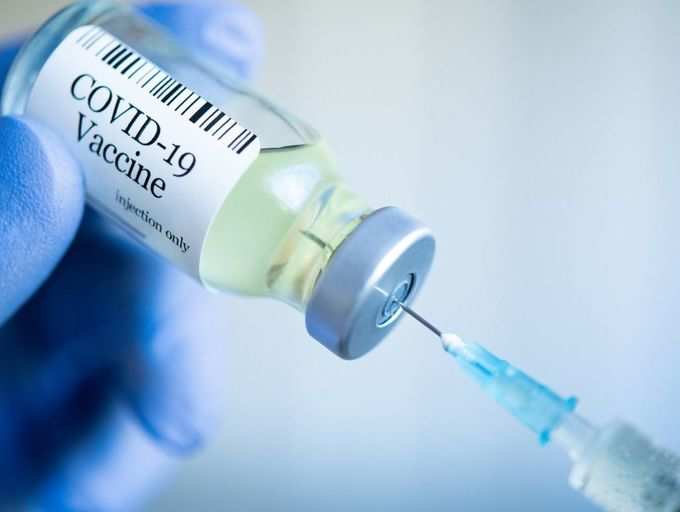
Primary COVID vaccines in India i.e. Bharat Biotech's Covaxin and Serum Institute of India's Covishield, have to be administered in two doses. Even if you have received the first dose of the vaccine, you must take the second shot at all costs.

In terms of Covishield, the second dose can be taken after the gap of 12 weeks, whereas after the first dose of Covaxin, you can get your second dose after 4-6 weeks.

Why should you get both your COVID vaccine doses?
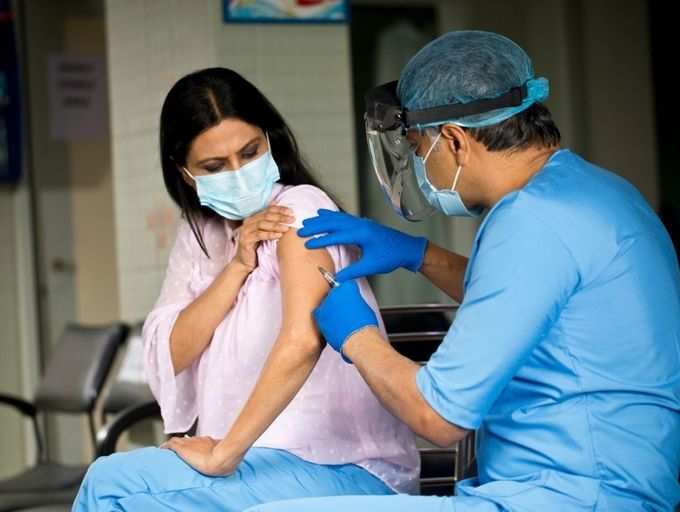
Getting only one dose of COVID vaccines only provides partial immunity, which means you are still at risk of developing severe COVID infections. Given the new emerging variants, it becomes all the more crucial that you take your vaccination process seriously and follow all the guidelines laid down by health officials.

Taking the second COVID shot gives you better protection against the virus
Besides lowering your chances of contracting the virus, getting your second shot and being fully vaccinated also ensures mild to no symptoms, even if you catch COVID-19. Apart from that, Recent reports have also suggested that people who are fully vaccinated are less susceptible to the Delta and Delta plus variant as compared to the ones who are partially vaccinated i.e. with one dose.

Given you and other members of the family are fully vaccinated, according to the Centre for Disease Control and Prevention (CDC), you can host gatherings indoors together and also be mask-free. However, it is advised to steer clear of those who are yet to receive their COVID shots.

The transmission of COVID-19 can be contained

The second vaccine shot is the most important as it provides full immunity against the virus. Besides, getting both the doses of the COVID vaccines can help us achieve herd immunity which can in turn contain the spread of the virus in communities.

Importance of getting your COVID vaccines

Considering the young and the elderly are both equally susceptible to the deadly coronavirus, it is important that each and every person, falling under the eligibility criteria, get themselves vaccinated. While you may not feel the need to get vaccinated considering you are young or have no pre-existing comorbidity, it is crucial that we protect the most vulnerable in our community and that can only be achieved through mass-vaccination.

This is only for your information, kindly take the advice of your doctor for medicines, exercises and so on.   

https://gscrochetdesigns.blogspot.com. one can see my crochet creations  
https://gseasyrecipes.blogspot.com. feel free to view for easy, simple and healthy recipes    
https://kneereplacement-stickclub.blogspot.com. for info on knee replacement


Labels: , , , , ,

Saturday, January 11, 2020

Plant-rich diet protects against foodborne pathogens, mice study shows

Mice fed a plant-rich diet are less susceptible to gastrointestinal (GI) infection from a pathogen such as the one currently under investigation for a widespread E. coli outbreak tied to romaine lettuce, UT Southwestern researchers report. A strain of E. coli known as EHEC, which causes debilitating and potentially deadly inflammation in the colon with symptoms such as bloody diarrhea and vomiting, is implicated in several foodborne outbreaks worldwide each year.

There has been a lot of hearsay about whether a plant-based diet is better for intestinal health than a typical Western diet, which is higher in oils and protein but relatively low in fruits and vegetables. So we decided to test it." Vanessa Sperandio, Ph.D., professor of microbiology and biochemistry at UT Southwestern

Her study on a mouse model of EHEC is published this week in Nature Microbiology.

"Plant-rich diets are high in pectin, a gel-like substance found in many fruits and vegetables. Pectin is digested by the gut microbiota into galacturonic acid, which we find can inhibit the virulence of EHEC," she adds.

"This is relevant to public health because EHEC outbreaks lead to hemorrhagic colitis, which is debilitating and sometimes causes death, particularly in the very young and the elderly," she says.

Intestinal pathogens like EHEC sense the complex chemistry inside the GI tract to compete with the gut's resident microbiota to establish a foothold, Sperandio says. Over centuries, the pathogens have developed different strategies to compete against the so-called good, or commensal, microbes that normally line the gut.

Those commensals include harmless strains of E. coli living in the colons of humans and other mammals, where they help the host's normal digestion process, she adds. The word commensal means "eating at the same table" and that is what the symbiotic bacteria that make up the gut's microbiota do.

The commensals that line the gut present a significant barrier to intestinal pathogens, Sperandio explains. EHEC and similar gram-negative bugs overcome that barrier by deploying a secretion system called T3SS.

T3SSs act like molecular syringes to inject a mix of virulence proteins into the cells lining the host's colon, setting off inflammation and symptoms of infection. Because mice are unaffected by EHEC, researchers use a similar pathogen, Citrobacter rodentium, in mouse studies, Sperandio explains.
"Our study finds first that the good E. coli and the pathogenic ones like EHEC use different sugars as nutrients," she says, adding that the two types of E. coli may have evolved to avoid competing for the same energy sources. "Second, we find that dietary pectin protects against the pathway the pathogenic EHEC uses to become more virulent."

Another type of commensal gut bacteria breaks down dietary pectin from fruit and vegetables, creating galacturonic acid, a sugar acid that the EHEC and C. rodentium use in two ways. Initially, the pathogen uses that sugar acid as an energy source to expand in the gut, Sperandio says.

"Once the sugar acid becomes depleted, the pathogen changes its survival strategy, almost like flipping a switch," she says. Instead of using the galacturonic acid for nourishment, the infectious bacteria employs it in a signaling pathway that increases the EHEC's and similar bacteria's virulence using the syringe-like T3SS.

In the study, mice fed pectin for about a week withstood infection. Comparing the colons of six mice fed a chow diet with 5 percent extra pectin from citrus peel with four mice on a typical diet, the researchers found a much lower rate of infection in the pectin-eating mice, Sperandio says.

The amount of bacteria in the mouse gut was measured by daily stool checks and by analysis of the amount of bacteria in a pouch at the juncture of the small and large intestines, called the cecum, at the experiment's end.

The researchers found that mice on the pectin-enriched chow had about 10,000 bacteria in the cecum compared to 1 million bacteria in mice on the typical diet. The pectin group also had fewer symptoms, she says, adding that a pectin level of 5 percent appears to prevent the pathogen from activating its virulence repertoire.

She stresses that the research is one step in a journey to define the molecular mechanisms that govern how the commensal species in the gut impact the virulence of intestinal pathogens.

"This is not translatable to humans yet. We hope a better understanding of how intestinal disease develops will lead to strategies to reduce the incidence or, at least, the symptoms caused by these gram-negative pathogens, possibly through new vaccines or drugs," she says.


this is only for your information, kindly take the advice of your doctor for medicines, exercises and so on.     
https://gscrochetdesigns.blogspot.com. one can see my crochet creations  
https://gseasyrecipes.blogspot.com. feel free to view for easy, simple and healthy recipes    
https://kneereplacement-stickclub.blogspot.com. for info on knee replacement
 

 source- newsmedical

Labels: , , , , , , , , , ,