8 Clever Ways to Cool Down Your Bedroom in the Summer Heat
Getting a good night's sleep during the hottest summer months seems
impossible at times. Sometimes, even the air conditioning doesn't help,
and you end up rolling from side to side and sweating like a sinner in
church all night long. But even if it does, having the AC running all
night for months seems like a waste of your hard-earned money, doesn't
it?
To save yourself some cash and still sleep well all summer, irrespective
of the heat, there are many things you can do, like proper insulation,
ceiling fans, and other general tips to consider to keep your entire
house cool. But insulating your attic and installing ceiling fans are
long-term projects that require professional help, a lot of time and
possibly money, and chances are, you need some quick fixes to cool off
and sleep well right away. So here are 8 clever and easy tricks that are
sure to keep your bedroom cool and fresh all night, and require little
time and even less money on your part.
1. Bring in some indoor plants

Turning your bedroom into a jungle full of greenery and fresh air is an excellent idea! Not only will the plants help you sleep better all night by providing you with fresh oxygen, but large leafy plants will also block out the sun and make sure the bedroom is in shade and hence a cooler place in your house. Planting shrubs and trees outside of the bedroom window is also a good idea, if possible.
In addition, some plants are natural coolants, and they provide lots of fresh oxygen and cool down the air in the room. Such indoor plants include aloe, snake plant, ficus plants, spider plant, Boston fern, pathos, and the Areca palm tree, and they will look great in your bedroom!
2. Make your windows reflective
Most of the heat gets into your bedroom with the light that shines
through the windows, and so blocking or filtering out some light might
really help reduce the heat in the bedroom. To do so, you can cover your
windows in a special reflective film, which is available in most
hardware stores and online and is easy to install on your own. The
nearly transparent film acts as a filter that will let in only 47% of
the sun's rays through, just enough to bring in some light into the room
without overheating it.
In a pinch, you can also use regular tin foil or foam sheets with a foil backing to cover your bedroom windows that will basically have the same effect. The downside of this trick, however, is that the foil will block most of the light and doesn't look particularly appealing, but it works!
3. Choose the right curtains and blinds

Lightweight sheer curtains are not suitable for bedrooms, as they will
let in too much light. Another great way to block out the sun's rays and
keep your bedroom cool apart from the reflective film are blackout
curtains or blinds, which you would ideally close throughout the day to
keep the room fresh. Blackout curtains especially can block nearly 100%
of the light and also have some noise-canceling properties and help trap
heat in during the winter, which makes them an excellent choice for
sensitive sleepers year-round.
4. Opt for light-colored furniture and accessories
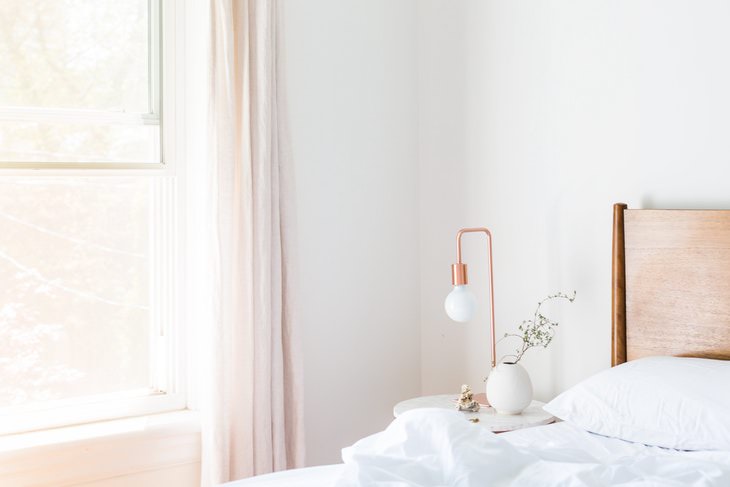
Even such a seemingly-minor detail as color can make a big difference in
terms of trapping in unwanted heat. We recommend you choose
light-colors like white, off-white, beige, or greige in your bedroom
during the summer. To understand why you must remember a bit of color
theory: dark colors, such as black, navy, and dark brown absorb light,
whereas light ones reflect it. Thus, light-colored accessories,
furniture, textiles, and bedding will not absorb much light and
subsequently heat, too, so they're a much better choice for the warm
months.
5. Choose the right fabric for your bedding
In a previous article on staying cool at night without air conditioning,
we've mentioned that cotton bedding is superior to polyester and satin
in the summer. We'd like to specify that a bit more, as it's not just
cotton, but also linen fabrics that are excellent for the summer months.
Both of these fabrics are woven from natural fibers and thus are very
breathable, which is key for losing heat.
Linen, in particular, has natural cooling properties, and it's also antimicrobial and moisture-wicking. Both cotton and linen are natural insulators, which means they will help you cool off in the summer and keep you warm in the winter. Textile experts also suggest a percale weave for the summer, which is an especially closely-knit weaving technique that results in a cooling and smooth-feeling fabric.
6. Get a carpet for your bedroom
Insulation is key to effective and efficient climate control year-round,
and not just in the summer, which is why experts always advise
homeowners and renters alike to insulate their attic, windows, and any
other cracks and gaps from where air may escape. However, few people
actually know that one of the easiest ways to insulate the floor is by
using a carpet. The carpet fibers will help fill in any insulation gaps
in the floor that may otherwise be pricey and effortful to repair.
7. Air out the room
Don't want to use the air conditioner at night? In that case, opening the bedroom door may actually prove beneficial, as simple as that. An open door will increase the ventilation in the room and promote the circulation of fresh, cool air from other rooms into your bedroom. Be wary of drafts, however, and always use door stoppers to prevent the door from slamming shut in the middle of the night.
8. Change the lightbulbs
If you're still using old-fashioned incandescent lightbulbs in your
home, it's definitely time for a change. These lightbulbs are
significantly less efficient than LEDs and CFL bulbs and gobble up to
80% more energy. They also let out about 90% of the energy they use as
heat, which means that they will increase the temperature in your
bedroom, unlike fluorescent and LED lightbulbs.