Wednesday, April 06, 2022

8 Simple Ways to Purify Indoor Air

While most people are very aware of the dangers of outdoor pollution, the many factors which can compromise the quality of indoor air are far less well-known. Since most people spend the majority of their time inside, it's highly important that everyone understands just how detrimental indoor contaminants are for our health.

Here are 8 easy ways to improve the air quality in your home:
 
1. Use Natural Air Conditioning
There are many ways to naturally make your home cooler and purer, without having to resort to running your central cooling system all summer long. For starters, a ceiling fan can go a long way if you're looking to cool entire rooms evenly. You could also try minimizing the use of heat-producing appliances or install heat-reducing window treatments. If you're looking to cool a yard or terrace, then try adding large plants which will provide you with some much-needed shade.

2. Try to Increase Your Ventilation 
While this piece of advice might seem overly-obvious at first, there's actually a lot more to increasing your ventilation than merely opening more windows. This is because outdoor air might still contain hazardous pollution that you wouldn't want to constantly breathe in. As an alternative, you could install trickle vents that will automatically cycle and purify the air that you breathe indoors. 
 
3. Try and Eliminate the Source
There are plenty of sources of indoor air pollution, such as a build-up of dust, excessive moisture, cigarette smoke, and the use of chemical products. If at all possible, you should try and limit your home's exposure to all of these, and it would be a great idea to look out for any natural alternatives that you can use instead. 
 
4. Use Indoor Air Filters 
Another thing which you might want to try is installing a number of HEPA filters around your home, which have been proven to be a highly effective solution when it comes to getting rid of nasty pollutants from indoor areas. What's more, you can use HEPA filters in both portable air purifiers as well as in central air systems. To get the most out of them, HEPA filters should be regularly cleaned or changed. 
 
5. Try Using Beeswax Candles
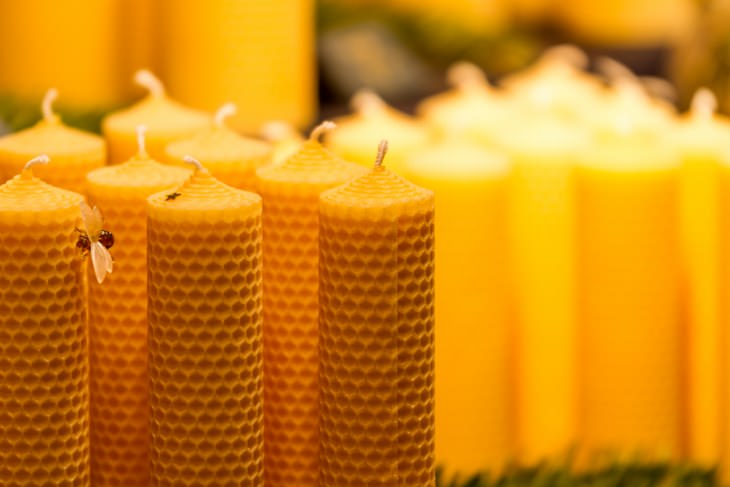
If you enjoy the natural light that candles provide your home with, then you should do your best to avoid buying ones which are made of paraffin, as these will end up polluting your home with toxic petroleum by-products. You should instead opt for beeswax candles as they combust very cleanly, and will also ionize the air in your home, which will help to neutralize toxic chemicals and other pollutants. An added benefit of using beeswax candles is that they burn very slowly, so you'll find yourself replacing them much less often. 
 
 6. Use Activated Charcoal 
 Making use of activated charcoal is another great way to naturally purify the air in your home. Also known as active carbon, activated charcoal is both entirely odorless, as well as extremely absorbent. What's more, activated charcoal is easy to find, and you can purchase all the charcoal you require from the internet, many home improvement stores, or even well-stocked supermarkets. 
 
7. Get a Salt Lamp

Much like beeswax, Himalayan pink salt is another natural ionizer, which will help keep your home as pure and fresh as possible. Not only are Himalayan salt lamps incredibly good for you, but they're also a unique and stylish way to add a bit of character to any indoor environment, whether at home or in an office. 
 
8. Get More Houseplants 
Of course, the king of natural air purifiers is the humble houseplant. There are plenty of plants that are easy to grow and that will effectively filter a whole host of toxins from your home. Some of the best include:
 
• Spider Plant 
• Dracaena 
• Rubber Tree 
• Philodendron 
• English Ivy 
• Bamboo Palm 
• Aloe Vera 
• Snake Plant 
• Peace Lily 
• Golden Pothos

This is only for your information, kindly take the advice of your doctor for medicines, exercises and so on.   

https://gscrochetdesigns.blogspot.com. one can see my crochet creations  
https://gseasyrecipes.blogspot.com. feel free to view for easy, simple and healthy recipes    
https://kneereplacement-stickclub.blogspot.com. for info on knee replacement


Labels: , , , , , , , , ,

Monday, January 25, 2021

Talking can spread COVID-19 as much as coughing, claims study

 Having a conversation with someone in close quarters while infected with COVID-19 could be just as dangerous as coughing near them, new research published Wednesday suggests.

According to the study, completed by researchers at the University of Cambridge and Imperial College London, when two people are in a poorly ventilated space and neither is wearing a mask, a prolonged conversation is far more likely to spread respiratory droplets carrying the virus than a short cough.

Study authors developed mathematical models to show how SARS-CoV-2, the virus which causes COVID-19, spreads in different indoor spaces depending on the ventilation and the use of masks.

The results suggest it takes just a couple of seconds for exhaled particles to travel beyond two metres and may linger for up to an hour after an infected person spoke – even if only for 30 seconds.

COVID-19 is spread from an infected person to others through respiratory droplets and aerosols created when the individual coughs, sneezes, or talks.

The droplets vary in size from large, which fall to the ground within seconds or minutes, to small, sometimes called aerosols, which linger in the air depending on the ventilation of the space.

When speaking, we exhale smaller droplets which spread more easily around a room and accumulate without proper ventilation. Coughing, on the other hand, expels larger droplets, which are more likely to settle on surfaces surrounding the infected person.

Researchers built mathematical models to take into account the size of droplets emitted from infected individuals when they speak or cough, and included factors such as how droplets evaporate and settle on surfaces and the viral load they may contain.

The results suggest the risk of transmission is quite high when standing within two metres from an unmasked infected person who is talking.

An hour after an infected person has spoken – even if the conversation was kept to a short 30 seconds – the aerosols left behind contain much more viral mass than one cough; enough to cause a possible infection.

When masks are worn however, they filter a portion of the exhaled droplets during conversation, reducing the amount of virus in aerosols that can spread through a space.

“Our knowledge of airborne transmission of SARS-CoV-2 has evolved at an incredible pace, when you consider that it’s been just a year since the virus was identified,” study co-author Dr. Pedro de Oliveira said in a University of Cambridge press release.

“In our work, we consider the wide range of respiratory droplets humans exhale to demonstrate different scenarios of airborne viral transmission – the first being the quick spread of small infectious droplets over several metres in a matter of a few seconds, which can happen both indoors and outdoors. Then, we show how these small droplets can accumulate in indoor spaces in the long term, and how this can be mitigated with adequate ventilation.”

Researchers say the results of the study show the vital role of ventilation in preventing the spread of COVID-19, especially as more people gather indoors during the winter months.

The researchers have released a free, open-source tool that can be used by those managing public spaces, such as restaurants, retail shops, workplaces and classrooms, to evaluate their ventilation needs.

“The tool can help people use fluid mechanics to make better choices, and adapt their day-to-day activities and surroundings in order to suppress risk, both for themselves and for others,” said study co-author Savvas Gkantonas, who led the development of the app with Oliveira.

Researchers hope the platform will be useful for assessing the importance of mitigating measures, such as reducing exposure time, increasing ventilation, and wearing a mask.​

This is only for your information, kindly take the advice of your doctor for medicines, exercises and so on.     

https://gscrochetdesigns.blogspot.com. one can see my crochet creations  
https://gseasyrecipes.blogspot.com. feel free to view for easy, simple and healthy recipes    
https://kneereplacement-stickclub.blogspot.com. for info on knee replacement

Labels: , , , , , , , ,