Sunday, April 05, 2026

Scientists Discover New Way To Eliminate “Zombie Cells” Driving Aging
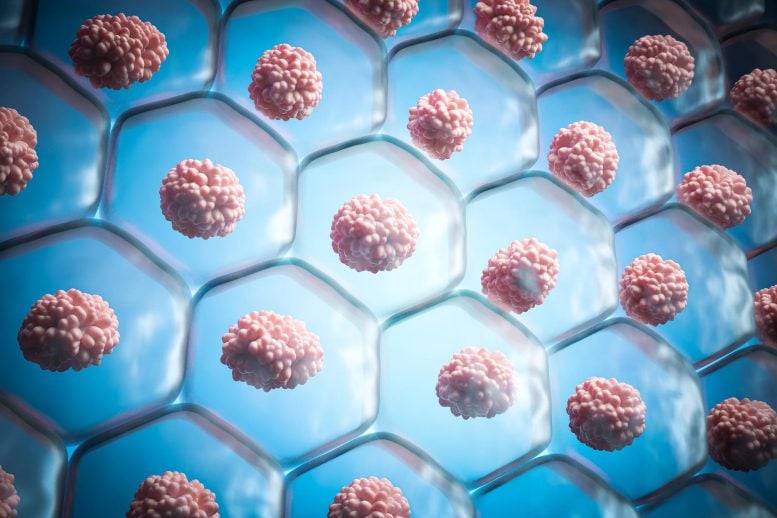
Human Skin Cells Microscopic Illustration 

Aging gradually erodes the body’s ability to maintain internal balance, in part due to the buildup of senescent cells that fuel inflammation and disease. New research explores how metabolic changes within these cells support their survival and identifies a molecular interaction that could be disrupted to restore resilience. Credit: Shutterstock

Scientists uncover a metabolic vulnerability in aging cells that could be key to restoring resilience and combating age-related diseases.

As people grow older and become more frail, their bodies often lose tissue reserve capacity. This reserve, known as resilience, allows the body to maintain homeostasis through defense, compensation, modulation, and repair processes. When resilience declines, older adults typically experience reduced daily activity along with a higher likelihood of multimorbidity, meaning the presence of multiple chronic conditions.

A key driver of this decline is the buildup of senescent cells—often called “zombie cells”—which no longer divide. The body naturally removes these cells through a process called senolysis, but this clearing system becomes less effective with age.

Senescent Cells and Inflammation

Senescent cells can damage surrounding tissue through the senescence-associated secretory phenotype, or SASP. This process involves the release of pro-inflammatory molecules that disrupt nearby cells. Over time, this contributes to chronic inflammation and the progression of age-related diseases, helping explain the loss of resilience seen in older individuals. However, the connection between metabolic resilience, survival capacity, and SASP has not been fully understood.

To explore this, researchers at Kyoto Unoversity examined how senescent cells function at a molecular level. They found that these cells rely heavily on glycolysis, the process of breaking down glucose for energy, a trait also seen in cancer cells. The team focused on two molecules involved in this process: phosphoglycerate mutase (PGAM), a glycolytic enzyme, and Chk1 kinase, which bind together in cancer cells to boost glycolysis.

Investigating Metabolic Mechanisms

To study whether this interaction also occurs in senescent cells, the researchers developed a NanoBiT assay, a method that uses bioluminescence to detect protein interactions. Their results showed that PGAM-Chk1 binding is increased in senescent cells, supporting both glycolysis and cell survival. When this interaction was blocked, senescent cells were selectively eliminated in both in vitro and in vivo experiments. The approach also reduced lung fibrosis in mice.

The study further revealed that this molecular interaction affects FoxM1, a transcription factor that plays a central role in the cell cycle. FoxM1 was found to suppress BIM, a protein that triggers apoptosis, or programmed cell death. It also activates DNA repair systems in senescent cells. Disrupting PGAM-Chk1 binding may therefore limit FoxM1 activity, allowing damaged cells to undergo apoptosis and potentially slowing the decline in resilience.

Implications for Senotherapy

These findings could have clinical relevance for senotherapy, an emerging approach aimed at treating age-related diseases by targeting senescent cells. The results may also support the development of senolytics, therapies designed to eliminate these cells by inducing apoptosis.

“Our findings in glycolytic regulation suggest that impaired metabolic resilience in aging is one of the targets for senotherapy, to aid in preservation of resilience in aging,” says corresponding author Hiroshi Kondoh.


This is only for your information, kindly take the advice of your doctor for medicines, exercises and so on.   

Labels: , , , ,

Friday, August 30, 2019

This new drug can prevent Alzheimer’s

A team of scientists has found a new drug that may prevent neuronal death through glucose metabolism modification in stressed neurons. The trials conducted on mice are rather promising for future use in humans. The new drug can be advantageous in neurological conditions ranging from Amyotrophic lateral sclerosis, Alzheimer's, and Huntington's diseases to traumatic brain injury and ischemic stroke.

According to WHO, stroke is the second most common cause of mortality, and more than a third of people who have survived a stroke will have a severe disability. As the population ages, many more millions are poised to develop Alzheimer's or Parkinson's diseases in the near future.

THIS IS ONLY FOR INFORMATION, ALWAYS CONSULT YOU PHYSICIAN BEFORE HAVING ANY PARTICULAR FOOD/ MEDICATION/EXERCISE/OTHER REMEDIES.                                    PS- THOSE INTERESTED IN RECIPES ARE FREE TO  VIEW MY BLOG-                                                                                           https://gseasyrecipes.blogspot.com/                                                                                                                                                FOR INFO ABOUT KNEE REPLACEMENT, YOU CAN VIEW MY BLOG-                                                                       https:// kneereplacement-stickclub.blogspot.com/                                                                                                                     FOR CROCHET DESIGNS                                                                                                   
                                https://gscrochetdesigns.blogspot.com


Glycolysis is generally considered as the metabolic pathway essential for cell survival since it meets cell energy needs in case of intensive energy consumption. However, it is already known that in the brain tissue, the situation is quite different - different cell types show distinct glucose metabolism patterns.

In neurons, only a small portion of glucose is consumed via the glycolysis pathway. At the same time, astrocytes provide nutrients to neurons and utilize glycolysis to metabolise glucose. These differences are mostly due to the special protein called PFKFB3, which is normally absent in neurons and is active in astrocytes.

In the case of certain neurological diseases, stroke being one of them, the amount of active PFKFB3 increases in neurons, which is highly stressful for these cells and leads to cell death. Researchers in the in vivo experiments confirmed that a small molecule, the inhibitor of PFKFB3, may prevent cell death in the case of ischemia injury.

Inhibition of PFKFB3 improves motor coordination of mice after stroke and reduced brain infarct volume. Moreover, PFKFB3 inhibitor protects neurons from the amyloid-beta peptide, the main component of the amyloid plaques found in the brains of Alzheimer's disease patients.

Professor said, "Excitotoxicity is a hallmark of various neurological diseases, stroke being one of them. Our group has previously established a link between this pathological condition and high activity of PFKFB3 enzyme in neurons, which leads to severe oxidative stress and neuronal death"

"These promising results bring hope to dozens of millions of patients suffering from life-threatening neurological diseases," mentioned another researcher.

Labels: , , , , , , , , , , ,

Thursday, August 22, 2019

Glucose not responsible for inflammation in type 2 diabetes

To date, the underlying causes of inflammation in obesity and type 2 diabetes mellitus (T2DM) have been poorly understood, but a new research seems to have made a breakthrough by finding that that changes to mitochondria--the powerhouse of cells--drive chronic inflammation from cells exposed to certain types of fats, shattering the prevailing assumption that glucose was the culprit.

According to the study, chronic inflammation fuels many of the devastating complications of type 2 diabetes, including cardiovascular, kidney, periodontal diseases, and is thus one of the key targets for therapy development.

This new data may enlighten the conversation about tight glycemic control as the dominant treatment goal for people with diabetes.

Research  didn't set out to disprove the glucose-inflammation causation theory.

Based on the importance of glycolysis--a 10-reaction sequence that produces energy--in other types of inflammation, the team hypothesised those immune cells from patients with type 2 diabetes would produce energy by burning glucose. "We were wrong," he said.

"We exclusively used immune cells from human subjects for all of the work," he explained, noting that humans, but not animal models of type 2 diabetes, have the specific pro-inflammatory T cell profile her team had identified in earlier research.

The team was surprised to find that glycolysis wasn't driving chronic inflammation. Instead, a combination of defects in mitochondria and elevated fat derivatives were responsible.

Nikolajczyk said she sees applications for this research in both basic and clinical sciences. She hopes to precisely define pro-inflammatory lipid types and explore associations between circulating and/or tissue-associated lipids and insulin resistance, one key feature of Type 2 diabetes.

She is also interested in contributing to the development of new analytical approaches, spearheaded by Dr. Lauffenburger's team, that leverage ongoing lipid-related findings into a new understanding of pathology in type 2 diabetes.

"Aggressive blood glucose control to lower the risk of diabetic complications has been the goal for most people with Type 2 Diabetes for decades. Our data provide an explanation for why people with tight glucose control can nonetheless have disease progression," Nikolajczyk said.

Family history of diabetes associated with increased bone mineral density

The association between type 2 diabetes and increased fracture risk is well documented. However, little was known about the possible effect of family history of diabetes on bone mineral density (BMD). A study from China now confirms that a history of first-degree family members with diabetes is linked to increased BMD as well as to insulin resistance. Results are published online in Menopause, the journal of The North American Menopause Society (NAMS).

Because patients with type 2 diabetes are at an increased risk of fracture, understanding the early pathophysiology of altered BMD could be critical in the development of preventive strategies for diabetic osteoporosis. Although strong evidence has revealed normal to high BMD in most patients with type 2 diabetes, no data have been published, to date, that demonstrate whether BMD is altered in persons with a first-degree family history of diabetes.

In this new study involving nearly 900 normoglycemic postmenopausal women, it was found that the BMD of the lumbar spine and femoral neck was significantly higher in participants with a first-degree family history of diabetes than in those without such history, even in women with normal blood glucose levels. These same participants additionally showed increased insulin resistance and hyperinsulinemia.

"This study shows an association between a family history of diabetes and increased bone density in postmenopausal women. This finding may be related to higher insulin levels in these women with a hereditary predisposition to diabetes, because insulin has a bone-building effect. Although this sounds like good news, these women are at increased risk for developing diabetes, which is associated with skeletal fragility and increased fracture risk," says Dr. Stephanie Faubion, NAMS medical director.


THIS IS ONLY FOR INFORMATION, ALWAYS CONSULT YOU PHYSICIAN BEFORE HAVING ANY PARTICULAR FOOD/ MEDICATION/EXERCISE/OTHER REMEDIES.                                    PS- THOSE INTERESTED IN RECIPES ARE FREE TO  VIEW MY BLOG-                                                                                           https://gseasyrecipes.blogspot.com/                                                                                                                                                FOR INFO ABOUT KNEE REPLACEMENT, YOU CAN VIEW MY BLOG-                                                                       https:// kneereplacement-stickclub.blogspot.com/                                                                                                                     FOR CROCHET DESIGNS                                                                                                   
                                https://gscrochetdesigns.blogspot.com

Labels: , , , , , , , , ,

Sunday, July 14, 2019

Targeting protein may stop ovarian cancer cells from spreading

Preventing a protein from performing its job may keep a certain type of ovarian cancer cell from growing and dividing uncontrollably in the lab, says researcher.

In a study, the researchers identified the protein as a potential therapeutic target for high-grade serous ovarian cancer cells.


Approximately 70 % of patients with this type of ovarian cancer relapse with the chemo-resistant disease, increasing the need for new approaches to treatment.


Another researcher has identifies a potential method to put high-grade serous ovarian cancer cells in a " sleep state" called senescence.


One of the biggest problems of cancer cells is they can grow forever without stimulus. By inducing senescence, the cells can no longer divide and grow, she said.


Cells break down and build up the chemicals needed for supporting life through various cycles and pathways in a process known as metabolism.


A hall mark of cancer cells is that their metabolic processes are often different from normal, healthy cells, said lead author of the paper.


The metabolites in each line of cells were quantified using spectometry. After comparing differences in their metabolic processes, the lab found that the cancerous cells prefer to use sugars in the citric acid cycle, instead of making lactate, the more common route.


Many therapies target glycolysis, but that may not be the best approach, she said. She noted that often when targeting glycolysis, there could be toxic damage to normal and healthy tissues.


The government has already approved a drug that targets the mutant form of the protein. One of the drugs that target the mutant form can also target the wild-type form. One of our long-term goals is to try and re-purpose this already -approved drug as a treatment for this form of ovarian cancer, she said.


The research team has found that inhibiting the wild-type form of the protein may be an effective strategy for future therapies for all stages of high-grade serous ovarian cancer. When these cells spread to other parts of the body, they adopt a form that is different from the original cancer cells.


It is important that therapies are effective at later stages, as this is when ovarian cancer patients are typically diagnosed, she said.


THIS IS ONLY FOR INFORMATION, ALWAYS CONSULT YOU PHYSICIAN BEFORE HAVING ANY PARTICULAR FOOD/ MEDICATION/EXERCISE/OTHER REMEDIES.                                    PS- THOSE INTERESTED IN RECIPES ARE FREE TO  VIEW MY BLOG-                                                                                           https://gseasyrecipes.blogspot.com/                                                                                                                                                FOR INFO ABOUT KNEE REPLACEMENT, YOU CAN VIEW MY BLOG-                                                  https:// kneereplacement-stickclub.blogspot.com/                                                                      FOR CROCHET DESIGNS                                                                                                                                                                                     https://gscrochetdesigns.blogspot.com

Labels: , , , , , , , , ,