Tuesday, December 21, 2021

How to Spot & Stop Someone from Drowning: 5 Infographics

We all have a strong idea of what it looks like when someone is drowning (arms flailing and muffled screams of help), yet it turns out that in reality, the signs of someone drowning are much harder to spot than the movies would have you believe. There are several subtle signs that are not obvious, but fortunately, you can learn. Many parents wish they knew this vital information before they helplessly watched their little ones perish before their very eyes - simply because they didn't realize what was happening before it was too late. 
 
Read these 5 excellent infographics prepared by brightside, so that you know exactly how to spot someone in danger of drowning, and just what to do to help them.  
 
1. How to tell whether someone is drowning or not
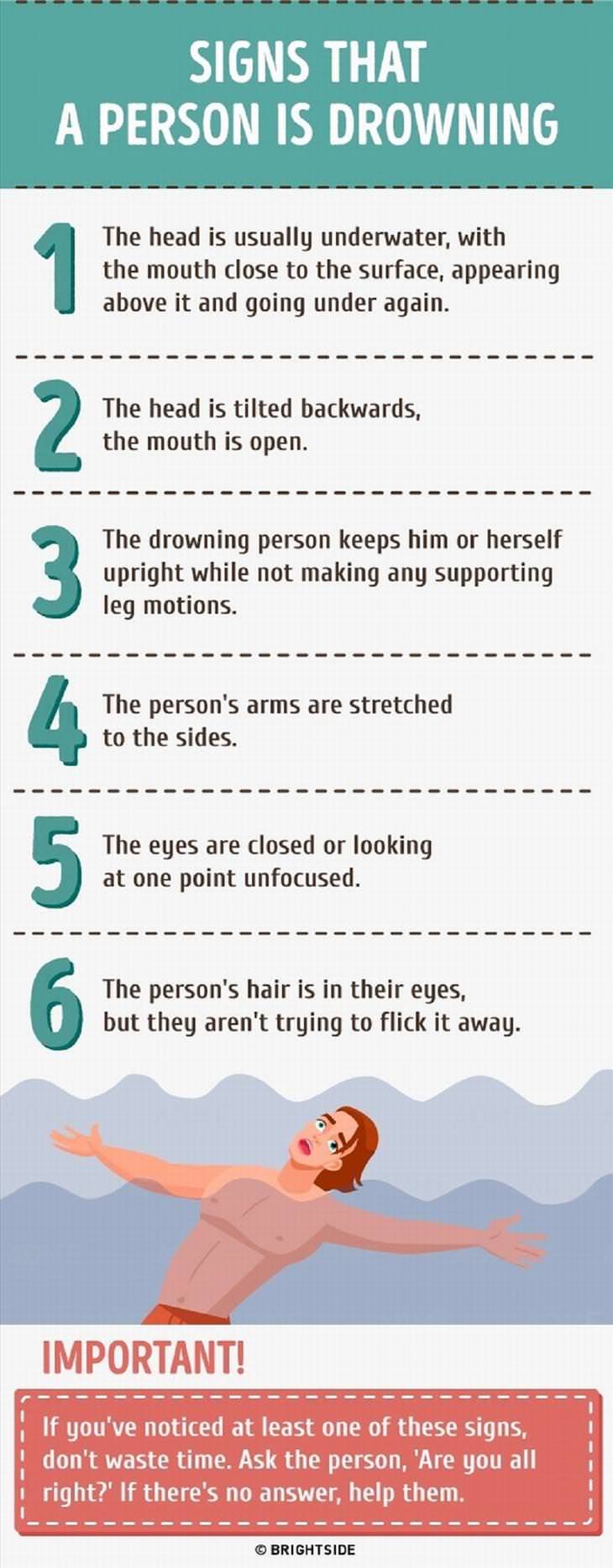
drowning guide
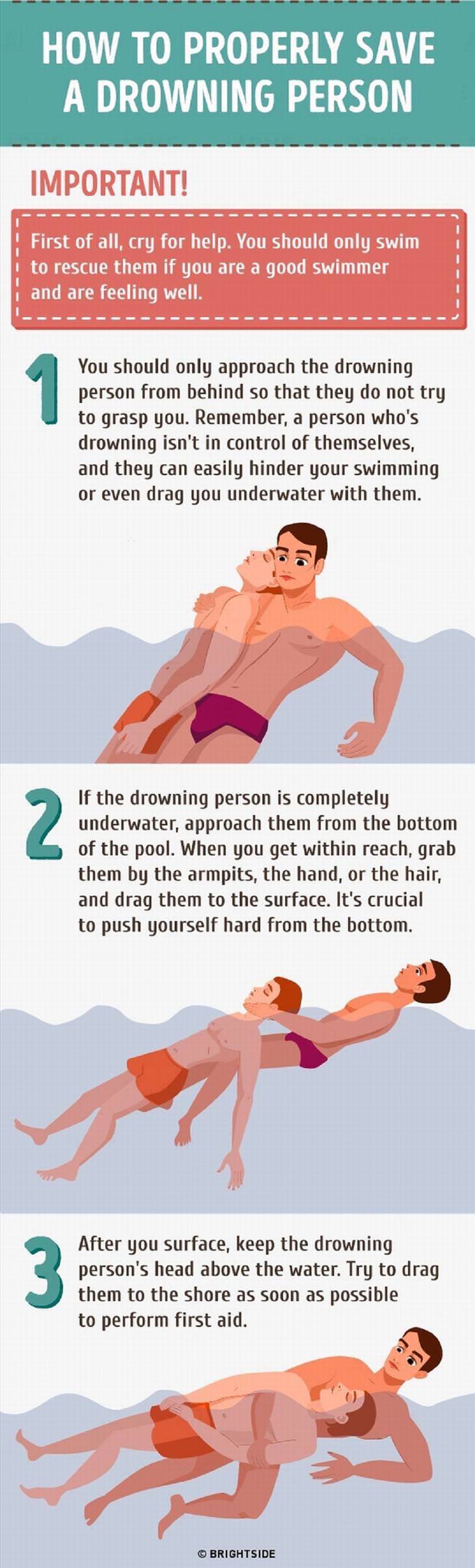
2. What to do to help someone who is drowning
drowning guide
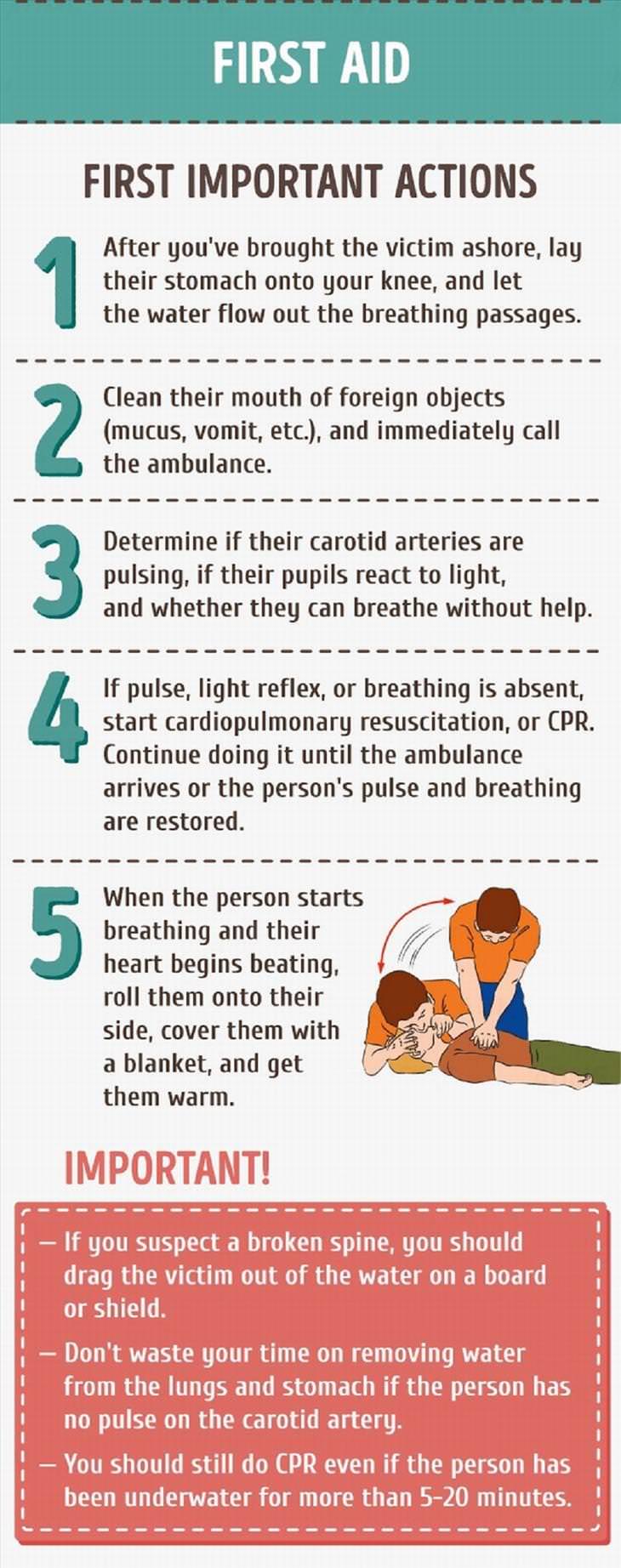
3. How to administer first aid
drowning guide

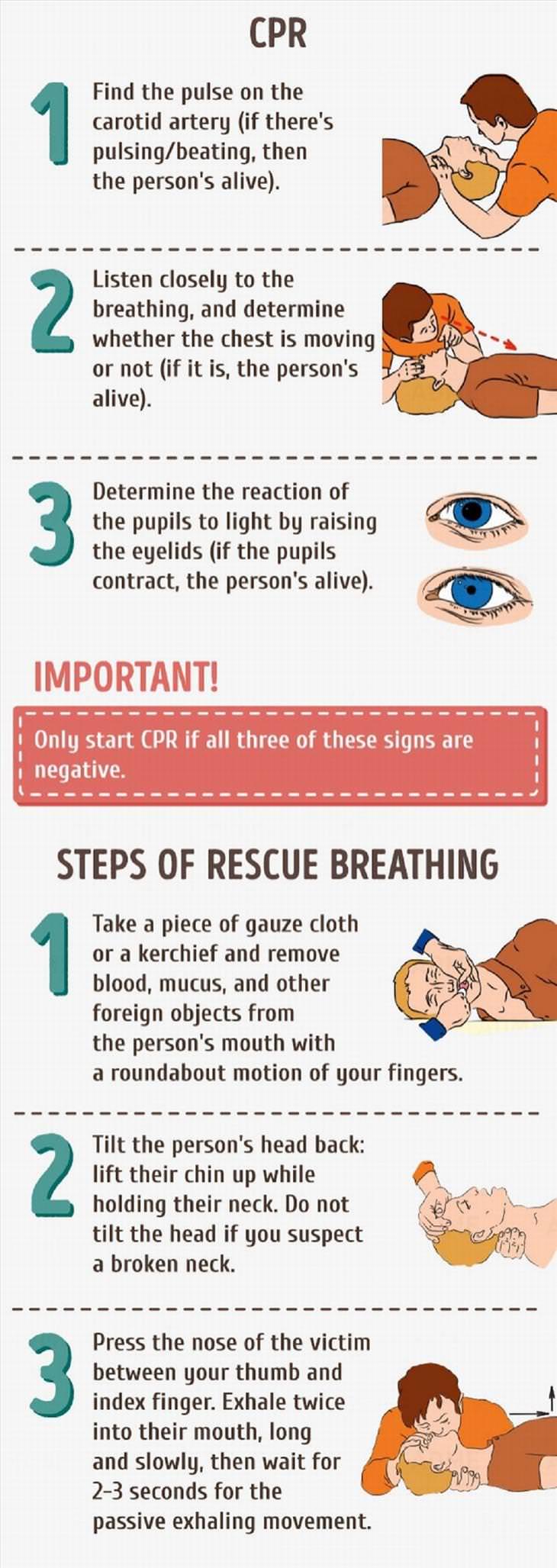
4. CPR in a nutshell
drowning guide
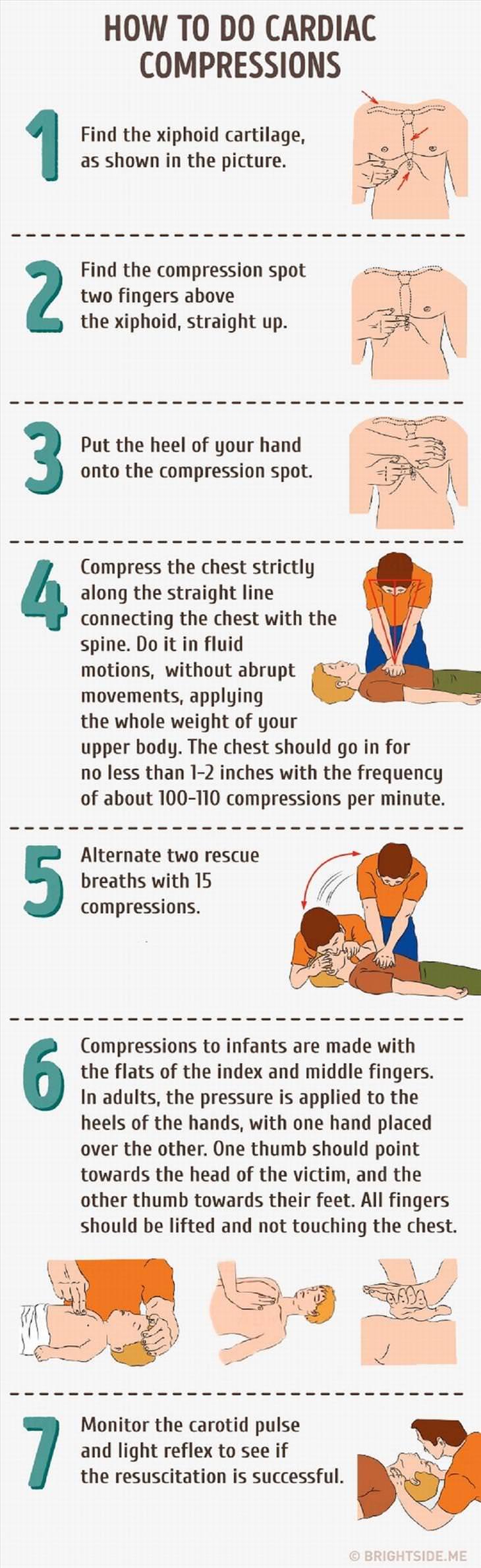
5. Performing cardiac compressions
drowning guide

This is only for your information, kindly take the advice of your doctor for medicines, exercises and so on.   

https://gscrochetdesigns.blogspot.com. one can see my crochet creations  
https://gseasyrecipes.blogspot.com. feel free to view for easy, simple and healthy recipes    
https://kneereplacement-stickclub.blogspot.com. for info on knee replacement


Labels: , , , , , , , ,

Thursday, April 02, 2020

8 Mistakes You're Making with First Aid

Spread butter on a burn - you may have heard of this remedy before. While we now know to avoid this old wives tale, there are still plenty more mistakes that we make which are downright dangerous. So, knowing the basic first aid would go a long way. Here are the biggest mistakes we are making in everyday emergencies.

Mistake #1: Disinfecting cuts and scrapes with hydrogen peroxide, rubbing alcohol, iodine or betadine

While disinfecting wounds is a smart move, the product you use can be creating more harm than good. While applying hydrogen peroxide may look like its killing germs, what its actually doing is killing your body's fibroblasts - the skin cells that are responsible for healing wounds. Whereas the stinging you feel when applying alcohol is actually healthy tissue that is being harmed.

What to do: Clean debris and bacteria from a cut or scrape by holding it under running water. If it continues to bleed, apply direct pressure to the cyst. Once you've flushed the wound, add some antibiotic ointment and cover up with a loose bandage or let it air out if possible. 

Mistake #2: Tilting your head back to stop a bloody nose

While it may be tempting to tilt your head back during a nose bleed, you're actually draining blood back into the throat. This does not stop the bleeding, nor do you know how much you are bleeding.

What to do: Keep the head upright, this will lower the blood pressure in the veins of the nose. Use your thumb and index finger to pinch both nostrils shut for 15 minutes, breathing through your mouth. After 15 minutes let go and if the nose is still bleeding apply pressure for a further 15 minutes. Most tend to resolve on their own and if it doesn't stop after 30 minutes, particularly after an injury, like a car accident, head to your doctor.

Mistake #3: Assuming the closest hospital is best for your emergency
Getting to the doctor ASAP may seem like a wiser choice than driving to a hospital further away, you may be better served at a hospital that is well equipped with what you need.

What to do: In an emergency, call 911, though you may need to be prepared to travel. If the 911 operator suggests a specialty center that is further away than the nearest hospital, opt for that. There are four main types of specialty centers - cardiac, stroke, burn and trauma, though depending on your emergency, it could mean the difference between life and death.

Mistake #4: Performing CPR by alternating chest compressions with mouth-to-mouth resuscitation
Forget mouth-to-mouth resuscitation. Research conducted on CPR found that the worst thing for a patient is not performing enough chest compressions.

What to do: If someone drops dead in front of you, feel for a pulse in the neck. If you don't detect one, start the compressions immediately, while another person calls 911. To do so, place the heel of your hand in the center of the chest, placing your other hand on top of it. Push down two inches with each compression, about 100 times per minute. A perfect beat for this is the track 'Staying Alive, by the BeeGees'.


Mistake #5: "Rescuing" survivors of a car accident
In a car accident, one of the most dreaded injuries is to the cervical spine or neck. If you don't move a person without properly immobilizing them first, they can get paralyzed.

What to do: Call 911. Do not move the person, just make sure that they are breathing and are comfortable. Assure them that help is on the way.

Mistake #6: If someone is having a seizure, putting a pencil in her mouth to keep her from swallowing or biting her tongue

It is physically impossible to suck your tongue down into your throat. But should you try prevent that from happening it is too risky. Putting an object in a person's mouth during a seizure could cause them swallow it. A pencil or a wallet could block the airway and may cause the person to suck it down once they start to breathe again.

What to do: During a seizure people twitch violently, they foam at the mouth and may even turn blue. Though seizures are self-limiting. This means that they will stop by themselves. The only thing you can do is call for help and keep the person away from surrounding danger - sharp objects, glass, heat, or falling in water. You can also roll the person onto his or her side, this will keep the airway clear. While they may seem like an emergency, they're usually not.

Mistake #7: Tying a tourniquet on an arm or leg to stop heavy bleeding
This is an Old Boy Scouts trick that may potentially stop the flow of blood to a body part, risking permanent tissue damage and loss of a limb. Using a tourniquet would cut off all circulation to that extremity and not accomplish anything that applying direct pressure can't accomplish.

What to do
: Use a sterile gauze or a clean cloth, apply firm pressure to the wound and keep pressing it even if the bandage gets soaked with blood. You can add other cloths on top if needed. Control the bleeding by applying pressure until the person can be seen in the ER. If the bleeding doesn't stop or if the wound appears to be gaping, is dirty or comes from an animal bite, visit a doctor immediately.


Mistake #8: Popping Tylenol like baby aspirin

This popular pain killer and fever reducer may be easy to take, though as good as this drug may be it should still be used wisely. In fact, according to the National Institutes of Health, overdose of Tylenol is the most common poisoning around the world.

What to do:
Tylenol has been proven to alleviate pain, so don't skip it if you need it. Be vigilant, stick to your daily limit and if you're unsure about your dosage, speak to your doctor. 


This is only for your information, kindly take the advice of your doctor for medicines, exercises and so on.     

https://gscrochetdesigns.blogspot.com. one can see my crochet creations  
https://gseasyrecipes.blogspot.com. feel free to view for easy, simple and healthy recipes    
https://kneereplacement-stickclub.blogspot.com. for info on knee replacement

Labels: , , , , , , , ,

Wednesday, January 22, 2020

17 Ridiculously Easy and Smart Uses For Your Old Pill Bottles

Mini Survival Kit

Keep matches and other necessities dry while you brave the wild: camping, boating, or just for a day at the beach.

Mini “Car Kit”

These bottles fit perfectly inside your car’s glove compartment or door cubby, and they’re great for storing change or small amounts of cash for garage parking, toll fare, or the Laundromat.

Mini First Aid Kit

Keep an emergency first-aid kit in your handbag or the glove box of your car “just in case.” Include things like band-Aids, Q-tips, alcohol swabs, packets of antibiotic ointment, etc.

Ear Buds Holder

Prescription bottles work great for small cords and ear buds. Easier to find them in your purse too!

Flosser Holder

I don’t know about you, but I find myself flossing in the car more than any other place! Thanks to these little individual flossers. This is the perfect little holder for them

Emergency Snacks

My son Kell has had Type 1 Diabetes since he was 2 years old and so we have ALWAYS made sure to have some emergency snacks on hand in case of low blood sugars.  These bottles make a handy little storage container for just enough Skittles or M & M’s to bring his blood sugar back up to a normal range.
Caution: Putting candy in a prescription bottle can confuse a child. Please be careful about where you place these reused prescription bottles and your real ones. Children can’t tell the difference between one and the other.

Mini “Sharps” Container

Store used lancets, blood test strips, until they can be disposed of. They are much cheaper than the sharps containers sold at the drug counters; are more compact; easier to store; and easier to dispose of.

NON-Prescription Pill Bottles

Sometimes I buy pain relief, vitamins, etc. in those big bottles from Costco, so I like to fill up a couple empty prescription bottles of these things to keep in a couple of locations. I also keep one in my toiletry bag I take on trips.

Miniature Portable Sewing Kit

Prescription bottles are just the right size and shape for a sewing needle, a small spool or two, a few straight pins, and a few plain buttons. Have one in the car, purse or office drawer. If a button comes loose or a hem unravels the kit is handy and the pins are tucked safely inside where no one can get pricked when not in use.

Seed Keeper

Collect the seeds at the end of the growing season and store them neatly in small pill bottles. Come spring, you’ll be all ready to get your new garden started.

Make Mini Ice Packs

Just fill them with water and freeze. These are perfect for packed lunches.

Cat Toy

Placing a small bell inside makes a great little play toy. The bottle rolls around and is light enough not to cause harm to the kitten, cat or furniture it might be rolled into.

Toothpick Holder

Drill a quarter inch hole in the cap, fill with toothpicks, and keep in your purse or car.

Condiment Containers

Line old prescription bottles with inexpensive baggies and use them for condiment containers for bagged lunches. Lined, they’re great for mayo, granola for yogurt, salad dressings, croutons for soup/salad, etc.

Drawer & Closet Sachets

Drill holes in the bottom and the top of the pill bottles. Add a slice or two of scented soap. Put the cap on and place in a drawer to keep clothes smelling fresh without risking stains on your clothes.

Portable Perfume

If you wear perfume and don’t want to bring the whole bottle with you in your purse but like to freshen up at midday, try this:  soak a cotton ball or two with your favorite cologne or perfume, place them inside a small bottle and close with the cap. By midday the cotton ball will still be wet and can be dabbed to the areas you spritz with perfume.

Donations

Check with your local free clinic or veterinarian’s office to see if they accept used prescription bottles. Some of them will reuse them for filling prescriptions. So, call around in your area to see if vets will take your bottles, or if any free clinics need them.

Labels: , , , , , , , , , , , , ,