Saturday, April 05, 2025

What Does the Spleen Do and How Do We Take Care of It?

The spleen is an important part of your body, but many people don’t even know what it is or where it’s located. In fact, many of us can go through our entire life without even thinking about it. This little organ is located on the left side of your abdomen under the rib cage. It weighs about 6 ounces (170 gm) in healthy adults and looks somewhat like a fist-sized purple sponge with holes in it. Since it’s tucked under the rib cage, the spleen usually isn’t felt on exam. However, if your spleen enlarges, it might need to be treated or surgically removed.

1. What does the Spleen do?
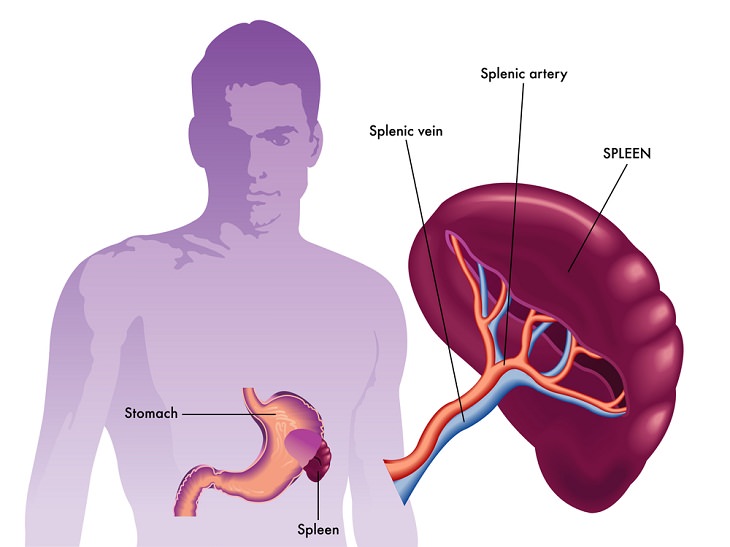
 The Spleen, functions

 The spleen has a few vital functions: 

 
Its primary job is to filter or remove "junk" from the bloodstream. It does so by getting rid of cellular waste and removing old, malformed, or damaged blood cells. 
 
The spleen contains infection-fighting white blood cells, called lymphocytes, as well as antibodies that help the body combat invading germs in the blood including bacteria or viruses. This makes the organ crucial for our immune system response. 
 
The spleen affects the level of white blood cells, red blood cells, and platelets. It maintains the levels of fluid in your body. 
 
Apart from containing white blood cells, the spleen also stores red blood cells and platelets. 
 
The spleen is also responsible for analyzing the quality of our red blood cells. So, for instance, a red blood cell is damaged or unable to move through the blood system properly, the spleen removes it from circulation. Further, if the spleen finds anything in the red blood cells that shouldn't be there, it gets rid of it. 
 
Conditions That Affect the Spleen  
If your spleen doesn't work properly, you are at a bigger risk of being infected with bacteria. In addition, you may suffer certain medical conditions. For starters, it may start removing healthy blood cells, which may lead to anemia or an increased risk of infection from a reduced number of white blood cells. 
 
Some of the other conditions that cause an enlarged spleen include: 
 
Sickle cell disease: With sickle cell disease, a group of disorders, the red blood cells become misshapen and get trapped in the spleen. This ultimately causes the spleen to expand. If more and more red blood cells continue getting trapped in the organ, it will keep getting larger. This can cause anemia.  
 
Sickled red blood cells also harm the spleen tissues and disrupt their normal functions. People with this disease are hence at a higher risk of infection. 
 
Hereditary spherocytosis: It’s a condition that affects red blood cells. People with hereditary spherocytosis experience a shortage of red blood cells as they are destroyed earlier than normal by the spleen. The gene mutations that cause red blood cells to be misshapen are called spherocytes that are taken out of circulation and sent to the spleen to be removed. When this keeps happening, it causes a shortage of red blood cells and too many in the spleen.
 
Cancer: The spleen is the largest lymphatic organ in the body and is surrounded by a connective tissue capsule. It can also be connected with lymphomas or cancer of the lymphatic system as well as blood cancers such as Hodgkin’s disease and leukemia. 
 
Thalassemia: The spleen helps produce blood cells before birth. In people with thalassemia, an inherited blood disorder, the bone marrow is unable to make red blood cells normally. This causes the spleen to enlarge to produce more red blood cells.
 
Bacterial, viral, and parasitic infections: If the spleen does not function properly, you are at a bigger risk from bacterial, viral, and parasitic infections. This is simply because the spleen is responsible for getting rid of harmful bacteria from the blood. In many viral infections, the spleen becomes enlarged which can cause infections such as syphilis, tuberculosis, endocarditis, mononucleosis (mono), and malaria.
 
Enlarged Spleen 
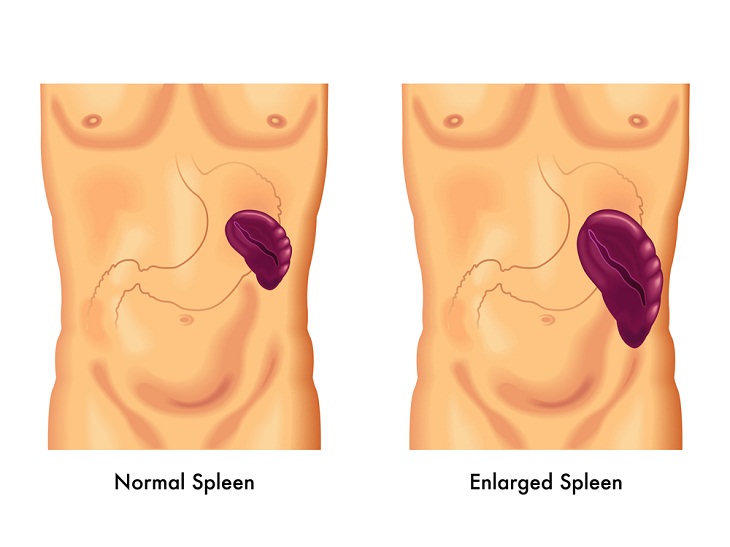
 The Spleen, Enlarged Spleen
Your spleen may become enlarged (a condition called splenomegaly) if it can’t filter your blood as efficiently as it’s used to. This primarily happens due to several different medical conditions or diseases that cause blood cells to break down too quickly such as cirrhosis, leukemia, or rheumatoid arthritis. 
 
An enlarged spleen traps an excessive amount of blood cells and platelets and may start destroying healthy red blood cells as well. This condition can lead to a significant reduction of healthy blood cells and platelets in your blood as your spleen becomes clogged. 
 
An enlarged doesn’t always show symptoms at first. But you should look out for these signs: 
 
* Feeling discomfort or pain behind your left ribs 
 
* Feeling too full quickly without eating too much. This happens because an enlarged spleen can press on the stomach. 
 
* Frequent infections. 
 
* Fatigue or anemia. 
 
* Easy bleeding 
 
If it enlarges too much without being detected, the spleen can be damaged or ruptured after a forceful blow to the abdomen. This may cause acute pain behind your left ribs and you would require your spleen to be removed.

How to treat an Enlarged Spleen?
Your doctor can often tell if you have an enlarged spleen by touching the area around your abdomen. A blood test, CT scan, or MRI scan would verify the diagnosis. 
 
If you are diagnosed with an enlarged spleen, you are likely to be first given antibiotics to treat the underlying condition that may have caused the issue. However, a severe infection may not respond to antibiotics and can lead to inflammation and a buildup of pus. In such a scenario, your spleen may need to be removed. Surgery may also be needed if doctors are unable to find out the cause of your spleen enlargement. 
 
The surgery to remove your spleen is called a splenectomy. Sometimes just part of your spleen can be removed if needed, which is called a partial splenectomy. Recovery from this surgery usually takes around four and six weeks. 
 
Can You Live Without Your Spleen?
After your spleen is removed, you are left with a compromised immune system and are at greater risk of bacterial infections. Does that mean you can’t live normally without a spleen? 
 
While the spleen is an important part of the body, you can indeed live without your spleen if it’s damaged by disease or injury. Your liver and lymph nodes take over the job of the spleen after it’s removed from your body. That being said, you may develop certain infections quickly and are likely to take longer than usual to recover after getting sick without your spleen. Your doctor may ask you to get vaccinated against certain infections to lessen your risk. Some of these include: 
 * Influenza 
* Meningitis 
* Chickenpox 
* Tetanus, diphtheria, and whooping cough 
* Measles, mumps, and rubella 
* Pneumonia 
 
If you are an otherwise healthy adult, you can lead a normal life even without your spleen. Consult with your doctor to devise a long-term plan to stay healthy after your spleen is removed. 
 
How Do I Keep My Spleen Healthy? 
Currently, there's not much research on how your diet can affect your spleen. There are also no recommendations on specific foods you should avoid to reduce the risk of developing an enlarged spleen. However, a healthy diet affects your overall health and keeps your immune system robust. Therefore, to keep your spleen and immune system in good shape, you should exercise regularly, maintain a healthy weight, and drink plenty of water, health experts say. Eating a balanced diet abundant in fruits and vegetables will be beneficial as well.


This is only for your information, kindly take the advice of your doctor for medicines, exercises and so on.   


Labels: , , , , , , , , , , , , ,

Thursday, December 16, 2021

What Does the Spleen Do and How Do We Take Care of It?

The spleen is an important part of your body, but many people don’t even know what it is or where it’s located. In fact, many of us can go through our entire life without even thinking about it. This little organ is located on the left side of your abdomen under the rib cage. It weighs about 6 ounces (170 gm) in healthy adults and looks somewhat like a fist-sized purple sponge with holes in it. Since it’s tucked under the rib cage, the spleen usually isn’t felt on exam. However, if your spleen enlarges, it might need to be treated or surgically removed.

What Does the Spleen Do?
The Spleen, functions

The spleen has a few vital functions:  
Its primary job is to filter or remove "junk" from the bloodstream. It does so by getting rid of cellular waste and removing old, malformed, or damaged blood cells. 
 
The spleen contains infection-fighting white blood cells, called lymphocytes, as well as antibodies that help the body combat invading germs in the blood including bacteria or viruses. This makes the organ crucial for our immune system response. 
 
The spleen affects the level of white blood cells, red blood cells, and platelets. 
 
It maintains the levels of fluid in your body. 
 
Apart from containing white blood cells, the spleen also stores red blood cells and platelets. 
 
The spleen is also responsible for analyzing the quality of our red blood cells. So, for instance, a red blood cell is damaged or unable to move through the blood system properly, the spleen removes it from circulation. Further, if the spleen finds anything in the red blood cells that shouldn't be there, it gets rid of it. 
 
 Conditions That Affect the Spleen 
If your spleen doesn't work properly, you are at a bigger risk of being infected with bacteria. In addition, you may suffer certain medical conditions. For starters, it may start removing healthy blood cells, which may lead to anemia or an increased risk of infection from a reduced number of white blood cells. 
 
Some of the other conditions that cause an enlarged spleen include:  
Sickle cell disease: With sickle cell disease, a group of disorders, the red blood cells become misshapen and get trapped in the spleen. This ultimately causes the spleen to expand. If more and more red blood cells continue getting trapped in the organ, it will keep getting larger. This can cause anemia. 
 
Sickled red blood cells also harm the spleen tissues and disrupt their normal functions. People with this disease are hence at a higher risk of infection. 
 
Hereditary spherocytosis: It’s a condition that affects red blood cells. People with hereditary spherocytosis experience a shortage of red blood cells as they are destroyed earlier than normal by the spleen. The gene mutations that cause red blood cells to be misshapen are called spherocytes that are taken out of circulation and sent to the spleen to be removed. When this keeps happening, it causes a shortage of red blood cells and too many in the spleen. 
 
Cancer: The spleen is the largest lymphatic organ in the body and is surrounded by a connective tissue capsule. It can also be connected with lymphomas or cancer of the lymphatic system as well as blood cancers such as Hodgkin’s disease and leukemia. 
 
Thalassemia: The spleen helps produce blood cells before birth. In people with thalassemia, an inherited blood disorder, the bone marrow is unable to make red blood cells normally. This causes the spleen to enlarge to produce more red blood cells. 
 
Bacterial, viral, and parasitic infections: If the spleen does not function properly, you are at a bigger risk from bacterial, viral, and parasitic infections. This is simply because the spleen is responsible for getting rid of harmful bacteria from the blood. In many viral infections, the spleen becomes enlarged which can cause infections such as syphilis, tuberculosis, endocarditis, mononucleosis (mono), and malaria.

Enlarged Spleen
The Spleen, Enlarged Spleen
Your spleen may become enlarged (a condition called splenomegaly) if it can’t filter your blood as efficiently as it’s used to. This primarily happens due to several different medical conditions or diseases that cause blood cells to break down too quickly such as cirrhosis, leukemia, or rheumatoid arthritis. 
 
An enlarged spleen traps an excessive amount of blood cells and platelets and may start destroying healthy red blood cells as well. This condition can lead to a significant reduction of healthy blood cells and platelets in your blood as your spleen becomes clogged.
 
An enlarged doesn’t always show symptoms at first. But you should look out for these signs:
* Feeling discomfort or pain behind your left ribs 
* Feeling too full quickly without eating too much. This happens because an enlarged spleen can press on the stomach. 
* Frequent infections. 
* Fatigue or anemia. 
* Easy bleeding 
 
If it enlarges too much without being detected, the spleen can be damaged or ruptured after a forceful blow to the abdomen. This may cause acute pain behind your left ribs and you would require your spleen to be removed.

How to Treat an Enlarged Spleen
Your doctor can often tell if you have an enlarged spleen by touching the area around your abdomen. A blood test, CT scan, or MRI scan would verify the diagnosis. 
 
If you are diagnosed with an enlarged spleen, you are likely to be first given antibiotics to treat the underlying condition that may have caused the issue. However, a severe infection may not respond to antibiotics and can lead to inflammation and a buildup of pus. In such a scenario, your spleen may need to be removed. Surgery may also be needed if doctors are unable to find out the cause of your spleen enlargement.

The surgery to remove your spleen is called a splenectomy. Sometimes just part of your spleen can be removed if needed, which is called a partial splenectomy. Recovery from this surgery usually takes around four and six weeks.

Can You Live Without Your Spleen?
After your spleen is removed, you are left with a compromised immune system and are at greater risk of bacterial infections. Does that mean you can’t live normally without a spleen? 
 
While the spleen is an important part of the body, you can indeed live without your spleen if it’s damaged by disease or injury. Your liver and lymph nodes take over the job of the spleen after it’s removed from your body. That being said, you may develop certain infections quickly and are likely to take longer than usual to recover after getting sick without your spleen. 
 
Your doctor may ask you to get vaccinated against certain infections to lessen your risk. Some of these include: 
 
 * Influenza
* Meningitis 
* Chickenpox 
* Tetanus, diphtheria, and whooping cough 
* Measles, mumps, and rubella 
* Pneumonia 
 
If you are an otherwise healthy adult, you can lead a normal life even without your spleen. Consult with your doctor to devise a long-term plan to stay healthy after your spleen is removed. 
 
How Do I Keep My Spleen Healthy? 
Currently, there's not much research on how your diet can affect your spleen. There are also no recommendations on specific foods you should avoid to reduce the risk of developing an enlarged spleen. However, a healthy diet affects your overall health and keeps your immune system robust. Therefore, to keep your spleen and immune system in good shape, you should exercise regularly, maintain a healthy weight, and drink plenty of water, health experts say. Eating a balanced diet abundant in fruits and vegetables will be beneficial as well.


This is only for your information, kindly take the advice of your doctor for medicines, exercises and so on.   

https://gscrochetdesigns.blogspot.com. one can see my crochet creations  
https://gseasyrecipes.blogspot.com. feel free to view for easy, simple and healthy recipes    
https://kneereplacement-stickclub.blogspot.com. for info on knee replacement


Labels: , , , , , , , , , ,

Thursday, October 21, 2021

5 possible causes of easy and frequent bruising

Who is more at risk of easy bruising

Bruises are typically an outcome of a tissue injury, which leads to discolouration of the skin. It forms when there is bleeding under the skin following an injury and causes damage to the blood vessels. The colour of the bruise can range from black and blue to brownish or purple and one may experience a mild pain when the injured area is pressed.


People get bruises for different reasons. Some are caused, while others appear on their own. As opposed to younger individuals, older people are more prone to bruises. However, the most important thing to take note of are the possible causes behind why anybody bruises. It could either be due to a health condition or some medications. Read on to find out.

Bleeding disorders

One of the common causes of bruising are bleeding disorders. These are a group of conditions that occur when a person’s blood does not clot at all or does so very slowly. Bleeding disorders like hemophilia or von Willebrand disease are some of the most prevalent causes of bruising. Such diseases have a defective or an absent protein vital for blood clotting.

Cancer

Not all, but certain cancers associated with the blood or bone marrow, known as Leukemia, may lead to bruising. Those with leukemia are likely to bruise because their bodies do not produce enough platelets to stop bleeding blood vessels. The bruises from leukemia are however no different from the bruises caused by any other reason. But they may show up at unusual areas of the body.

Excess alcohol consumption or liver disease

Excess alcohol intake can lead to liver problems such as cirrhosis. When liver diseases progress and become more complex, it limits the production of the protein from the liver that is crucial for blood clotting. This may lead to excessive bleeding, cause frequent and easy bruising.


Vitamin C or Vitamin K deficiency

Vitamin C deficiency can lead to health conditions such as scurvy. This further results in painful bleeding gums, unexplained wounds and easy bruising. Additionally, Vitamin K, which is an important nutrient that helps form blood clots and stops bleeding, is crucial for preventing any instances of bruising. Lack of Vitamin K can cause sudden increase in bruise marks on the body.

Blood thinning medications

Blood thinners like aspirin can prevent blood clots, making a person bleed more and causing bruises. Until and unless extremely necessary and prescribed by the doctor, avoid taking blood thinning medications. They can weaken and change the course of blood vessels, leading to inflammation and increasing the risk of bleeding and bruising.


Labels: , , , , , , , ,