Sunday, March 02, 2025

These Rare and Fascinating Diseases Almost Seem Made Up

Medical conditions like diabetes, hypertension, or asthma are well-known, but what about the rare ones that few people know about? Ever heard of a condition where people believe they are dead or missing their soul? Creepy, right? And did you know there's a condition that makes a person suddenly start speaking in a different accent?! In today's article, we'll explore seven of the rarest and weirdest medical conditions on record that sound totally made up. But aren't.  


1. Foreign accent syndrome

Imagine you're having a normal conversation, then suddenly you find yourself speaking with a strange accent! This isn't a scene from a movie - it's a real condition called Foreign Accent Syndrome (FAS). FAS happens when a specific area of the brain responsible for speech production is damaged. This damage, often caused by a stroke or head injury, disrupts speech patterns, causing the person to sound like they've picked up a new accent overnight.

According to the University of Texas, these new accents sound foreign because they affect the way someone speaks, including their rhythm, pitch, and tongue placement. Researchers have documented cases where FAS has caused people to switch accents from Japanese to Korean, British English to French, and even American English to British English. 
 
 
2. Alice in Wonderland syndrome

alice
The classic children's book, Alice's Adventures in Wonderland, features a curious protagonist who mysteriously shrinks and grows in size. Interestingly, a neurological condition called Todd's Syndrome, or Alice in Wonderland Syndrome, has similar effects. This condition triggers migraines that distort a person's perception of size and distance. 
 
Episodes can last up to an hour and involve seeing objects or people as much larger, smaller, or farther away than they truly are. Hallucinations and a warped sense of time can also occur that feel incredibly slow or fast. Typically affecting young children, this syndrome may appear as they fall asleep. 
 
 
3 . Water allergy
magine being allergic to something as essential as water! This is an unfortunate reality for people with aquagenic urticaria (AU). AU causes itchy rashes to develop on the skin whenever it comes in contact with water. The good news is that these rashes fade within about an hour of drying off. However, since complete water avoidance is practically impossible, managing AU relies on medications like antihistamines, topical creams, ultraviolet light therapy, and even injectable medications.


4. Walking Corpse Syndrome
Cotard's Syndrome, also known as Cotard's delusion, is a rare mental disorder where people start to believe they are dead, rotting, or missing body parts. Scientists believe that this syndrome is a symptom of various psychiatric illnesses, especially depression. However, recent studies using brain scans suggest that neurological changes might also play a role in some cases. Due to its rarity, the exact cause of Cotard's Syndrome remains unclear. 
 
People with Cotard's Syndrome might experience a range of unusual symptoms. Some may attempt to harm themselves, while others become withdrawn and speechless. Delusions are common, with patients believing they are immortal, already dead, or no longer exist altogether. In severe cases, they may become insensitive to pain or even refuse to eat due to the belief they're already deceased. 
 
Medications like antidepressants, antipsychotics, and anti-anxiety drugs can help manage the symptoms. Therapy approaches like Cognitive Behavioral Therapy (CBT) or psychotherapy can also be beneficial. In extreme cases where medication and therapy prove ineffective, electroconvulsive therapy (ECT) might be considered as a last resort.
 
While rare, some patients with Cotard's Syndrome experience a full recovery, even in severe cases.


5. Geographic tongue
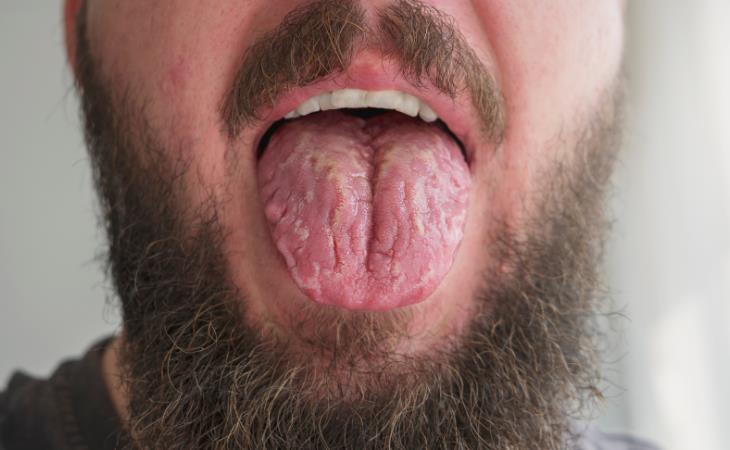
 Geographic tongue
 Geographic tongue (GT) is a condition that causes symptoms similar to psoriasis in the mouth. It leads to the development of harmless, but potentially uncomfortable, lesions on the tongue itself. These lesions often appear as red and white patches with a slightly raised yellow border, resembling a map with oddly shaped continents. While the exact cause of GT remains unknown, there seems to be a link between its occurrence and stressful situations or conditions, which can include allergies, hormonal changes, nutritional deficiencies, psychological distress, a condition known as Reiter's syndrome, and even spicy foods, according to a 2005 case study.


6. Fish Odour Syndrome
 
This genetic condition is caused by a missing enzyme. This enzyme normally breaks down a chemical called trimethylamine (TMA), which has a strong, unpleasant smell like fish. Because the enzyme is missing, the body can't get rid of TMA properly. As a result, people with this condition have a fishy odor in their urine, sweat, and breath. Unfortunately, there's no cure, but they can manage the symptoms by following a special diet that avoids foods high in TMA, such as beans, nuts, eggs, and certain types of fish and meat.


7. Exploding head syndrome

headache

Imagine what it would be like if you were drifting off to sleep only to be jolted awake by loud sounds like gunfire or clanging cymbals in your head! This strange condition, known as Exploding Head Syndrome, can be extremely unsettling despite causing no physical pain. While the exact cause remains unknown, it's linked to factors like insomnia, sleep disturbances, and certain anxieties. Interestingly, simply learning about the condition and understanding that it's harmless can sometimes reduce its frequency. Additionally, maintaining healthy sleep patterns is likely beneficial.
 

This is only for your information, kindly take the advice of your doctor for medicines, exercises and so on.   


Labels: , , , , , ,

Monday, July 01, 2024

These Rare and Fascinating Diseases Almost Seem Made Up

Medical conditions like diabetes, hypertension, or asthma are well-known, but what about the rare ones that few people know about? Ever heard of a condition where people believe they are dead or missing their soul? Creepy, right? And did you know there's a condition that makes a person suddenly start speaking in a different accent?! In today's article, we'll explore seven of the rarest and weirdest medical conditions on record that sound totally made up. But aren't.


1. Foreign accent syndrome

 Imagine you're having a normal conversation, then suddenly you find yourself speaking with a strange accent! This isn't a scene from a movie - it's a real condition called Foreign Accent Syndrome (FAS). FAS happens when a specific area of the brain responsible for speech production is damaged. This damage, often caused by a stroke or head injury, disrupts speech patterns, causing the person to sound like they've picked up a new accent overnight.


According to the University of Texas, these new accents sound foreign because they affect the way someone speaks, including their rhythm, pitch, and tongue placement. Researchers have documented cases where FAS has caused people to switch accents from Japanese to Korean, British English to French, and even American English to British English. 


2. Alice in Wonderland syndrome
alice
The classic children's book, Alice's Adventures in Wonderland, features a curious protagonist who mysteriously shrinks and grows in size. Interestingly, a neurological condition called Todd's Syndrome, or Alice in Wonderland Syndrome, has similar effects. This condition triggers migraines that distort a person's perception of size and distance. 
 
Episodes can last up to an hour and involve seeing objects or people as much larger, smaller, or farther away than they truly are. Hallucinations and a warped sense of time can also occur that feel incredibly slow or fast. Typically affecting young children, this syndrome may appear as they fall asleep. 
 
 
3. Water allergy
Imagine being allergic to something as essential as water! This is an unfortunate reality for people with aquagenic urticaria (AU). AU causes itchy rashes to develop on the skin whenever it comes in contact with water. The good news is that these rashes fade within about an hour of drying off. However, since complete water avoidance is practically impossible, managing AU relies on medications like antihistamines, topical creams, ultraviolet light therapy, and even injectable medications.


4. Walking Corpse syndrome
Cotard's Syndrome, also known as Cotard's delusion, is a rare mental disorder where people start to believe they are dead, rotting, or missing body parts. Scientists believe that this syndrome is a symptom of various psychiatric illnesses, especially depression. However, recent studies using brain scans suggest that neurological changes might also play a role in some cases. Due to its rarity, the exact cause of Cotard's Syndrome remains unclear. 
 
People with Cotard's Syndrome might experience a range of unusual symptoms. Some may attempt to harm themselves, while others become withdrawn and speechless. Delusions are common, with patients believing they are immortal, already dead, or no longer exist altogether. In severe cases, they may become insensitive to pain or even refuse to eat due to the belief they're already deceased. 
 
Medications like antidepressants, antipsychotics, and anti-anxiety drugs can help manage the symptoms. Therapy approaches like Cognitive Behavioral Therapy (CBT) or psychotherapy can also be beneficial. In extreme cases where medication and therapy prove ineffective, electroconvulsive therapy (ECT) might be considered as a last resort. 
 
While rare, some patients with Cotard's Syndrome experience a full recovery, even in severe cases.


5. Geographic tongue
Geographic tongue
Geographic tongue (GT) is a condition that causes symptoms similar to psoriasis in the mouth. It leads to the development of harmless, but potentially uncomfortable, lesions on the tongue itself. These lesions often appear as red and white patches with a slightly raised yellow border, resembling a map with oddly shaped continents. While the exact cause of GT remains unknown, there seems to be a link between its occurrence and stressful situations or conditions, which can include allergies, hormonal changes, nutritional deficiencies, psychological distress, a condition known as Reiter's syndrome, and even spicy foods, according to a 2005 case study.


6. Fish odour syndrome
This genetic condition is caused by a missing enzyme. This enzyme normally breaks down a chemical called trimethylamine (TMA), which has a strong, unpleasant smell like fish. Because the enzyme is missing, the body can't get rid of TMA properly. As a result, people with this condition have a fishy odor in their urine, sweat, and breath. Unfortunately, there's no cure, but they can manage the symptoms by following a special diet that avoids foods high in TMA, such as beans, nuts, eggs, and certain types of fish and meat.


7. Exploding head syndrome
headache
Imagine what it would be like if you were drifting off to sleep only to be jolted awake by loud sounds like gunfire or clanging cymbals in your head! This strange condition, known as Exploding Head Syndrome, can be extremely unsettling despite causing no physical pain. While the exact cause remains unknown, it's linked to factors like insomnia, sleep disturbances, and certain anxieties. Interestingly, simply learning about the condition and understanding that it's harmless can sometimes reduce its frequency. Additionally, maintaining healthy sleep patterns is likely beneficial.


This is only for your information, kindly take the advice of your doctor for medicines, exercises and so on.   

https://gscrochetdesigns.blogspot.com. one can see my crochet creations  
https://gseasyrecipes.blogspot.com. feel free to view for easy, simple and healthy recipes    
https://kneereplacement-stickclub.blogspot.com. for info on knee replacement
https://cancersupportindia.blogspot.com  for infor on cancer and health related topics
https://GSiyers home remedies.blogspot.com   is the latest addition to my blogs. I'm going to add posts there, do give me your valuable feed back on my blogs. Thanks a lot, take care, be healthy and be happy.

Labels: , , , , , ,

Saturday, January 02, 2021

8 Incredibly Rare and Strange Diseases That Really Exist

When we hear yet another suspicious news story of this one patient who woke up with a foreign accent or one about that one patient getting drunk on bread or arguing they're dead, we can't help but be skeptical. Realistically, though, there are some really strange rare diseases out there that sound unbelievable but are painfully real for the people suffering from them. In fact, all the diseases we've mentioned in the first sentence are very real, just like all the others we describe in this article.
1. Auto-Brewery Syndrome Makes a Person Feel Drunk after Eating Bread
The overwhelming majority of people experience drunkenness after consuming alcohol, but individuals who suffer from auto-brewery syndrome get drunk from just eating carbs (and especially gluten). This is because of yeast living in these patients’ gut that converts the carbohydrates we consume into ethanol (alcohol), which can lead to intoxication.

Just imagine waking up with a hangover after one-too-many croissants... Admittedly, the majority of people suffering from this condition don’t get hammered after eating a piece of cake, but those with a more severe form of the disease can suffer from chronic fatigue, headaches, vomiting, and even liver damage, not to mention sudden changes in behavior. 
 
2. Foreign Accent Syndrome Patients Wake up Speaking with a Foreign Accent
This rare speech impediment that usually appears after some form of damage to the brain makes a person suddenly acquire a foreign accent. So, a native American English speaker recovering from a brain injury may all of a sudden wake up speaking with a French or Chinese accent. 
 
And while it may sound bizarre, neuroscientists can explain why this happens: a person who has sustained some damage to one of the language areas of the brain may have difficulties producing certain speech sounds, which we, the listeners, perceive as a foreign accent. And while these people are usually aware that they are pronouncing a sound incorrectly, they simply lack the ability to change the way they speak.
 
3. Tissues and Body Parts of Patients Suffering from Proteus Syndrome Grow Disproportionately
rare strange diseases proteus syndrome
Proteus Syndrome is a rare genetic disease that makes the different tissues of our body (bones, skin, organs and blood vessels) grow out of proportion. This rare condition is not hereditary, and the abnormality in the genetic code is believed to be a random gene mutation during fetal development. 
 
At birth, patients with Proteus Syndrome don’t exhibit any symptoms of the disease, and the excessive growth typically starts at 6-12 months of age. The condition is highly stigmatized, and throughout history, Proteus Syndrome sufferers have been often labeled freaks and outcasts, with one of the most famous examples of this stigma being a British man, Joseph Carey Merrick (1862-1890), sadly more known by the nickname “the Elephant Man". Merrick himself wrote that people, even doctors, often treated him like an animal.

5. Cotard's Syndrome Makes Patients Believe They’re Already Dead
This rare psychiatric condition, also called “the walking corpse syndrome,” makes patients believe that their body is decomposing. These patients are severely delusional, denying the presence of certain body parts and often refusing to eat because they believe they’re already dead and won’t be able to digest food. 
 
Interestingly, patients suffering from the disease can successfully distinguish between alive and dead people, but they are convinced that they specifically are deceased. The condition is loosely linked to depression, with antidepressants generally helping recovery, but there were also reported cases of Cotard’s Delusion induced by brain damage and injury, which sometimes clear up spontaneously after the patients’ recovery.

5. Urbach-Wiethe Disease Sufferers May be Immune to Fear

rare strange diseases Urbach-Wiethe Disease
Yet another rare genetic condition, the Urbach-Wiethe Disease is typically characterized by the hardening of the skin and other tissues, including the brain (thus the condition is often linked to brain damage). There are 400 registered cases of the condition at the moment, but one of these patients, a female patient called S.M. in medical literature is unique, as she cannot experience fear. 
 
S.M. was dubbed “the woman with no fear”, and her case helped neuroscientists isolate one brain area that is responsible for the sensation of fear, the amygdala. After scanning S.M.’s brain, the scientists saw that her amygdala is completely destroyed, which confirmed this area’s role in experiencing fear. 
 
Several experiments designed to trigger fear in S.M. have been conducted, e.g. holding her at knifepoint and gunpoint, exposing her to spiders and snakes, and she didn't even flinch. What's more, when asked to distinguish between sad or scary music, she failed, so the very concept of fear is foreign to this woman. 
 
6. Marie Antoinette Syndrome Makes One’s Hair Suddenly Turn White
The name of this condition comes from a legend about the French queen Marie Antoinette, whose hair supposedly turned white the night before her execution. And while the majority of scientists don’t believe that it’s possible to lose all of your hair pigment overnight, there are reported cases of relatively sudden graying of the hair due to extreme stress. 
 
Some World War II bombing survivors, for example, have experienced their hair turning white faster than usual, but not overnight. Many historical figures, too, such as Thomas More, have been believed to suffer from this condition as well. 
 
7. Persons Suffering from Water Allergies Get Skin Rashes after Contact with Water
The medical name of this condition is actually twofold: Aquagenic urticaria and Aquagenic pruritus, and both are skin conditions that develop minutes after a person suffering from the so-called water allergy gets in contact with water. Though commonly known as a water allergy, these conditions are not technically an allergic reaction and their causes are poorly understood. There is no cure and water of any temperature can trigger a reaction. 
 
There are 30 known cases of water allergies, and the majority of these patients are women who start exhibiting symptoms during puberty. The main distinction between Aquagenic urticaria and Aquagenic pruritus is that the former forms only in contact with water outside of the body, whereas in the latter, even sweating, tearing up and urinating can trigger a reaction. Also, Aquagenic urticaria patients generally develop skin hives, whereas Aquagenic pruritus only causes redness and intense pain when exposed to water. 
 
8. Fish Odor Syndrome Makes All Bodily Secretions Smell Like Rotten Fish
If you’re self-conscious of your BO, just imagine how patients suffering from fish odor syndrome might feel. Trimethylaminuria, the scientific name of the condition, makes patients emit a smell reminiscent of rotten fish through their sweat, breath, and urine. 
 
This condition is genetic and there is no known cure, but minimizing the intake of foods containing chlorine may temporarily improve symptoms. And though this condition is not dangerous to a person’s health on its own, most patients suffering from trimethylaminuria have mental health issues due to stigma and low self-esteem, and a few suicidal attempts have even been recorded.


This is only for your information, kindly take the advice of your doctor for medicines, exercises and so on.     

https://gscrochetdesigns.blogspot.com. one can see my crochet creations  
https://gseasyrecipes.blogspot.com. feel free to view for easy, simple and healthy recipes    
https://kneereplacement-stickclub.blogspot.com. for info on knee replacement

Labels: , , , , , , , ,