Thursday, June 02, 2022

How to Identify Different Types of Bug Bites

It’s extremely difficult to avoid being bitten by insects, and sometimes it’s hard to identify what it was that bit you. There are many different biting insects, and they all transmit different diseases, so it’s very important to be able to correctly identify what bit you.

The guide below will help you do just that: 
 
1. Mosquito
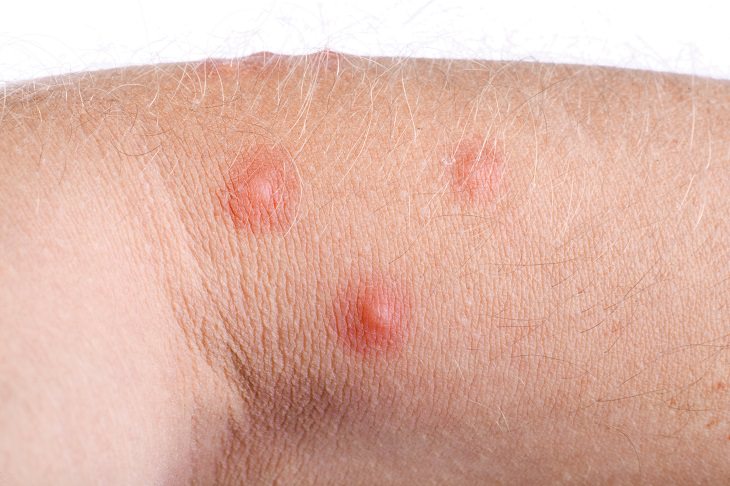
A mosquito bite is usually a swollen red spot the size of a berry, and they most often appear on open areas of the body. Mosquitos prefer to bite where the skin is very thin as this makes it easier for them to get into the blood vessels. When they bite, they inject their saliva which contains anticoagulants that make the blood thinner. Mosquito bites cause the skin to turn red, itch, and swell. 
 
2. Tick
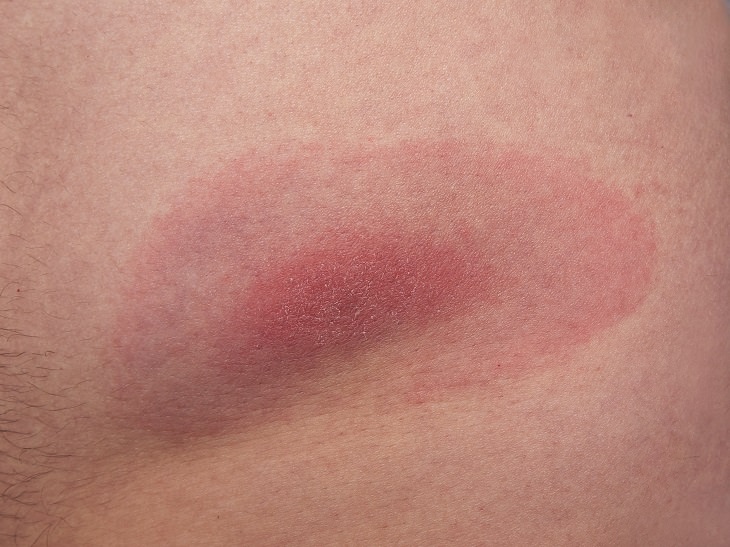
Our body’s reaction to being bitten by a tick is a red spot. Ticks can infect you with Lyme’s disease, encephalitis, Borreliosis, and many other diseases. If you remove the tick from your skin, but the red spot continues to grow, you should see your doctor as quickly as possible.

3. Flea
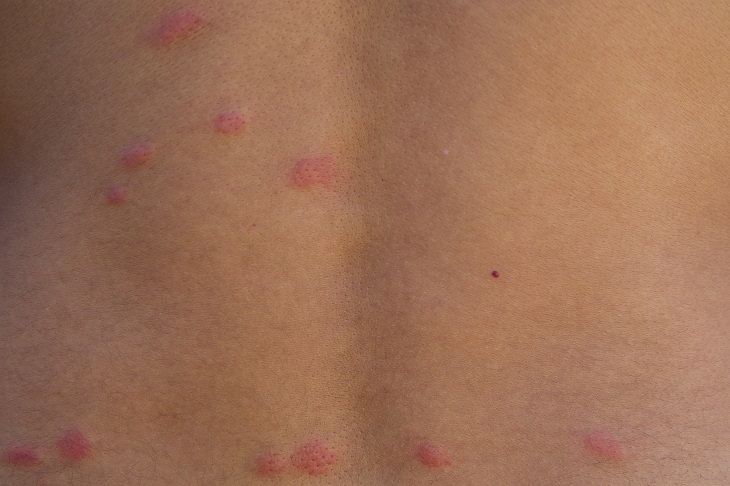
Flea bites are often mistaken for allergies or mosquito bites as they often look red and swollen. However, unlike mosquitos, these insect bites are painful and itch a lot more. Fleas usually attack the legs, and one insect can bite several times, so the distance between red spots is usually 0.5 to 1 inch. Flea bites can become seriously infected. 
 
4. Ants
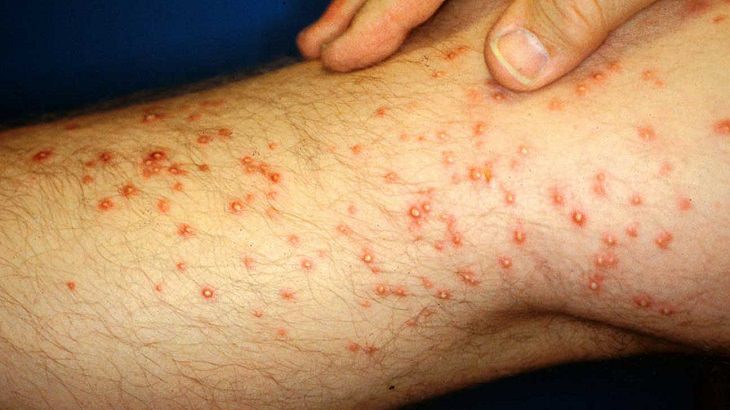
The majority of ants are harmless to humans, but the red fire ant can cause a lot of pain. Pustules will appear at the bite location, and these will later turn into scars. To add to this, the ants’ poison contains toxins, so the victim could have a dangerous allergic reaction or go into anaphylactic shock. The thatching ant may also bite humans, and their bite resembles a mosquito bite. However, immediately after being bitten, the victim will feel a burning pain as though some boiling water has been poured on the skin. 
 
5. Louse
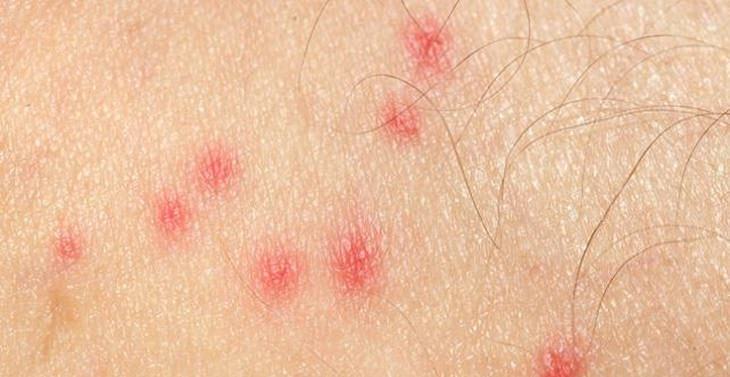
If you find small red dots that resemble mosquito bites in places where hair grows, it means that you have been bitten by a head or pubic louse. The bites are usually a few inches away from each other, and the skin looks like it was pierced. Lice can transmit serious diseases such as trench-fever and typhoid. 
 
6. Bed Bug
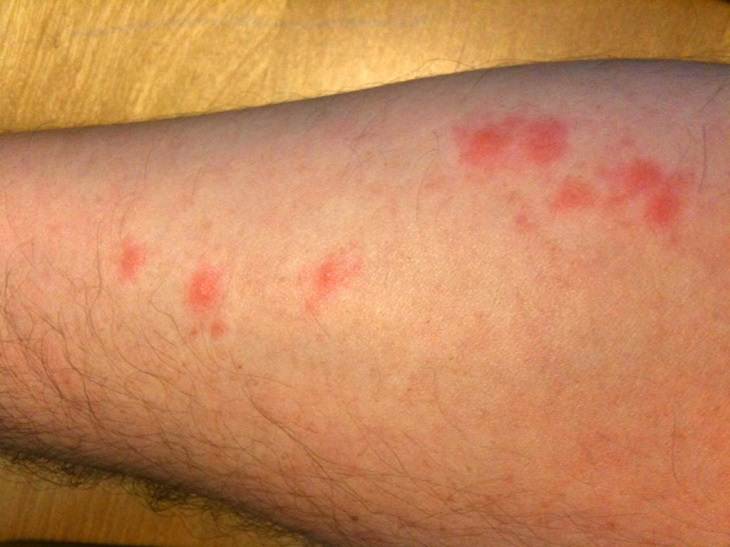
At first sight, a bed bug bite may look like a flea or mosquito bite or an allergic reaction. The skin becomes red, swollen and begins to itch. However, bed bug bites are very close to each other and look like little roads on the skin. They are also more painful than mosquito bites. The roads are more noticeable in the morning as bed bugs hunt at night.

This is only for your information, kindly take the advice of your doctor for medicines, exercises and so on.   

https://gscrochetdesigns.blogspot.com. one can see my crochet creations  
https://gseasyrecipes.blogspot.com. feel free to view for easy, simple and healthy recipes    
https://kneereplacement-stickclub.blogspot.com. for info on knee replacement

Labels: , , , , , , ,

Saturday, November 27, 2021

What Should You Do if Bitten by a Tick?

Parasites are never a pleasant thing to discover on your body, but ticks are of special concern, as some strains carry and transmit Lyme disease, a harrowing medical condition which may result in long-term fatigue, joint pain, facial paralysis and severe headaches if left untreated.

Here is what you should know about dealing with ticks  
 
Locating the tick
Ticks: skin
Ticks like humidity and warmth. As a consequence, their favorite haunts are areas of the body that also offer them a lot of concealment, like the armpits, under the breasts, between toes and on the groin. Make sure to check these tricky areas when returning from an outing in a grassy area.  
 
Identifying the threat
Ticks: grass
Ticks aren’t actually bugs like fleas. They’re arachnids, related to spiders and scorpions. That means that, unlike insects, they have eight legs and no wings. They have a wide oval body and are incapable of jumping or flying. Ticks are very small, and nymphs, which carry the greatest risk of transmitting Lyme disease are tiny- about the size of a poppy seed.

Time is of the essence
Ticks: engorged
Do not use any “remedy” like applying a cream to the area and the tick or painting the tick in nail polish, and do not wait for the tick to detach on its own. The average time it takes for a tick nymph to transmit Lyme disease is around 36-48 hours. Try to gauge how long the tick has been there by remembering the last time you’ve been around grass and looking at the tick. The longer the tick has been feeding, the more obviously bloated its abdomen will be.

Removing the pest
Ticks: removal
Grasp the tick with fine-tipped tweezers as close to the skin as possible and pull it upwards with a steady hand. In case the tick is torn in the process, with the mouth still attached to the skin, remove it separately with clean tweezers. Place the tick in a plastic bag or sealed box. It may be important to keep it, as not all ticks transmit Lyme disease, and identifying the culprit may be important. After handling the tick, clean the bite area with alcohol or soap.  
 
Follow Up
Ticks: rash
If you develop a rash at the site of the tick bite after removing the tick, consult with a doctor. The rash may take weeks to manifest, so try to remember the time and spot of the bite. Make sure to mention the tick to the doctor. The rash is typically painless, does not itch, and may grow in size, appearing like a “bull’s eye”. The rash doesn’t always appear this way, and in 20% of cases, there won’t be a rash at all. If no rash is present, be on the lookout for other symptoms, such as fever, fatigue and joint pain. If a knee begins to swell painlessly and without connection to any physical activity, that too may be a telltale sign of Lyme disease. 
 
Early identification and treatment is crucial, as it may save you from some of the harsher, permanent symptoms of Lyme disease, including long-term brain damage.

This is only for your information, kindly take the advice of your doctor for medicines, exercises and so on.   

https://gscrochetdesigns.blogspot.com. one can see my crochet creations  
https://gseasyrecipes.blogspot.com. feel free to view for easy, simple and healthy recipes    
https://kneereplacement-stickclub.blogspot.com. for info on knee replacement


Labels: , , , , ,