You’ll Go Nuts Knowing the Health Benefits of Hazelnuts
When we talk about healthful nuts, the
first candidates we usually think of are almonds, pistachios, or
walnuts. But there’s one underrated nut that doesn’t get as much
attention as it should – the hazelnut. These delicious red-brown nuts
have a buttery, sweet flavor and are popularly used in baking and
desserts. But did you know that hazelnuts have unsaturated fats and are
extremely rich in protein, vitamins, and other nutrients? In fact, they
make a great addition to your diet because of the multiple health
benefits they offer.
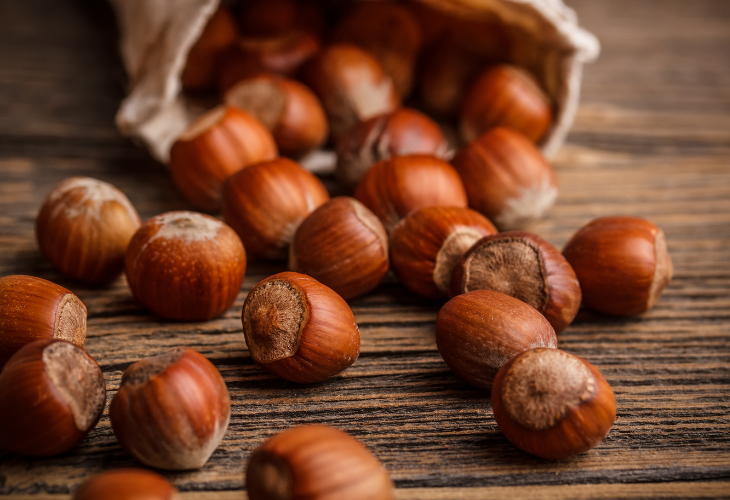
1. They are highly nutritious
Hazelnuts, also called filberts or filbert
nuts, come from the Corylus tree that’s primarily cultivated in Turkey,
Italy, Spain, and the United States.
Although these oblong nuts are high in calories, they are chock-a-block
with essential nutrients along with healthy fats. Additionally,
hazelnuts are a good source of dietary fiber.
One ounce (28 grams) of hazelnuts contains:
Calories: 176
Total fat: 17 grams
Protein: 4.2 grams
Carbs: 4.7 grams
Fiber: 2.7 grams
Vitamin E: 21% of the Reference Daily Intake (RDI)
Thiamin (vitamin B1): 12% of the RDI
Magnesium: 12% of the RDI
Copper: 24% of the RDI
Manganese: 87% of the RDI.
A study published in The Journal of Nutrition showed that adding
hazelnuts to your diet can boost the levels of key micronutrients, such
as vitamin E and magnesium, in the body. While vitamin E helps boost the
immune system, magnesium is known to lower blood pressure and has
anti-inflammatory benefits.
2. They can help reduce weight
Hazelnuts are a good source of protein. So, if you are a vegetarian and
are looking for a healthy source of protein, filbert nuts are a good
choice. Moreover, since they are also packed with healthy fats and
fiber, they will help you keep fuller for longer. That’s one of the best
tricks to use if you are trying to lose weight.
Also, a 2018 study published in the European Journal of Nutrition found a
correlation between nut consumption, lowered weight gain, and a reduced
risk of obesity. In the study, the participants who regularly consumed
nuts were found to be less likely to become overweight than those who
didn’t.
3. May help lower cholesterol
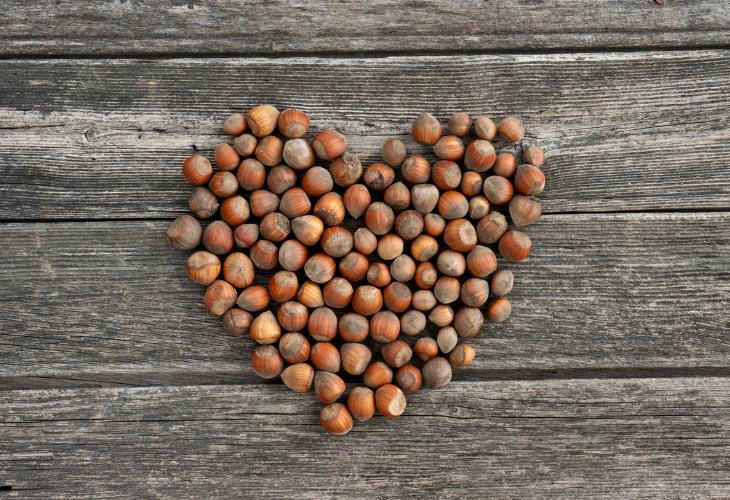
Eating hazelnuts regularly can help lower
cholesterol levels. A 2013 study found that a hazelnut-enriched diet
helps decrease low-density lipoprotein (LDL) cholesterol, which is
associated with a higher risk of heart problems. The researchers noted
that the nuts should be incorporated into the daily diet without change
in total caloric intake to make the best use of its health benefits.
Similarly, a 2016 review published in the journal Nutrients suggested
that hazelnuts can decrease the levels of harmful cholesterol and can,
hence, have a favorable effect on cardiovascular disease prevention.
Related: The Many Great Health Benefits of Brazil Nuts
4. Will support healthy bowel movements
As mentioned above, hazelnuts are a good source of dietary fiber. A low
fiber diet can contribute to constipation while eating plenty of fiber
can improve regular bowel movements and help prevent constipation. This
happens because soluble fiber slows digestion, allows more water to
remain in your stool, making it softer and easier to pass through the
intestines.
The American Dietetic Association recommends that men aged 19 to 50
should get at least 38 grams of fiber in their daily diets, and women in
the same age group should get 25 grams.
A 28-g serving (or about 20 whole kernels) of hazelnuts contains about
2.7 g of dietary fiber.
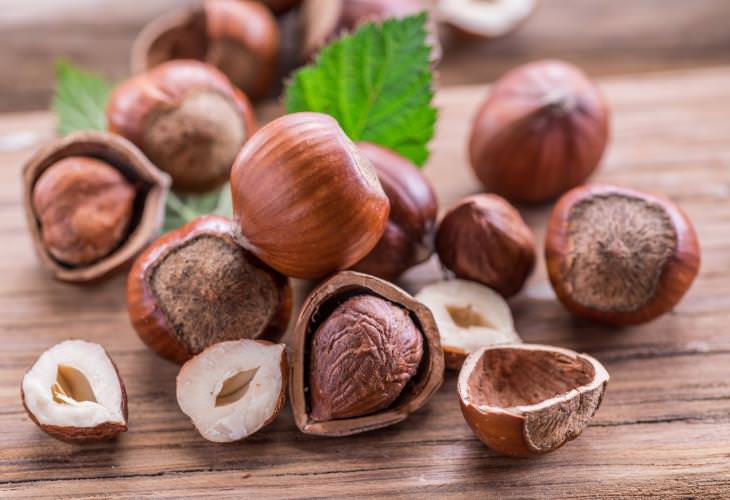
5. May help reduce blood sugar levels
Research suggests that hazelnuts can help
reduce blood sugar levels. In a 12-week study, people with metabolic
syndrome (a group of risk factors for heart disease, diabetes, and other
health problems) were given a combination of walnuts, almonds, and
hazelnuts. At the end of the 12 weeks, the participants showed a
significant reduction in fasting insulin levels.
Furthermore, oleic acid, which is the main fatty acid in hazelnuts, has
been shown to have a beneficial effect on insulin sensitivity and blood
sugar.
6. Good for the heart
Eating hazelnuts can boost heart health,
research suggests. We have already mentioned how a diet rich in these
nuts helps decrease LDL or “bad” cholesterol. A large amount of fiber
and monounsaturated fatty acids in these nuts help reduce LDL
cholesterol while increasing the high-density lipoprotein (HDL) or
“good” cholesterol. High levels of HDL cholesterol in the body have been
associated with a lower risk for heart disease and stroke, as it
absorbs LDL cholesterol and carries it back to the liver.
Studies also indicate that eating about 29 to 69 grams of hazelnuts per
day can be great for improving one’s overall heart health.
7. Can help decrease inflammation
Regular consumption of hazelnuts has been linked with a reduction of
inflammation in the body due to their high healthy fat content. Studies
have shown that eating 60 grams of hazelnuts every day for 12 weeks can
be useful in decreasing inflammatory markers in overweight and obese
people.
Another study, which analyzed how eating hazelnuts affected
inflammation, found that consuming 40 grams of hazelnuts can reduce the
inflammatory response in healthy people.
That being said, these studies also
conclude that simply eating hazelnuts might not be enough for reducing
inflammation; one must also have a healthy diet overall.
How to add hazelnuts to your diet
Hazelnuts have a sweet, nutty, and mild
flavor and are popularly consumed as a snack. You can buy them raw from
the supermarket and then roast or ground them to enjoy as your evening
snack. Alternatively, hazelnuts can also be used in the following ways:
* Add these nuts to your salads to make them more flavorful.
* Chop and use them in desserts like pastries, pies, truffles, biscotti,
cookies, tarts, and macaroons.
* Add raw, roasted, or toasted hazelnuts into a bowl of yogurt, oatmeal,
or muesli.
* Sprinkle some finely chopped hazelnuts to a few slices of grilled
pineapple or apple for a light and nutritious dessert.
* Add them to quinoa, risotto, or any other grain-based dish.