Wednesday, April 02, 2025

Suffer From Anxiety? Here's How to Avoid Panic Attacks

A panic attack is a sudden feeling of intense anxiety, which may also be accompanied by a number of intense physical symptoms, including nausea, disorientation, shaking, an irregular heartbeat, dizziness, sweating, restlessness, tingling fingers, ringing in your ears, and shortness of breath. 
 
These symptoms aren't typically dangerous but can be absolutely terrifying to experience, especially if you've never had a panic attack before. They can make you feel as though you're having a heart attack, and may last anywhere from a few minutes to half an hour. 
 
What Causes a Panic Attack?

 
Suffer From Anxiety? Here's How to Avoid Panic Attacks
The symptoms described above tend to kick in when your body enters 'fight or flight' mode, as the result of a distressing physical or psychological stimulus. Your rate of breathing speeds up as your body tries to increase its oxygen intake. This causes a number of hormones to be released, such as adrenaline, making your muscles tense up and your heart beat faster.

How Should I Handle a Panic Attack? 
Professor of Clinical Psychology and Applied Science at the University of Bath, Paul Salkovskis, says that it's very important not to allow your fear of panic attacks to take over. "Panic attacks always pass and the symptoms are not a sign of anything harmful happening," he says. "Tell yourself that the symptoms you're experiencing are caused by anxiety." 
 
He points out that during a panic attack, one should avoid looking for distractions, but to ride out the attack instead. "Try to keep doing things. If possible, don't leave the situation until the anxiety has subsided. Confront your fear. If you don't run away from it, you're giving yourself a chance to discover that nothing's going to happen." 
 
Once the anxiety begins to subside, you should focus on your surroundings, and carry on with whatever you were doing before the attack began. "If you’re having a short, sudden panic attack, it can be helpful to have someone with you, reassuring you that it will pass and the symptoms are nothing to worry about," says Professor Salkovskis.

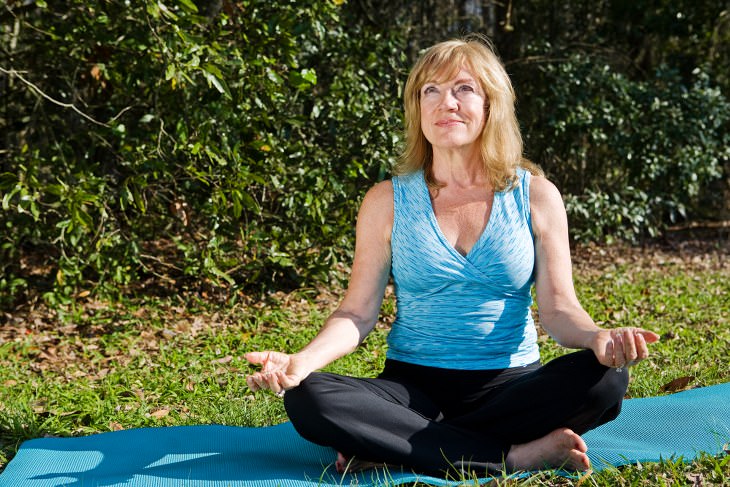
Try breathing exercises to help ease symptoms
 Suffer From Anxiety? Here's How to Avoid Panic Attacks
 
If a panic attack causes your breathing pattern to rapidly speed up, controlling your breath by means of breathing exercises is an effective way of easing some of the symptoms. 
 
Try this: 1. Breathe in through your nose, as gently, slowly, and deeply as possible. 
 
2. Breathe out through your mouth, gently, slowly, and deeply.  
 
3. While breathing in and out, you may find it useful to count from one to five for each inhalation or exhalation.
 
 4. Close your eyes, and simply focus on your breathing. 
 
After practicing this for a few minutes, you should begin to feel better. However, it's perfectly normal to feel a bit fatigued afterward. 
 
How Can I Prevent Panic Attacks? 
 
In order to try and prevent panic attacks from occurring, Professor Salkovskis says that "you need to try to work out what particular stress you might be under that could make your symptoms worse," but that "it's important not to restrict your movements and daily activities." 
 
Here are some things that may help you to prevent panic attacks: 
 
• Doing breathing exercises or practicing meditation on a daily basis. 
 
• Eating regular meals to help stabilize your blood sugar levels. 
 
• Exercising regularly to help you manage stress, boost your confidence, release tension, and boost your mood. 
 
• Avoid smoking, alcohol, and caffeine, since these can aggravate your symptoms. 
 
• Cognitive Behavioral Therapy (CBT) can get to the root of your problem and can alter the negative thought patterns that are fueling your attacks. 
 
• Joining a panic support group can also be very helpful and reassuring. 
 
Should I See a Doctor? 
While frightening, panic attacks are typically relatively harmless. However, for more severe cases, it would be a good idea to get a professional opinion. 
 
You should see your doctor if: 
 
• You feel unwell after your breathing returns to normal. 
 
• Your panic attack still hasn't subsided after 20 whole minutes of controlled breathing exercises. 
 
• You still have an irregular or rapid heartbeat or chest pains after the attack subsides. 
 
• Your panic attacks become a regular occurrence.


This is only for your information, kindly take the advice of your doctor for medicines, exercises and so on.   


Labels: , , , , , , , , , ,

Thursday, July 22, 2021

Yes, ‘Smiling Depression’ Is a Thing—Here’s How to Know if You Have It

Symptoms of depression seem pretty easy to spot: disinterest in things you used to love, an attitude that can change at the drop of a hat, a desire to eat all of the things (or none of the things).

But here’s the thing: Sometimes you can’t see that stuff—not because it’s not there, but because it’s hidden (yes, even to yourself). You can feel all of those depressed feelings, but still show up for work (and your family and your friends) with a smile on our face.

That's what's known as “smiling depression,” which, though, sounds counterintuitive, but according to Heidi McKenzie, PsyD, a clinical psychologist practicing in Pittsburgh, Pennsylvania, depression and smiling are not mutually exclusive. Here’s what you need to know about “smiling depression,” including what to do if you think you have it, and how to get help.

What Exactly is “Smiling Depression”?

“People with smiling depression often mask the symptoms they are experiencing,” says McKenzie. “They can get up each day, get dressed, show up for work, and continue to interact with others in a way that belies how badly they are feeling inside.”

McKenzie says that smiling depression is essentially another name for high-functioning depression or persistent depressive disorder (PDD), a chronic level of sadness that can include sleep or appetite changes, feelings of hopelessness or fatigue, panic attacks, and loss of interest in favorite activities. So it’s a totally real thing, and it can leave you in serious pain.

Okay But Why Haven't I Ever Heard of “Smiling Depression”?

If you’re looking for “smiling depression” in the Diagnostic and Statistical Manual of Mental Disorders, 5th Edition (DSM-5), you won’t find it, but experts are fairly comfortable using the term as a stand-in for mild to moderate categories of depression, especially if it prompts someone to seek help for their symptoms when they might not otherwise realize they have a problem.

“I think it’s important to use terms that people can relate to, that can destigmatize depression, and that can encourage people to say they need help,” says Karen Stewart, M.D., a psychiatrist at Georgia. “People may not know otherwise that what they’ve been experiencing can be attributed to depression.”

McKenzie agrees, explaining that the idea of "smiling depression" can go a long way toward busting the myth of the depressed person as someone who only stays in bed all day with the blinds drawn.

While some people with depression become bedridden (it can happen with major depressive disorder), many others are able to do their jobs, take care of their families, and even smile, laugh, or maintain their sense of humor, says McKenzie. Assuming you must be fine because you don't fit the stereotypical picture of mental illness could do long-term harm to your health and well-being.

How Do I Know If I Have “Smiling Depression”?

There’s no single answer here, but there are plenty of signs and symptoms to watch for. If you’re feeling totally drained at the end of every day and have no idea why, McKenzie says you may be doing a lot of emotional legwork to fight through your depression. Here’s a few physical examples of how that might look, according to McKenzie:

  • It takes serious effort for you to get up in the morning, do your hair and makeup, and get yourself to work. Once there, you can play the role of happy employee (asking your co-workers about their weekend plans or accepting lunch invites) but you might feel empty and disconnected while participating.
  • You can power through your work day, successfully balancing a budget or managing a classroom of kindergartners, but you struggle to maintain your focus; when you finally get home, you’re so exhausted you neglect all your personal responsibilities and fall into bed (or asleep on the couch) before dinner.
  • Your self-care has totally dropped off the charts. You spend so much energy keeping up with the bare minimum that you’re skipping workouts, making unhealthy food choices, and dodging invites to hang with your friends.
  • You’re constantly experiencing a cycle of negative emotions, by either feeling guilt or shame for feeling down, or by berating yourself for being lazy when you can’t find the energy to do something.
  • You dabble in something called "passive suicidal ideation," which means you aren’t actively planning to take your own life, but you don’t feel upset or distressed by the thought of dying suddenly (like in a car accident, for example).

I Think I Might Have “Smiling Depression.” What do I do Now?

First off, try to dismiss any thoughts of shame, blame, or guilt associated with the idea of depression. About 7 percent of Americans of all ages suffer from it every year, according to the Centers for Disease Control and Prevention. There is zero reason to feel embarrassed about saying you have it—or that you need help.

Secondly, Stewart recommends making an appointment with your PCP or a mental health professional ASAP for a thorough evaluation if you’ve noticed symptoms lasting most of the day for a minimum of two weeks. Being officially diagnosed with depression—and knowing which category of it you have—is important to finding the right treatment.

Speaking of treatment, that’s your third step. Thankfully, you have several options: lifestyle changes, therapy, and medication, says Stewart."You can pick and choose from those three or do a combination of all of them."

According to Stewart, lifestyle changes involve paying attention to your diet, sleep, and exercise habits, while medication usually involves taking a selective-serotonin reuptake inhibitor (SSRI), like Prozac, Zoloft, or Paxil, which can give you a much-needed boost of mood-improving serotonin. And as far as therapy goes, cognitive behavioral therapy is a solid choice that Dr. Stewart says will teach you how to manage your thoughts and behaviors to improve your overall mood.

Whatever treatments you choose, the key is to get help—both professionally and from trusted friends or family members. Like any other health condition, it will take time to feel better, but relief can be found.

“Working on a day-to-day basis on developing a sense of self-compassion for not being at your best is an important step toward feeling better,” says McKenzie. “Know that the condition is highly treatable and take the steps to reach out for help.”

This is only for your information, kindly take the advice of your doctor for medicines, exercises and so on.   

https://gscrochetdesigns.blogspot.com. one can see my crochet creations  
https://gseasyrecipes.blogspot.com. feel free to view for easy, simple and healthy recipes    
https://kneereplacement-stickclub.blogspot.com. for info on knee replacement


Labels: , , , , , , , ,