Muscle Atrophy: Types, Signs and Ways to Reverse It
Movement is one of the best predictors of
long-term health and life satisfaction. Those who move more are
healthier, happier, and more independent than their peers who lead a
sedentary lifestyle. An immediate harmful effect of inactivity we don’t
discuss enough is muscle loss or atrophy - a condition that occurs when
our body redirects resources from the muscles we don’t use enough,
essentially starving the muscle and making it shrink in size.
In some people, muscle atrophy can develop
in just a few weeks. Luckily, this process is reversible in most cases.
Read on to learn about several types of muscle atrophy and ways to
prevent it.
What is muscle atrophy?
The human body is a fascinating system that continuously updates itself
and changes. The body is programmed to redirect nutrients to the muscles
of the body we use the most and cutting off nutrients to the
underutilized ones. This process of losing muscles mass is referred to
as muscle atrophy, or muscle loss, muscle catabolism, and muscle wasting
As a result of muscle atrophy, a person may
experience any of the following symptoms:
Weakness in the arms or legs, which leads to trouble reaching for
high objects, difficulty opening jars, tying shoelaces, rising from a
chair.
Muscle cramps and spasms while walking, doing sports, or engaging in
everyday activities.
Balance and coordination issues - if the issue affects the back,
core, or legs.
Asymmetry. You may notice that the muscles of one arm are smaller or
that your torso is tilted to one side.
In some cases, muscle atrophy can develop in a matter of 2-3 weeks of
downtime, but others can maintain their muscle mass for a longer time.
The speed of muscle loss depends on many factors, including your initial
fitness level, age, and other health issues. Sadly, in most cases,
muscle catabolism is rapid - a study published in the Journal of
Rehabilitation Medicine concluded that older 8 men lost a quarter of
their muscle gains of 8 weeks of strength training after just 2 weeks.
Muscle atrophy predominantly occurs because you don’t or can’t use a
specific group of muscles enough, often due to a physical setback like
an injury or a long period of bed rest due to illness. However, spending
too much time at a desk can weaken specific muscles too.
Here are the most common types of muscle atrophy:
1. Physiological muscle atrophy
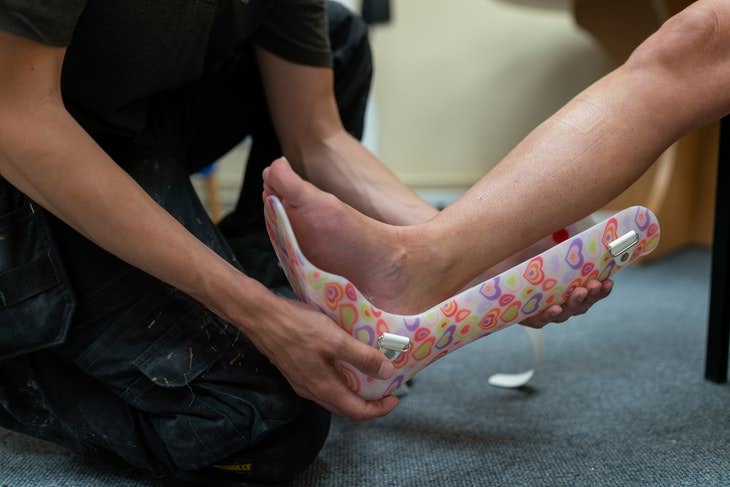
Physiological atrophy is the most common
type of muscle loss. It occurs as a result of disuse over long periods
of time. For example, when astronauts spend a few days in outer space
with no gravity - their muscles start to shrink. If you have ever had a
cast on your arm or leg, you will have experienced physiological muscle
atrophy.
Your muscles will decrease in size and
strength when you stop exercising or just moving enough. This can happen
for a variety of reasons: a job that requires a lot of sitting, an
immobilized limb as a result of injury, bed rest, etc. The good news is,
most cases of physiological atrophy can be cured by using the muscle.
2. Neurogenic atrophy
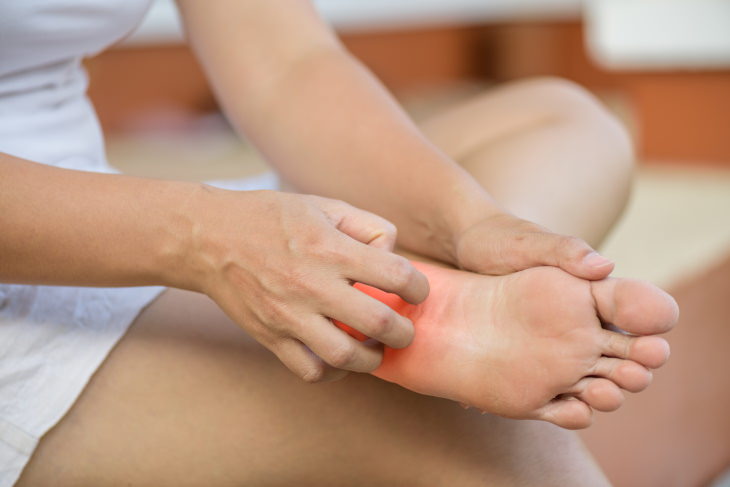
This type of muscle atrophy occurs when the
nerve that leads to a specific muscle becomes damaged. The damaged
nerve isn’t able to create muscle contractions, so the muscle slowly
withers. Any type of neuropathy (nerve damage) or any other condition
that affects the nerves - such as amyotrophic lateral sclerosis,
Guillain-Barré syndrome, multiple sclerosis, or stroke - can lead to
neurogenic muscle atrophy. This type of muscle atrophy is more difficult
to treat because the muscle must be artificially trained using
electrical stimulation to stay strong.
3. Malnutrition
Severe malnutrition can lead to muscle loss too. When your body doesn’t
get all the nutrients it requires for a long period of time, it may
start using your muscle tissues as fuel. According to the International
Osteoporosis Foundation, a diet low in protein, fruits, and vegetables
alone can reduce your muscle mass. So make sure to maintain a
well-balanced diet to prevent muscle loss.
4. Arthritic muscle loss

Any type of joint pain and limitation in
the range of motion can lead to physiological muscle atrophy. Patients
suffering from osteoarthritis, rheumatoid arthritis, and any other
condition that affects the muscles or joints often suffer from muscle
loss as well.
The pain and discomfort people with joint issues experience discourage
them from physical activity, which results in muscle weakness. As a
result of muscle weakness, more pressure is put on the joints - and
you’ve got a vicious cycle of arthritic pain leading to muscle atrophy
leading to more arthritic pain, etc. If you have arthritis, please don’t
get discouraged - remember that exercise will be able to reverse the
atrophy and improve your symptoms considerably.
5. Sarcopenia
Sarcopenia is an age-related condition experienced by 10% of adults over
age 50 and up to 13% of people in their 60s and above. It can start as
just feeling a bit weaker during physical activities and progresses to
difficulty doing everyday activities like opening jars or holding a pen.
Even though sarcopenia is considered a normal part of aging, it can
lead to dramatically fast muscle loss, especially when combined with
lack of movement or immobilization.
The biggest issue with sarcopenia is the
increased risk of falls and injuries, but exercise can help delay the
progression of sarcopenia. As Jodi Klein, a physical therapist, pointed
out in an article by Harvard Health, "It can take longer for the body to
recover from dramatic muscle loss, but with the right strategy, older
adults can protect themselves from muscle atrophy and rebound easier if
it occurs, no matter what their age."
Muscle loss is reversible - in most cases
The great news is that most people
suffering from muscle atrophy will be able to recover in a matter of
months. As long as your nerves are intact, you’re eating healthy, and
you’re getting treatment for any underlying health issues that are
contributing to the muscle loss, you should be able to get back in shape
within 2-4 months.
Unfortunately, muscle atrophy caused by neurological damage or stroke
can be irreversible. When nerve signals are no longer able to reach the
muscles, little can be done to preserve them.
Reversing Muscle Atrophy
1. Start by returning to movement and doing physical therapy
The first step is returning to normal
physical activity - getting out of bed, moving around every half an hour
or so, carrying around small objects. Maintaining an active lifestyle
will help prevent recurrent muscle loss too, which is especially crucial
for people who sit a lot, those who suffer from arthritis, and older
adults.
Physical therapy can also help teach you to activate specific muscles,
and a physical therapist will be able to help you move the arms and legs
if you have trouble doing so yourself. It’s especially helpful for
preventing muscle loss in people in hospitals or those who have to stay
in bed for a long time as a result of health issues.
2. Keep up the good shape with general
exercise
Any type of daily exercise, be it walking, cleaning the house,
gardening, cycling, or any other activity will stimulate your muscles
and help them regrow. Swimming and water exercises may be especially
helpful for recovering patients, as water makes movements easier.
Lastly, weight training, such as training with resistance bands and
dumbbells, can help prevent muscle atrophy by focusing on specific
muscles.
3. Electrical stimulation and ultrasound
therapy
Both electrical stimulation and ultrasound therapy are non-invasive
methods that help heal and restore muscles. Ultrasound and electrical
stimulation devices are applied to the problematic area, stimulating the
muscles and making them heal. These are usually in-office treatments,
but your physical therapist may also offer you a portable device you can
use at home.
4. Surgery
If one’s muscles, ligaments, or tendons become too stiff as a result of
muscle atrophy, it can lead to a contracture deformity. The stiffness
may prevent you from moving and may require surgery to correct it.
In summary, muscle atrophy is an extremely common health issue that
affects everyone from office workers to the elderly. The dangerous
health issue can weaken your muscles and lead to pain, weakness, and
even problems with balance. Luckily, the condition is usually reversible
with regular physical activity and exercise.