Tuesday, August 18, 2026

Risk-Based Screening Improves Skin Cancer Detection After Transplant
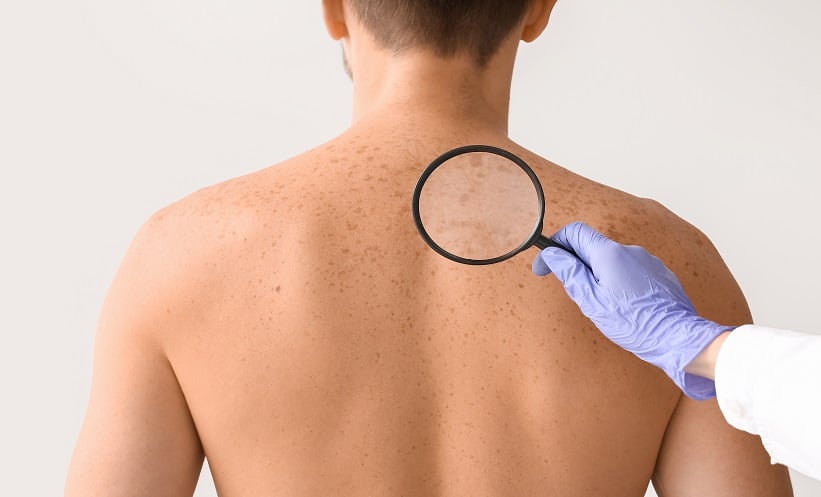
 skin cancer 

A new analysis from Kaiser Permanente Northern California has confirmed that solid organ transplant (SOT) recipients face a dramatically higher risk of skin cancer compared with nontransplant patients. The retrospective cohort study, which included 2083 transplant recipients and 26,199 matched controls, found a 7.8-fold increase in post-transplant skin cancer risk among SOT recipients. The elevated risk stems largely from long-term immunosuppressive therapy, which weakens the body’s ability to repair DNA damage from ultraviolet exposure.

Given the rising number of transplant survivors worldwide, clinicians have been seeking more efficient ways to identify those at greatest risk. The Skin and Ultraviolet Neoplasia Transplant Risk Assessment Calculator (SUNTRAC) was developed to help stratify patients based on established risk factors such as transplant type, age, skin type, and UV exposure history.

SUNTRAC Program Improves Early Detection

Researchers assessed the impact of a modified version of this tool, the KP‑SUNTRAC risk-based surveillance program, which was implemented across northern California health facilities between 2022 and 2024. Patients were categorised into low, medium, high, or very high risk for posttransplant skin cancer and monitored accordingly.

Following program implementation, screening rates improved significantly among those in the high‑risk (hazard ratio 1.98) and very high‑risk (hazard ratio 2.17) groups. The rate of first-detected skin cancer increased in these populations (hazard ratio 2.57), suggesting more effective early identification rather than a true increase in disease incidence. Importantly, health care utilisation remained stable, with no rise in dermatology visits or biopsy-related workload.

Implications for Targeted Screening

The findings demonstrate that risk‑stratified surveillance can optimise limited dermatology resources while improving cancer detection in those most at risk. Investigators concluded that KP‑SUNTRAC strengthens early diagnostic efforts without adding short‑term burden to the health system.

By enabling clinicians to focus screening intensity where it is most needed, programs like KP‑SUNTRAC could reduce long‑term morbidity and health care costs associated with late‑stage skin cancer in transplant recipients. This approach offers a practical model for personalised, cost‑effective prevention in immunosuppressed populations.


This is only for your information, kindly take the advice of your doctor for food, medicines, exercises and so on.   

Labels: , , , ,

Sunday, February 10, 2019

This Could Impair The Immune System


Researchers have now discovered how the fungus -- Aspergillus fumigatus -- knocks out the immune defences, enabling a potentially fatal fungal infection to develop.


While, healthy people usually have no problem if microorganisms find their way into their bodies as their immune defence system will put the spores out of action, a specific type of fungus can threaten lives with a compromised immune system, such as AIDS patients or who are immunosuppressed following an organ transplantation, says a new study.

Researchers have now discovered how the fungus -- Aspergillus fumigatus -- knocks out the immune defences, enabling a potentially fatal fungal infection to develop.

Among other factors, it is gliotoxin -- a potent mycotoxin -- that is responsible for the pathogenicity of Aspergillus fumigatus.

Pathogenicity refers to the ability of an organism to cause disease.

"It was known that this substance has an immunosuppressive effect, which means that it weakens the activity of cells of the immune defence system. However, it had not been clear previously how exactly this happens," said a Professor.

To achieve this, they brought immune cells into contact with synthetically produced gliotoxin. These cells -- neutrophilic granulocytes -- represent the first line of the immune defence system.

Their task is to detect pathogens and eliminate them. As soon as such a cell comes into contact with a pathogen, for example a fungus, it releases specific messenger substances (leukotrienes) into the blood, which attract other immune cells. Once a sufficiently large number of immune cells has gathered, they can render the intruder harmless, findings showed.

This does not happen if the pathogen Aspergillus fumigatus is involved. Gliotoxin ensures that production of the messenger substance leukotrieneB4 in the neutrophilic granulocytes is inhibited, so that they are unable to send a signal to other immune cells. This is caused by a specific enzyme (LTA4 hydrolase) being switched off by the mycotoxin.

"This interrupts communication between the immune cells and destroys the defence mechanism. As a result, it is easy for spores - in this case the fungus - that enter the organism to infiltrate tissues or organs," said the Prof.
THIS IS ONLY FOR INFORMATION, ALWAYS CONSULT YOU PHYSICIAN BEFORE HAVING ANY PARTICULAR FOOD/ MEDICATION/EXERCISE/OTHER REMEDIES.                                    PS- THOSE INTERESTED IN RECIPES ARE FREE TO  VIEW MY BLOG-                                                                                           https://gseasyrecipes.blogspot.com/                                                                                                                                                                         FOR INFO ABOUT KNEE REPLACEMENT, YOU CAN VIEW MY BLOG-                                                  https:// kneereplacement-stickclub.blogspot.com/                                                                                     FOR CROCHET DESIGNS                                                                                                                                                                                                  https://gscrochetdesigns.blogspot.com


Labels: , , , , , , , , , , , , ,