Tuesday, October 12, 2021

Flu cases rising in India amidst COVID-19: Should you get a flu vaccine right now? Questions answered

Will getting a flu vaccine shot be helpful right now?
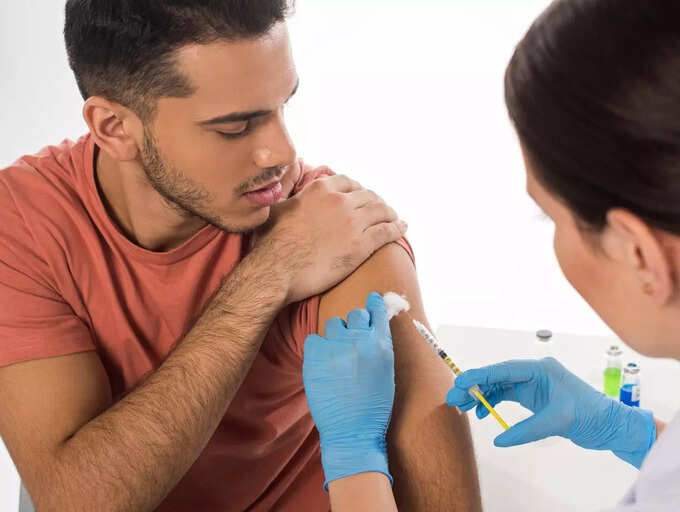
Despite a decline in the total COVID-19 cases in India, there has been an unfortunate rise in flu cases in the country. While influenza is a routine virus which crops up during the seasonal change times, the cases have been observed to be severe, and longer lasting this time around, and more cumbersome than before.

Flu, much like COVID-19, can prove to be a serious health problem, and could also cause severity for those at a higher risk and must not be taken lightly, or dismissed to be a 'cold'.

Flu vaccination is just as important as COVID-19 vaccination

Prompt and prioritized vaccination is one key factor which has helped us somehow get the COVID-19 crisis under control, flu vaccination is still something which still doesn't garner active awareness. With the flu season posing alarming problems, doctors are increasingly stressing on adult flu vaccinations, and kids to get flu vaccines as well, to have double defensive protection. With newer, upgraded flu vaccines available right now, we clear some key questions about the efficacy, and the importance of timely flu vaccination:

What kind of protection do flu vaccines offer? How are they different from COVID-19 jabs?

Flu vaccines are a kind of injection which offer protection from the disease spread by influenza virus. While the jabs have been pushed into use for a long time now, the flu vaccines have been clinically tried and tested to curb the severity and mortality rates with the flu infection, which can be particularly helpful for those who are at a higher risk. The efficacy of these flu vaccines has also been found to be over and above the WHO criterion. Just like COVID-19, flu can be a respiratory infection which can cause severe symptoms, including pneumonia, and reduces the overall risk of hospitalization as well.

Having said that, while both are respiratory infections caused by viruses, there are some notable differences between the vaccines. Flu vaccines and COVID-19 vaccines are built using different technologies but have the same job of training our immune system.

As for the efficacy, while there again is a considerable difference, with some experts feeling that the COVID-19 vaccines do a better job at protection and severity reduction, it's also thought that the COVID vaccine technology can help improve the protective features, workability of existing vaccines, including the flu shot. 

How long does the efficacy of these jabs last?

Flu vaccines are routinely upgraded and improved to offer higher levels of protection against the infection. Since the flu virus is said to undergo mutational changes upto twice a year, vaccines are upgraded in the same manner. However, it's important to remember that the vaccines actually, only offer protection against disease for 6-7 months, and hence, should be pushed into annual immunization practice. Getting upgraded, new-improved vaccines can help guarantee the maximum protection against illness risk, and also bring down the risk of transmission.

Which type of vaccine should you get right now?
Which type of vaccine should you get right now?

Routine changes and changes can make some vaccine types more suitable for use than others. As per the World Health Organisation (WHO) recommendations, using the Southern Hemisphere (SH) vaccine is the ideal one for Indian beneficiaries as the annual shot is updated with antigens prevalent and known to circulate in our part of the world and weather conditions.

Can getting the flu vaccine offer protection against COVID-19?
Can getting the flu vaccine offer protection against COVID-19?

Even as COVID-19 and flu are similar diseases causing a range of respiratory and inflammatory symptoms, a flu vaccine doesn't directly protect one against COVID-19, and vice versa. Both are different viruses, and thinking one to be protective against the other can be a terribly bad mistake.

However, at the same time, considering the surge in flu cases being witnessed right now, and the delayed third COVID wave, getting a flu shot right now would be a wise decision to make as it can definitely help in differentiating both the diseases. Flu can be a serious disease just like COVID-19, and if precautions and treatment aren't taken in time, it could weaken immunity, prolong recovery and complicate matters if an individual happens to contract COVID at the same time. Thus, getting both the vaccines is a safer decision to make to minimize any additional risks, when a third wave is to come.

Can kids get the shot in the absence of COVID-19 vaccines?
Can kids get the shot in the absence of COVID-19 vaccines?

Kids, much like elders, are at a higher risk of catching flu and seasonal infections. With schools having reopened, there's a risk of COVID-19 spread too. While we do not have COVID-19 vaccines available for kids yet, doctors have been recommending parents to get kids timely flu and other immunizations to protect them better. While on one hand, flu vaccines will help minimize flu risk and make it easier to identify COVID-19, it will also reduce the burden on pediatric hospitalization risk, which is a big fear for the third wave. However, it should be very well remembered that flu vaccines have no proven efficacy against COVID, and consulting doctors first would be helpful.

What are the different types of seasonal flu vaccines?

What are the different types of seasonal flu vaccines?

Flu vaccines are available in two forms-intramuscular injectable shots and intranasal sprays. While injectable shots are administered the same way as typical COVID-19 vaccines, they tend to cause more vaccine-related side-effects, whereas a intranasal vaccine is available in the form of a nasal spray which is injected into the nasal cavity and helps avoid unpleasant reactions and painful side-effects. In India, while the Serum Institute of India (SII, Pune) is working on developing an anti-flu intranasal vaccine, currently, only injectable vaccines are available.

While flu vaccines are advisable considering the public health risks, the vaccines are only available at private hospitals right now. Please note, while the vaccines are easily available, doctors' consultation and recommendations may be needed in some places. 

What side-effects could you expect from getting the flu and COVID-19 vaccine together?

What side-effects could you expect from getting the flu and COVID-19 vaccine together?

Major health bodies have established that getting both the flu and COVID vaccine doses together is a safe thing to be done, and poses no risk. In light of this, a lot of establishments have started offering the shots together. While majorly advantageous, there can be some side-effects which could come up if an individual gets both the vaccines together. Some side-effects could also be on the intense side.

Largely, with both the vaccines, the major side-effects which are to be expected include soreness in the arm, light to moderate fever, chills, fatigue, headache, nausea and body pain.

dmore

This is only for your information, kindly take the advice of your doctor for medicines, exercises and so on.   

https://gscrochetdesigns.blogspot.com. one can see my crochet creations  
https://gseasyrecipes.blogspot.com. feel free to view for easy, simple and healthy recipes    
https://kneereplacement-stickclub.blogspot.com. for info on knee replacement

Labels: , , , , , , , , , ,

Wednesday, January 06, 2021

These Medical Breakthroughs Will Help Save Countless Lives

As the world continues to battle the coronavirus pandemic, the biggest hope in getting rid of the threat is the development of an effective vaccine. At the time of writing, more than 165 vaccines against the coronavirus are under development with 30 vaccines already in human trials. Whenever we do get the coveted vaccine, we would once again have science to thank.

Every year, scientific advancements help change little aspects of our daily lives for the better. Today, we will look at some of the significant advances made by contemporary science in the field of medicine and health. From a needle that can detect cancer to a head device that helps Alzheimer’s patients, these major developments can help save or improve the lives of millions of people across the globe.
 
1. Cancer-detecting ‘smart needles’
 Medical Developments, Cancer-detecting ‘smart needles’
Scientists in the UK have developed a “smart needle” which could revolutionize cancer diagnosis. This pioneering new procedure can pinpoint cancerous tissues or cells within seconds with the help of light. The device uses a technique known as Raman spectroscopy to shine a low-power laser into the part of the body being examined. Light is scattered differently from healthy or diseased tissues, which means that health professionals would get the chance to detect whether there are concerns with this device quickly. 
 
Researchers believe that this new technology could significantly improve the rate of detection and diagnosis of cancers, particularly lymphoma (a cancer of the immune system). This will also reduce patient anxiety as they await their results. 
 
Professor Nick Stone, from the University of Exeter and project lead, said: "The Raman smart needle can measure the molecular changes associated with disease in tissues and cells at the end of the needle. Provided we can reach a lump or bump of interest with the needle tip, we should be able to assess if it is healthy or not." 
 
The ''smart needle" probe is made up of fiber-optics enclosed within a fine needle that can search for cancer under the skin's surface. A prototype was built late last year by Dr. John Day of the University of Bristol and the team is now working on improving the design which would hopefully work well in clinical trials in the future.
 
2. A definitive cure for Ebola
Medical Developments, Ebola 
While we are in the middle of the coronavirus pandemic right now, a lot of us might have forgotten that not too long back the world also feared an Ebola pandemic. The Ebola virus is extremely dangerous and kills by shutting down the body’s organs and draining victims of the fluids that keep them alive. In past Ebola outbreaks, the virus has claimed as many as 9 in 10 patients. 
 
While scientists have been researching the fatal disease for years, it appears that we may have finally made a significant breakthrough in tackling it. In 2019, a clinical trial, conducted by an international coalition of doctors and researchers in the Democratic Republic of the Congo recognized two new drugs that reduced the death rate from the disease from 75 percent without treatment to 29 percent. 
 
Of the two treatments, one is a monoclonal antibody drug made by Regeneron that has shown the lowest overall death rate, at 29%. The second one is monoclonal antibody 114 made by Ridgeback Biotherapeutics and has a mortality rate of 34%. The next phase would now reveal which of the two drugs works best in certain settings. 
 
Regeneron contains a mixture of antibodies that are made by our immune cells to get rid of infections from the body. These antibodies specifically attack the Ebola virus (which can quickly evolve) and hence there is a lot of hope from this new drug in curing the Ebola infection. 
 
“From now on, we will no longer say that Ebola is incurable,” said Prof Jean-Jacques Muyembe, the director-general of the Institut National de Recherche Biomédicale in DRC, which has overseen the trial. “These advances will help save thousands of lives.” 
 
3. Universal flu vaccines
Medical Developments, Universal flu vaccines
According to the latest reports, scientists may be 'on the cusp' of a universal flu vaccine. A study that was published in March this year noted that researchers found that a single dose of the vaccine, called Flu-v, caused greater immune responses than placebo in a trial involving 175 volunteers. The results indicate that the vaccine is safe and most likely to be effective as well. 
 
"We're on the cusp of a universal flu vaccine," said Dr. Amesh Adalja, an infectious-diseases specialist and senior scholar at Johns Hopkins Center for Health Security in Baltimore, who was not involved in the new study. "It's long been a joke that a universal flu vaccine is always five years away. But I think, this time, it really is coming within the next five years." 
 
The seasonal flu vaccine definitely helps save lives but it is still suboptimal, according to experts. During each flu season, predicting the characteristics of the growing flu strains and developing vaccines that will prevent widespread infection becomes a major challenge. It’s a lengthy and expensive process and often results in frequent vaccine shortages as well. 
 
Hence, a universal flu vaccine like Flu-v is a promising alternative, primarily because it is made to target areas of the virus that are common to numerous strains of the flu virus and unlikely to mutate. "Flu-v can be manufactured all year round," said study co-author Olga Pleguezuelos, chief scientific officer at Seek, the drug discovery company that's developing Flu-v. "The manufacturing is synthetic, so there are no limitations on the scale of production," which there are for flu vaccines that are grown using eggs or cell cultures, she said. 
 
In four previous trails so far, it has been demonstrated that Flu-v is safe. The new study (called a "Phase 2" study) was the first human trial to indicate that Flu-v enhances the body's production of antibodies that prevent flu infection. A final round of "Phase 3" clinical trials will now determine if the universal flu vaccine can indeed prevent flu in humans safely and effectively. 
 
4. A Treatment for Alzheimer’s Disease
Medical Developments, Alzheimer’s
There is finally some encouraging news for millions of people suffering from Alzheimer’s disease (AD). NeuroEM Therapeutics, a clinical-stage medical device company focused on neurodegenerative diseases, announced their findings from an open-label clinical trial last year showing reversal of cognitive impairment in Alzheimer's disease patients after just two months of treatment using a wearable head device developed by the company. 
 
The first clinical study of eight patients found that seven experienced a return of some cognitive function. Extensive studies are currently underway to determine the authenticity of these results. 
 
“Perhaps the best indication that the two months of treatment was having a clinically-important effect on the AD patients in this study is that none of the patients wanted to return their head device to the University of South Florida/Byrd Alzheimer’s Institute after the study was completed”, said Dr.Gary Arendash, CEO of NeuroEM Therapeutics. One patient even exclaimed, “I’ve come back.” 
 
Previously, similar experiments had been conducted on mice with electromagnetic waves in the radiofrequency range and it was discovered that they provided protection against memory damage in young AD mice and reversal of memory impairment in aged AD mice. While these are still early days in this novel treatment, it still presents a rare ray of hope to the countless people suffering from Alzheimer’s as medicines have only helped to mildly slow down the disease’s progression.

5. Mind-Controlled prosthetics
In a major advance for amputees, brain-controlled prosthetics have now become a reality. University of Michigan researchers have used faint, latent signals from arm nerves and expanded them to enable real-time, perceptive, finger-level control of a robotic hand. 
 
For this, the researchers prepared a way to subdue volatile nerve endings, separate thick nerve bundles into smaller fibers that allow for a more specific control, and increase the signals coming through those nerves. The method includes tiny muscle grafts and machine learning algorithms taken from the brain-machine interface field.

We have developed a technique to provide individual finger control of prosthetic devices using the nerves in a patient’s residual limb. With it, we have been able to provide some of the most advanced prosthetic control that the world has seen,” says Paul Cederna, who is the Robert Oneal Collegiate Professor of Plastic Surgery at the U-M Medical School, as well as a professor of biomedical engineering. 
 
This is easily the biggest advance in motor control for people with amputations in many years. “It’s like you have a hand again,” said study participant Joe Hamilton, who lost his arm in a fireworks accident in 2013. “You can pretty much do anything you can do with a real hand with that hand. It brings you back to a sense of normalcy.”

Other researchers, too, have been developing similar brain-controlled prosthetics. For instance, Swedish researchers created a new type of prosthetic arm that could drastically improve the lives of people who’ve lost a limb. A few users have already received the brain-controlled prosthetic that was surgically attached to the bone, muscles, and nerves of their severed arms. It has allowed them to not only grip objects intuitively with their hand but feel the sensation of touching them. “The socket prosthesis I previously had is a tool you can use for help in your daily life, but this … this is a part of you,” says Rickard Normark who lost his left arm after an electric shock at work in 2011 and is using this new brain-controlled prosthetic. 
 
Hopefully, more researchers will continue to develop and improve upon these prosthetics and make the life of amputees much easier. 
 
This is only for your information, kindly take the advice of your doctor for medicines, exercises and so on.     

https://gscrochetdesigns.blogspot.com. one can see my crochet creations  
https://gseasyrecipes.blogspot.com. feel free to view for easy, simple and healthy recipes    
https://kneereplacement-stickclub.blogspot.com. for info on knee replacement


Labels: , , , , ,