Wednesday, July 20, 2022

Are your symptoms a sign of COVID's Omicron or allergies? How to tell the difference

Identifying the major differences between Omicron and allergies

For over two years, the SARs-CoV-2 virus has proved unpredictable and rampant. The Delta variant being the most menacing, people took a sigh of relief when Omicron became more dominant, leading to more simpler, milder and manageable symptoms. However, the continuous mutations and emergence of new subvariants has caused alarm across countries.

Recently, the Centers for Disease Control and Prevention (CDC) declared the BA.4 and BA.5 subvariants of Omicron as dominant in the United States and many other countries have expressed concerns about the same. Although the symptoms are said to be milder, the rate of infections has increased considerably, making more people sick.

What's even worse is that Omicron symptoms tend to overlap with symptoms of other respiratory issues including allergies. This, according to experts, can further facilitate the spread of the virus. Let us understand more about it!


Why are Omicron and allergy symptoms confusing?

Since the onset of the Omicron variant of COVID-19, the kind of symptoms commonly associated with the illness has changed. While with the Delta variant, that is said to have driven the second wave of infection in India, the symptoms were more severe and life-threatening, with Omicron, the ailments are considerably milder.

According to experts, while the Delta affected the lower respiratory tract, the Omicron is said to attack the upper respiratory tract, causing symptoms of sore throat, runny nose, sneezing, headache, muscle pain, fever, etc.

However, these upper respiratory symptoms are also reported in people who suffer from allergies, which are caused by an entirely different property i.e. airborne substances like pollen.

Therefore, nasal congestion, sneezing, coughing, headache, and tiredness are also symptoms of allergies, which may make it difficult to identify the cause of your illness.


How to differentiate between the two?

When it comes to understanding the difference between COVID's Omicron variant and allergies, we must look beyond the common respiratory symptoms they share.

For instance, the incubation period may vary in both these conditions.

In terms of allergies reactions occur within seconds or minutes after exposure to the allergen and can last from days to months, depending on how long you're in contact with the allergy trigger and a short time after.

With Omicron, experts say incubation period is about two to four days, which is generally shorter than the previous variants.

Furthermore, an infection with the Omicron is likely to make you feel a bit under the weather, whereas allergies do not give light to such discomfort.

Symptoms that may help differentiate between Omicron and allergies

According to Scott Feldman, MD, PhD, an assistant professor of clinical medicine in the division of allergy and immunology at the University of Pennsylvania Health System, fever is a tell-tale sign of COVID-19, as reported by Health.

This is because a rise in the body temperature indicates that the body is trying to fight off infections, he explains.

Another symptom that differentiates COVID from all other respiratory illnesses is loss of sense of smell and taste, which is highly unlikely with other conditions. In people with allergies, a partial decrease in smell may arise due to a stuffy nose. However, it is not as intense and long lasting as with COVID.

Additionally, with allergies, one is likely to experience itchy and watery eyes, which is not common with Omicron symptoms. 

What more to know

There are several other factors to note.

For instance, if you have a history of allergies, you're likely to be more prone to allergies and may recognize certain patterns and exposures that may be recurrent.

When it comes to seasonal allergies, some people may experience symptoms at the same time every year and in a similar circumstance.

Furthermore, if you're resorting to allergy medications, you must note that these will only treat symptoms like congestion, runny nose, and coughing, but will not help you get rid of fever, body ache and loss of smell and taste. 

Resort to COVID-19 testing

The best and most reliable way to find out what you're suffering from is to get a COVID-19 test. You can choose to get a rapid antigen test, which gives you prompt results or resort to an RT PCR test, which takes time to deliver results, but is more accurate.

What's important is staying safe
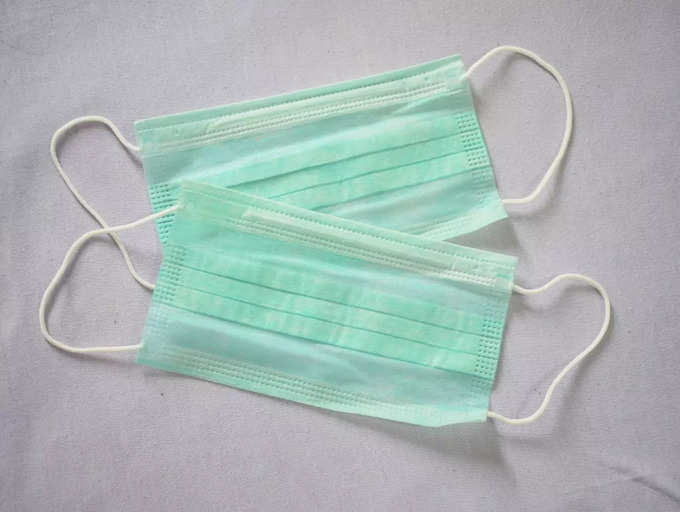
The key is to protect yourself from all respiratory illnesses.

In the case of COVID-19, wearing masks, maintaining social distance, washing your hands frequently and getting yourself vaccinated or boosted is of utmost importance.

With allergies, you again need to be very alert. Cover your face when you go out, avoid outdoor activities, take a bath before going to bed, wear a face mask if you go out to limit the entry of pollen in your system. Make sure you also check weather reports for pollen counts.

This is only for your information, kindly take the advice of your doctor for medicines, exercises and so on.   

https://gscrochetdesigns.blogspot.com. one can see my crochet creations  
https://gseasyrecipes.blogspot.com. feel free to view for easy, simple and healthy recipes    
https://kneereplacement-stickclub.blogspot.com. for info on knee replacement


Labels: , , , , , , , , , , , , , ,

Tuesday, November 19, 2019

Many parents have trouble differentiating between teen angst and depressive symptoms

Being able to differentiate between normal mood swings and something serious remains the top challenges faced by parents in identifying youth depression, suggests a recent study.

Though the majority of parents say they are confident they would recognise depression in their middle or high school-aged child, two-thirds acknowledge barriers to spotting specific signs and symptoms, according to the doctors.


Forty per cent of parents struggle to differentiate between normal mood swings and signs of depression, while 30% say their child is good at hiding feelings, according to a new poll.

"In many families, the preteen and teen years bring dramatic changes both in youth behaviour and in the dynamic between parents and children," said a new poll co-director.

"These transitions can make it particularly challenging to get a read on children's emotional state and whether there is possible depression," she added.

Still, a third of parents polled said nothing would interfere with their ability to recognise signs of depression in their child.

"Some parents may be overestimating their ability to recognize depression in the mood and behavior of their own child," she said. "An overconfident parent may fail to pick up on the subtle signals that something is amiss."

The poll also suggests that the topic of depression is all too familiar for middle and high school students. One in four parents say their child knows a peer or classmate with depression, and 1 in 10 says their child knows a peer or classmate who has died by suicide.

Indeed, rates of youth suicide continue to rise. Among people ages 10 to 24 years old, the suicide rate climbed 56% between 2007 and 2017, according to the Centres for Disease Control and Prevention.

"Our report reinforces that depression is not an abstract concept for today's teens and preteens or their parents," she said.

Compared to the ratings of their own ability, parents polled were also less confident that their preteens or teens would recognise depression in themselves.

The researcher said parents should stay vigilant in spotting any signs of potential depression in kids, which may vary from sadness and isolation to anger, irritability and acting out.

Parents might also talk with their preteen or teen about identifying a "go-to" adult who can be a trusted source if they are feeling blue, she said.

Most parents also believe schools should play a role in identifying potential depression, with seven in 10 supporting depression screening starting in middle school.

"The good news is that parents view schools as a valuable partner in recognising youth depression," she said. The bad news is that too few schools have adequate resources to screen students for depression, and to offer counselling to students who need it."


this is only for your information, kindly take the advice of your doctor for medicines, exercises and so on.     
https://gscrochetdesigns.blogspot.com. one can see my crochet creations  
https://gseasyrecipes.blogspot.com. feel free to view for easy, simple and healthy recipes    
https://kneereplacement-stickclub.blogspot.com. for info on knee replacement


Labels: , , , , , ,

Sunday, May 31, 2015

Indian-American scientist finds new way for kidney diagnosis

In a major success, an Indian-American scientist and his colleague have identified a new, less-invasive method to provide diagnostic information on kidney disease and its severity.

They used an optical probe and Raman spectroscopy to differentiate between healthy and diseased kidneys.

"There are some molecules that must be responsible for these different Raman signals, but we don't need to know what those molecules may be," said Chandra Mohan, professor at University of Houston in the US.

"As long as there's a difference in the signal, that's good enough -- you can easily differentiate between a diseased kidney's Raman signal and a healthy kidney's Raman signal," Mohan said.

Apart from the potential side effects, the number of renal biopsies a patient can undergo is limited because of damage to the kidney tissue.

For the study, Mohan and his colleague Wei-Chuan Shih, assistant professor of electrical and computer engineering, relied upon the fact that a healthy kidney and a diseased kidney produce different Raman signals.

"Raman spectroscopy provides molecular fingerprints that enable non-invasive or minimal invasive and label-free detection for the quantification of subtle molecular changes," Mohan and Shih said.
"By adapting multivariate analysis to Raman spectroscopy, we have successfully differentiated between the diseased and the non-diseased with up to 100 percent accuracy, and among the severely diseased, the mildly diseased and the healthy with up to 98 percent accuracy," concluded Mohan and Shih.

The study was outlined in the Journal of Biophotonics. 

 THIS IS ONLY FOR INFORMATION, ALWAYS CONSULT YOU PHYSICIAN BEFORE HAVING ANY PARTICULAR FOOD/ MEDICATION/EXERCISE/OTHER REMEDIES.


PS- THOSE INTERESTED IN RECIPES ARE FREE TO VIEW MY BLOG-
HTTP:GSEASYRECIPES.BLOGSPOT.COM


FOR INFO ABOUT KNEE REPLACEMENT, YOU CAN VIEW MY BLOG-
HTTP://KNEE REPLACEMENT-STICK CLUB.BLOGSPOT.COM/

FOR CROCHET DESIGNS

Labels: , , , , , , ,