Saturday, July 25, 2026

These 7 Great Tips Will Help Alleviate Back and Neck Pain

Aside from a toothache, there is arguably nothing more annoying than back and neck pain. It can weigh you down at work, leave you sore in the evening, and make it very difficult to get to sleep at night. Chiropractors know a thing or two about treating back and neck pain, and they can provide some helpful tips about what to do and what not to do to prevent/alleviate this type of pain. Below are some top tips from masters of the trade that will enable you to put back and neck pain firmly in the rearview mirror.

1. Correct sleeping posture
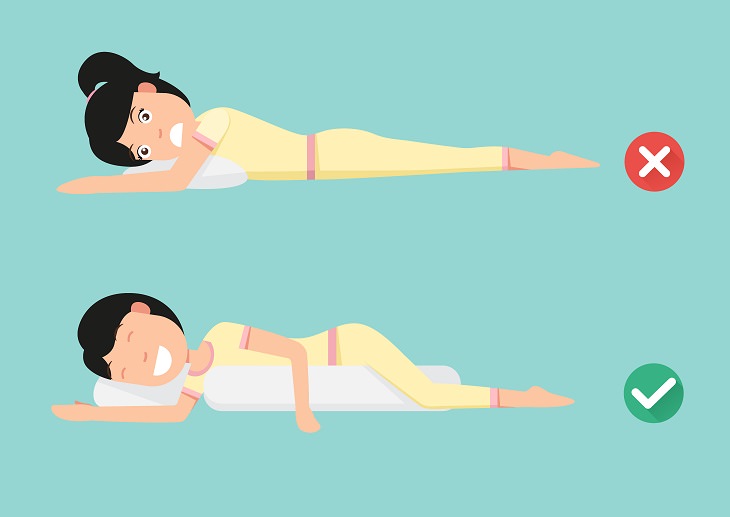
Tips to Alleviate Back and Neck Pain 

Sleeping in the right positions can do wonders for back and neck pain. Experienced chiropractors recommend never sleeping on your stomach. They state that the best way to sleep is on your back with a pillow under your head and neck area and another pillow under your knees. If you're the kind of person who cannot sleep unless you're on your side, a pillow between the knees is recommended.

2. Safe Lifting Techniques 

When lifting heavy objects, chiropractors suggest that you bend at the knees, avoid twisting, keep your back straight, and lift with your arm and leg muscles, not your back muscles. Keep your feet shoulder-width apart, bend at the knees, and lift as you straighten up. When taking part in repetitive lifting activities, make sure to take regular breaks so that you don't mess up your technique due to fatigue. 

3. Proper Phone Use

In this highly technological day and age, everyone is on their phones, and usually practicing bad posture while they're at it. As you text, search the web, watch videos, or scan social media sites, you are probably craning your neck down in a C-shape, with your chin close to resting on your chest. Chiropractors don't recommend this. Instead, they suggest that you hold the phone out with your hands at nearly eye-level, as craning your neck down to look at a low screen for extended periods of time is horrible for neck pain. 

4. Use Car Headrests 

We spend a lot of time in cars, traveling from place to place. So why not spend this time giving your neck some much-needed rest? According to chiropractors, resting your head on a car headrest will bring your head into a naturally comfortable position and will release any built-up tension in your overworked neck muscles. 

5. Get the Right Mattress
Chiropractors state that having a mattress of medium firmness is a lot better for back and neck health. A mattress that is too hard can be rigid and unforgiving, while a mattress that is too soft will not offer enough support. Therefore, a mattress with medium firmness is best as it can help minimize any curvature of the spine during sleep.

6. Don't Crack Your Neck  

Do you often pop or crack your neck? If so, we recommend that you stop, as chiropractors are strongly against it. Though it may feel like you are relieving pressure, in reality, you're probably just making it a whole lot worse. Popping or cracking your neck without chiropractic knowledge is likely to damage surrounding joints instead of fixing them. 

7. Sit with Correct Posture 

Posture is very important for back and neck health, whether you're standing, sitting, or sleeping. Try to sit up straight, but also avoid crossing your legs. Chiropractors recommend sitting with your feet flat on the floor, or flat on an elevated foot rest, reducing pressure on your lower back while you sit. Furthermore, if you're sitting at a computer for most the day, elevate the screen to eye level in order to promote good posture.


This is only for your information, kindly take the advice of your doctor for food, medicines, exercises and so on.   


Labels: , , , , , , , ,

Saturday, March 21, 2026

4 Simple Hand Exercises to Alleviate Arthritis Pain

 Arthritis wears away at the cartilage that cushions our joints and keeps them healthy and pain-free. Over time, this process of gradual but steady damage to the joints becomes more noticeable and painful. With more damage comes more inflammation, stiffness, weakness, and pain, especially after repetitive tasks like typing on the keyboard or using kitchen utensils. Medications and dietary changes can help reduce these worrisome symptoms in the long run, but if you’re looking for instant arthritis relief, exercises are probably the best option.

Hand exercises for arthritis strengthen the muscles that support the joints. They also increase the production of synovial fluid that lubricates the joints. As a result, you will experience pain relief and improved range of motion of your hands and wrists right away. With consistent practice, you will also notice more flexibility and a better grip, so these exercises are definitely worth trying.

Exercise  1-  Stretch your wrists to relieve  from stiffness and pain.

Hand Exercises for Arthritis wrist stretches 

Start by giving your hands and wrists a general warmup. This will lubricate the joints, preparing them for the exercises to follow. Wrists can also get stiff from arthritis, and these exercises help improve their flexibility.

Follow these steps to perform the stretch: 

Downward Stretch 

1. Hold your arms out straight in front of you, with one palm facing down. 

2. Use the other hand to press down on the hand that’s facing down. Be gentle, you should feel a stretch on the tops of the palm, wrist, and arm, but no sharp pain. 

3. Hold this position for 5 seconds, then release. Repeat 5-10 times, and then do the same on the opposite side.

Upward Stretch 

1. Hold your arms out straight in front of you, with one palm facing up. 

2. Use the other hand to press on the base of the palm that’s facing up until you sense a pleasant stretch in the inner part of the wrist and arm. 

3. Hold this position for 5 seconds, then release. Repeat 5-10 times, and then follow the same steps on the opposite side.  

2. Strengthen hand muscles with sequential finger bends

 
Hand Exercises for Arthritis sequential finger bends

This exercise is like a pushup for your fingers and the base of the palm. It helps strengthen the hand muscles and will improve your grip and flexibility. In this exercise, you will need to bend each finger one after the other. 

There are two ways you can do this exercise. If your fingers are relatively flexible, you can bend the finger completely until the fingertip rests where the base of the finger meets the palm. Alternatively, you can bend the finger to meet your thumb, as shown in the image above - this is an easier version of this exercise.

The exercise itself is pretty straightforward. Here are the steps:

1. Start in the same position, but with only one of your hands held up straight. 

2. Bend your pinkie down toward your palm (or the thumb). Hold this position for 5 seconds. 

3. Straighten the pinkie, and then bend the ring finger for 5 seconds. Release, straighten, and move on to the middle finger, and so. 

4. When you get to the thumb, simply bend it towards the palm and hold for 5 seconds. 

5. Repeat the same exercise on the other hand. You can do this exercise several times throughout the day.

Exercise 3. Do the “O” or “C” finger bend whenever your hand is feeling stiff

 
Hand Exercises for Arthritis O finger bend

Unlike the previous task, where we exercised each finger separately, this finger bend activates all the muscles together, which brings relief to hands that feel stiff and weak. Just like the previous exercise, there are two methods of doing this finger bend. The “O” stretch is more advanced and challenging, whereas the “C” stretch is the easier one. Here are the steps: 

1. As the name suggests, this exercise requires you to curve all of your fingers in until they form a shape similar to the letter “C” or “O”. 

2. Hold for 5 seconds, then release and straighten the fingers. 

3. Repeat 5-10 times on each hand.

Exercise 4. Improve strength and relieve stiffness with these variations of a fist

 
Hand Exercises for Arthritis
This is probably the easiest and most straightforward exercise we will show you. It’s also the last one. You can do it anywhere and anytime, which makes it a great option for instant stiffness relief. 

As before, we will walk you through 2 versions of this exercise. The easier one only requires bending your fingers halfway, whereas the more advanced variation requires you to make a full fist. Follow these steps: 

1. Hold your arms out straight in front of you, with all the fingers straight. 

2. Slowly bend your hand into a fist halfway, as shown in the image on the right. Your thumb should be on the outside of the hand. 

3. You can stop here and hold this position for 5 seconds. Alternatively, you can bend your fingers inward completely, as shown in the image on the left, and hold. 

4. Open the hand and straighten the fingers. Repeat the exercise 10 times on each hand.


This is only for your information, kindly take the advice of your doctor for medicines, exercises and so on.   


Labels: , , , , , ,