Have you recently heard people talking about being over-acidic,
measuring their pH and eating alkalizing foods? Emphasizing the
importance of body’s pH might seem like a new fashion, but the science
and art of pH balancing has had a long tradition and, unlike some other
trendy theories, it has successfully overcome the test of time.
What is PH?
In terms of chemical understanding, pH is a measurement of hydrogen ion (H+)
concentration in a solution. Solutions with low hydrogen concentrations
have high pH values, and solutions with high hydrogen concentrations
have low pH values.
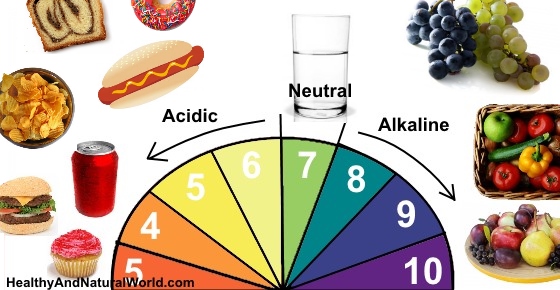
As you probably remember from school, the pH scale runs from 1 to 14,
with 7 representing the pH of pure water – neutral. Above 7 is
alkaline, below is acidic.
In optimal circumstances, your body should have a pH of between 7.0
and 7.4, so slightly alkaline. This refers to the pH of the body’s main
fluids: blood, lymph and cerebrospinal fluid.
The pH of the digestive system
however, is a bit less uniform: the mouth, pharynx and esophagus are
all slightly acidic with a pH of 6.8; the pH of the healthy stomach is
1.3 – extremely acidic; the pH of the small intestine resembles that of
healthy bodily fluids; and in the colon it ranges between 5.5 and 7.
Why Does pH Matter?
In 1931, Dr. Otto Warburg won the Nobel Prize in physiology. He was
the first to describe the correlation between the acidic environment and
cancer cell growth.
We know now that an acidic body is more susceptible to different diseases, including arthritis, cancer, and cardiovascular diseases.
What’s more, if your pH is out of balance, digestive problems can occur and your body can’t assimilate the goodness from food, which can make you feel constantly tired. Blood pressure, insulin levels and cholesterol, as well as body weight and immune system function, are all influenced by changes in pH levels.
As every one-point decrease on the pH scale means 10 times increased
acidity, going from pH 7 to 5 makes your insides 100 times more acidic!
This is not a good sign if you’re planning on living a long and healthy
life.
The bottom line is that you want to keep your body’s pH as close as
possible to what nature intended it to be. Also, if you are aiming to
cure a disease, you might want to start by looking at the pH of your
body. When doing that, most people discover that they’re too acidic.
What the Research Says About the Alkaline Diet
Research suggests that an alkaline diet can assist with chemotherapy treatments,
making the treatments more effective. This is the case for example with
cucumber, which contains lignans that are being studied for treating estrogen-related cancers within the body.
The Journal of Environmental Health suggests
that “it would be prudent to consider an alkaline diet to reduce
morbidity and mortality of chronic disease that are plaguing our aging
population”.
Another medical study
showed that “oral NaHCO(3) (or baking soda) selectively increased the
pH of tumors and reduced the formation of spontaneous metastases in
mouse models of metastatic breast cancer.”
While there are no studies that directly show an alkaline diet to prevent cancer, research is ongoing.
In general, the alkaline diet may assist cells and connective tissue in retaining water as it works to enhance systemic, brain, and bone health.
Additionally, alkaline foods such as cucumber may provide the support
needed for enhanced enzymatic function, to prevent degradation of
tissues and slow cell aging.
Presumably, an abundance of alkaline cellular reserves buffers the
depletion that occurs when the body constantly readjusts to maintain
proper pH and minimize cellular acidity.
What Causes pH Imbalances?
The main culprits of over-acidity are improper diet (fast food, high consumption of sugars, animal products and processed foods), stress
and lifestyle choices, for example sedentary life style. Interestingly,
over-exercising, especially too much cardio workout, can lead to a drop
in your pH levels as well, as it contributes to stress.
At first, the body tries to compensate and bring the pH back to its
optimum levels. For example, minerals such as potassium, sodium,
magnesium and calcium are taken from our vital organs and bones to
counteract the acid. But this cannot go on indefinitely, and sooner or
later the acidic environment starts to attract all sorts of ailments.
Naturopath Ann Boroch is one of many who recommend switching to a
more alkaline diet (see video at the end of my article). She points out
that the five things we should all avoid (or reduce as much as possible)
in order to keep our bodies within the optimal pH range (between 7.0
and 7.4) are:
- Excessive consumption of red meat
- Caffeine
- Sugar
- Alcohol
- Stress
She claims that all these turn your body acidic and make it inflamed.
So you need to become more alkaline again. You can do this by eating
foods that will bring you back to balance. The changes don’t need to be
as complex as some might think. Boroch emphasizes that little can go a
long way.
Warning Signs Your Body is too Acidic
According to experts, signs and symptoms that may be seen in acidosis include:
- Headaches
- Confusion
- Feeling tired
- Lack of appetite
- Sleepiness
- Fast breathing
The Link Between Candida and Cancer
Candida is very widespread due to the imbalanced lives we lead.
Antibiotics and steroids are taken routinely, and everyone is overly
stressed. All these factors contribute to candida overgrowth.
Many times, candida goes undetected for a long time and weakens the
immune system. Compromised immune system leads to genetic mutations. One medical study found that candida infection can significantly increase overall and some individual cancer risks. Another medical study concluded that “Candida spp., particularly C. albicans,
has been implicated in oral and esophageal cancer development, the
pathogenic mechanisms and its carcinogenic capability is not clearly
understood”
Doug Kaufmann has written and lectured about the ‘fungal theory of
disease’, in which he explains the role fungi has in disease
development. Fungi should not be ignored, as they might be the key to
solving many health issues.
Ann Brooch herself believes that there is a strong connection between
cancer and candida overgrowth. She claims that if you have candida,
that is a clear signal your body is over-acidic.
How to Test your PH Level
It might be a good idea to test your pH and find out where you stand.
You can do this at home. All you need is litmus paper, which can be
bought at a pharmacy or a health food store, and a bit of discipline.
You need to dip the litmus paper in your first morning urine. Collect
a sample in a clean container and measure the pH level. Or, you can use
saliva, one hour before a meal or two hours after eating. Make sure you
obtain a clean sample, so before spitting on the litmus paper, collect
saliva in your mouth and swallow it.
You might find it useful to keep a diary over a period of time, so
you can compare the values and get a medium value. The pH of your saliva
should stay between 7 and 7.4 all day.
The pH of morning urine is slightly more acidic and fluctuates
between 6 and 6.5. If you are also measuring the evening urine, the
value should be between 6.5 and 7.
Tips for Alkalizing your Body
Some methods for alkalizing your body are straightforward and focus
on dietary and lifestyle changes, while others will require specialist
support and guidance, such as the use of alkaline minerals. Cesium
chloride, germanium, rubidium and other alkalizing minerals can be used
to alkalize the body.
Particularly cesium chloride and sodium bicarbonate therapies have
received a lot of attention and have been reported to yield good
results, the latter being somewhat easier to use.
The Cancer Alternative Foundation, which has a mission of researching
and verifying various alternative approaches to healing cancer, has
established that alkalizing therapy is one of the most efficient
alternative techniques for treating cancer, even in the later stages of
the disease.
Basic dietary changes you can make to get your body more alkaline and healthy
As for a diet that will help turn your body alkaline, it’s recommended to embrace a vegetarian, or even better a vegan diet
(meat and dairy products have a very acidic effect on the body’s pH
levels) and to eliminate refined sugars, alcohol and caffeine from your
diet.
Eat more vegetables such as cucumbers. Your diet should consist of
60% vegetables. That doesn’t necessarily mean eating raw vegetables.
Your food can be cooked. In fact, some people’s digestive tracts can’t
handle just raw food. Dark leafy greens are particularly praised for
their alkalizing potential. Juice, steam, sauté them – whatever works
for you.
Fresh fruits, vegetables, nuts and seeds
are a preferred choice due to their alkalizing potential. A food’s
natural pH level does not necessarily indicate the effect it will have
on the body. For example, lemons and limes are known to have an alkaline
effect on the body, despite their initial (citric) acidity, so squeeze
some lemon in water and drink before a meal.
A very popular dietary supplement that also helps you alkalize your body is spirulina
– an algae that can be consumed in powder form or in tablets. Some
guidance may be required to establish which food and food combinations
are optimal for you.
Get a dose of raw apple cider vinegar first thing in the morning. Mix
a tablespoon with some water. Or, mix freshly squeezed lemon juice with
some warm water, and drink that every morning.
Don’t eat junk food and processed foods.
Reduce your stress
The next thing you should look at is your stress. Don’t forget to assess your stress levels. Sound sleep, exercise and regular relaxation
can do wonders for the body and mind. If you need to manage your stress
levels, some simple breathing exercise can do the trick. You can also
look at some other relaxation techniques, such as yoga, meditation,
emotional freedom technique (EFT), to name a few.
