A Guide to Laparoscopy Surgery
Laparoscopy, derived from the Greek words
"lapara" (flank or abdomen) and "skopein" (to examine), is a minimally
invasive surgical technique that allows physicians to inspect and
operate on abdominal and pelvic organs without the need for large
incisions. This approach offers patients reduced recovery times, less
postoperative pain, and minimal scarring compared to traditional open
surgeries.
Historical Background
The evolution of laparoscopy dates back to 1806 when Philip Bozzini
developed a device using a simple tube and candlelight to view the
interior of the urethra. In 1869, gynecologist Pantaleoni utilized an
endoscope to examine the uterine cavity, marking the early use of
endoscopy in gynecology. By 1901, George Kelling employed a cystoscope
to explore the abdominal cavity in dogs, introducing the concept of
insuffiating the abdomen with filtered air to control internal bleeding.
The term "laparoscopy" was coined in 1911 by Swedish internist Hans
Christian Jacobaeus, who used a cystoscope to examine the abdominal and
thoracic cavities. Significant advancements continued, notably by Raoul
Palmer in 1944, who performed gynecological laparoscopies with patients
in a head-down position and used gas insufflation to enhance visibility.
The development of cold light sources in 1952 further enhanced the
safety and efficacy of laparoscopic procedures.
Applications of Laparoscopy
Today, laparoscopy is integral to various surgical specialties,
including general surgery, gynecology, and urology. In gynecology, it
addresses conditions such as ovarian cysts, ectopic pregnancies,
endometriosis, and fibroids. General surgeons utilize laparoscopy for
procedures like cholecystectomy (gallbladder removal), appendectomy,
hernia repairs, and colorectal surgeries. The technique's minimally
invasive nature results in shorter hospital stays, quicker recoveries,
and fewer complications.
A few stories that highlight what this surgery is for:
At 86, John had always been active, enjoying daily walks and time with
his grandchildren. When sudden abdominal pain led to a diagnosis of
acute cholecystitis, he feared a prolonged recovery. Fortunately,
doctors recommended a laparoscopic cholecystectomy. Through small
incisions, the surgeons removed his inflamed gallbladder. Everything
went without a hitch, and John was home just days later. He was soon
back to his routines, grateful for the swift intervention and shocked at
how fast his recovery was for a man of his age.
Take Emily, a much younger, 37-year-old
teacher, who was in the middle of her school year when she experienced
sharp abdominal pain. Diagnosed with acute appendicitis, she worried
about missing work and her students. Her medical team suggested a
laparoscopic appendectomy. The minimally invasive procedure meant Emily
was back on her feet within a week. This kind of surgery used to take
weeks and months of hard-earned recovery and pain.
We'll finish with the case of Michael, a 17-year-old athlete, faced a
life-threatening situation after a chest injury during a game. Doctors
used diagnostic laparoscopy to assess internal damage. The clear
visualization allowed them to address his injuries promptly. Thanks to
this approach, Michael's recovery was swift and complete enough to put
him back on the field.
Preparation and Procedure
Preparation for laparoscopy involves a comprehensive medical evaluation,
including a review of medical history, physical examination, and
necessary laboratory tests. Patients are advised to fast for
approximately eight hours before the procedure and may need to
discontinue certain medications, especially blood thinners. The surgical
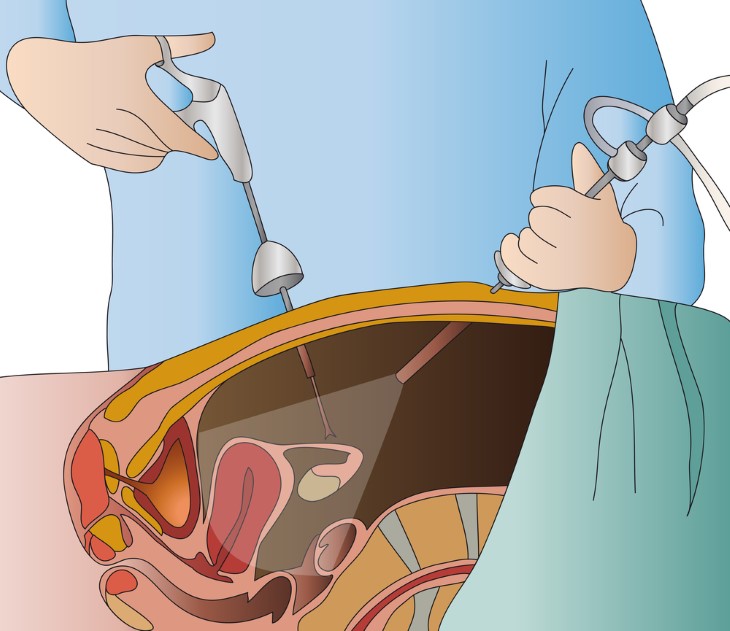
process includes general anesthesia, followed by small abdominal
incisions through which a laparoscope and specialized instruments are
inserted. Carbon dioxide gas is introduced to inflate the abdominal
cavity, providing better visualization of internal organs. The
procedure's duration varies based on its complexity, and patients
typically experience shorter recovery periods compared to open
surgeries.
Risks and Considerations
While laparoscopy offers numerous benefits, it is not without risks.
Potential complications include bleeding, infection, and injury to
internal organs. Certain conditions, such as advanced abdominal cancers,
chronic tuberculosis, bleeding disorders, or extensive abdominal
adhesions, may contraindicate the use of laparoscopy. It is crucial for
you to discuss their medical history and any concerns with their
healthcare provider to determine the appropriateness of this surgical
approach.
Postoperative Care and Recovery
After laparoscopy, you may experience mild abdominal discomfort,
bloating, or referred shoulder pain due to residual carbon dioxide gas.
These symptoms typically resolve within a few days. Adhering to
postoperative care instructions, such as wound care, activity
restrictions, and follow-up appointments, is essential for optimal
recovery. Most individuals can resume normal activities within a week,
although this may vary depending on the specific procedure performed.
In summary, laparoscopy represents a significant advancement in surgical
practice, offering a less invasive option for diagnosing and treating
various abdominal and pelvic conditions.