Here's How:
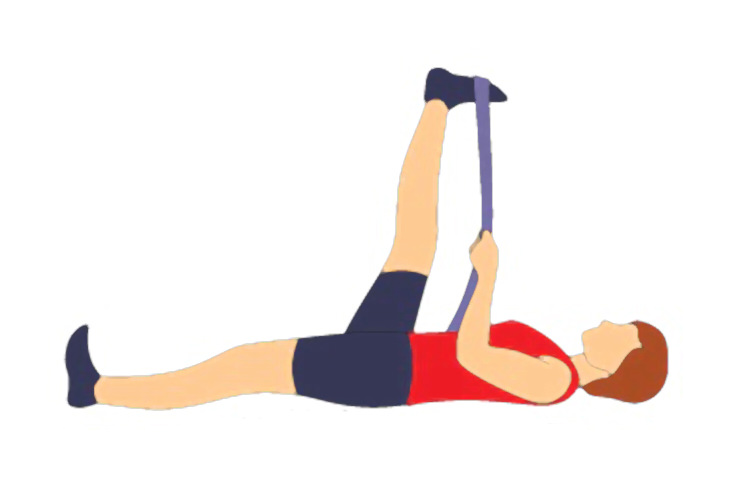
1) Lie on the floor, keep your legs
strongly extended with your feet flexed. Exhale and bend your right
knee, drawing your thigh to your torso, hugging it to your belly. Keep
your left leg extended, pushing actively through the heel.
2) Loop a strap around the arch of your right foot, holding the strap
with both hands. On your next inhalation, extend your knee straight,
pressing your heel up toward the ceiling. Reach your hands as far up the
strap as possible, until your elbows are extended.
3) Keep your shoulder blades broad across the back, pressing lightly
into the floor. Keep your collarbones wide, reaching away from the
sternum. Your sitting bones should be firmly planted on the floor.
4) Hold the pose for 10 deep breaths. Then lower your leg slowly by
bending your knee towards your chest and slowly releasing it to the
floor. Repeat the process with your left leg.
2. Staff Pose
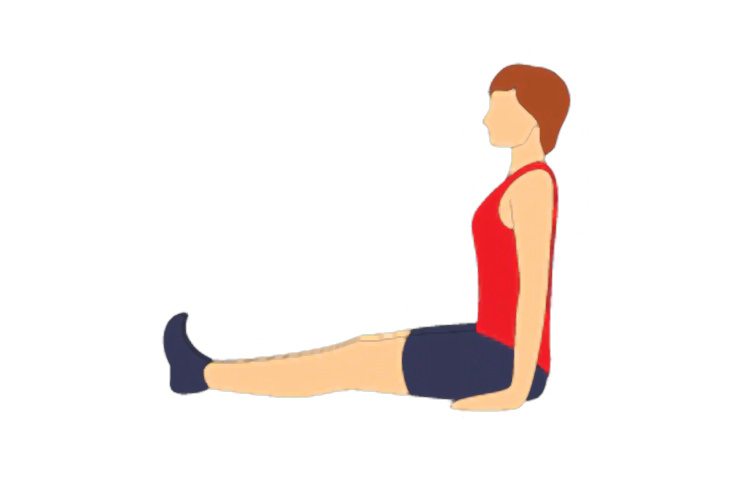
Beginner's Tip: This is a basic seated
pose, which aside from relieving sciatica, will also help improve
posture. Lay a 10-pound sandbag across the top of your thighs at the hip
crease to help keep your thighs grounded. You can also practice this
pose by keeping your back against the wall.
Here's How:
1) Sit on the floor, extending both legs in front of you. Keep your legs
together and your torso upright. If your torso is leaning back, sit up
on a blanket or cushion to help lift your pelvis. If practicing against a
wall, your sacrum and shoulder blades should touch the wall, but not
the lower back or the back of the head.
2) Sit on the front parts of your sitting bones, keep your thighs firm,
pressing them down against the floor, rotating them slightly toward each
other. Keep your ankles flexed, pressing out through your heels. Keep
your spine long, as if you're being pulled by a string from the crown of
your head. Hold for one minute taking long, deep breaths.
3. Pigeon Pose
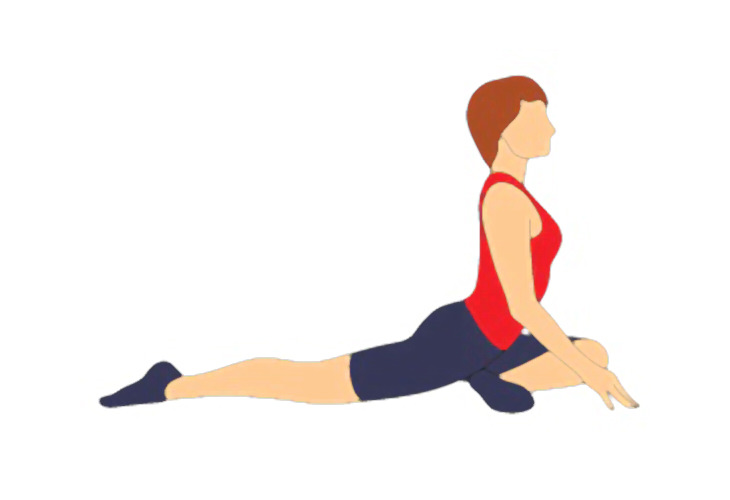
Beginner's Tip: This pose stretches the piriformis. Place a thick, folded blanket underneath you hip for extra support.
Here's How:
1) Start on all fours. Bring your right
knee forward and out between your hands. Slowly sink your hips to the
floor. As you do so, release your left leg onto the floor behind you,
slowly sliding it back while bringing your body forward. Keep your left
toes pressed down on the mat.
2) Your right heel should be in line with your left hip and your shin
should be at about a 45-degree angle. If you feel yourself tilting over
to the right hip, place a blanket underneath for extra support. Keep
your hips parallel to the front of your mat as much as possible. Use
your fingertips to support your torso and keep your spine long, shoulder
blades drawing close together. Hold for 10 deep breaths and repeat on
the other leg.
4. Standing Twist
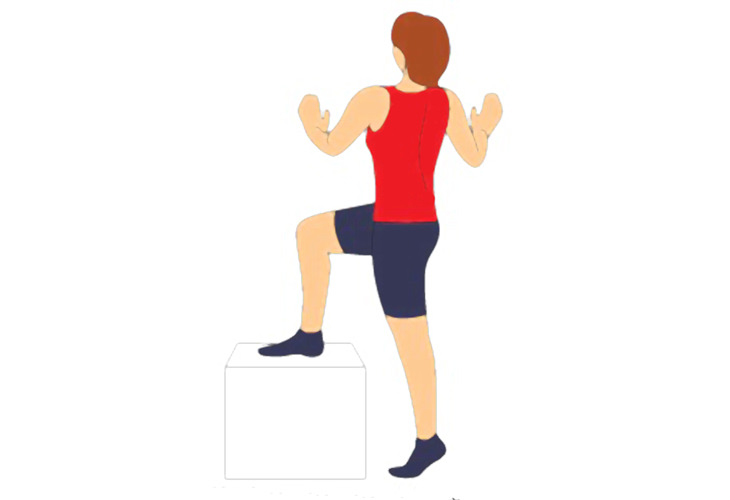
Beginner's Tip: To reap the benefits of
this pose, place a chair against the wall; the chair and the wall will
provide you with extra support, enabling you to twist deeper.
Here's How:
1) Stand with your right hip against the wall with your body facing the
chair. Put your right foot up on the chair, keeping your knee bent.
Also, keep it in line with your ankle. Your standing leg should be
straight. Press your right hand against the wall, to help you balance.
2) Slowly lift your left heel up and turn your torso towards the wall,
supporting your hands with the wall. Exhale and lower your heel to the
floor, staying in the twist for a couple more breaths. Slowly return to
the starting position and repeat on your left side.
5. Preparation for Spinal Twist
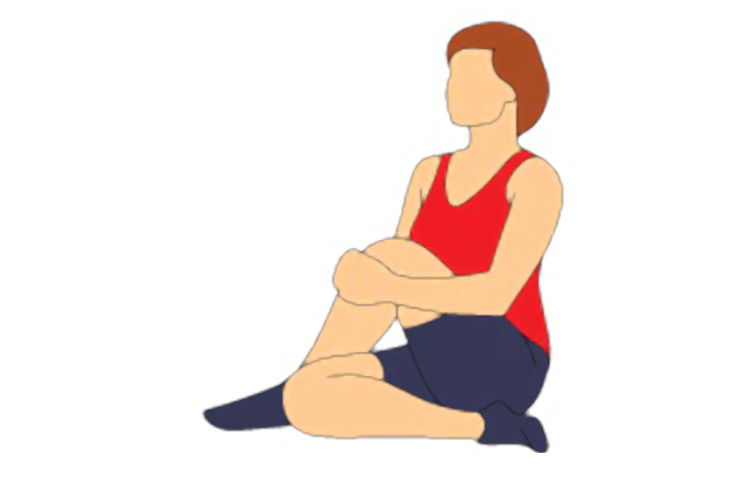
Beginner's Tip: Sit on the corner of a
folded blanket for extra support in the full seated spinal twist pose
(see below).
Here's How:
1) Sit with your knees bent and your feet out in front of you. Release
your right leg on the floor, taking your right heel to the outside of
your right hip. Then bring your left foot around, placing your left heel
by your right hip. Your weight should be evenly distributed across your
buttocks.
2) Interlock your fingers over your left knee, while focusing on
lengthening your spine. Hold this position for several breaths. Then
proceed to the next pose.
6. Simple, Seated Twist
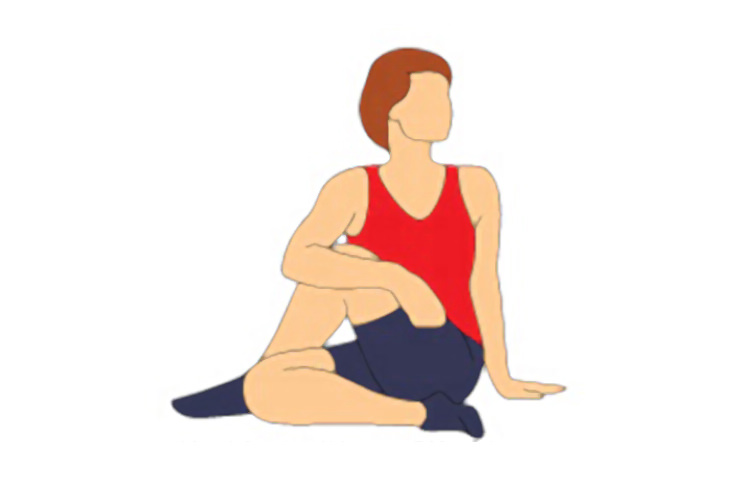
Here's How:
1) From the preparation pose described above, turn your torso (from your
waist, not your hip) toward the left knee. Place your left hand behind
you, using it as a lever to twist (your weight should not be supported
by your left arm). Hold onto your knee with your right hand.
2) It is vital that you do not go too deeply into the twist, as doing so
will worsen piriformis syndrome. Repeat on the opposite side, starting
with the pose above.
7. Cow's Face Pose
Beginner's Tip: For extra support in this
passive stretch, sit on a blanket. If during the pose you notice that
your left leg is not touching the floor, or your left knee locks or
hurts during the stretch, roll up a second blanket or towel and place it
under your knee.
Here's How:
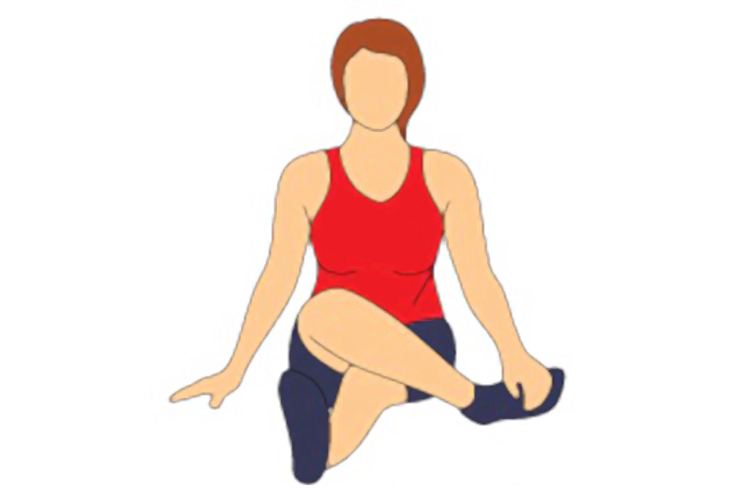
1) From staff pose (number 2), bend your right knee, bringing your right
leg across the left leg. Bring your right foot close to your outer left
hip.
2) Move your left leg towards the mid-line - it should be slightly
diagonal to your body. Your right hand should be on the floor while your
left-hand holds your right foot. Keep your spine extended, holding the
position for a couple of breaths, then repeat on the other side.