9 Subtle Signs of Skin Cancer
A staggering one in five Americans will
develop skin cancer by the time they turn 70. Although skin cancers that
are detected early are almost always curable, things can become a lot
more serious when they evade detection, to the point where they can
become deadly. Here are 9 subtle signs of skin cancer:
1. Repeatedly getting a sore in the same place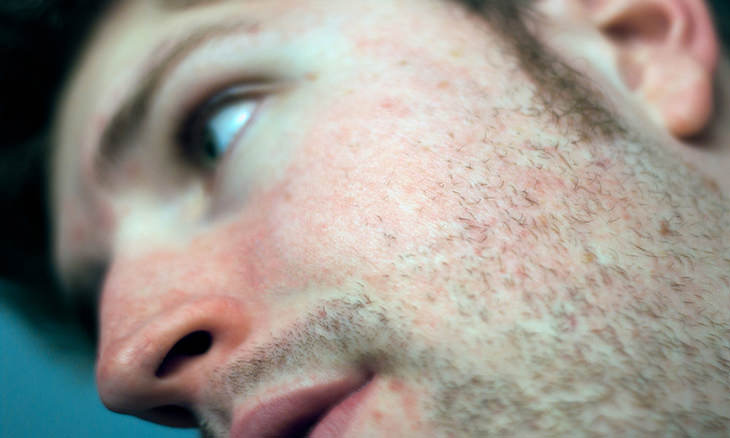
A sore that doesn’t heal may be a sign of
basal or squamous cell carcinoma, which are the two most common types of
skin cancer. They often develop in the men’s beard areas and are
associated with pain during shaving. If such a sore hasn’t healed within
a month, then you must visit a dermatologist.
2. Pearly bump on the skin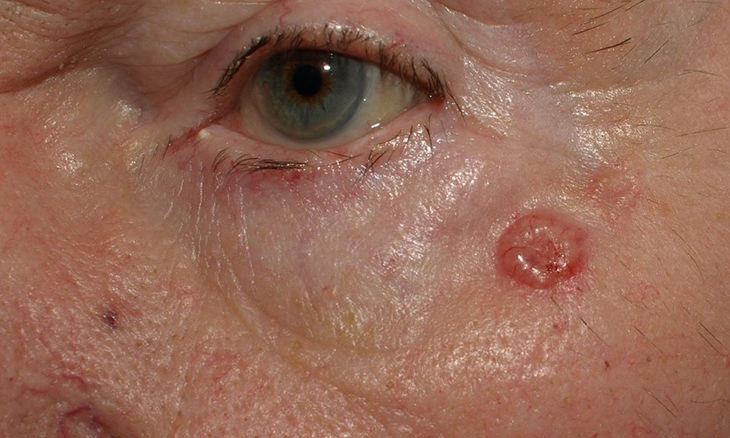
Basal cell carcinomas can often look like
unassuming “pearly bumps”. They can be pink, red, white, tan, black or
brown in color. Other signs to look out for include irritated red spots,
pink growths crusted, indented centers; the aforementioned sores; and
white, yellow, waxy areas that look like scars.
3. A red, scaly patch that just won’t quit
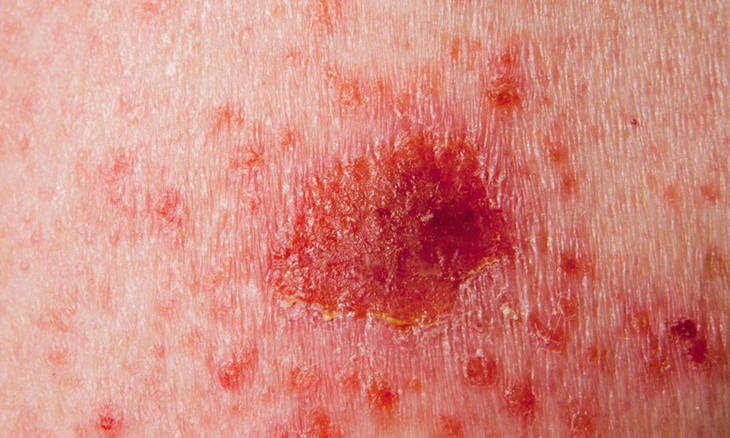
Both basal and squamous cell carcinomas can
show up as scaly red patches. Squamous cell carcinomas, in particular,
can be a little tender to the touch. Furthermore, both carcinomas can
feel like “irregular sandpaper” when touched. Squamous cell carcinomas
can also present as sores that won’t heal – wart-like growths or
elevated growth with indented centers that bleed.
4. A change in one of your moles
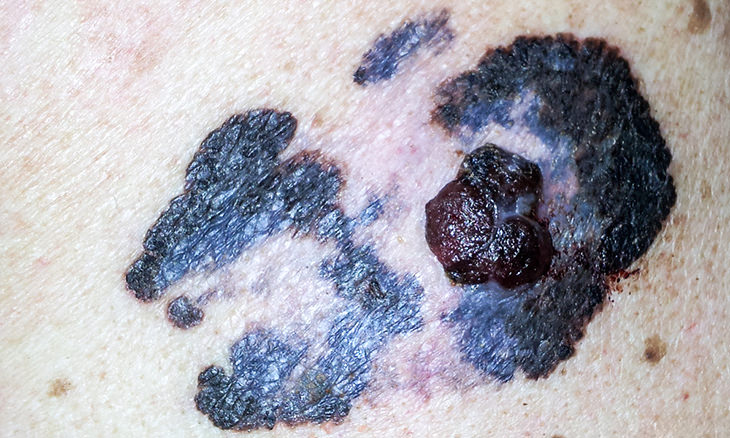
Although melanoma is less common than the
other forms of cancer, it’s by far the most lethal. It can show up
either as a new sport, or it can arise within an existing mole. Always
be on the lookout for a mole that has changed in size, shape or color. A
suspicious mole can also be identified by multiple or unusual colors,
such as red, white, blue or black.
Use this acronym to track mole changes:
• A stands for asymmetry. In melanoma, two sides of a mole often don't
match.
• B stands for borders. A melanoma usually has irregular borders,
rather than clearly defined ones.
• C stands for color. Melanomas are usually uneven in color.
• D stands for diameter. An increase in a mole's size, or diameter,
could indicate melanoma.
• E stands for evolving. Watch out for moles that change over time.
5. Getting a new mole (when you’re over a certain age)
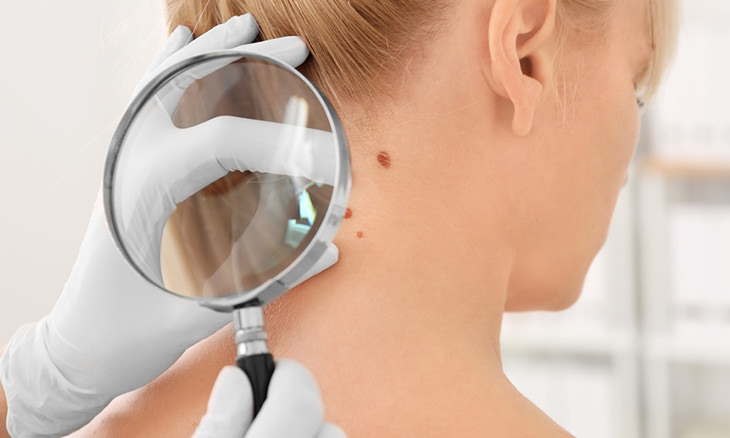
It’s uncommon for new moles to grow once
you’re over the age of 55. If you’re over that age and experience a new
one growing, be sure to head to a dermatologist to have it biopsied.
6. Moles itching or bleeding for no apparent reason

If you have a mole that just starts
bleeding without you having any recollection of injuring yourself, or if
it itches persistently, then you should definitely get it checked.
7. Suspicious spot on a part of your body not exposed to the sun

Melanomas can present on parts of the body
that are almost never exposed to the sun, and most people aren’t aware
of this fact. Sun exposure does, in fact, increase the risk of
developing melanoma, however, it can occur in the most surprising of
places, such as a man’s penis or a woman’s vulva. A melanoma can even
present on the bottom of your foot. Make sure you check your entire body
when doing a skin check, including parts of it that aren’t exposed.
8. See a doctor if you’re concerned about certain spots
If a particular spot is concerning you,
simply head to a dermatologist for peace of mind. That doesn’t mean that
it has to be seen to immediately, but you should definitely book an
appointment as soon as you can. You should also keep in mind that
melanoma and other skin cancers are not just cancers of the elderly.
9. Don’t panic, but don’t ignore
The key to the successful treatment of skin
cancer is to catch it early. Even if a spot you’re concerned about
turns out to be benign, it’s much better to have it checked out early
rather than waiting six months only to find that the matter is actually
serious.