PTSD Treatment Advancement Using MDMA and Psilocybin
Post-traumatic stress disorder, or PTSD, touches millions of lives. It can follow combat, a car accident, an assault, a natural disaster, or the loss of a loved one. People living with it often describe a mind that will not let go of the worst moment of their life. Intrusive memories, nightmares, a constant sense of being on guard, and a tendency to avoid anything that brings the trauma back are all part of the picture. For decades, the medical options were limited. That is finally beginning to change, and two of the most talked about new approaches involve substances that many of us once associated only with the counterculture of the 1960s: MDMA, the active compound in what is commonly called ecstasy, and psilocybin, the active ingredient in so-called magic mushrooms.

These treatments are still experimental, and they are not available at
your local pharmacy. But the research behind them has grown serious,
careful, and increasingly promising. Here is a clear look at how they
are thought to work, what the studies actually show, and where things
stand today.
Why New Treatments Are Needed
For more than twenty years, only two medications have carried full
approval from the U.S. Food and Drug Administration specifically for
PTSD: the antidepressants sertraline, sold as Zoloft, and paroxetine,
sold as Paxil. They help some people, but many patients see little
benefit, and a significant number stop treatment because the relief is
partial at best. Talk therapy can be powerful, yet some people find it
almost impossible to revisit their trauma without becoming so
overwhelmed that the sessions do more harm than good. This gap between
need and effective treatment is exactly what researchers have been
trying to close.
The Principle Behind MDMA-Assisted Therapy
It helps to understand that MDMA is not being studied as a pill you take
on your own to feel better. Instead, it is given a small number of
times under close supervision, during long therapy sessions guided by
trained professionals. The medicine is meant to open a door so that the
real work of therapy can happen.
The brain science is fascinating. In a healthy response to fear, a small
almond-shaped region called the amygdala raises the alarm, and other
parts of the brain eventually calm it back down. In PTSD, that alarm
system gets stuck in the on position. MDMA appears to gently turn down
activity in the amygdala while strengthening the connection between the
regions that store memories and the regions that help us reason and feel
safe. At the same time, it floods the brain with serotonin, dopamine,
and a bonding hormone called oxytocin. The result is what researchers
describe as a window of tolerance. A person can finally bring the
traumatic memory to mind, look at it honestly, and process it without
being swept away by terror.
Scientists believe two related processes are at work, known as fear
extinction and memory reconsolidation. In plain terms, the brain gets a
rare chance to take an old, frightening memory off the shelf and put it
back with a calmer, less threatening emotional label attached. A
detailed scientific review of these mechanisms is available here, and an
earlier laboratory study showing how MDMA helps the brain unlearn fear
can be read here.
How Psilocybin Works Differently 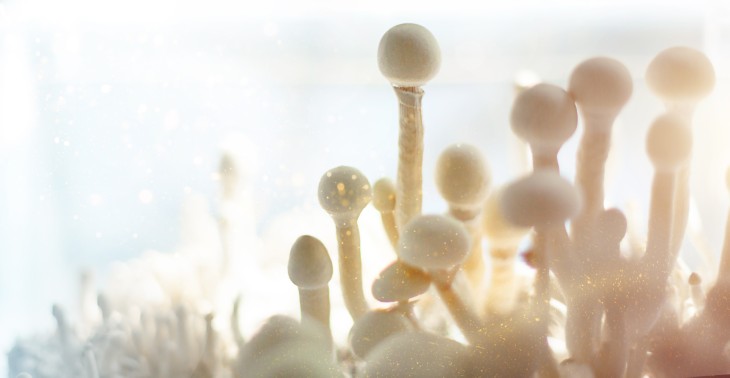
Psilocybin, the compound found in certain mushrooms, takes a somewhat
different route. Once in the body it acts on a particular serotonin
receptor in the brain and temporarily loosens the rigid, well-worn
patterns of thinking that trauma and depression tend to lock in place.
Brain imaging suggests it briefly relaxes the networks that normally
keep our sense of self fixed and inflexible, which may give a person the
chance to see their experiences from a fresh perspective. Many
researchers also believe psilocybin encourages neuroplasticity, the
brain's natural ability to form new connections, almost as if it opens a
short window during which healthier patterns can take root
What the Studies Show
The strongest evidence so far comes from research on MDMA. Two large,
carefully designed trials, known in the field as MAPP1 and MAPP2 and
published in the respected journal Nature Medicine, tested MDMA combined
with therapy against therapy with a placebo. The results drew worldwide
attention. After just three medicine sessions, roughly two out of three
participants no longer met the diagnostic criteria for PTSD at all. A
broad scientific summary of the evidence found that MDMA produced
unusually large reductions in PTSD symptoms, often after only two or
three sessions, and you can review that analysis here.
Psilocybin research for PTSD is younger but moving quickly. A Phase 2 study run across several sites in the United Kingdom gave a single dose of psilocybin to people with PTSD and tracked them carefully. The treatment was generally well tolerated, with side effects such as headache and nausea that mostly faded within a day, and the early signs pointed to meaningful and lasting improvement over twelve weeks. The published results are available here, and the company behind the study has shared a summary here. Larger trials are now underway.
The Current State of Things
This is where the story becomes more complicated, and it is important to
be honest about it. Despite the encouraging results, no psychedelic
medicine has yet been approved in the United States for treating PTSD.
In August 2024, the FDA declined to approve MDMA-assisted therapy,
asking the company involved to carry out at least one more study.
Regulators raised real concerns. Because MDMA has such noticeable
effects, it is hard to design a study in which neither the patient nor
the therapist can guess who received the real medicine, and that makes
the results harder to interpret. There were also questions about how
some of the trials had been conducted. None of this erased the promising
findings, but it did mean the bar for approval had not yet been met.
Momentum has continued to build all the same. Both MDMA for PTSD and
psilocybin for treatment-resistant depression have received what the FDA
calls Breakthrough Therapy designation, a status reserved for
treatments that may offer a real advance over what already exists. In
April 2026, the federal government signed an executive order directing
roughly fifty million dollars toward expanded research and instructing
agencies, including the Department of Veterans Affairs, to speed up the
evaluation of these therapies and broaden access for eligible patients.
Veterans groups, who have watched friends struggle for years, have been
among the strongest voices calling for progress. Outside the United
States, Australia took the notable step in 2023 of allowing psilocybin
and MDMA to be prescribed under tightly controlled conditions.
A Word of Caution and Hope
It is worth repeating that these are not do-it-yourself remedies. The benefits seen in trials came from medicine used a handful of times alongside skilled therapists in a safe setting, never from casual or recreational use, which carries genuine risks. These compounds remain illegal outside of approved research in most places, and they are not suitable for everyone.
Still, after decades with very few new options, the field of trauma treatment is moving in a direction that would have seemed unthinkable a generation ago. For the many people who have tried everything and still carry the weight of their worst memories, that shift represents something precious and rare: a reason for genuine hope.
This article is for general information and is not medical advice.
Anyone considering treatment for PTSD should speak with a qualified
healthcare profess