Foods Children Are More Likely to Choke On
Warnings are forever being issued to parents about which household items
and toys are choking hazards to small children. We carefully read the
labels, listen to news reports, and do our best to be vigilant about
what the little ones are sticking in their mouths.
This should also include food. Since their airways are still small,
young children are at greater risk of swallowing bits of food that are
too large, which can lead to choking. Whether you’re feeding them, or
they’re eating by themselves, accidents can easily happen.
According to the American Academy of Pediatrics, food accounts for half of choking incidents in small children. To help prevent this, they’ve highlighted which foods pose the biggest risk to children under the age of 4:
1. Nuts 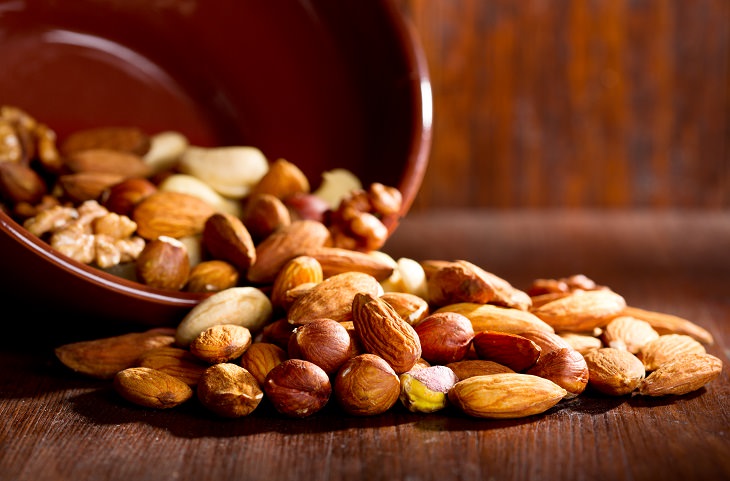
Nuts can easily get caught in a child’s airway due to their size. To add
to this, tiny teeth might not be able to handle chewing whole nuts, so
avoid giving them nuts altogether. Sometimes, the shells from the nuts
can restrict airways too. Before giving your child nuts, you should wait
until they’re well over the age of 4, can sit while eating, and have
learned how to chew their food completely.
2. Candy
Besides leading to cavities, hard candy such as lollipops send thousands of kids to the ER every year. Even a small piece can get stuck in a child’s throat. Avoid giving hard candy and marshmallows to your child until they’re over the age of 5 and can chew thoroughly.
3. Grapes
Due to their size and slippery texture, grapes are a major choking
hazard. Doctors suggest a no-grape policy for kids under 4 or cutting
them into quarters before serving them to children. Similarly shaped
foods like cherries should also be avoided at this age.
4. Hot Dogs
According to John Hopkins, one of the biggest threats to kids under the age of 3 is hot dogs - even if you cut them up. Choking on a small piece of hot dog can lead to hospitalization if you’re not careful. If you still want to give a small child hot dogs, make sure to cut them into thin strips.
5. Meat and Cheese Chunks
Like hot dogs, chunks of cheese and meat are difficult for growing toddlers to chew. Food should be diced so that it’s no larger than ½ inch, and your child should be supervised at all times while eating these foods.
6. Peanut Butter
Nut butters can get stuck to the roof of the mouth and the throat. For kids under 2, skip the globs of peanut butter and other nut butters. When serving to toddlers, spread a thin layer of it onto bread or crackers.
7. Gum
Chewing gum can cause dangerously sticky situations for small children. They’re prone to trying to swallow it or accidentally inhaling it while chewing. Don’t give gum to small children at all.
8. Veggies and Fruits
Vegetables should be cooked until soft, and cut into small pieces that
are no larger than ½ inch in size. It’s suggested to avoid stringy
veggies such as celery or string beans altogether. Chunks of raw
vegetables or fruits, such as carrots or apples, should be avoided until
the children have learned to chew.
9. Popcorn
Popcorn shouldn’t be given to children until they’re at least 4. Many
toddlers and infants have to visit the ER each year due to kernels
getting lodged in their airways.