Sunday, August 31, 2025

Peanuts or makhana/ Fox nuts: Which is the healthier snack for weight loss?
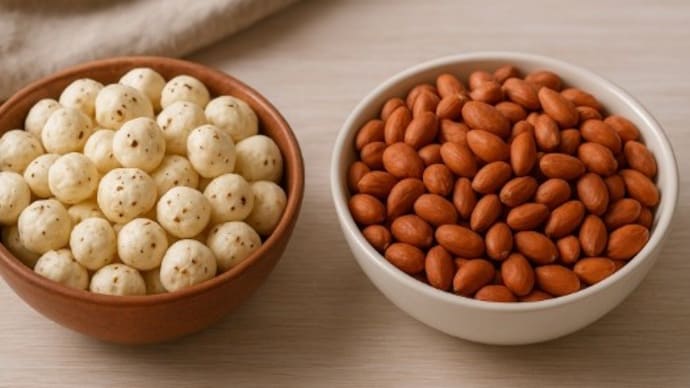
 Makhanas are low in calories and peanuts help to boost eneregy 

Snacking is (mostly) non-negotiable. Whether it’s the 4 pm hunger pangs or a movie-time munch session, we all reach out for something light yet tasty. That’s where the idea of healthy snacking comes in - because chips and dips only win on taste, not nutrition.

Two favourites that often make the cut are makhanas (fox nuts) and peanuts (groundnuts).

A handful of either is a go-to in healthy snacking conversations. Some like them roasted, others swear by salted or spiced-up versions. Versatile, bite-sized, and flavour-packed - they check the health box while doubling up as perfect party munchies.

But here’s the real dilemma: which is actually healthier—makhanas or peanuts - especially if weight loss is the goal? We’ll leave it to the experts to decode that one.


Nutrition face-off


Fox nuts are light on the stomach yet rich in fibre, which helps keep you full for longer. They provide dietary fibre, plant-based protein, potassium, and antioxidants - all of which aid in controlling blood sugar and improving digestion. 

Peanuts, on the other hand, pack more calories but are nutrient-rich. They offer higher protein, vitamin E, B vitamins, magnesium, and heart-friendly fats such as MUFA (monounsaturated fatty acids) and PUFA (polyunsaturated fatty acids). They also contain antioxidants like resveratrol, which protect against oxidative stress.

In terms of carbohydrates, 100 grams of fox nuts have 75–80 grams, but these are low-glycaemic index carbs. Groundnuts have 18–38 grams of carbohydrates. The protein content in fox nuts is 9.7–11.2 grams, while peanuts provide 20–25 grams.

Makhanas also make a safe evening snack to prevent overeating later. Peanuts work well for people with higher energy needs, active lifestyles, fitness enthusiasts, or those focusing on heart and metabolism.

However, people with kidney issues should avoid peanuts because of their potassium content.

The weight loss angle

When it comes to weight loss, calorie count matters. Low-calorie foods are better suited for weight management, giving makhanas an advantage.

“Dry-roasted makhanas are very low in fat and calories, and their fibre helps with satiety. Even if a teaspoon of ghee is used in roasting, the calories stay much lower than peanuts,” says Ipsita Chakravarti, HOD Dietetics, CMRI Kolkata.

Makhanas have around 356 calories per 100 grams, very low fat (0.1 to 0.5 grams), and a good amount of other vitamins and minerals.

Peanuts are healthy, but energy-dense - 100 grams give over 550 calories and 40 to 50 grams of fat per 100 grams. That makes portion control tricky on a calorie-deficit diet. So, makhanas are usually the safer option for weight management.

How to eat them right?

Experts believe that about 30 to 50 grams of each is a decent daily quantity to consume individually.

According to Dr. Karthigai Selvi A, Head of Clinical Nutrition and Dietetics, Gleneagles BGS Hospital, Kengeri, Bengaluru, combining the two is also a good option to get the predominant nutrients from both.

“Combination is always better so that you can get a good amount of protein and fibre, which are important for weight loss. The ideal ratio is 75 per cent fox nuts and 25 per cent groundnuts.”

But there’s a catch: if you don’t drink enough water, the high fibre content can lead to constipation, since fibre absorbs water as it passes through the intestine.


Another factor to keep in mind is the cooking method. Fried or oil-heavy preparations should be minimised. Roasting, mixing with salads, or pairing with other cereals are healthier options.

“We also need to consider overall fat consumption throughout the day. Even if you eat the right amount of fox nuts and groundnuts, but also take in large amounts of saturated fat and refined carbohydrates, it will not aid weight loss,” Dr. Selvi explains.

Salty, spicy and ghee - still healthy?

Makhanas and peanuts both come in spicy, salty, or ghee-roasted versions - because who doesn’t like a little spice and everything nice?

But does flavouring cancel out the health benefits?

Simple roasting or light ghee-roasting can aid vitamin absorption, thanks to butyric acid. Experts caution, however, against going overboard with masala on peanuts. While mild seasoning is fine, too much spice can cause acidity.

The best way to snack on peanuts? Dry roasted. “Peanuts are most beneficial when dry roasted, as frying or heavy salting raises fat and sodium levels, reducing their benefits. Slight roasting enhances the nutritional value of both snacks, but excessive seasoning can be detrimental,” notes Chakravarti.

Final nibble

Fox nuts, with their fibre and low-calorie content, and peanuts, with their protein and healthy fats, can both be consumed in moderation. But relying on only makhanas or only peanuts will not lead to weight loss.

Instead of reaching for junk food, sugary snacks, or fatty foods, opting for makhanas or peanuts is a healthier choice.

“I would suggest that there is no single food that provides all the nutrients your body needs to function. A balanced diet is key - it should include a wide range of foods like vegetables, whole grains, lean proteins, and fruits, as these provide vitamins, minerals, and other macronutrients. An active lifestyle and good sleep cycle, together, aid weight loss,” Dr. Selvi concludes.

However, people with certain comorbidities should consult their doctors or medical professionals for a tailor-made diet.


 This is only for your information, kindly take the advice of your doctor for medicines, exercises and so on.   

https://gscrochetdesigns.blogspot.com. one can see my crochet creations  
https://gseasyrecipes.blogspot.com. feel free to view for easy, simple and healthy recipes    
https://kneereplacement-stickclub.blogspot.com. for info on knee replacement
https://GSiyers home remedies.blogspot.com   is the latest addition to my blogs

Labels: , , , , , ,

Cardiologist Shares Easy Lifestyle Tips to Prevent Heart Disease

Taking care of your heart doesn’t always mean following strict diets or complicated workout plans. Cardiologists often say that heart health comes down to consistent, everyday choices. Small steps like eating right, staying active, and reducing stress can go a long way in protecting your heart.

Dr. Bimal Chhajer, a non-invasive cardiologist, explains in his blog SAAOL Magazine that simple habits practiced daily can greatly lower the risk of heart disease. From mindful eating to getting quality sleep, he stresses that prevention is easier than dealing with heart problems later in life.

 Here are a few simple everyday habits to keep your heart strong and healthy:

Eating with awareness makes a big difference

Mindful eating means paying attention to what and how much you eat instead of rushing meals or getting distracted by TV and phones. Choosing fresh, whole foods and avoiding processed snacks not only improves digestion but also helps maintain a healthy weight. When you listen to your body’s signals and stop eating once full, you naturally avoid overeating.

The right fats can protect your heart

Not all fats are harmful. Healthy fats from olive oil, nuts, seeds, and avocados can reduce inflammation and keep cholesterol levels in check. At the same time, it’s important to cut down on fried foods, hydrogenated oils, and packaged snacks that damage arteries over time.

A balanced diet is the foundation of heart health

Filling your plate with colourful fruits, vegetables, whole grains, legumes, and lean proteins like fish and poultry provides the nutrients your heart needs. Limiting sugar, trans fats, and processed foods helps control cholesterol and blood sugar. Making gradual, realistic changes in your diet makes it easier to stick to healthy eating for the long term.

Reducing salt lowers blood pressure

High salt intake is one of the biggest causes of hypertension. Choosing fresh foods, cooking with herbs and spices, and checking food labels are simple ways to limit sodium. Even small reductions in salt can lower blood pressure and reduce strain on the heart.

Controlling portion sizes prevents weight gain

Even healthy food can cause problems if eaten in large amounts. Using smaller plates, eating slowly, and measuring servings can prevent excess calorie intake. This helps keep blood sugar and blood pressure under control, both of which are crucial for heart health.


Good sleep and hydration support heart function

Aim for 7–9 hours of quality sleep each night to allow the heart to recover. Poor sleep can lead to weight gain, hypertension, and even heart attacks. Staying hydrated by drinking enough water throughout the day also helps the heart pump blood effectively and reduces fatigue.

Managing stress is as important as diet and exercise

Chronic stress can raise blood pressure and harm the heart. Relaxation techniques like meditation, yoga, or deep breathing for just 10–15 minutes a day can make a big difference. Lower stress levels also improve sleep and overall well-being.

Staying active keeps the heart strong

Daily movement doesn’t have to mean intense exercise. Walking, climbing stairs, or light stretching all improve circulation and strengthen the heart. For extra benefit, structured workouts like brisk walking, cycling, or swimming at least 150 minutes per week are recommended.

Avoiding smoking and limiting alcohol are non-negotiable

Smoking damages arteries, reduces oxygen in the blood, and is one of the biggest risk factors for heart disease. Quitting is one of the best decisions you can make for your heart. Alcohol should also be consumed in moderation, as excessive drinking raises blood pressure and weakens the heart muscle.

Regular health check-ups catch problems early

Monitoring blood pressure, cholesterol, and blood sugar regularly helps in early detection of heart risks. Preventive check-ups give you a clear picture of your health and allow timely interventions if needed.


This is only for your information, kindly take the advice of your doctor for medicines, exercises and so on.   


Labels: , , , , , , , , ,

Shoulder Weakness And Stiffness: Early Signs Of Rotator Cuff Damage

Rotator Cuff Tear - Gold Coast Hand + Upper Limb Clinic Rotator Cuff Tear - Gold Coast Hand + Upper Limb Clinicrotator cuff tear from orthoinfo.aaos.org

On National Sports Day, as we celebrate the spirit of athletes and sports, it is equally important to highlight conditions that can limit the ability to stay active. Among athletes and fitness enthusiasts, shoulder pain and stiffness are often early signs of rotator cuff injuries, one of the most common causes of impaired mobility. The rotator cuff, a group of muscles and tendons, helps stabilize the shoulder joint and enables free movement. Damage here can affect not only sports performance but also daily activities. Dr. Gaurav Gupta, shares all you need to know:

Causes of Rotator Cuff Injuries in Athletes

*Overhead Sports: Repetitive overhead movements in tennis, swimming, volleyball, or cricket can strain and tear the tendons.

• High-Impact Trauma: Falls, tackles, or collisions in contact sports may lead to acute tears.

• Over-training & Poor Technique: Intense training without adequate rest or improper form during workouts increases the risk of shoulder injuries.

Early Symptoms of Rotator Cuff Damage

• Persistent Pain and Weakness: Pain during throwing, lifting, or weight training is an early warning sign. Weakness often follows, reducing power and endurance.

• Stiffness and Reduced Mobility: Difficulty rotating the shoulder or raising the arm overhead limits performance in sports like swimming, tennis, cricket, or basketball.

• Disturbed Sleep: Athletes often report shoulder discomfort at night, especially when lying on the affected side, which hinders recovery.

Types of Rotator Cuff Tears

• Partial Tear: Tendon damage without full detachment, often seen in early-stage sports injuries

• Complete Tear: Full separation of the tendon from the bone, resulting in significant weakness and reduced performance

• Massive Tear: Multiple tendons involved, severely restricting shoulder function if not treated promptly.

Treating the tear

• Non-invasive treatment: Physical therapy, medication, R.I.C.E therapy (Rest, Ice, Compression and Elevation), lifestyle changes such as certain exercises may be recommended as a first step to provide pain relief, reduce swelling and restore shoulder movement.

• Arthroscopic surgery: If non-surgical treatment does not bring relief, a minimally invasive surgical procedure could be suggested. During an arthroscopic shoulder surgery, the joint is accessed through 2-3 small incisions to insert a tiny camera and specialized surgical instruments to repair or treat the tear using either titanium or bioabsorbable anchors. The camera allows surgeon to see your joint and injury in real-time on a video monitor. This technique supports faster recovery and less pain due to its minimally invasive nature.

Post-surgery recovery regime includes immobilizing the joint with an arm sling for a few weeks, based on your condition, to aid healing followed by physiotherapy to help regain full range of motion.


This is only for your information, kindly take the advice of your doctor for medicines, exercises and so on.   

Labels: , , , , , , , , ,

Cholesterol is not the only lipid involved in trans fat-driven cardiovascular disease

Salk scientists have tracked the flow of trans fats using mouse models to describe the molecular mechanisms that cause trans fats to promote atherosclerotic cardiovascular disease (ASCVD), explaining how industrially produced trans-unsaturated fatty acids in our food significantly promote ASCVD and encouraging lawmakers to impose regulations on the use of these fats in food. This new insight into the flow of fats through the body points to new therapeutic targets for mitigating diseases like ASCVD, non-alcoholic fatty liver disease, obesity, diabetes, peripheral neuropathy, and neurodegeneration.

Excess cholesterol is known to form artery-clogging plaques that can lead to stroke, arterial disease, heart attack, and more, making it the focus of many heart health campaigns. Fortunately, this attention to cholesterol has prompted the development of cholesterol-lowering drugs called statins and lifestyle interventions like dietary and exercise regimens. But what if there's more to the picture than just cholesterol?

New research from Salk Institute scientists describes how another class of lipids, called sphingolipids, contributes to arterial plaques and atherosclerotic cardiovascular disease (ASCVD). Using a longitudinal study of mice fed high-fat diets -- with no additional cholesterol -- the team tracked how these fats flow through the body and found the progression of ASCVD induced by high trans fats was fueled by the incorporation of trans fats into ceramides and other sphingolipids. Knowing that sphingolipids promote atherosclerotic plaque formation reveals another side of cardiovascular disease in addition to cholesterol.

The findings, published in Cell Metabolism on November 14, 2024, open an entirely new avenue of potential drug targets to address these diseases and adverse health events like stroke or heart attacks.

"Fat is a major component of our diet, and eating trans fats is known to drive heart disease. We used this phenomenon to understand the biological mechanisms putting us at risk," says senior author Christian Metallo, professor and holder of the Daniel and Martina Lewis Chair at Salk. "There have been lots of studies investigating how trans fats drive cardiovascular risk, but it always comes back to cholesterol -- we wanted to take another look that omits cholesterol as a factor, and we found an enzyme and pathway relevant to cardiovascular disease that we can potentially target therapeutically."

When dietary fats enter the body through the foods we eat, they must be sorted and processed into compounds called lipids, such as triglycerides, phospholipids, cholesterol, or sphingolipids. Lipoproteins -- like the familiar HDL, LDL, and VLDL -- are used to transport these lipids through the blood.

Sphingolipids have become useful biomarkers for diseases like ASCVD, non-alcoholic fatty liver disease, obesity, diabetes, peripheral neuropathy, and neurodegeneration. However, it is unclear exactly how the incorporation of different dietary fats into sphingolipids leads to the development of ASCVD.


In particular, the researchers were curious to ask how the processing of trans fats into sphingolipids may be creating atherosclerotic plaques. They wondered, could sphingolipids created in the liver influence the secretion of lipoproteins like VLDL into the bloodstream that, in excess, cause arterial blockages?

The fate of dietary fat is often determined by the protein that metabolizes it, explains Metallo, so it was important for the Salk team to first explore the metabolic landscape that creates sphingolipids in the first place. They started their survey with a protein called SPT, which acts as a floodgate to regulate the synthesis of sphingolipids from fat molecules and amino acids (other cellular building blocks) like serine.

The team suspected that trans fats were being incorporated into sphingolipids by SPT, which, in turn, would promote the excess lipoprotein secretion into the bloodstream that causes ASCVD.


To test their theory, they compared the processing of two different fats, cis fats and trans fats. The difference between these two comes down to the placement of a hydrogen atom; cis fats, found in natural foods like fish or walnuts, have a kink in their structure caused by two side-by-side hydrogen atoms, whereas trans fats, found in processed foods like margarine or anything fried, have a straight-chain structure caused by two opposing hydrogen atoms. Importantly, the kink in cis fats means they cannot be tightly packed -- a positive feature for avoiding impenetrable clogs.

The researchers combined mouse model dietary manipulation with metabolic tracing, pharmacological interventions, and physiological analyses to answer their question -- what is the link between trans fats, sphingolipids, and ASCVD?

"We found the incorporation of trans fats through SPT increased lipoprotein secretion from the liver, which then promoted the formation of atherosclerotic plaques," says first author Jivani Gengatharan, a postdoctoral researcher in Metallo's lab. "This highlights sphingolipid metabolism as a key node in the progression of cardiovascular disease driven by specific dietary fats."

To test their theory, they compared the processing of two different fats, cis fats and trans fats. The difference between these two comes down to the placement of a hydrogen atom; cis fats, found in natural foods like fish or walnuts, have a kink in their structure caused by two side-by-side hydrogen atoms, whereas trans fats, found in processed foods like margarine or anything fried, have a straight-chain structure caused by two opposing hydrogen atoms. Importantly, the kink in cis fats means they cannot be tightly packed -- a positive feature for avoiding impenetrable clogs.

Starting with cells in Petri dishes, the team looked at whether trans or cis fats were preferentially metabolized by SPT -- and it turns out that SPT preferred trans fats. Furthermore, SPT's bias for trans fats was causing downstream sphingolipid secretion that could go on to cause plaque formation.

Then, they moved from Petri dishes to mice, and Gengatharan designed otherwise identical diets containing either high trans or high cis fats but little cholesterol, feeding them to mice for 16 weeks. In the end, they saw mice consuming a high trans fat diet were producing trans fat-derived sphingolipids that promoted the secretion of VLDL from the liver into the bloodstream. This, in turn, accelerated the buildup of atherosclerotic plaques and the development of fatty livers and insulin dysregulation. High cis fat diet mice, on the other hand, experienced shorter-term, less harmful effects like weight gain.

To probe these effects further, they inhibited SPT to see whether they could limit negative trans fat effects in mice, finding that reducing SPT activity did decrease trans fat-induced atherosclerosis. According to Metallo, these findings make this sphingolipid synthesis pathway through SPT a critical target for ASCVD therapeutics moving forward.

"As we get a better grasp on identifying and measuring these diverse circulating molecules in our bodies and how they're metabolized, we could make huge strides in personalizing medicine accordingly," says Metallo. "For now, I recommend everything in moderation -- we all have our own diets and genetics and predispositions. As we explore and understand those factors, we can improve our knowledge and expand treatment options in the future."

One particular SPT subunit stood out to the researchers as the subject of future research, since the team suspects it is responsible for selectively spitting dangerous lipids out of the liver. With the spotlight on SPT, the team hopes to see new non-statin drug development plans for managing and preventing cardiovascular disease.

Despite the World Health Organization (WHO) announcing a plan to eliminate trans fats from food supplies by the end of 2023, nearly 4 billion people remain at risk in 2024 due to countries not abiding by WHO's best practices. The team hopes their work can make a difference in the lives of individuals still at risk.


This is only for your information, kindly take the advice of your doctor for medicines, exercises and so on.   

Labels: , ,