New Study Shows Effect of Diet Drugs on Fatty Liver Disease
A new clinical trial has found that the
weight-loss drug Wegovy significantly improves a serious form of fatty
liver disease in nearly two-thirds of patients — a potential
breakthrough for millions affected worldwide.
The study, published in the New England
Journal of Medicine, focused on metabolic dysfunction-associated
steatohepatitis (MASH), an advanced form of what’s now called metabolic
dysfunction-associated steatotic liver disease (MASLD), formerly known
as non-alcoholic fatty liver disease. MASLD affects roughly a third of
U.S. adults, with about 5–7% progressing to MASH — where fat
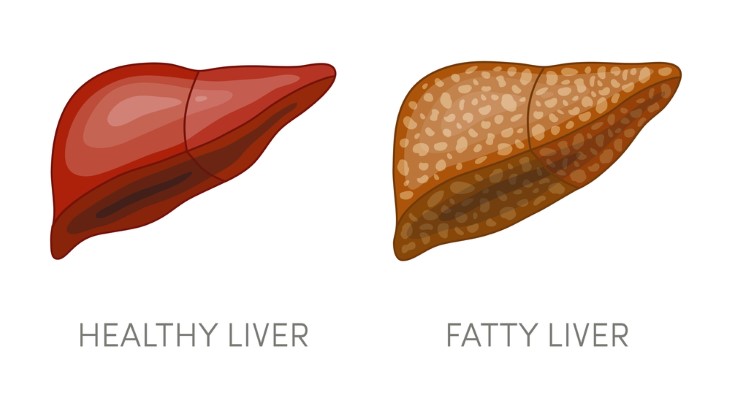
accumulation leads to inflammation and scarring. Left untreated, it can
result in cirrhosis, liver failure, or cancer.
Insulin resistance is a key driver of both MASLD and MASH, making
individuals with obesity or type 2 diabetes especially vulnerable. Dr.
Lior Neuman, a family medicine and obesity specialist, described fatty
liver as “one of the most common metabolic complications of excess
weight,” and emphasized how often the disease remains silent, even in
its advanced stages. Diagnosis typically starts with blood tests showing
elevated liver enzymes, followed by imaging like ultrasound.
According to the National Institutes of Health, up to 75% of overweight
adults and 90% of those with obesity have MASLD. Of these, roughly 17
million Americans are believed to have MASH. Globally, over 1 billion
people may be affected by MASLD, and MASH cases in the U.S. are
projected to rise by 56% by 2030.
Dr. Neuman stressed the importance of early
detection: “Fat in liver cells can lead to inflammation and scarring.
That scarring was once considered permanent — now we know weight loss
can reverse it.” He added that while FibroScan is a useful tool for
assessing liver fat and fibrosis, it’s not yet publicly available in
Israel.
Study Design and Results
The trial, led by Prof. Philip Newsome (King’s College London) and Dr.
Arun Sanyal (Virginia Commonwealth University), involved 1,195 people
with MASH across 253 sites in 37 countries. Participants had an average
age of 56 and an average BMI of 34.6; about half had type 2 diabetes.
Patients received weekly injections of semaglutide — the active compound
in Wegovy and Ozempic — or a placebo over a 72-week period, gradually
increasing to the standard 2.4 mg weight-loss dose. All participants
also received lifestyle counseling.
The results were compelling:
62.9% of those on semaglutide showed
significant improvement in liver fat and inflammation, compared to 34.3%
on placebo.
36.8% had fibrosis improvement, versus 22.4% in the placebo group.
Nearly one-third of semaglutide patients showed both benefits,
double the placebo group’s 16.1%.
Most participants had moderate to severe fibrosis (stage 2 or 3) at the
study’s start. Prof. Newsome called the outcomes “crucial for patients.”
Semaglutide mimics GLP-1, a natural hormone
that reduces appetite and boosts insulin secretion. Patients on the
drug lost an average of 10.5% of their body weight, compared to just 2%
in the placebo group. While weight loss itself can improve liver
function, researchers suspect the drug may also act directly on the
disease. “GLP-1 drugs may help reduce inflammation through immune system
effects,” said Newsome, though more studies are needed to confirm this.
The treatment was generally well tolerated.
Common side effects included nausea, diarrhea, constipation, and
vomiting. Only 2.6% of semaglutide users and 3.3% of placebo users
dropped out due to side effects.
A Turning Point
Experts view the findings as a significant step forward, though
questions remain about long-term results. “This is impressive weight
loss — but will patients sustain it?” said Dr. Sobia Laique, a
hepatologist at the Cleveland Clinic. “Managing obesity requires a
long-term strategy.”
Dr. Jeffrey Lazarus of the CUNY School of Public Health called the study
“a breakthrough,” noting that the FDA had already approved another
drug, resmetirom (Rezdifra), for fatty liver disease and fibrosis in
2023. “We finally have drug options alongside lifestyle changes,” he
said, though he emphasized that medications should supplement — not
replace — healthy habits. Rezdifra is not yet approved in Israel.
Dr. Susan Spratt, an endocrinologist at Duke University who wasn’t
involved in the study, found the semaglutide results “particularly
promising,” given how difficult it is to reverse fibrosis. “This is
meaningful progress,” she said.
Dr. Neuman agreed: “These findings confirm what we’ve long believed —
that losing just 5% or more of your body weight can significantly
improve liver health.”
Novo Nordisk, the manufacturer of Wegovy, said the FDA has granted the
drug “priority review” for treating MASH, with a decision expected
within six months. Wegovy was already approved in 2023 to reduce
cardiovascular risk in people with obesity. Other GLP-1 drugs like
Zepbound (Mounjaro) and Ozempic have also expanded into areas such as
sleep apnea and chronic kidney disease.
These results mark another major step in expanding the potential of
GLP-1 drugs beyond weight loss and diabetes — giving new hope to
millions with serious liver disease.