Abruptly losing your sense of smell is a
concerning experience. Many conditions, including COVID-19, sinusitis,
and allergies can manifest themselves through anosmia. However, unlike
anosmia, or the complete loss of the sense of smell, hyposmia can
develop gradually, so it’s more difficult to recognize. At the same
time, it’s an important symptom in the diagnosis of Parkinson’s because
it can often show up months or years before other symptoms.
The reason why Parkinson’s patients experience hyposmia or anosmia is
only partially understood. According to the European Parkinson's Disease
Association, “it is related to the protein alpha-synuclein which clumps
in the brain of people with Parkinson’s.” Studies show that
alpha-synuclein first appeared in the olfactory bulb, which is the part
of the brain responsible for the sense of smell. From the olfactory
bulb, these alpha-synuclein clumps are said to migrate to other parts of
the brain and may contribute to the development of Parkinson’s.
While many of us can have a reduced sensitivity to subtle smells, not
being able to smell strong scents is a concerning symptom. actively test
your ability to detect them. Three strong scents all healthy people can
usually smell are dill pickles, licorice, and bananas.
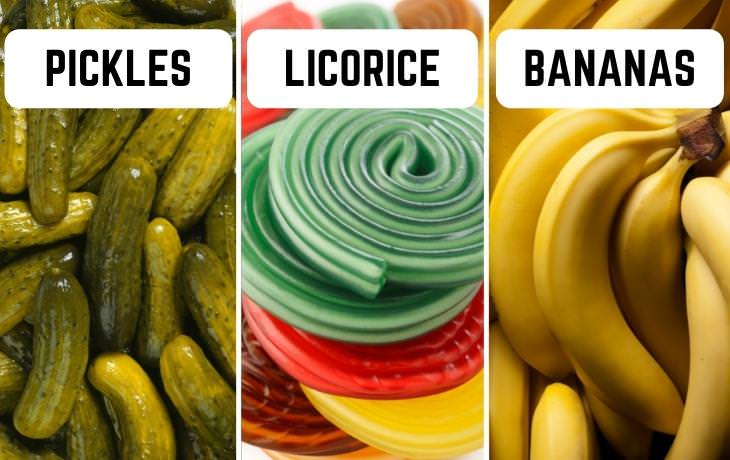
If you experience hyposmia, you may also
have a reduced appetite, have difficulty telling apart fresh foods from
spoiled ones. The Parkinson’s Foundation suggests that those who cannot
smell these three foods should talk to their doctor about Parkinson's.
Those who have a higher risk of developing Parkinson's can even smell
these strong-smelling foods occasionally as a way to test their sense of
smell.
Is there anything to help hyposmia?
Unfortunately, there is no medication that can sharpen your sense of
smell. Over time, your sense of smell will likely decrease or vanish
completely if you have Parkinson's.
However, there is a way you can train your brain to strengthen your
olfactory bulb. It’s called smell training. This training is simple
enough and requires sniffing a few strong scents two or three times
every day. These smells will stimulate the olfactory bulb and urge your
brain to rebuild the neural connections responsible for the sense of
smell. It usually takes a long time - months of training - to see
results because neural connections take time to be restored.
Some Parkinson’s treatments, such as deep brain stimulation and surgery
are also known to improve patients’ sense of smell.
T