Infertility Test Reveals A Uterus Inside A 26-Year-Old Delhi Man: Know The Rare Condition Behind The Discovery?
A 26-year-old Delhi man seeking treatment for infertility was found to have a small uterus-like structure and fallopian-tube-like structures inside his abdomen, along with both testes located internally.
What doctors discovered during evaluation was unexpected, the case, as reported by news agency ANI, has drawn attention to a rare congenital condition and raised a common question—can men have a uterus?
According to the report, the man approached RG Hospitals in Rajouri Garden for primary infertility and was found to have azoospermia, meaning there were no sperm in his semen. Further investigations showed that both testes were undescended. An MRI revealed a uterus-like structure in the pelvis, while genetic testing showed a 46,XY chromosome pattern. Laparoscopic examination later confirmed a small, underdeveloped uterus and Müllerian structures associated with both abdominal testes.
One testis showed pre-cancerous changes known as Germ Cell Neoplasia In Situ (GCNIS). Given the long-standing undescended position of the testes and the elevated cancer risk, the Müllerian structures and both testes were removed.
Can Men Have a Uterus?

Many are questioning, how can someone with typically male chromosomes and male physical development have structures that usually develop into the uterus and fallopian tubes?
We spoke to Dr Ankit Vaishnav, Consultant – Urology, Robotic Surgery & Renal Transplant Surgeon, Sterling Hospitals, Ahmedabad, who explained that such a finding can occur in a rare congenital condition called Persistent Müllerian Duct Syndrome.
“It may be surprising to discover that a man has a uterus. If such a discovery is made, however, it is not necessarily a uterus. It may be caused in rare instances by a congenital condition called Persistent Müllerian Duct Syndrome (PMDS)," he says.
In PMDS, some reproductive structures that would normally disappear during male foetal development remain in the body. These can include Müllerian structures such as the uterus and fallopian tubes, even though the person is phenotypically and genetically male.
The condition is extremely rare and can remain undetected for years, sometimes until adulthood.
What Makes This Case Unique?
During normal male foetal development, the testes produce Anti-Müllerian Hormone (AMH). This hormone signals the Müllerian ducts, embryonic structures that can otherwise develop into the uterus, fallopian tubes and other reproductive structures, to regress.
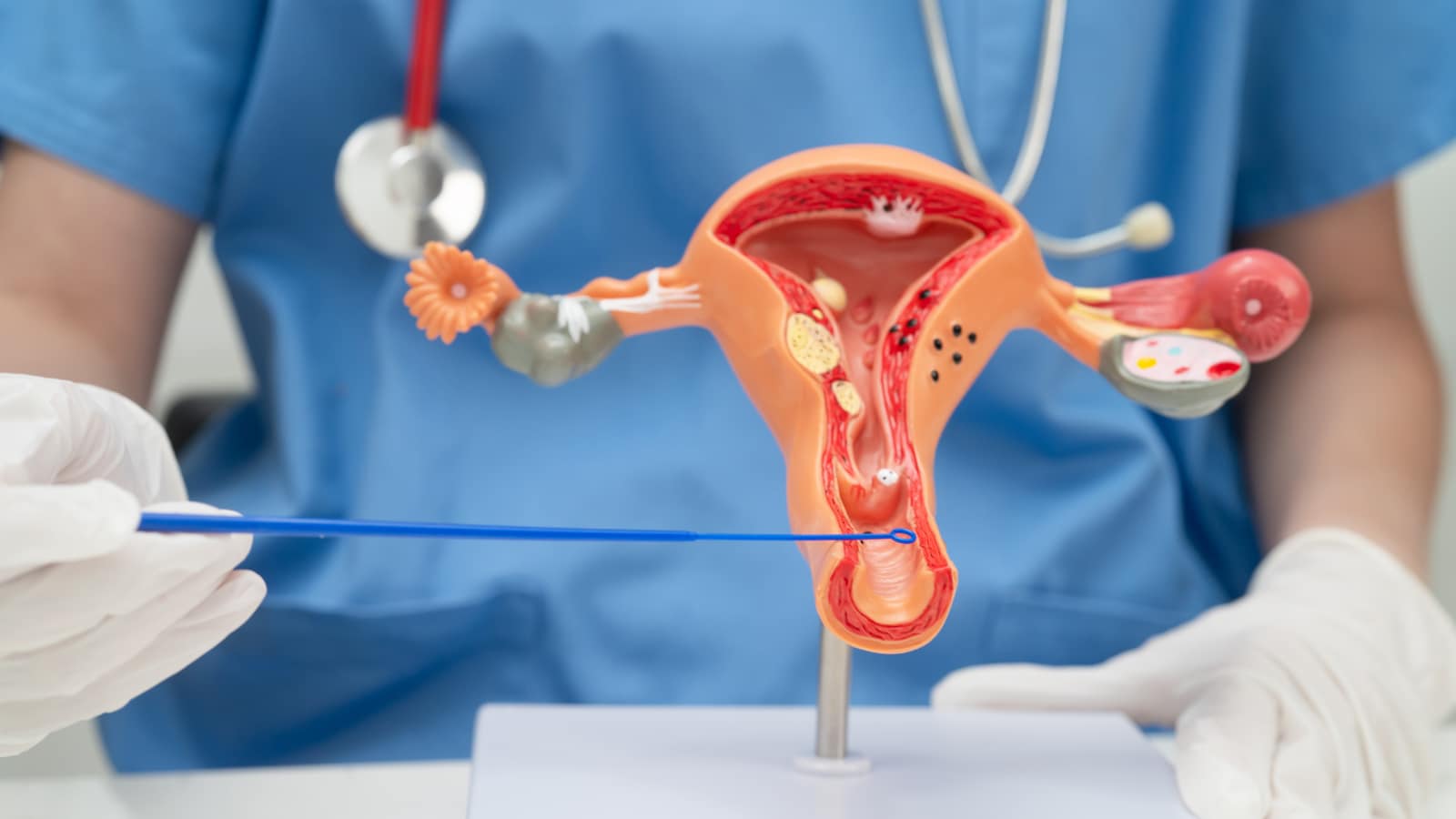
“In PMDS, problems with producing AMH or with its effect can make this process not occur at all," Dr Vaishnav explains. “This means that there may be some internal structures like uterus and fallopian tubes." The condition can therefore coexist with male reproductive anatomy, rather than meaning that the person has undergone a change from one sex to another.
Many people may not know they have PMDS for years and years. They are typically male and may not exhibit any symptoms. It is frequently diagnosed as a chance finding when investigating undescended testes, inguinal hernia, infertility, or an abdominal imaging or surgery for a different medical problem.
In the Delhi case, the condition remained hidden until adulthood because the man had typical external male characteristics and no obvious earlier symptoms that prompted investigation.
What Are The Symptoms of Persistent Müllerian Duct Syndrome?
PMDS may not cause obvious symptoms during childhood or adolescence. Many people may not know they have the condition until doctors investigate another reproductive or abdominal problem.
Dr Vaishnav says, “PMDS is frequently diagnosed incidentally while investigating undescended testes, inguinal hernia, infertility, abdominal imaging or surgery for an unrelated medical problem."
In the Delhi case, the discovery happened during an evaluation for infertility. The patient’s testes had remained inside the abdomen and were severely atrophied. When testes remain inside the abdomen, the higher body temperature can impair sperm production over time. In this patient, the testes were already severely damaged, contributing to azoospermia. Fertility outcomes vary; some individuals may still have options through assisted reproductive techniques depending on residual testicular function.
Does PMDS Cause Infertility?
The presence of PMDS does not automatically mean a person will be infertile. “These patients may present with infertility as one of the causes of their medical attention and undescended testes and other associated developmental abnormalities can impact on their reproductive function," Dr Vaishnav says. “But PMDS does not mean that the person will be infertile."
Fertility depends on several factors, including the location and function of the testes and whether other reproductive abnormalities are present.
For this 26-year-old, doctors found azoospermia and severe testicular atrophy. The long-standing undescended testes were also an important concern.
Does Having A Uterus Mean A Man Can Become Pregnant?
Finding Müllerian structures inside a person with PMDS does not mean that the person has a normally functioning female reproductive system or can carry a pregnancy.
The uterus-like structure in PMDS is typically underdeveloped, and the reproductive anatomy and hormonal environment required for pregnancy are not present. The condition is a rare variation in embryological development rather than evidence that a male reproductive system can function as a female reproductive system.
Dr Vaishnav says, “The occurrence of PMDS in such an individual is very rare and highlights the complexity of human development." He adds that advances in imaging, hormonal investigations and genetic testing are making it increasingly possible to identify these congenital variations and provide appropriate treatment, counselling and long-term care.
The occurrence of PMDS in such an individual case is very rare and underlines the complexities of human development and the need for careful investigation when a male child has, for example, undescended testes or unexplained infertility.