The $1 'Smart Bandage' That Quickens Wound Healing
Buy vitamins and supplements
Science
scientific
Elastic bandage
Supplements
supplement
science
Dietary supplement
Wound care is about to take a major leap forward with the development of
an innovative bandage that uses water to generate an electric field,
promoting faster healing. Researchers have designed a cost-effective, $1
dressing that could make treatment more accessible for millions of
people dealing with chronic wounds. With a simple activation process and
no need for external equipment, this new approach could revolutionize
how wounds are managed at home and in medical settings.
Chronic wounds and the need for better treatment
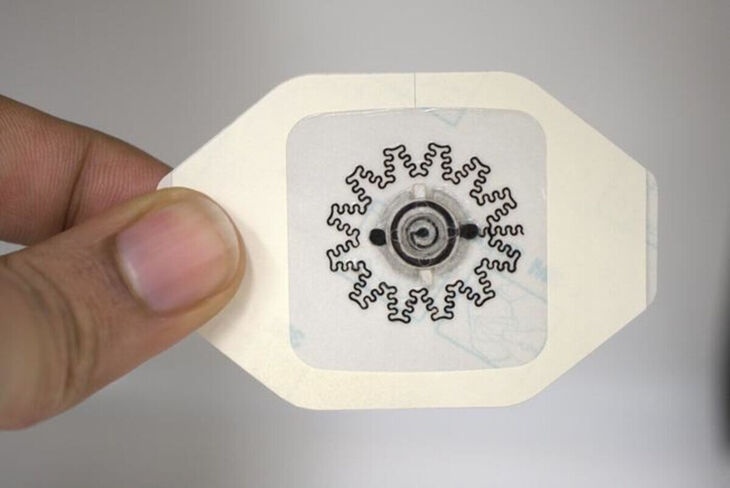
The water-powered, electronics-free
dressing (WPED) designed for wound electrical stimulation. (
Chronic wounds, such as diabetic foot ulcers, affect about 18.6 million
people worldwide and can be extremely difficult to heal. These
persistent injuries often lead to severe complications, including a
higher risk of amputation and death. Current treatments range from basic
bandages to expensive biologic therapies, some costing over $20,000 per
wound. Unfortunately, many of these options are either ineffective or
financially out of reach for patients who need them most.
Scientists have been searching for a practical solution that is both
affordable and easy to use. This study, published in Science Advances,
examines a new treatment option that may reduce costs while improving
access to chronic wound care. An American research team developed a
water-activated, electronics-free dressing (WPED) that can be produced
for around $1. This smart bandage harnesses a combination of magnesium
and silver/silver chloride to create a healing electrical field when it
comes into contact with water.
“Our goal here was to develop a far less expensive technology that
accelerates healing in patients with chronic wounds,” says co-author
Amay Bandodkar, assistant professor at North Carolina State University,
in a statement. “We also wanted to make sure that the technology is easy
enough for people to use at home, rather than something that patients
can only receive in clinical settings.”
How the water-activated bandage works
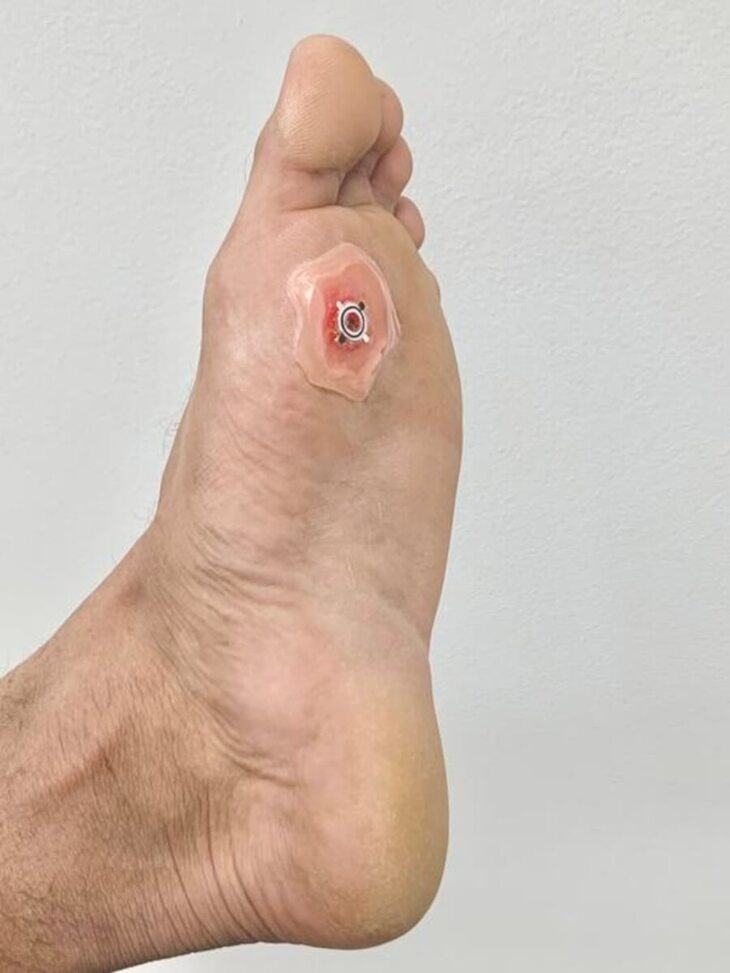 The WPED being used on a simulated wound on
a human foot.
The WPED being used on a simulated wound on
a human foot.
This bandage is equipped with a small, flexible battery that is
activated as soon as water is added to the inlet pad. The system
generates a mild electrical field that promotes wound healing by
stimulating tissue repair. Made from a combination of magnesium and
silver/silver chloride, the bandage creates a controlled charge that
mimics the body's natural healing processes.
A built-in checkpad changes color once the separator is fully hydrated,
signaling that the bandage is actively working. At only 290 milligrams,
this dressing is barely heavier than a standard bandage and can conform
to irregular wound surfaces, making it practical for real-world use.
Why electrical stimulation matters
Electricity has long been recognized for its ability to aid wound
healing, but traditional electrical therapies require bulky external
equipment. This new dressing simplifies the process by delivering
electrical stimulation without any additional devices. Once activated
with water, the dressing can function for anywhere from 30 minutes to
over seven hours, depending on environmental conditions and the nature
of the wound.
Researchers note that directing the electric field from the outer edges
of the wound toward the center is essential to improving healing. The
flexible electrodes in the dressing ensure that this process happens
effectively, allowing for better wound closure and tissue regeneration.
Testing and promising results
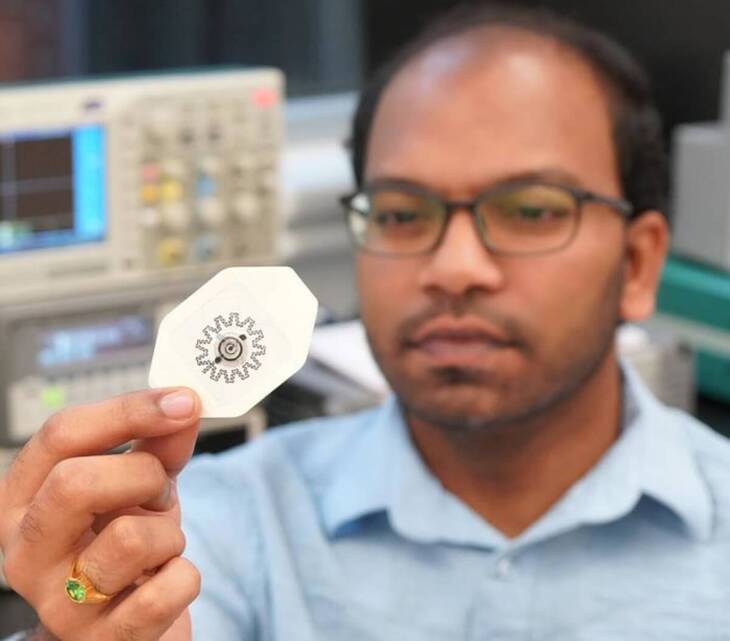
Researcher Rajaram Kaveti holds the
water-powered, electronics-free dressing (WPED) used for wound
electrical stimulation. (Credit: Gurudatt Nanjanagudu Ganesh)
The effectiveness of the bandage was tested in laboratory settings under
various temperature and pressure conditions. Even when exposed to
different environments, the dressing continued to function as intended.
Although higher temperatures led to faster water evaporation, the
bandage still provided a steady flow of electrical stimulation.
In controlled trials using diabetic mice, the results were impressive.
By day 11, 75% of wounds treated with the bandage had completely closed,
compared to just 12.5% in those that received a non-powered dressing.
By day 13, healing rates increased to 88% in the treated group.
Researchers observed faster wound closure, improved blood vessel
formation, and reduced inflammation, all contributing to better overall
healing outcomes.
A step forward in wound care
Diabetic foot ulcers remain a serious health challenge, often leading to
amputations when left untreated. There is an urgent need for new
treatment options, as the last FDA-approved therapy for diabetic foot
ulcers was introduced over 25 years ago.
Although further testing is needed before this bandage reaches clinical
use, its potential is clear. Using a simple chemical reaction to
generate an electric field, this low-cost solution could provide
advanced wound care to patients who might otherwise be unable to afford
it. With continued research and development, this innovation may soon
become a practical tool for both hospitals and home care.
This is only for your information, kindly take the advice of your doctor for medicines, exercises and so on.
https://gscrochetdesigns.blogspot.com. one can see my crochet creations
https://gseasyrecipes.blogspot.com. feel free to view for easy, simple and healthy recipes
https://kneereplacement-stickclub.blogspot.com. for info on knee replacement
https://GSiyers home remedies.blogspot.com is the latest addition to my blogs
Labels: electricity generated, faster wound healing, smart bandage, water-activated bandage
posted by G S Iyer at 8:44 AM


0 Comments:
Post a Comment
<< Home