Understanding and Combating Visceral Fat
Deep within the human body lurks a silent
threat that many people don't even know they carry. Visceral fat, the
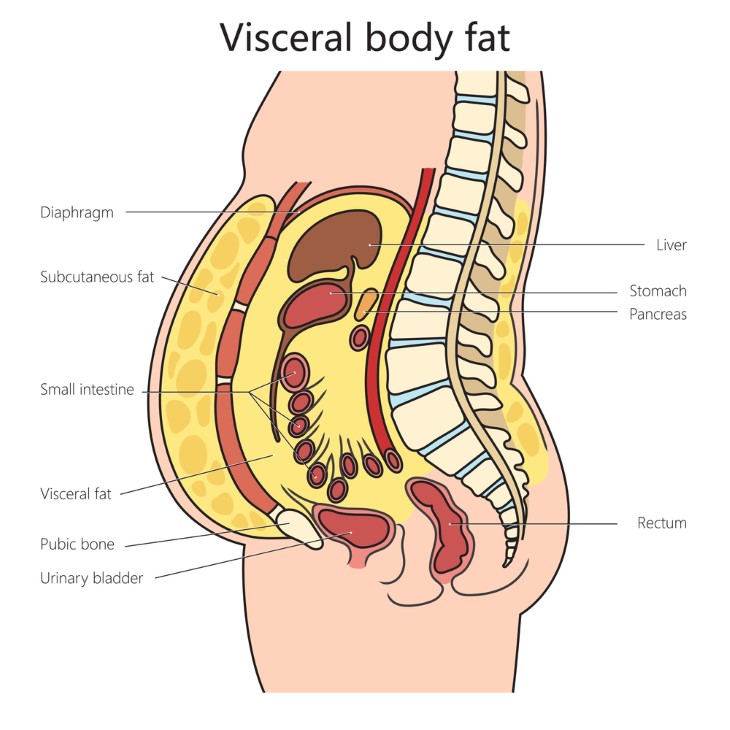
dangerous adipose tissue that accumulates around vital organs like the
heart, liver, and kidneys, represents one of the most significant health
risks of our time. Unlike the fat you can pinch on your arms or thighs,
this internal fat operates as a toxic factory, pumping out inflammatory
compounds that can dramatically shorten your lifespan.

What makes visceral fat particularly
insidious is its ability to hide in plain sight. While it often
manifests as an expanding waistline, even individuals who appear slim
can harbor excessive amounts of this harmful fat around their organs - a
condition medical professionals refer to as "skinny fat." This
deceptive nature means that millions of people walk around unaware
they're carrying a ticking time bomb in their midsection.
The Cascade of Health Consequences
Dr. Andrew Freeman, who directs cardiovascular prevention and wellness
at National Jewish Health in Denver, describes visceral fat as "a marker
for everything" when it comes to metabolic dysfunction. The presence of
excessive visceral fat correlates strongly with insulin resistance,
elevated cardiovascular disease risk, fatty liver disease, and type 2
diabetes—a constellation of conditions that collectively represent some
of the leading causes of premature death in developed nations.
The health implications extend far beyond
traditional metabolic concerns. Emerging research has revealed a
troubling connection between visceral fat and cognitive decline. Dr.
Kellyann Niotis, a preventive neurologist specializing in Alzheimer's
and Parkinson's disease risk reduction at the Institute for
Neurodegenerative Diseases, explains that visceral fat is "metabolically
unhealthy and secretes a lot of inflammatory chemicals that can cause
brain atrophy and impact cognition."
Recent studies have uncovered an alarming correlation: as belly
circumference increases, the brain's memory center actually shrinks.
Even more concerning, the hallmark proteins associated with Alzheimer's
disease—beta-amyloid plaques and tau tangles—begin appearing in the
brains of people with excess visceral fat. This neurological
deterioration can begin as early as a person's 40s and 50s, decades
before any noticeable cognitive symptoms emerge.
Identifying the Enemy Within
Determining whether you have problematic levels of visceral fat requires
more than just looking in the mirror. According to the Cleveland
Clinic, visceral fat should comprise no more than 10% of your total body
fat mass to be considered normal and healthy.
The most accessible screening method involves measuring your waistline.
The Centers for Disease Control and Prevention has established clear
guidelines: women with waist measurements exceeding 35 inches and men
with measurements over 40 inches face elevated health risks from
visceral fat accumulation.
To accurately measure your waist, position a
tape measure across your belly button area, ensuring it sits parallel
to the floor. Resist the temptation to suck in your stomach—this
measurement is about confronting reality, not flattering yourself.
Breathe normally and take the measurement when the tape is snug but not
constricting.
Another critical indicator is your lean muscle mass ratio. When body fat
percentage exceeds muscle mass, visceral fat typically infiltrates not
just the abdominal cavity but also the muscle tissue itself, according
to Dr. Freeman. Advanced body composition analysis through DEXA scans
can provide precise measurements of bone density, internal visceral fat,
and muscle mass, while consumer-grade bioimpedance scales offer
convenient at-home monitoring options.
Perhaps most importantly, honest self-assessment of lifestyle habits can
reveal visceral fat risk. Poor exercise routines and diets heavy in
ultraprocessed foods serve as reliable predictors of visceral fat
accumulation, regardless of current appearance.
The Path to Redemption
The encouraging news is that visceral fat responds remarkably well to
targeted interventions. Unlike some health conditions that require
pharmaceutical management, visceral fat can be effectively reduced
through strategic lifestyle modifications.
Dr. Freeman advocates for a comprehensive approach that he describes as
"the real holy grail, the elixir of youth." The foundation of this
approach rests on cardiovascular exercise performed at sufficient
intensity. He recommends brisk walking for a minimum of 30 minutes
daily, defining "brisk" as a pace that leaves you breathless and unable
to maintain a conversation.
However, cardiovascular exercise alone proves insufficient for optimal
results. The critical component is resistance training, which should be
integrated rather than treated as a separate activity. Dr. Freeman
suggests combining cardio with strength training by carrying weights
during walks, wearing weighted backpacks, cycling uphill, or using
swimming fins to increase water resistance.
The most effective resistance exercises engage multiple muscle groups
simultaneously. Compound movements like deadlifts, lunges, planks,
various presses, pull-ups, and push-ups maximize oxygen consumption and
trigger beneficial hormonal responses, including adrenaline release that
enhances blood flow and elevates heart rate.
Progressive overload—gradually increasing weight, sets, repetitions, or
reducing rest periods—ensures continued adaptation and muscle growth.
For those uncertain about proper progression techniques, consulting with
a qualified fitness professional can prevent injury while maximizing
results.
Nutritional Warfare Against Visceral Fat

Exercise alone cannot overcome the effects
of poor nutrition. Dr. Freeman advocates for abandoning what he terms
"the standard American diet," characterized by ultraprocessed foods
laden with added fats and sugars, in favor of a predominantly whole
foods approach.
The Mediterranean dietary pattern has emerged as the gold standard for
visceral fat reduction and overall health improvement. This lifestyle
approach emphasizes fruits, vegetables, whole grains, olive oil, nuts,
and seeds while promoting social meals and daily physical activity. The
diet minimizes sweets and limits dairy and red meat consumption, though
it embraces fatty fish like sardines as dietary staples.
Research validates this approach: older
adults following a lower-calorie Mediterranean diet combined with
minimal exercise gained muscle mass and lost significant body fat over
one year, maintaining these improvements for three additional years.
Another study demonstrated that women following Mediterranean dietary
patterns reduced their risk of death by approximately 25% over a 25-year
period.
Meal timing may provide additional benefits through intermittent fasting
or time-restricted eating patterns. Dr. Freeman suggests a six-hour
eating window—perhaps breakfast at 11 AM and dinner by 5 PM—allowing 18
hours of fasting daily. However, he cautions that this approach doesn't
work for everyone and should be combined with proper exercise and whole
food nutrition for optimal results.
The Stakes of Inaction
The consequences of ignoring visceral fat extend far beyond aesthetic
concerns. This metabolically active tissue represents a fundamental
threat to longevity and quality of life, contributing to the development
of chronic diseases that have become epidemic in modern society.
Yet the solution remains within reach for most people. By understanding
the nature of visceral fat, accurately assessing personal risk, and
implementing evidence-based interventions combining strategic exercise
with nutritional optimization, individuals can reclaim their health and
extend their lifespan.
The battle against visceral fat requires commitment and consistency, but
the rewards—improved metabolic health, enhanced cognitive function, and
increased longevity—make it one of the most important fights you'll
ever undertake. The question isn't whether you can afford to address
visceral fat accumulation; it's whether you can afford not to.