5 Easy Tests You Can Take at Home to See How Fit You Are!
Staying in shape is essential for our
health. For every year we don’t exercise, we lose 0.5lbs (0.2kg) in
muscle tissue, which can lead to problems such as infertility and even
diabetes. The less in shape we are, the slower our metabolism is, which
increases the risk of injuries and illnesses. At a later age, these
issues can prevent us from enjoying our favorite activities with beloved
family members.
Fortunately, it is almost always possible to get back in shape. These
five tests will let you know how strong and limber you are, and will
tell you whether or not you should hit the gym. This way you’ll be able
to enjoy a rich and fulfilling life and not feel as if your body is
betraying you.
1. Cardio
If you’re in good physical shape, you should be able to get off the sofa
with ease, play with your kids and grandkids, enjoy a nature hike, and
feel like you did when you were younger.
The test:
Run or walk for 12 minutes as fast as you can. It is better to do this
on a level plain, preferably with shoes that give good support. Compare
the distance you’ve passed to the results below to figure out your level
of cardio.
Age 40-49:
Not good: Less than 1.2 miles (1.8 km)
Acceptable: 1.2-1.5 miles (18-2 km)
Good: 1.5-1.7 miles (2-2.2 km)
Very good: 1.7-1.9 miles (2.2-2.4 km)
Excellent: More than 1.9 miles (2.4 km)
Age 50-59:
Not good: Less than 1.1 miles (1.7 km)
Acceptable: 1.3-1.4 miles (1.8-1.9 km)
Good: 1.4-1.5 miles (1.9-2 km)
Very good: 1.5-1.7 miles (2-2.2 km)
Excellent: More than 1.7 miles (2.2 km)
Age 60-69:
Not good: Less than a mile (1.6 km)
Acceptable: 1-1.2 miles (1.6-1.7 km)
Good: 1.2-1.3 miles (1.7-1.8 km)
Very good: 1.3-1.5 miles (1.8-1.9 km)
Excellent: More than 1.5 miles (2 km)
There are many advantages to having good cardio stamina, but if you’re
not actively exercising, you are probably in the “Not good” –
“Acceptable” range. Luckily for you, it doesn’t take much time to
improve your stamina. Simply take a 10-minute run or speed-walk every
night, and once it becomes easy, add another 5 minutes, and so on.
2. Upper body strength
When we talk about strength, especially in later age, we usually want to
be able to do the smaller things with ease, such as carrying groceries
or playing with our grandkids. These activities require some upper body
and core strength, which is why it is vital that we maintain that part
of the body.
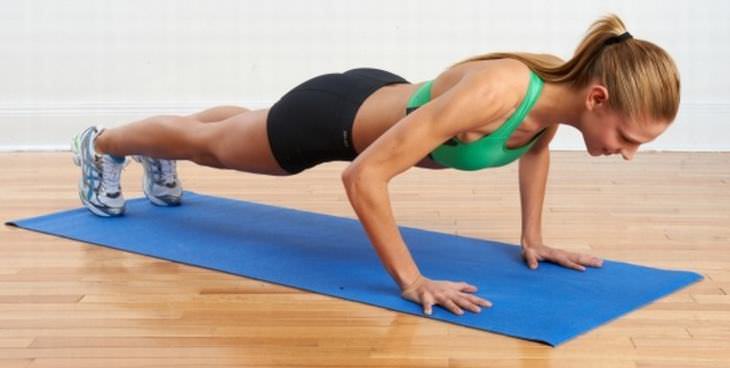
The test: Pushups
Lie down in the pushup position. Push yourself up using your arms while
making sure your back and neck are straight. Lower yourself down again
and stop before you touch the floor. This is one pushup. Try to do as
many as you can until you cannot do it anymore.
Age 40-49:
Not good: 4
Acceptable: 5-10
Good: 11-14
Very good: 15-23
Excellent: More than 23
Age 50-59:
Not good: 1
Acceptable: 2-6
Good: 7-10
Very good: 11-20
Excellent: More than 20
Age 60-69:
Not good: 1
Acceptable: 2-4
Good: 5-11
Very good: 12-16
Excellent: More than 17
We don’t want to be dependent on others, or not be able to play with our
grandchildren at a later age, which is why strength is essential. If
you maintain your strength now, you’ll stay strong when you’re older,
and perform activities that may look easy now, but without strength,
they become nearly impossible.
3. Core muscles
Our core muscles prevent injuries (mostly spinal), and help us maintain a
healthy posture, making them very important as we get older.
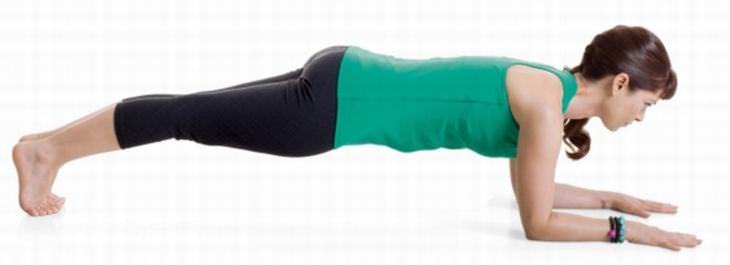
The test: Plank position
Lie down on the floor. Place your arms out in front of you, palms down,
so that the elbows are in line with your shoulders. Stretch your legs
back and place your toes on the floor. Lift yourself up, using your arms
and toes to stay in the air. Keep a straight back and make sure your
stomach muscles are contracted. Your body should form a straight line
from your head and down to your heels. Keep a watch or a timer in view,
and see how long you can remain in this position.
Age 40-49:
Not good: Less than a minute
Acceptable: 1 minute
Good: 1.5 minutes
Very good: 2 minutes
Excellent: More than 3 minutes
Age 50-59:
Not good: Less than 45 seconds
Acceptable: 45 seconds
Good: 1 minute
Very good: 1.5 minutes
Excellent: More than 2 minutes
Age 60-69:
Not good: Less than 30 seconds
Acceptable: 30 seconds
Good: 45 seconds
Very good: 1 minute
Excellent: More than 1.5 minutes
If you feel like this exercise is too difficult, it’s an indicator that
you must invest more time in it. Do not neglect it and I promise you
that you’ll thank me later.
4. Lower body strength
Maintaining your lower body strength will help prevent unsteadiness and
falls, and remember that you need your legs to walk. Men often neglect
this part when exercising, or invest more time and energy on upper body
strength, but it is important to remember that both parts of the body
are equally as important.
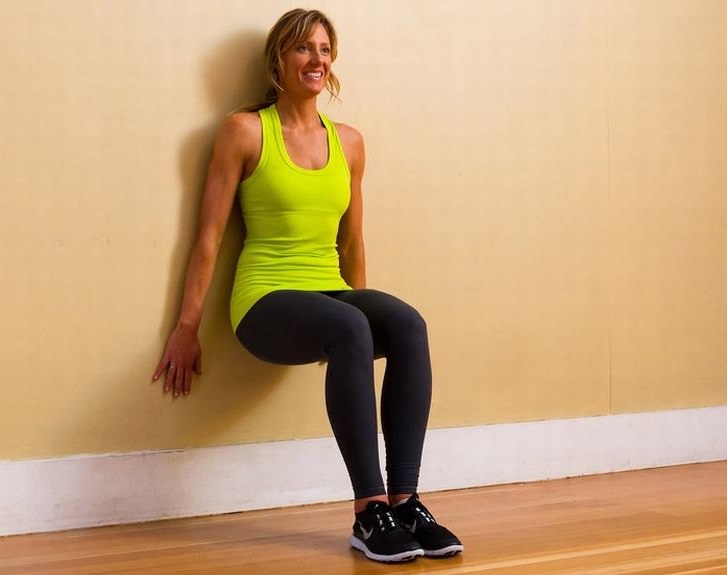
The test: Chair stand
Stand up and lean against a wall. Bend your knees slowly until they are
in a 90-degree angle, as if you’re sitting on an imaginary chair. Hold
this position for as long as you can.
Age 40-49:
Not good: Less than 9 seconds
Acceptable: 10-18 seconds
Good: 19-26 seconds
Very good: 27-33 seconds
Excellent: More than 33 seconds
Age 50-59:
Not good: Less than 6 seconds
Acceptable: 7-13 seconds
Good: 14-17 seconds
Very good: 18-24 seconds
Excellent: More than 24 seconds
Age 60-69:
Not good: Less than 4 seconds
Acceptable: 5-11 seconds
Good: 12-16 seconds
Very good: 17-23 seconds
Excellent: More than 23 seconds
On average, women will maintain this part of the body better than men,
for aesthetic reasons, but both genders need to exercise this part of
the body, as it will help you stand up without posture-related pains.
5. Flexibility
To reach that top shelf, or to tie our shoelaces, we must maintain our
flexibility, even more so as we age, because our muscles and tendons
become less limber, which increases the risk of injuries. Staying
flexible is vital for both our comfort and our health.

The test: Stretches
Sit on the floor with your legs straight forward. Stretch your hands and
try touching your toes. If you cannot reach them, slowly bend your
knees until you can.
Any age:
Not good: Your knees are fully bent, heels touching your buttocks
Acceptable: Your knees are bent in a V shape, heels close to your
buttocks
Good: Your knees are slightly bent, heels far from the buttocks
Very good: Your knees are almost straight
Excellent: Your knees are fully straight
Flexibility levels are not an absolute. Some people will never be able
to touch their toes, but as long as you keep practicing, you’ll see
improvements. Remember to take 2-3 minutes a day to stretch – it’ll do
your body good.
Use these tests to guide and push you to keep exercising and maintaining
your health. If you’re general scores are “acceptable”, know that your
risk of various diseases and injuries is significantly lower. Remember
that as long as you can get off the sofa and get a few minutes of
exercise every day, you’re less likely to suffer from a heart attack,
diabetes, and even some forms of cancer.