These Sleep Positions Help Reduce Neck, Back & Hip Pain
Did you know? Estimates suggest that as
much as 80 percent of adults worldwide will experience lower back pain
once in their lifetime.
While certain exercises will help alleviate pain, those who suffer from
chronic pain, be it in their back, neck, shoulders or hips, know that
different positions can aggravate the condition, hindering sleep. In
fact, according to research published in the Clinical Journal of Pain,
chronic pain can negatively affect the quality of sleep, in terms of
duration, satisfaction, day-time functioning, time taken to fall asleep
and sleep efficiency.
Yet, while non-neutral sleeping positions can pose unnecessary stress
and strain on the joints and surrounding tissues (which may lead to
backaches, spinal degenerative disorders and other ailments) clinicians
and researchers believe that certain sleeping positions may play a
preventive and therapeutic role in the management of backache and
chronic pain.
These 5 sleep positions are most suitable for chronic pain sufferers:
1. Neck Pain
Best sleep positions: On your side or back
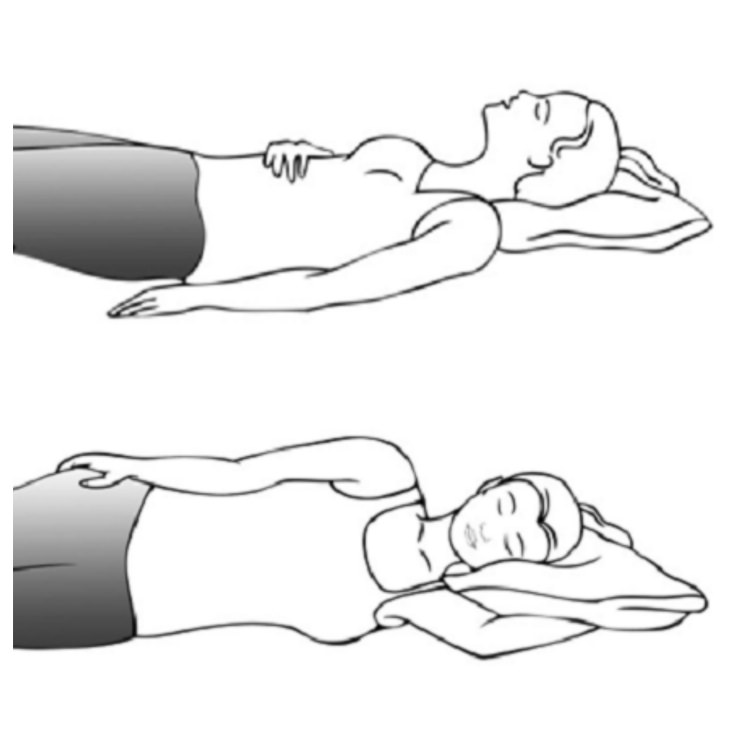
The following tips will ensure a comfortable sleep throughout the night:
• Opt for a rounded pillow to support the
natural curve of your neck.
• Use a feather pillow that conforms to the shape of the neck. The
drawback is that they tend to collapse over time, in which case your
pillow will need to be replaced once a year.
• You may also opt for a memory foam pillow that conforms to the contour
of your head and neck. It is believed that memory pillows foster proper
spinal alignment.
• Avoid using a pillow that is too high or sticks out, as this will keep
your neck flexed overnight and can result in morning pain and
stiffness.
• If you sleep on your side, opt for a pillow that is high on your neck
and low on your head to keep your spine in alignment.
Avoid: Sleeping on your stomach
This position is tough on the spine because the back is arched and your
neck is turned to the side. While we don't often wake up in the same
position in which we fell asleep, it is worth starting the night
sleeping on your back or side in a well-supported, healthy position.
2. Shoulder Pain
Best sleep positions: On your side, or on your back
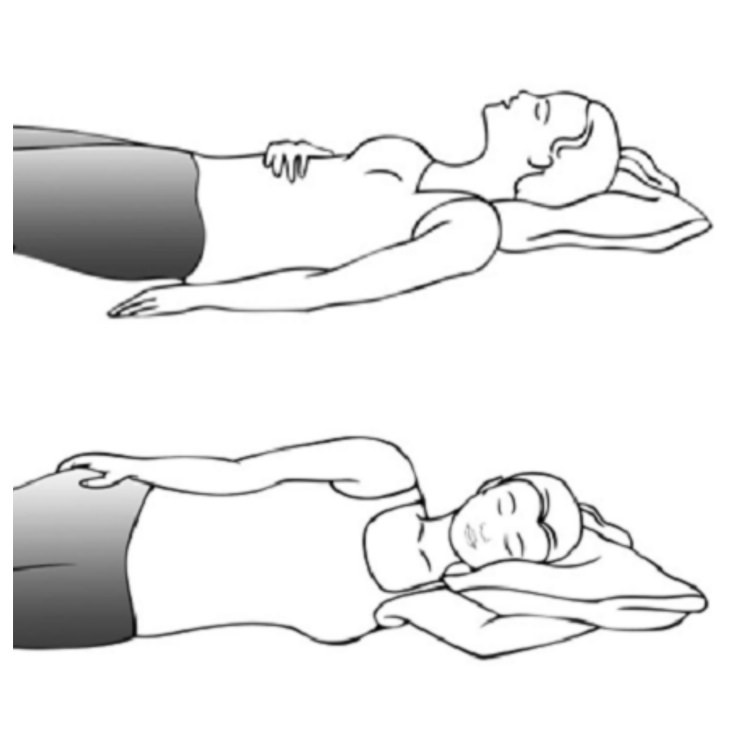
Bear in mind the above-mentioned tips, alongside the following:
• Ideally, keep your legs straight to minimize pressure on the spine.
• If keeping your legs extended is uncomfortable, flex the knees at a 90-degree angle to maintain a neutral posture.
Avoid: Sleeping on your side without pillow support.
3. Low back pain
Best sleep position: On your back with pillows placed underneath your knees.
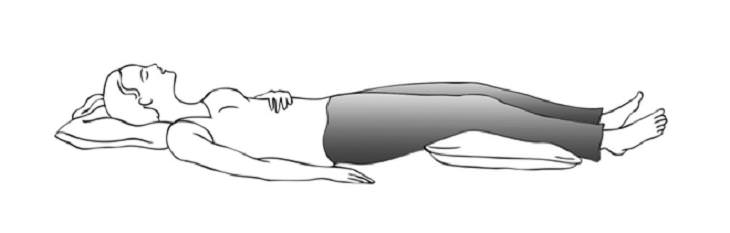
This sleeping position minimizes
back-arching, reducing low back pain.
• When sleeping on your back, avoid crossing your legs or sliding one
knee over the other as this increases the pressure on your pelvis.
• Avoid a thick pillow and do not use more than one pillow when resting
in this position.
• For extra comfort, and to reduce the pressure of gravity, you can use
soft physical support in the form of rolled-up towels or pillows at
positions where your spine tends to naturally curve - predominantly at
the lower back and under the knees.
• Keep your arms parallel to your torso as opposed to being elevated
above your head.
Avoid: Sleeping on your stomach or on your back without a pillow
underneath your knees.
4. Hip Pain
Best sleep positions: On your side, with a pillow placed between the
knees.
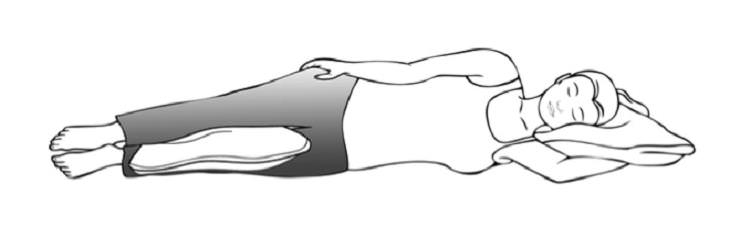
Sleeping with a pillow between your knees has a number of benefits:
• It will prevent your upper leg from pulling your spine out of alignment.
• It will reduce stress on your hips and lower back.
• It will help pull your knees up slightly toward your chest.
• Opt for a firm pillow.
Avoid: Sleeping on your back or stomach.
5. Jaw Pain, TMJ (Temporomandibular Joint Syndrome) and Headaches
Best sleep position: On your back, with arms at the side. Use a TMJ-friendly pillow
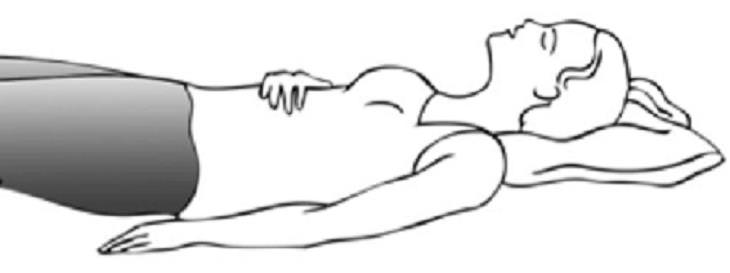
While sleeping on your back can be a bad
habit to get into, it has a number of benefits for TMJ sufferers.
Bear
in mind the following tips:
• Use a small pillow under the arch of your spine, to make back sleeping
more comfortable.
• Consider changing your mattress. Opt for one that conforms to your
body, making it a lot more comfortable and cozy to sleep on your back.
• Your arm position should not be overlooked. Keeping your arms at the
side is best. Avoid keeping your arms over your head as this can cause
strain on the shoulders.
Avoid: Sleeping on your back with your arms raised above your head, or
lying on your stomach.
T