Can Your Sleeping Position Affect Your Digestion?
We spend a third of all our lifetime
asleep, and it’s no news that sleep deprivation or oversleeping can have
serious negative effects on our health and wellbeing. But it isn’t only
the quantity of your sleep, but also its quality that can either help
or harm you.
In fact, it is possible to go even further with this argument and state
that the right sleeping position can enhance your well-being, just like a
good yoga class or a workout do. This includes all of your organs and
systems, and especially your digestive system. Learn how to enhance your
sleeping position and avoid common mistakes in this article.
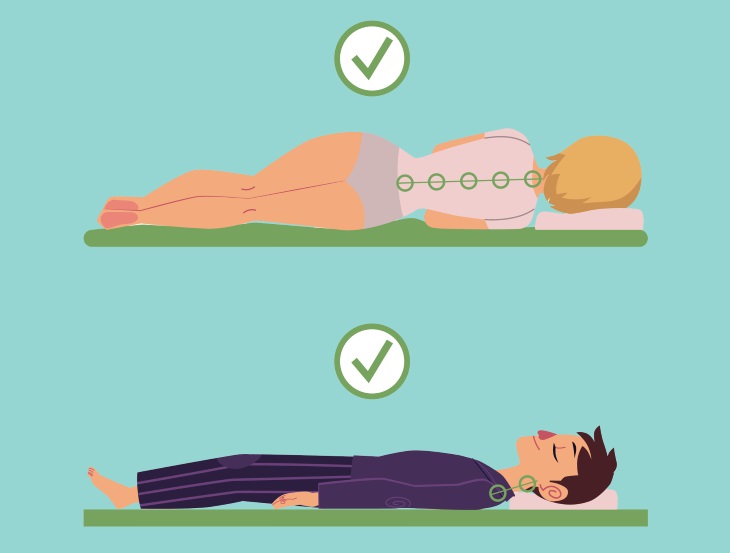
Did you know that according to scientific
research the best sleeping position isn’t sleeping on your back, but
rather on your left side? The reasoning behind this is the inner
asymmetry of our organs.
It is best to release pressure from the digestive tract during sleep, as
it is one of the few organs that doesn’t enter a rest mode when you
fall asleep. In fact, specific digestive processes are even more active
at night than they are during the day.
By sleeping on your left side, you’re letting gravity do the digestive
work for you, which makes it easier to normalize bowel movements,
especially to people who already suffer from irritable bowel syndrome,
lazy bowel syndrome, inflammatory bowel disease, and other conditions.
Here are the health benefits of sleeping on your left side:
Reduces heartburn
Helps digestion
Boosts brain health
Reduces snoring or sleep apnea
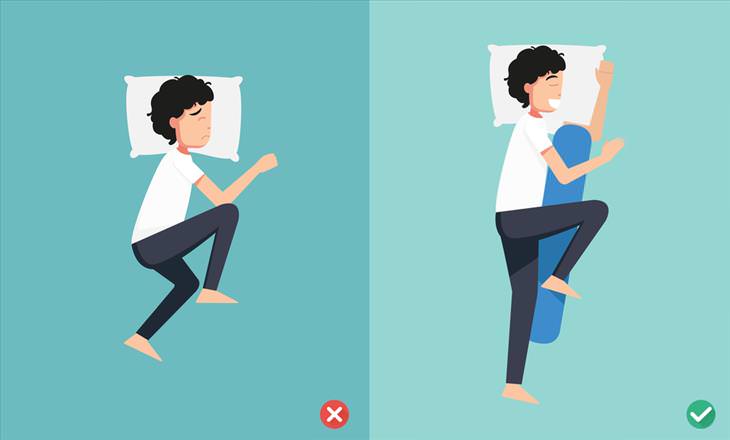
Even if you’re a side sleeper naturally,
still pay attention to these tips to stack your bones correctly and
prevent any possible muscle or joint pain that can develop when you’re
constantly sleeping on one side.
Tips for side sleeping:
Find a firm pillow that’s just tall enough.
Measure the distance
between your neck and the shoulder and find a pillow that’s just the
same height.
Place a pillow or blanket between your knees to support your spine.
Keep your arms parallel at the level of your face or below.
Sleeping on Your Back
Though sleeping on your side is ideal for a lot of people, others might
want to consider sleeping on their back as well.
Apart from being the best position for retaining smooth, wrinkle-free
skin on your face, it can also be beneficial for people with joint and
spine problems, as well as injuries and chronic pain.
Sleeping on your back may be beneficial to those of you who suffer from:
hip or knee pain
shoulder pain
arthritis
Fibromyalgia
stuffy nose and sinuses
headaches.
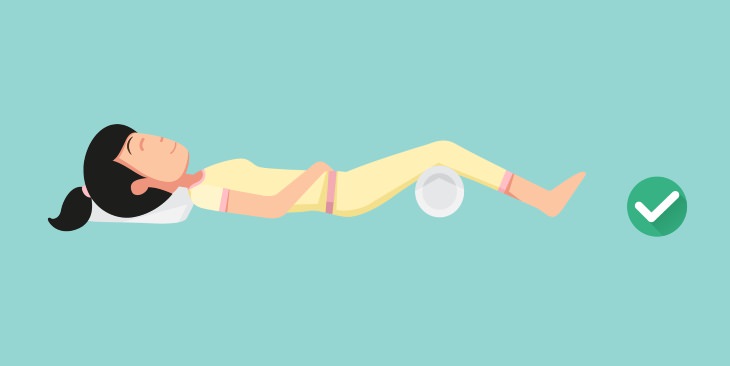
Here are some pro tips to consider to sleep
on your back correctly:
Relieve or prevent lower back pain by putting a pillow under your
knees.
Try to keep your arms and legs spread out more or less symmetrically
to avoid putting pressure on your spine and joints.
Elevate your head and neck by using a pillow to about 6 inches (15
cm).
This tip is beneficial to those of you who suffer from heartburn,
snoring, but can’t sleep on their left side, as well as those who suffer
from headaches and sinus buildup and nasal congestion.
Sleeping on Your Stomach
Sleeping on your stomach is the worst choice you could make. It can
trigger back pain and neck pain because your weight is not evenly
distributed throughout your spine, which puts a strain on a specific
region.
The only benefit of sleeping on your tummy is the clearing of the
passageways, which may help some of you who have sleep apnea or snore
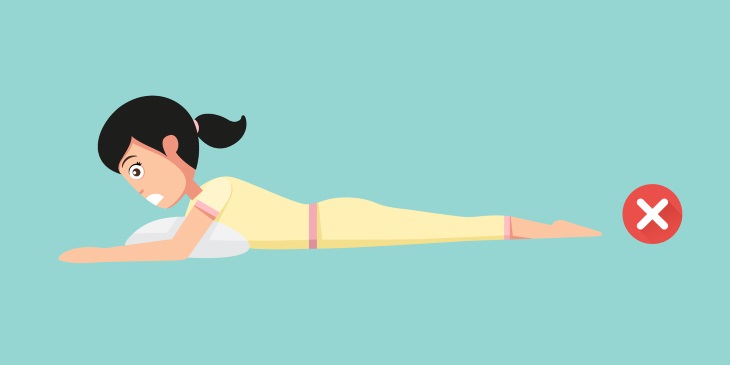
Though we don’t advise sleeping on your
stomach, here are some tips that can make this position safer for your
health:
Stop using a pillow or use a very thin one on your pelvis to release
the pressure.
To avoid neck pain and stiffness, alternate the side you turn your
head during the night.
Keep your arms and legs straight and to your sides. Otherwise, your
legs or arms could go numb, hurt your joints and your spine will be in
an even more awkward position.
Finally, remember that it’s OK if you alternate your sleep positions
during the night, as it can help prevent muscle stiffness, especially if
you’re a side or stomach sleeper.
I hope you found these tips helpful. If you want to read even more
about healthy sleep positions, we have a fascinating article about 5
Sleep Positions for Chronic Pain.
Have a good night! For those sleeping positions, kindly see my next post.
T