Can isabgol reduce cancer risk? What science really says
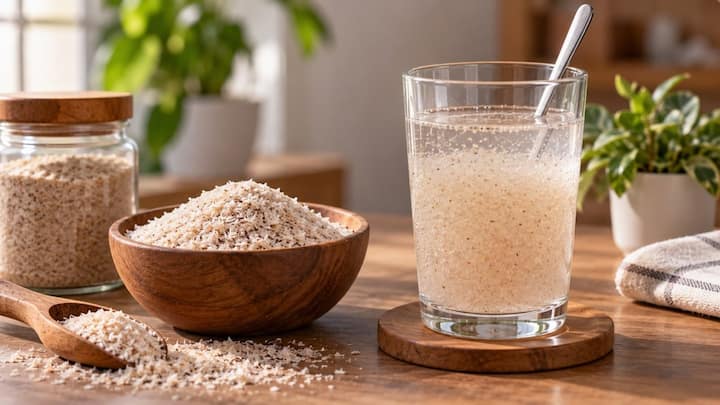
There's no denying the fact that isabgol (psyllium husk) is a go-to remedy for several people who experience constipation or other digestion-related issues.
However, what if the same-old staple could also cure your risk of cancer? Seems unlikely, right? Well, recent conversations have linked the two and to understand whether or not it's possible, Firstpost spoke with Dr Jaya Agarwal, Senior Consultant, Gastrointestinal Surgery, Amrita Hospital, Faridabad.
According to her, the answer requires careful understanding rather than assumptions.
“The truth lies somewhere between exaggeration and over expectation. Isabgol has clear benefits for gut health, but it should not be viewed as a cancer-preventing medicine," says Dr Agarwal.
How isabgol works in the body
Isabgol is rich in soluble, gel-forming fibre, which plays an important role in digestion.
“It absorbs water, softens stool and increases its bulk, making bowel movements easier,” Dr Agarwal explains. “This can help reduce the time harmful substances remain in contact with the lining of the colon.”
She adds that fibre also supports the gut microbiome. “Certain gut bacteria break down fibre to produce short chain fatty acids such as butyrate. In laboratory settings, butyrate has shown potential in controlling inflammation and influencing abnormal cell growth.”
However, she cautions against overinterpreting these findings. “These biological mechanisms are important, but they do not directly translate into cancer prevention in humans.”
Fibre and colorectal cancer: What research shows
There is strong evidence linking high-fibre diets with a lower risk of colorectal cancer.
“Large population studies consistently show that people who consume more dietary fibre tend to have a lower incidence of colorectal cancer,” says Dr Agarwal.
She points to global research trends. “Organisations such as the World Cancer Research Fund highlight convincing evidence that fibre-rich diets may help protect against colorectal cancer.”
A major study published in The Lancet also found that individuals consuming around 25 to 29 grams of fibre daily had lower risks of colon cancer, cardiovascular disease and early death.
But there is an important distinction.
“These benefits are associated with total dietary fibre from whole foods such as grains, legumes, fruits, vegetables, nuts and seeds, not just fibre supplements,” she emphasises.
Do fibre supplements like isabgol prevent cancer?
When it comes to supplements, the evidence is far less convincing.
“Clinical trials studying fibre supplements, including psyllium, have not demonstrated a clear benefit in preventing the recurrence of colorectal adenomas,” Dr Agarwal explains.
She refers to findings published in The New England Journal of Medicine. “In that study, psyllium supplementation did not reduce the recurrence of adenomas, which are considered precursors to cancer.”
This highlights a key point. “A supplement cannot replicate the complex benefits of a balanced, fibre-rich diet,” she says.
Should you still take isabgol?
Despite the limitations, isabgol still has an important role in digestive health.
“It is effective for relieving constipation and can also support better control of blood sugar and cholesterol when used appropriately,” Dr Agarwal notes.
However, she advises moderation and awareness. “It should be seen as a supplement to a healthy diet, not a substitute for it.”
She also stresses proper usage. “Isabgol must be taken with adequate water to avoid complications.”
When not to self-treat with fibre
While isabgol is generally safe, it is not a solution for every digestive concern.
“Symptoms such as rectal bleeding, unexplained weight loss, persistent abdominal pain or a sudden change in bowel habits require medical evaluation,” Dr Agarwal warns. “These should not be managed with fibre alone.”
The bigger picture: What actually reduces cancer risk
No single food or supplement can prevent cancer.
“Cancer prevention is multifactorial,” Dr Agarwal says. “Maintaining a healthy weight, staying physically active, avoiding smoking, limiting alcohol and processed meat, and consuming a balanced, fibre-rich diet are all important.”
Regular screening also plays a crucial role. “Colorectal cancer screening based on age and risk factors remains one of the most effective preventive strategies,” she adds.
The final takeaway
Isabgol is more than just a home remedy, but it is not a miracle solution.
“It supports gut health and can be a useful addition to the diet,” Dr Agarwal concludes. “But it should not be marketed or understood as a cure or preventive treatment for cancer.”
Understanding the difference between supportive nutrition and proven medical prevention is key to making informed health choices.