Why do Indians feel bloated so often? Doctor explains the real cause, and simple diet changes that can fix it.
Why do Indians feel bloated so often? Doctor explains the real cause, and simple diet changes that can fix it.
A slightly swollen stomach after a heavy meal feels normal. But for many Indians, that bloated, tight feeling shows up almost daily. It lingers through the day, affects energy, and often gets brushed aside as” just gas”.
Health educator Dr. Eric Berg has often pointed to a pattern: it’s not just what is eaten, but how much of certain foods dominate the plate. His explanation has sparked discussion because it connects modern eating habits with gut health in a simple, practical wat. But the story goes deeper, especially in the Indian context.
The carb-heavy plate: where it begins
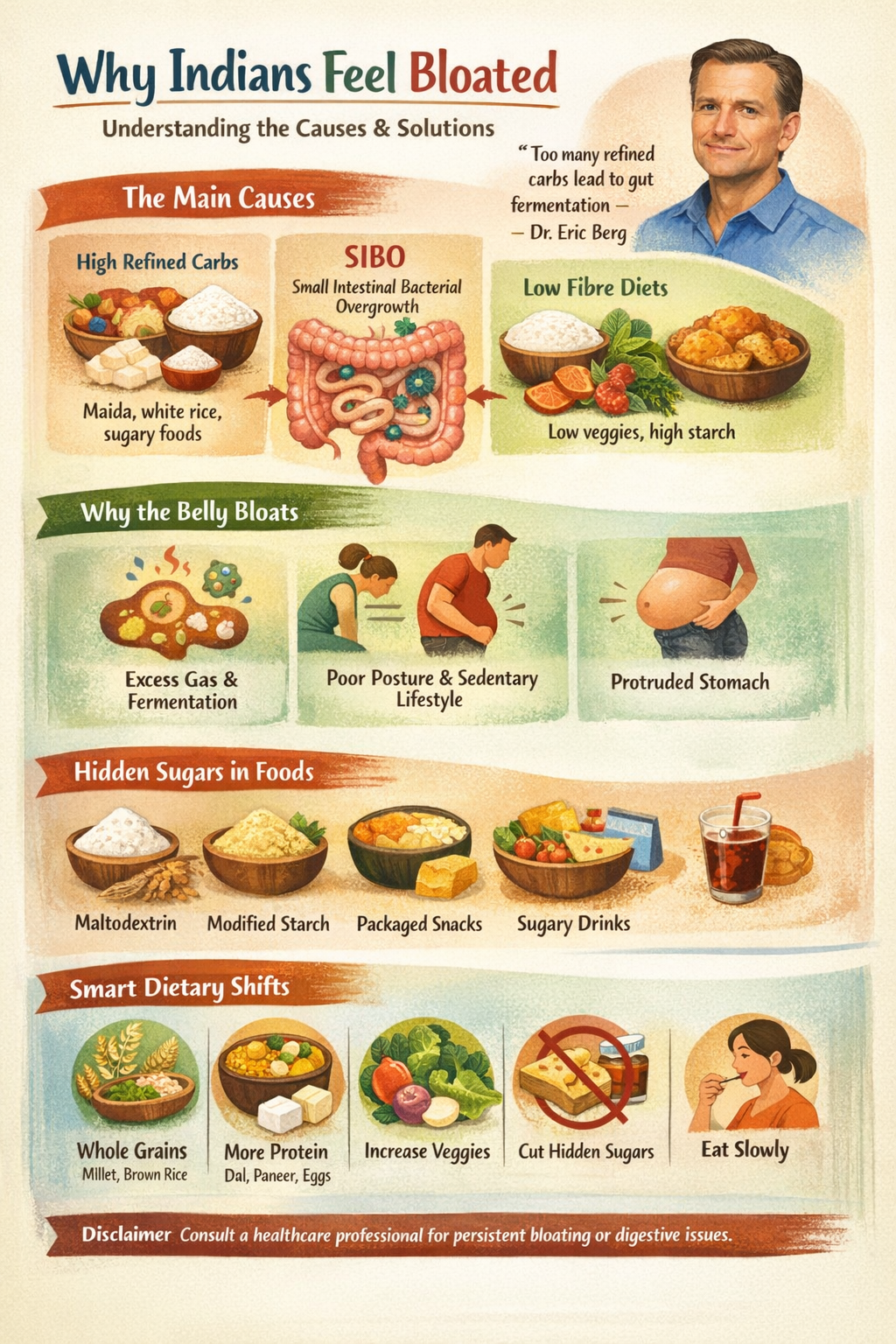
Dr. Berg highlights one key trigger excess refined carbohydrates. Many Indian meals revolve around foods like white rice, maida-based rotis, snacks and sweets.
These foods break down quickly into sugars. When consumed in large amounts, they don’t just feed the body, they also fee gut microbes.
Here’s the catch: not all microbes behave the same way. Some thrive on sugar and starch. When overfed, they multiply rapidly and start fermenting food inside the small intestine. This leads to gas, pressure and that familiar bloated look.
A report by the Indian Council of Medical Research ( ICMR) also notes that Indian diets often exceed recommended carbohydrate intake while falling short on protein and fiber.
What is SIBO, and why it matters
Dr. Berg links this bloating pattern to a condition called Small Intestinal Bacterial Overgrowth (SIBO).
In simple terms, SIBO happens when too many bacteria grow in the small intestine, where they don’t belong in large numbers. These bacteria ferment carbohydrates early in digestion, producing gas much sooner than usual.
That’s why bloating can happen even after a small meal.
Symptoms often include-
A protruding belly after eating
Frequent gas or burping
Feeling heavy despite eating light
While SIBO needs proper diagnosis, the pattern of frequent bloating in high-card diets aligns with what many Indian households experience daily.
The vegetarian factor: not the problem, but part of the puzzle
India has one of the largest vegetarian populations in the world. That alone is not the issue. In fact, well-planned diets can support excellent gut health.
The problem lies in how vegetarian meals are structured today. Instead of whole foods like lentils, vegetables and millets, many diets lean heavily on:
Refine wheat (maida)
Polished rice
Deep-fried snacks,
Sugary tea and desserts
These choices reduce fiber diversity and increase fast-digesting carbs. Fiber is crucial because it feeds good gut bacteria and keep digestion balanced.
According to the National Institute of Nutrition (NIN), India, most Indians consume less fiber than recommended levels.
Hidden sugars in everyday foods
Bloating is not always about obvious sweets. Many everyday foods quietly add to the sugar load:
Packaged snacks with maltodextrin
Bakery items made with refined flour
Instant mixes with modified starch
Even “healthy” biscuits or breakfast cereals
Dr. Berg specifically points out ingredients like maltodextrin, cornstarch and tapioca starch. These breakdown rapidly and spike fermentation in the gut.
India’s food regulator, FSSAI, has also flagged high sugar and refined carb consumption as a growing concern in urban diets.
Why the belly looks more “protruded”
Bloating is not just about gas. Over time, repeated distension can change posture and abdominal muscle tone.
Combine that with:
Sedentary lifestyles
Weak core muscles
Late-night eating habits
And the stomach begins to appear permanently extended.
There’s also a cultural angle. Large, carb-heavy meals eaten quickly, often followed by sitting or lying down, slow digestion further.
What actually helps: practical shifts that work
Dr. Berg suggests” starving the bad microbes”, but in real life, that doesn’t mean eliminating entire food groups overnight.
A more sustainable approach looks like this
Replace refined grains with whole options like millets or brown rice
Add protein to every meal, dal, paneer, curd, or eggs ( in non-vegetarian)
Increase fiber through vegetables, not just grains
Cut down hidden sugars in packaged foods
Eat slower and give digestion time between meals
Even small changes can reduce fermentation and ease bloating within weeks.
A balanced plate, half vegetables, one-quarter protein, ¼ carbs, often works better than strict elimination.