Are Probiotics Really Helpful For Most Digestive Diseases?
Over the last few years, probiotics have become immensely popular and are being used by millions of health-conscious people all over the world. Probiotics are specific live microorganisms (such as bacteria and yeasts) that are supposed to be good for our bodies when eaten, especially for our digestive system. The health benefits of probiotics are presumably many: weight loss, digestive health, healthier skin, immune function betterment, and even improvement of some mental health conditions.
As more and more studies have cropped up about the numerous health
benefits of probiotics, people have begun taking it regularly in pill
form, or by eating more fermented foods like yogurt, and other food
products.
However, before being completely smitten with the idea of the health benefits of probiotics, we should be a little cautious. According to new guidelines released by the American Gastroenterological Association (AGA), there isn’t sufficient evidence to support the recommendation of using probiotics for treating most digestive diseases.
“While our guideline does highlight a few use cases for probiotics, it,
more importantly, underscores that the public’s assumptions about the
benefits of probiotics are not well-founded, and there is also a major
variation in results based on the formulation of the probiotic product,”
said guideline panel chair Dr. Grace L. Su, a gastroenterologist at the
University of Michigan, in a press release recently.
New guidelines say that probiotics are beneficial for only particular conditions
You might be aware that probiotic pills are available by prescription in
certain places and are also available over the counter in many
countries. As the popularity of probiotics has surged, many companies
are marketing them as dietary supplements. In countries like the USA,
these companies don’t even need preapproval from the Food and Drug
Administration (FDA) to market them. However, they cannot make any
health claims about these products.
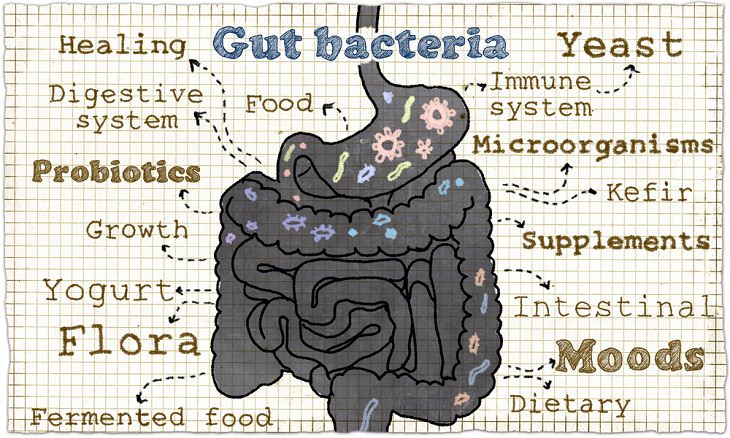
It is true that probiotics can indeed be pretty helpful. When we think of bacteria, we instantly imagine harmful germs. However, the stomach and intestines are comprised of millions of helpful bacteria and yeasts. The human gut consists of about 300 to 500 different bacterial species that engage in intricate ways with the body and with each other.
Now, the latest review by the AGA has claimed that probiotics may be
helpful with some gut-related issues. For instance, some probiotics may
be beneficial for preterm, low-birthweight infants. The review states
that they can help shorten the number of days infants will have to stay
at the hospital. Furthermore, certain probiotics can lower the risk of
Clostridium difficile (a bacteria that causes inflammation of the colon)
infection in adults and children who take antibiotics. The review
further stated that some probiotics can be useful in helping manage
pouchitis – a swelling of the ileal pouch in patients who have undergone
a colectomy as a result of ulcerative colitis.
Despite these benefits, however, it would be unwise to treat probiotics
as some wonder cure for many of our digestive health issues. The AGA has
observed that there is a clear lack of evidence to support the use of
probiotics for other health conditions.
“Patients taking probiotics for Crohn’s, ulcerative colitis or
[irritable bowel syndrome (IBS)] should consider stopping,” said Su in
the news release. “The supplements can be costly and there isn’t enough
evidence to prove a benefit or confirm lack of harm.” The review also
found that probiotics aren’t useful for children with infectious
diarrhea.
The effectiveness of probiotics may vary from patient to patient
According to a study that was published in the Journal of Family
Practice, the benefits of probiotics depend on the strain, dosage, and
condition being treated. The paper was written by Dr. Daniel J.
Merenstein, a professor of family medicine at Georgetown University, and
his colleagues.
“Just as we know that not all antibiotics are equally effective for all infections, so, too, effectiveness among probiotics can — and often does — vary for any given condition,” they wrote. They also state that the effectiveness of the probiotics may vary from patient to patient.
Merenstein and his colleagues advise that physicians recommending
probiotics for their patients should first look for scientific evidence
for which one to use. According to them, simply advising that patients
take probiotics isn’t really helpful when that person might be looking
for a product that may help them with a specific condition.
Probiotics are mostly safe. However, they can cause harm to live
bacteria in some cases. This can be particularly true for people with an
unsettled immune system. Many people also use probiotics for improving
the health of their gut. However, such a diet can alter the structure of
the gut microbe at times. In fact, anyone with any health condition
should first consult a doctor before blindly taking probiotics.
Thus, be careful and prudent while taking probiotics. In general, health
experts recommend following a low-fat and high-fiber diet to always
keep your digestive system healthy.