Scientists Believe This Purple Veg Is the Answer to Cancer
Some of you may not have heard of purple
potatoes, but now’s the time to get acquainted because a study conducted
at the Penn State Hershey Research Institute in Pennsylvania, found
that this root has many powerful components shown to be effective in
treating cancer. Although the study has now chosen to focus on colon
cancer, the researchers believe the findings promise positive results
for treatments in its other forms. So what have researchers actually
revealed about this colorful potato? What other health benefits are
there? And what else do we need to know about the purple wonder that has
long occupied Latin American cuisine?
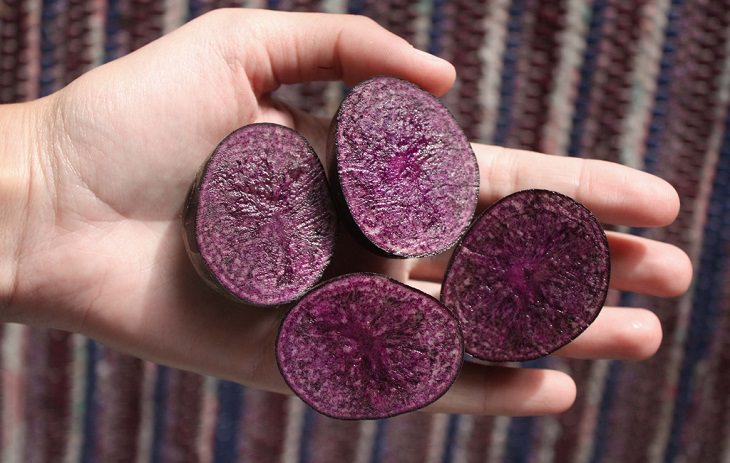
Purple potatoes grow widely in Peru and
Bolivia and are quite popular in the South American kitchen. Now, it
seems that we should also add this strange vegetable to our daily diet
because beyond the deep purple color that only adds to every dish,
recent studies have shown that it has the potential to be a natural and
perfect answer to the problem of cancer treatment. Already in the
initial study, positive findings have shown that extracts from the
purple potato suppressed the spread of cancer cells in the colon.

The researchers were not satisfied with
their initial findings and decided to repeat the study again with
laboratory mice, which confirmed their positive hypotheses through
identical results. Jairam Vanamala, one of the scientists who led the
study in the simple comparison, explained the shocking news: "You may
cut the weed, but as long as the roots are still there, the weeds will
keep growing back and, likewise, if the cancer stem cells are still
present, the cancer can still grow and spread."
The explanation for this ability described by Jairam is linked to the
fact that this potato strain is rich in anthocyanins, a pigment that
gives the vegetable its dark purple color, which acts as a powerful
anti-oxidant against cancer. This pigment is joined by resistant starch,
another component found in very high quantities and is also considered
to be an active anti-cancer substance. The combination of the two,
according to the scientists, led to the amazing results of the
experiment and turned the purple potato into a natural drug with
unequivocal effects on the disease.
So what are purple potatoes?
They do look odd but don’t worry, purple potatoes, also known as
Vitilettes, can be a great addition to a wide variety of dishes. These
potatoes are slightly smaller than regular potatoes, but their taste
isn’t very different from them. In the South American kitchen, it is
customary to boil, bake and roast the purple potatoes, and turn them
into mashed potatoes, French fries and a variety of dishes that aren’t
any different from the recipes we’re already familiar with.
Additional health benefits
In addition to the new discovery of their ability to protect the body
against cancer cells, purple potatoes are associated with a number of
other health benefits that can make them an excellent addition to our
daily diet:
The purple potato is rich in potassium, an essential mineral for the
human body known to help regulate blood pressure. In a study conducted
by the US Department of Agriculture among overweight and high blood
pressure participants, those who consumed between six and eight purple
potatoes a day had positive results with their blood pressure dropping
by an average of 4%.
Beyond their cancer-fighting abilities, the antioxidants found in
the purple potato are also known for strengthening the immune system and
preventing cardiovascular disease.
Purple potatoes are an excellent source of dietary fibers that help
the digestive system function properly and are especially effective in
treating constipation.
The caloric value of three purple potatoes that make up a satisfying
portion is 131 calories, zero fat and zero cholesterol, which makes
them an excellent diet staple.
As studies in the field intensify, it seems
that the fight against cancer is making its way, in a slow and gradual
process, from the pharmacy straight to the plate.