The reason why diabetes has been on the rise for decades now is poorly understood, but with more than 400 million
diabetics worldwide waiting for explanations, researchers have been
busy looking for any additional causes or risk factors of the disease
that were previously overlooked by science.
Why do we need to find new risk factors for diabetes?
The
short answer to the question is that the current system of early
diabetes detection is just not very good. This work is especially
important since the majority of diabetic patients have type 2 diabetes, the acquired, and hence the preventable, form of the disease. To this day, type 2 diabetes is notoriously underdiagnosed, with a study
from back in 2014 concluding the following alarming numbers, “Globally,
45.8% or 174.8 million of all diabetes cases in adults are estimated to
be undiagnosed.” This means that nearly half of type 2 diabetes
sufferers are diagnosed with the dangerous disease until it reaches
later stages when complications arise and the condition becomes more
difficult to treat.
Clearly, health systems worldwide
need to be able to send people to screenings and tests when the first
signs and risk factors arise. Thus, understanding the habits and issues
people have before they develop diabetes is key, as these could serve as
a red flag for doctors and prompt them to schedule necessary check-ups.
What are the new and known risk factors of diabetes?
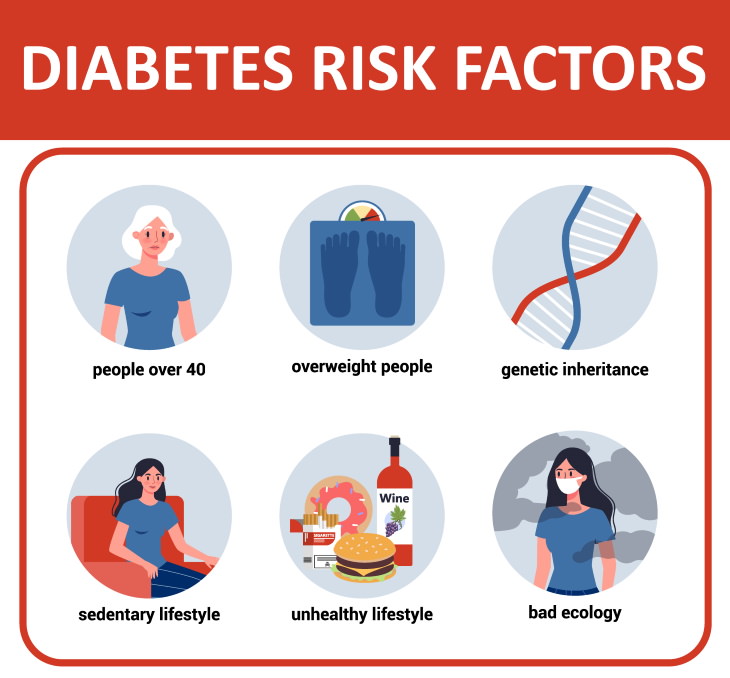
Previously,
researchers have known and established officially that things like a
family history of diabetes, obesity, polycystic ovarian syndrome in
women, and older age can raise one's risk of developing type 2 diabetes.
But even seemingly unrelated habits and factors, such as inactivity,
alcohol consumption, daytime napping, skipping breakfast, and a polluted
environment, too, were sometimes added into the mix, as many small
previous studies claimed that these, too, make a person more likely to
suffer from the dangerous health condition.
To
add more clarity to the picture and finally decide which factors do or
don't increase one's risk of diabetes apart from the known factors, a
Swedish team of scientists who have conducted a massive review of
previous findings. They established 19 risk factors for type 2
diabetes and 21 risk factors that lack evidence as of now. The findings
were published in the September 2020 issue of the Diabetologia journal.
The data of 74,124 cases of type
2 diabetes and 824,006 controls has been evaluated, stemming from 238
studies. The average age of the participants was 55 years, with more or
less equal distribution between males and females (51.8% were male).
From the 97 factors they considered, 19 actually had an increased type 2
diabetes risk. One never before seen risk factor really surprised the
researchers - it was insomnia.
Insomnia has been identified as a strong new risk factor of diabetes
The
study concludes that people suffering from insomnia have a 17%
increased risk of developing type 2 diabetes compared to those who get
enough sleep. “Daytime napping also appears to be a risk factor for type
2 diabetes. However, because it is strongly related to insomnia, it’s
unclear whether daytime napping is an independent risk factor for type 2
diabetes,” the researchers revealed in a statement.
Other
variables that raise one's risk of type 2 diabetes the researchers have
confirmed were more expected and in line with the official list of risk
factors, such as:
- obesity
- high blood pressure
- caffeine and smoking
- depression
- certain saturated and polyunsaturated fats in the blood.
Certainly,
obesity, unhealthy eating patterns, and low activity levels remain the
main modifiable risk factors of type 2 diabetes, but a lack of sleep and
insomnia, too, may make you at a greater risk of developing the
dangerous condition. Luckily, we as individuals have the power
to change our bad habits and increase our activity levels, which has
been shown to have the opposite effect - decrease the risk of getting
type 2 diabetes. Unfortunately, it isn't clear why many of these habits,
especially insomnia, could lead to this dangerous disease as of now,
but we hope to hear from new research soon.
labels- type 2 diabetes, insomnia, bad habits, modifiable, risk factors, depression, high BP, obesity, high saturated fats,